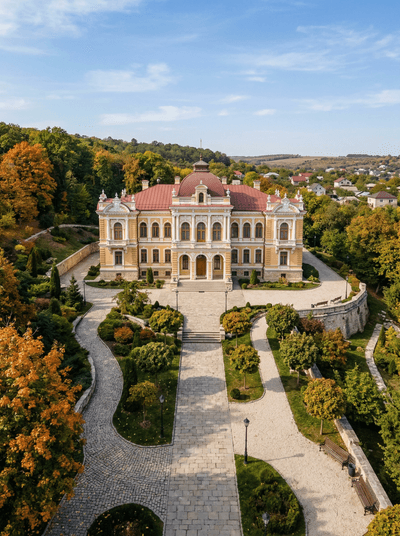
Moldova
Rudi
The Earth was measured from a stone in this orchard, on a line to the Arctic.
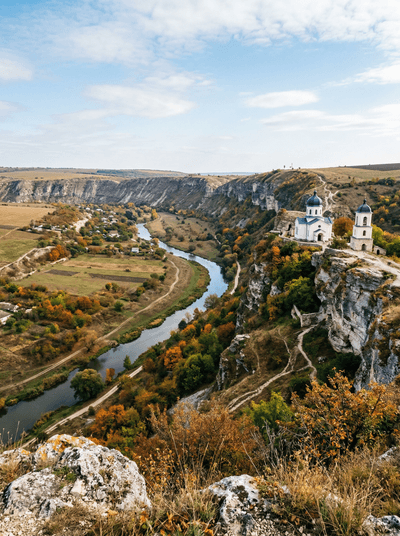
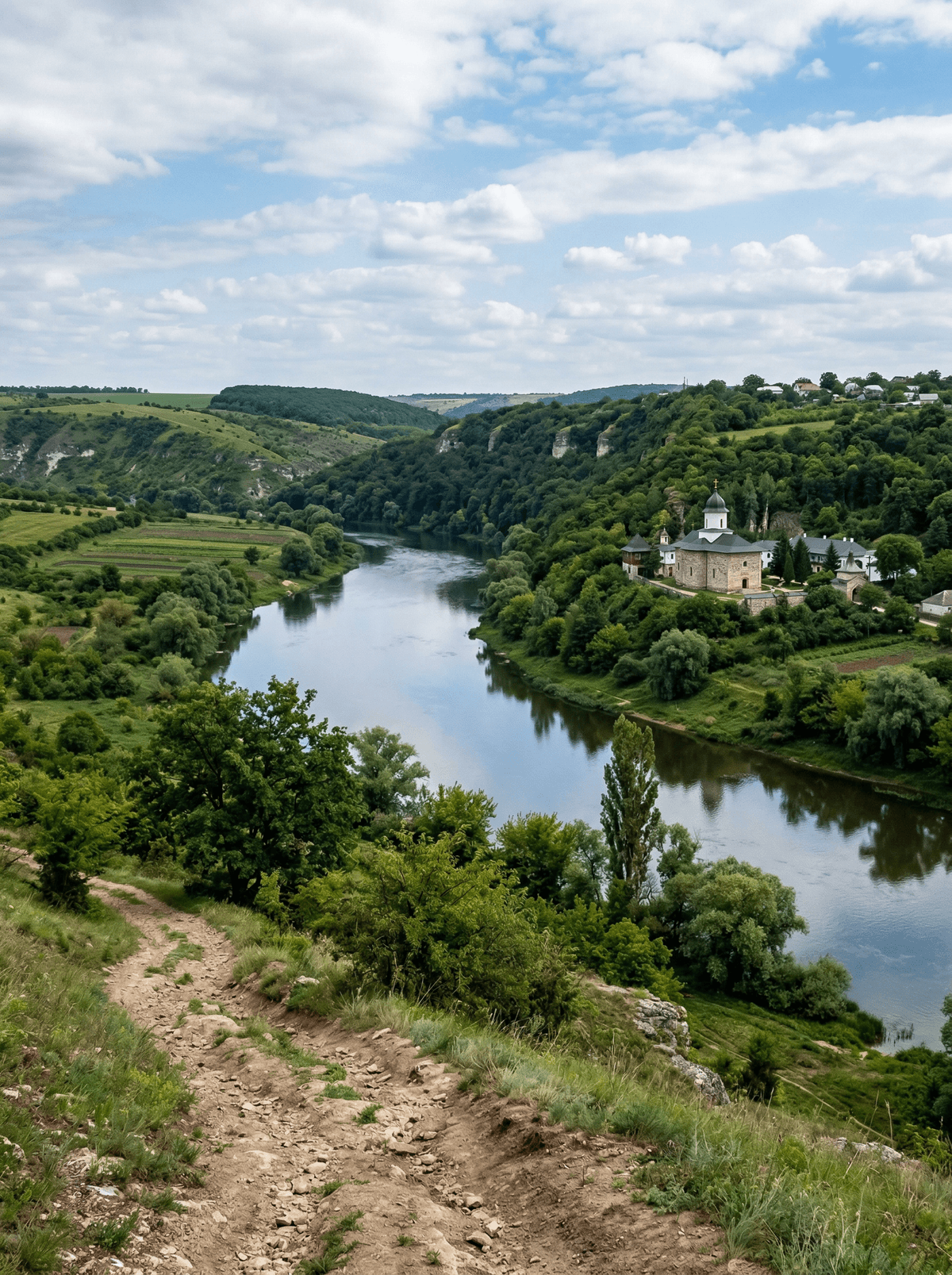
An orchard beside the Otaci road holds a small survey stone that helped fix the size of the Earth. The chain it belonged to ran from the Arctic Sea to the Black Sea. Down in the wooded valley, an eighteenth-century monastery keeps its old rhythms.
Rudi is where Moldova touches the history of measuring the planet. Between 1816 and 1855 the astronomer Friedrich Georg Wilhelm Struve triangulated a line 2,820 kilometres long from the Arctic Sea to the Black Sea, the first accurate measurement of a long arc of meridian, and one of his stations sits in an orchard outside this village. Of the 265 original stations, 34 are inscribed as World Heritage, and this one is Moldova's only entry on the list. A few kilometres away, Rudi Monastery keeps its Holy Trinity church of 1777, a textbook piece of old Moldovan church architecture in a wooded stream valley with natural caves in its slopes. The pieces are dispersed, so bring a car and join marker and monastery into one unhurried loop.
Solo
Treat it as a pilgrimage of measurement: stand on the arc line, then walk the monastery valley until the survey feels human-sized.
Couple
The orchard marker and the wooded monastery make a slow afternoon; carry the picnic and let the valley set the pace.
Friends
Come as a carload from Soroca and chain the marker, the monastery and the river villages into an easy day.
- Rudi holds Moldova's only World Heritage inscription: a station of the Struve Geodetic Arc, sitting in an orchard beside the Otaci road.
- The arc fixed the true size and shape of the Earth between 1816 and 1855, along 2,820 kilometres from the Arctic Sea to the Black Sea.
- Of the survey's 265 original stations across ten countries, 34 are inscribed, and Rudi carries Moldova's point.
- Rudi Monastery's Holy Trinity church, built by 1777 in the old Moldovan style, stands in a wooded valley with natural caves.
There is no kitchen at the marker or the monastery: carry bread, brânză and water from Soroca and picnic where the survey line runs.
The nearest proper table is back in Soroca, where Vlad'S grills Moldovan standards through the evening.
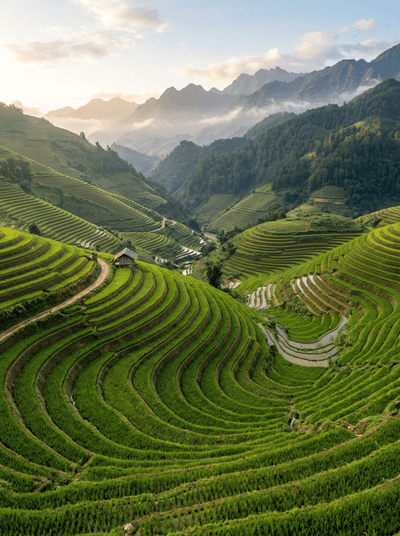
Mu Cang Chai
Vietnam
Mountains carved into thousands of mirrored rice terraces reflecting the sky.
Olmoti Crater
Tanzania
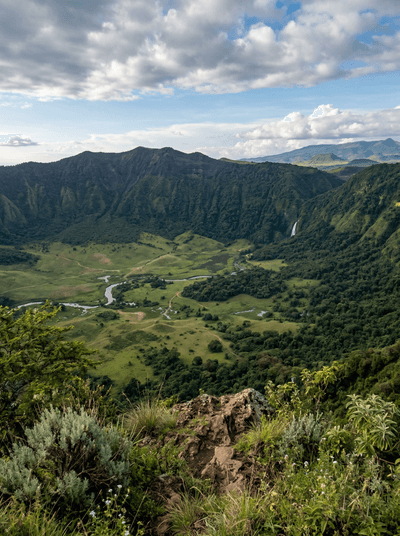
A waterfall slips out of a grassy crater where cattle graze beside eland.
Ameln Valley
Morocco
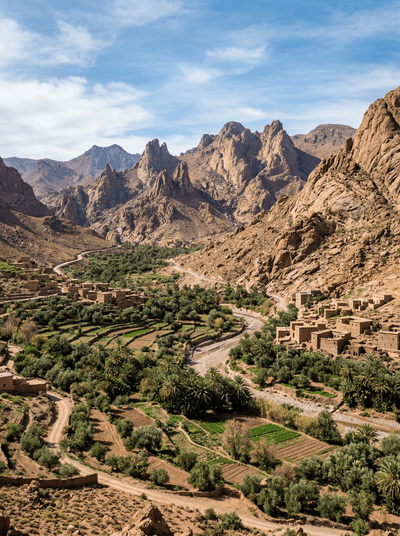
Ochre villages disappear into Jbel Lekst while almond blossom clouds the valley floor.
Matavanu Crater
Samoa
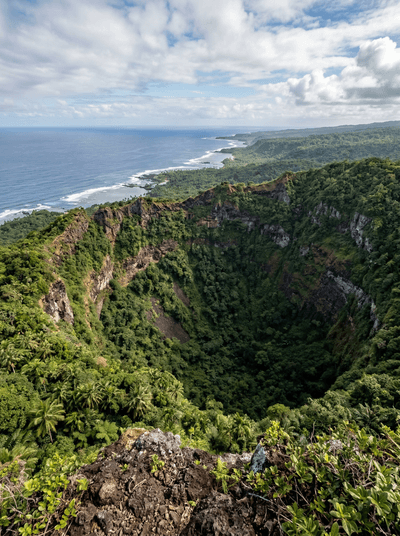
A hand-kept trail climbs to the crater that buried villages; its keeper logs every visitor's country.