Pakistan
Shigar
A 400-year-old Balti fort with Tibetan woodwork, rebuilt as a hotel where you sleep inside history.
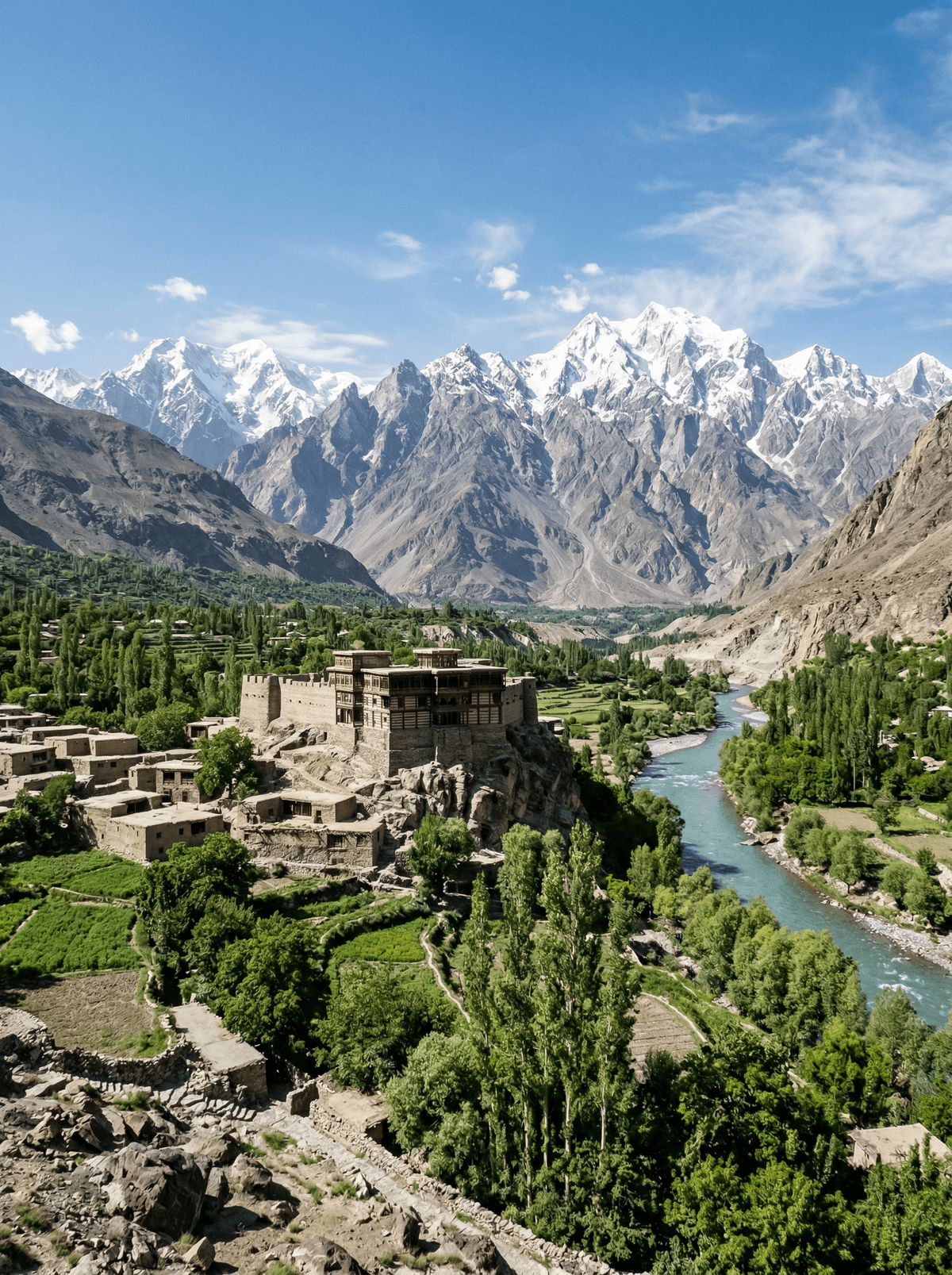
The wooden balcony overhangs a courtyard where apricot trees press against 400-year-old stonework. Inside Shigar Fort, hand-carved Tibetan lintels frame doorways, and the floorboards carry the particular warmth of timber that has been walked on for four centuries. You are sleeping inside a museum — except the museum serves breakfast.
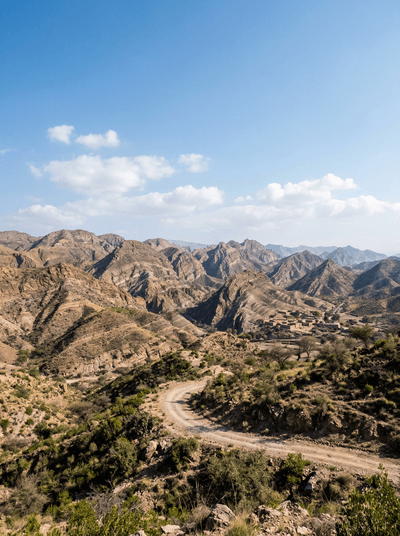
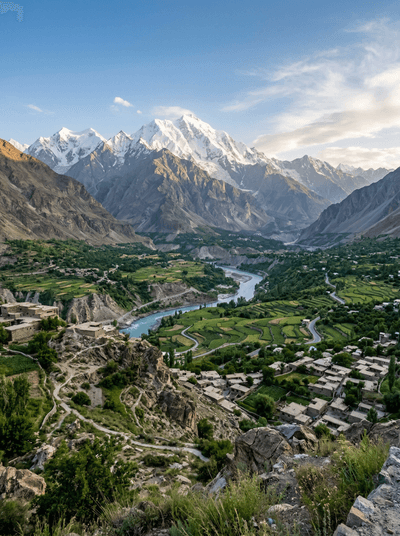
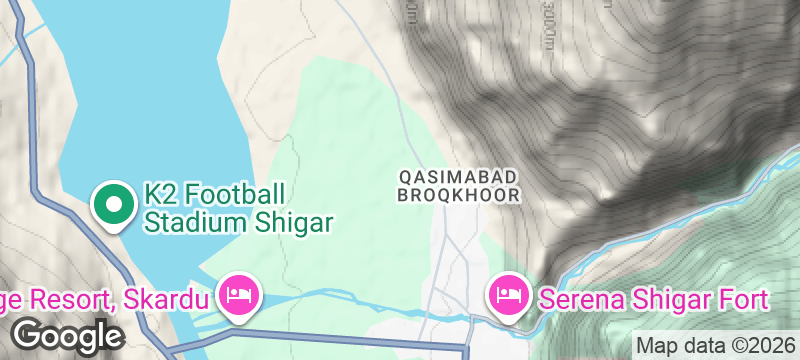
Shigar Fort is a 17th-century Balti royal residence in Gilgit-Baltistan, painstakingly restored under the Aga Khan conservators and run as a heritage hotel — the original carved lintels, door frames and ceiling beams intact, the modern comforts hidden behind antique surfaces. The fort anchors Shigar town in its broad valley, where cold-desert sand dunes rise above apricot orchards in the same field of view, and the 14th-century Amburiq Mosque — one of Baltistan's oldest — stands nearby, its cedar pillars darkened by centuries of smoke and prayer. Shigar is the quieter alternative to Skardu, and the last cultivated valley before the expedition road runs on towards Askole and the Baltoro.
Couple
Shigar Fort offers one of Pakistan's most romantic stays — a royal residence where hand-carved woodwork frames every window and Balti dinners arrive by candlelight.
Solo
A contemplative base without Skardu's bustle — the Amburiq Mosque, the fort's carved interiors, and quiet orchard walks set a pace that suits reflection.
- Shigar Fort — a 17th-century Balti royal residence with original carved poplar columns — operates as a heritage hotel inside the original structure.
- The 14th-century Amburiq Mosque nearby is one of Baltistan's oldest, its cedar darkened by centuries of prayer.
- Cold-desert dunes and apricot orchards share the same view across the broad Shigar Valley.
- The village is the quiet gateway — the last cultivated valley before the expedition road towards Askole.
Cherry ice cream at the fort's Fong Khar restaurant — orchard fruit, churned on site.
Tras pa — hand-cut noodles dressed in walnut sauce, a Balti mountain supper.
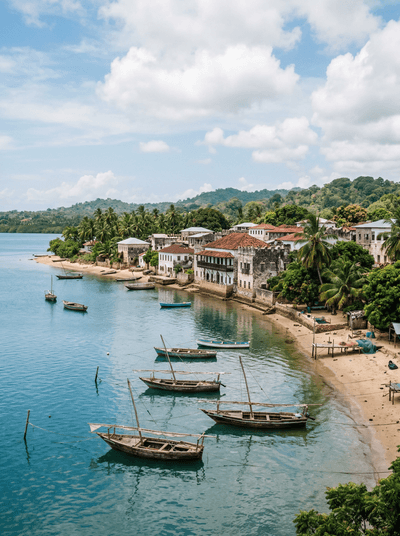
Mikindani
Tanzania
Livingstone sailed from this coral-stone harbour on his final expedition.
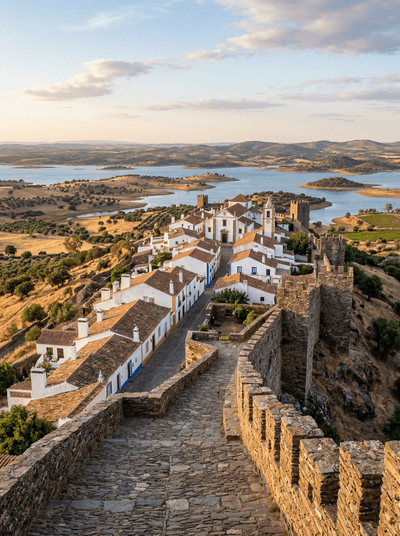
Monsaraz
Portugal
A walled village of whitewashed stone above a lake so still it doubles the sky.
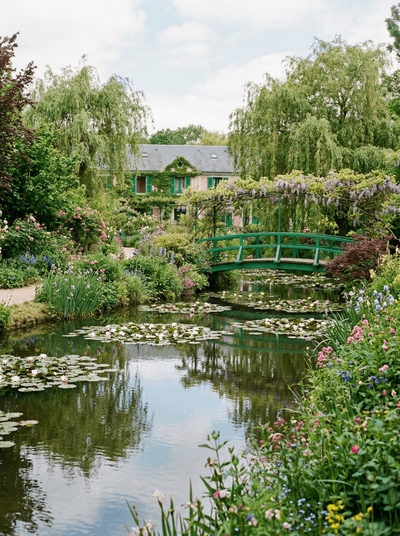
Giverny
France
Water lilies floating on the exact pond Monet painted until his eyes failed him.
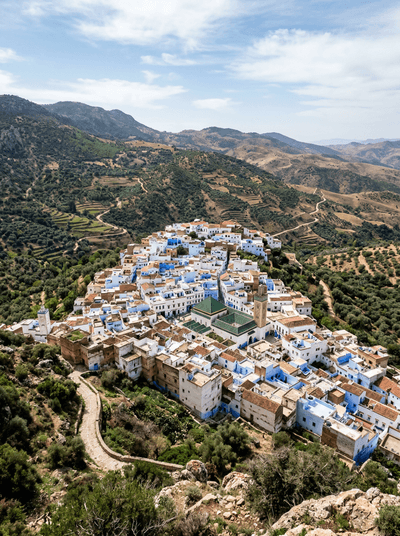
Moulay Idriss Zerhoun
Morocco
Five pilgrimages here during the moussem are said locally to equal one hajj to Mecca.