Saudi Arabia
Shuwaymis
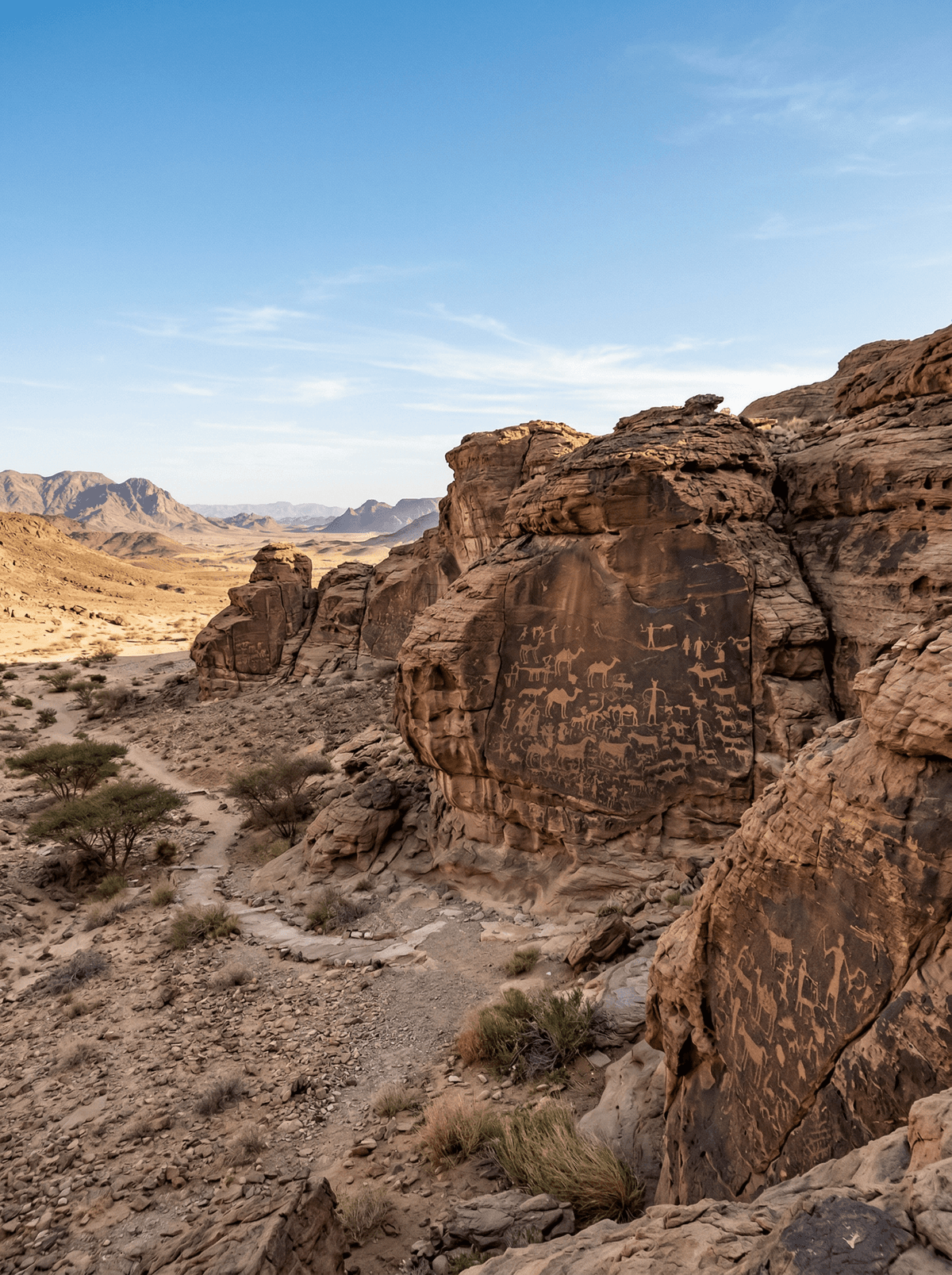
Thousands of rock art panels spanning ten millennia across a sandstone canyon wall.
The rock art panels at Shuwaymis stretch along a sandstone canyon wall in an unbroken sequence that spans ten thousand years of human expression. Cattle that have not lived in this region for millennia are carved life-size into the stone, alongside hunting scenes, abstract symbols, and images of wild dogs that predate domestication. The panels are exposed to the open air — no glass, no barriers — and the desert has preserved them with a fidelity that indoor museums envy.
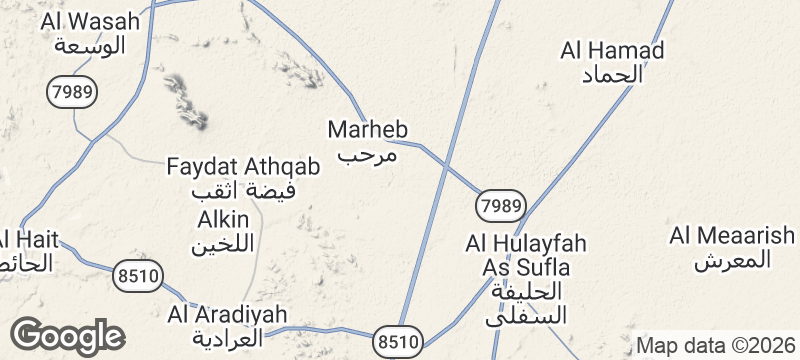
Shuwaymis is a rock art site in Saudi Arabia's Ha'il region, part of the UNESCO-listed Rock Art in the Ha'il Region inscription. The site contains one of the largest concentrations of rock art on the Arabian Peninsula, with panels spanning from the Neolithic period through to the early Islamic era. The images include life-size cattle — evidence of a wetter climate when this region supported herds rather than sand — as well as hunting scenes, camels, ibex, and abstract geometric patterns. The site's remoteness has been its primary protection: few visitors reach the canyon, and the panels remain in their original context, unlit and uninterpreted, exactly as the artists left them.
Solo
The remoteness and the solitude of the canyon walls make this a deeply personal encounter with deep time — no audio guides, no labels, just you and the stone.
Couple
Discovering the panels together — pointing out new images as you walk the canyon — creates a shared experience that feels like genuine exploration.
- Rock art panels here span over 10,000 years — one of the longest continuous records of human expression in Arabia.
- Images include life-size cattle, wild dogs, hunting scenes, and abstract symbols carved into sandstone walls.
- The site is UNESCO-listed as part of the Ha'il Region Rock Art — one of Arabia's most significant cultural sites.
- The remoteness means most panels are seen in solitude — no crowds, no fences, no noise.
Jareesh simmered slow with lamb and onion over a fire in the Ha'il desert camps.
Fresh Ha'il dates — Barhi variety, golden and crunchy — eaten under a star-blanketed sky.
Trollskogen (Öland)
Sweden
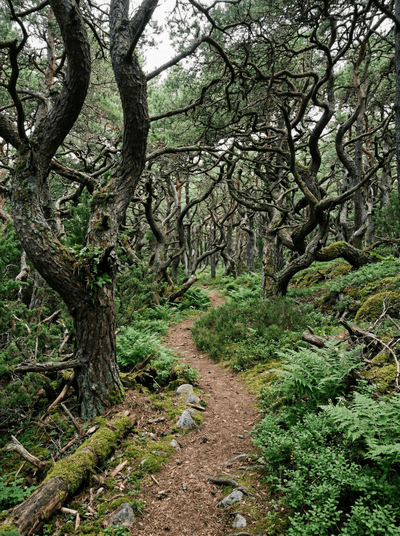
A forest of wind-warped oaks so twisted they look like a witch's spell gone wrong.
Millennium Cave
Vanuatu
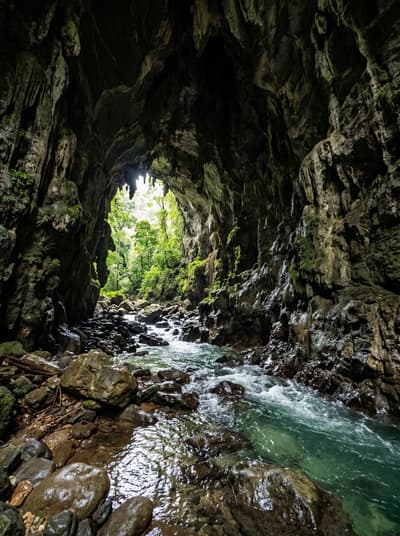
Scramble through jungle and wade chest-deep rivers to a cave you enter walking and exit floating.
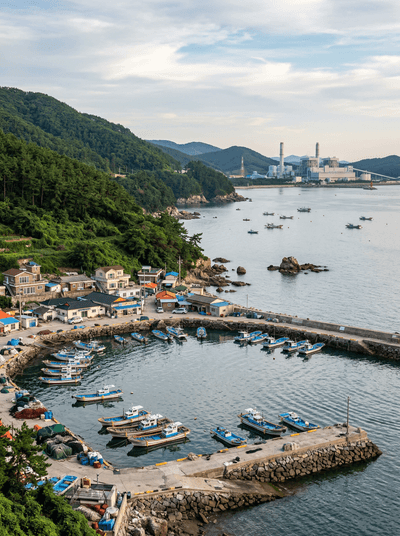
Maryang-ri
South Korea
A five-hundred-year-old forest of camellia trees bleeding red flowers against the grey winter sea.
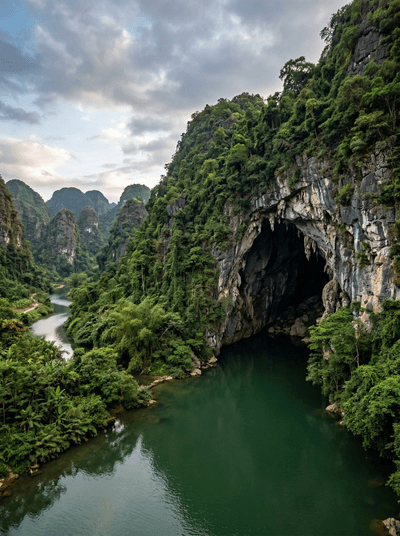
Phong Nha
Vietnam
Hidden jungle portals opening into subterranean river systems and limestone caverns.
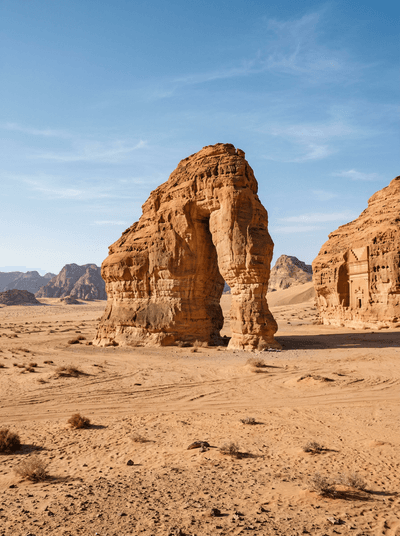
Al-Ula
Saudi Arabia
Nabataean tombs carved into sandstone cliffs that glow amber at dusk.
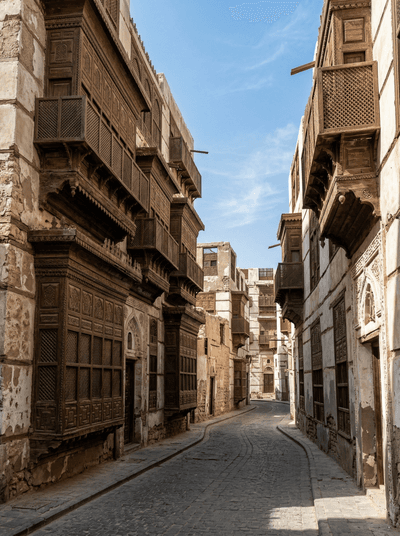
Jeddah Al-Balad
Saudi Arabia
Coral-stone towers with carved wooden balconies leaning over spice-scented alleys.
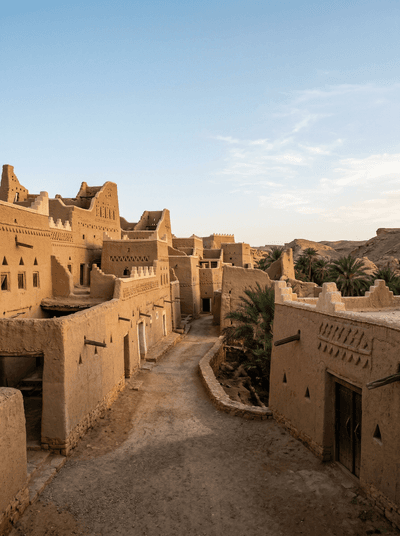
Diriyah
Saudi Arabia
Mud-brick fortress walls still sharp-edged against the Najdi sky after three centuries.
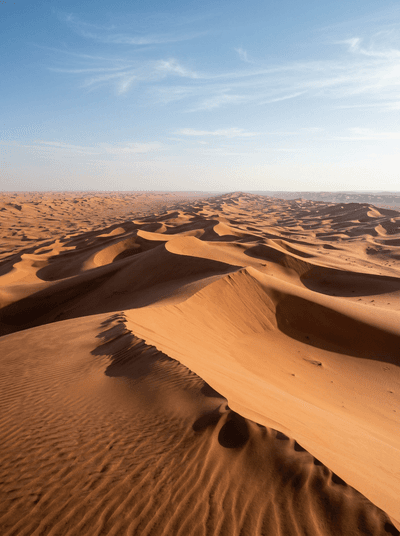
Rub' al Khali
Saudi Arabia
Dunes 250 metres high stretching unbroken to every horizon, silence pressing like weight.