Wales
Tintern
A roofless Gothic abbey on the Wye that a teenage Turner sketched and Wordsworth revisited.
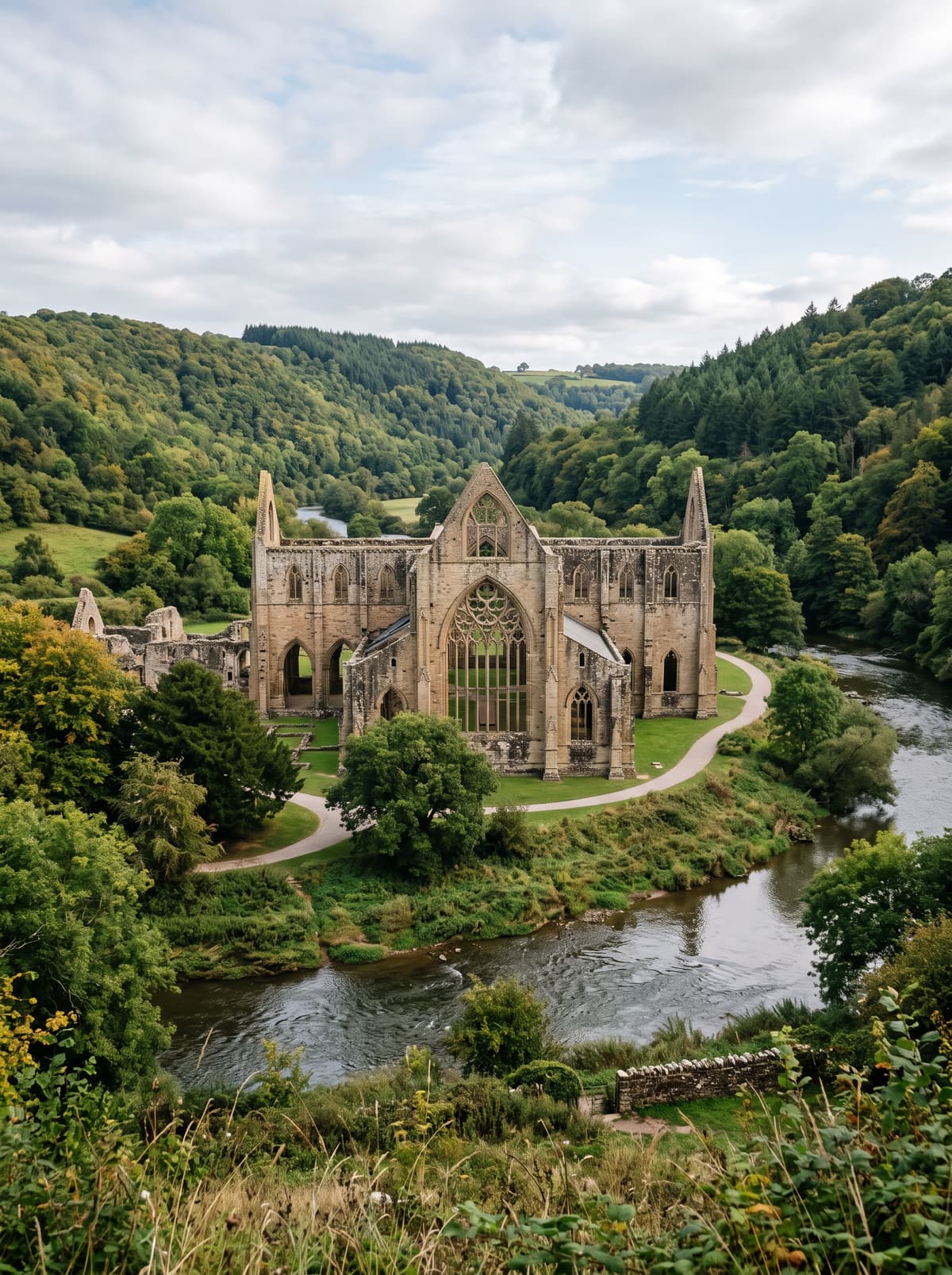
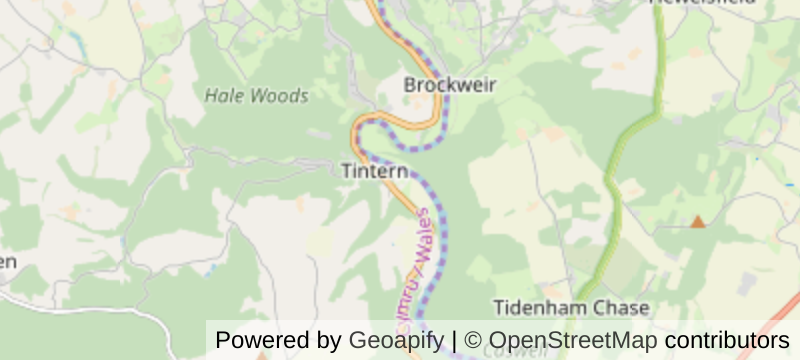
The abbey has no roof and has not had one for nearly five hundred years, which is why people came. Tintern stands on a curve of the Wye where Wales meets England, in a wooded valley, the great Gothic church begun by Cistercian monks in 1269 open to the sky, and the eighteenth century decided that this was the most beautiful ruin in Britain and rowed down the river to look at it.
The monks arrived in 1131 and made do with timber; the stone church that followed was built with the money of Marcher lords and became a masterpiece, then fell with the monasteries and lay forgotten until the 1730s, when an engraving started the ball rolling. The Reverend Gilpin's Wye voyage of 1770 called it the most beautiful scene of all, and travellers shut out of Europe by war came in small boats with picnic hampers in search of the sublime. Turner arrived in 1792 aged barely seventeen, and his sketches became the Royal Academy watercolours of 1794 and 1795; Wordsworth returned in July 1798 and wrote the lines that fixed the place in English poetry. The village has a second history the tourists missed: brass was first made in Britain at the Abbey Forge, wire was first drawn here on an industrial scale, and the first transatlantic cable was made in this valley. The Anchor's bar sits in the abbey's old cider mill beside the thirteenth-century water gate, the Wye Valley Greenway runs five miles along the old railway through the Tidenham tunnel, and the Wye Valley bus links Chepstow and Monmouth through the village; autumn, when the woods above the abbey turn, is the season the painters would have chosen.
Solo
The abbey at opening with the mist still on the river, then the greenway through the Tidenham tunnel and back for a pint in the cider mill.
Couple
An autumn afternoon in the nave, dinner in the Ferryman's cottage at the Anchor, and a walk along the Wye in the morning.
Family
A ruin big enough to run around in, a miniature train at the Old Station, and a river path with a tunnel at the end.
Friends
Walk in from Chepstow or Monmouth on the Wye Valley Walk, see the abbey, and take the bus back.
- Cistercian monks founded Tintern in 1131 and in 1269 began the abbey church that became one of the masterpieces of British Gothic, still standing roofless on the Wye nearly 500 years after its fall.
- In 1792 a seventeen-year-old J. M. W. Turner sketched the ruins on his first real trip to Wales, and the watercolours he made from them hung at the Royal Academy in 1794 and 1795.
- Wordsworth had already seen the abbey when he came back in July 1798 and wrote the poem that carries its name; travellers kept from Europe by war were flocking to the Wye by boat with picnic hampers.
- Tintern was also an industrial village: brass was first made in Britain at the Abbey Forge, wire was first drawn here at industrial scale, and the first transatlantic cable was made in the valley.
Ale and a bar meal at the Anchor, whose bar occupies the abbey's original cider mill and whose dinners are served in the Ferryman's cottage by the thirteenth-century water gate.
Tea at the Old Station tearooms up the valley, where the disused Wye Valley Railway now carries walkers and a miniature train.
Manuel Antonio
Costa Rica
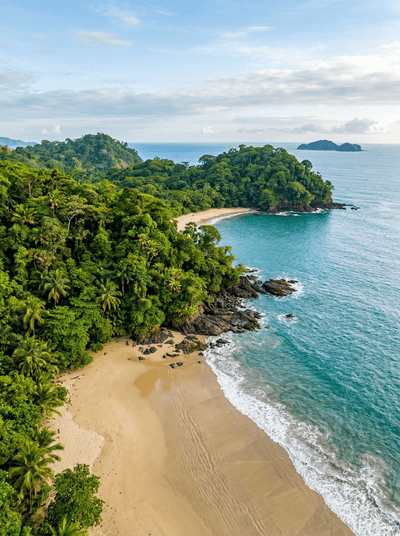
Capuchins patrol the sand beneath dozing sloths where rainforest walks into the ocean.
Vaitupu
Tuvalu
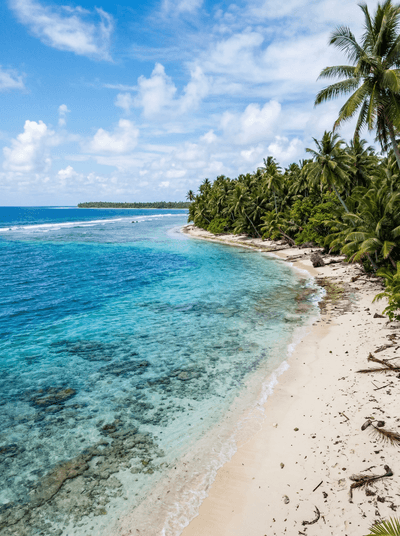
Tuvalu's largest island, where traditional sport te ano sends two woven balls flying at once.
Tortuguero
Costa Rica
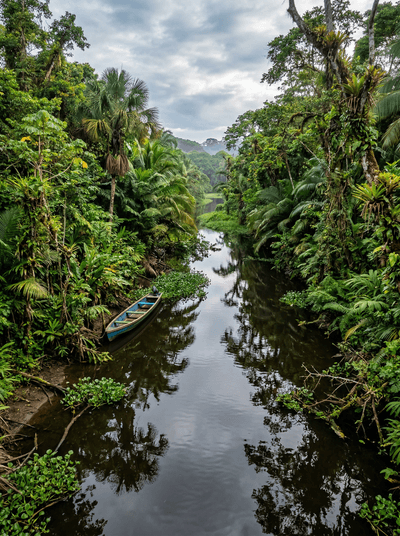
Jungle canals where green sea turtles haul onto black volcanic sand under a moonless sky.
Kadavu
Fiji
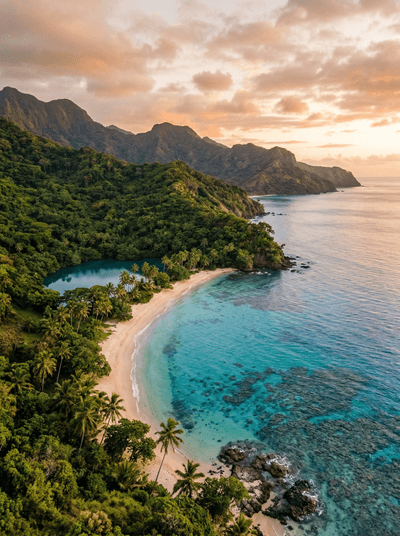
Manta rays circle the world's fourth-largest barrier reef, off villages the road barely reaches.
Blaenau Ffestiniog
Wales
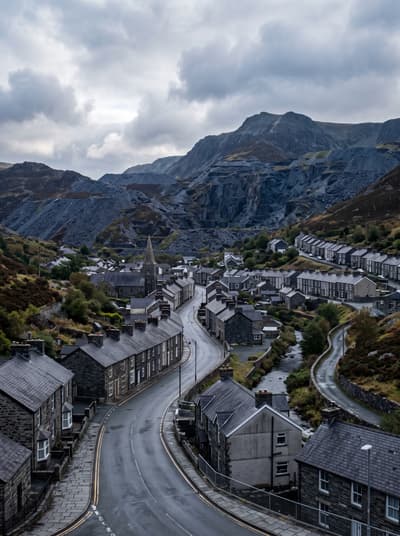
The town that roofed the world, where you bounce on trampolines slung inside a slate cavern.
Harlech
Wales
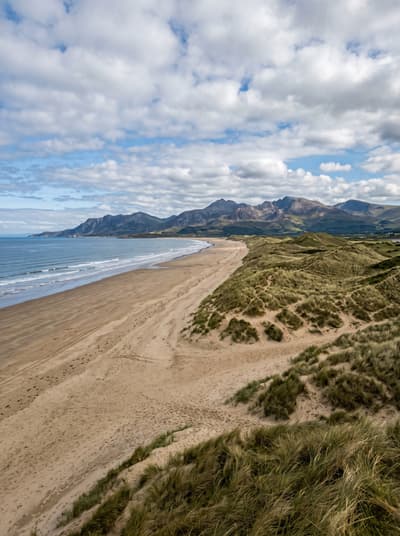
A castle on a crag waiting for a sea that walked away centuries ago.
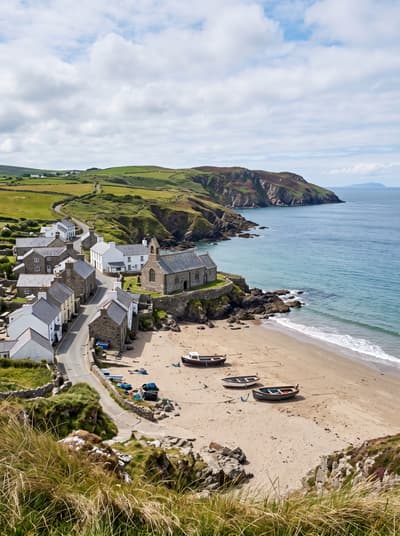
Aberdaron
Wales
A church on the sand where pilgrims ate their last meal before the island crossing.
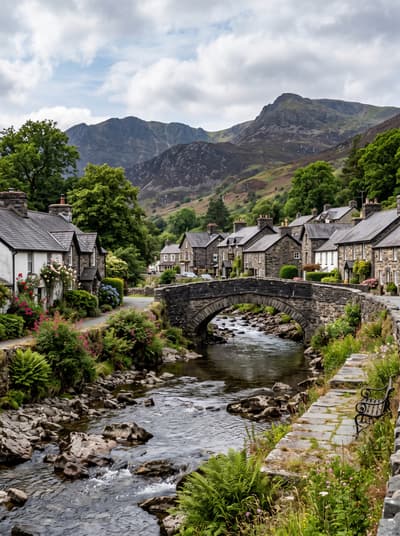
Beddgelert
Wales
A stone village at the meeting of two rivers, named for a legendary dog's grave.