Mexico
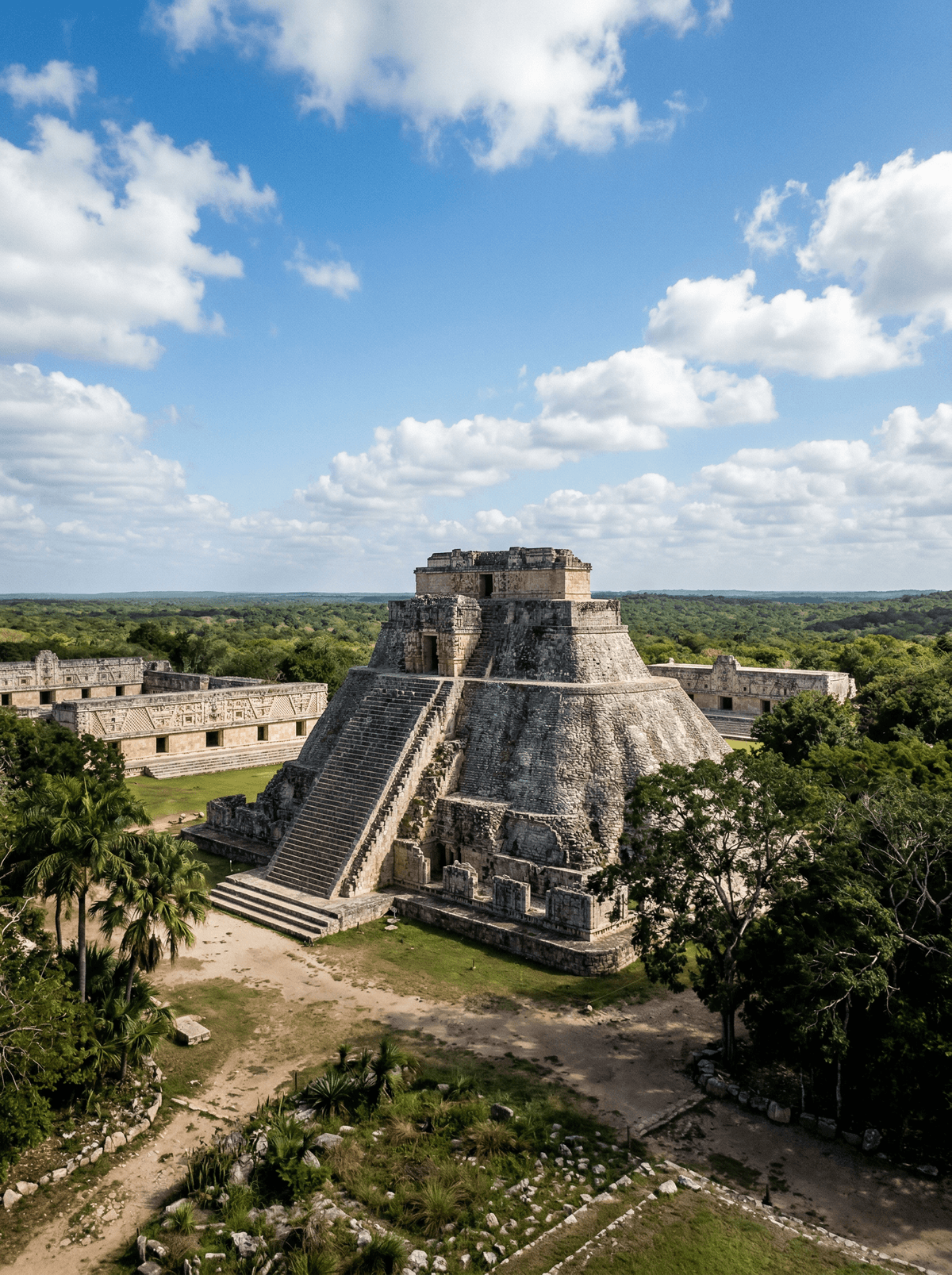
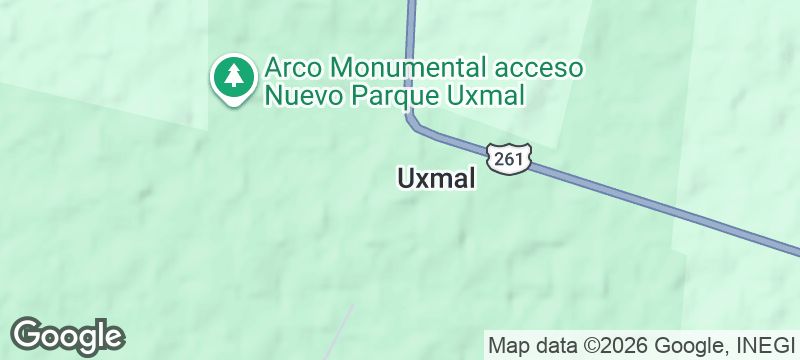
Uxmal
Rain-god masks and Puuc mosaics cover a Maya city shaped in warm limestone.
The Pyramid of the Magician rises on rounded corners, unlike anything else in the Maya world. The closer you stand to Uxmal's walls the busier they become: stone mosaics, latticework, and the long-nosed rain god repeated like a prayer.
Uxmal is the finest of the Puuc cities, centred on the Pyramid of the Magician and the long, precisely decorated front of the Governor's Palace. Its walls carry geometric mosaics and stacked masks of the rain god Chaac, best read slowly along the public circuit. Current INAH rules govern access and climbing, and the site pairs naturally with the smaller Puuc towns to its south.
Solo
Read the Governor's Palace façade slowly; the mosaics reward patience over pace.
Couple
Share the circuit while morning light stays soft, and continue down the Puuc road.
Family
Let the Magician's rounded pyramid anchor the visit, with shade breaks and water built into the plaza distances.
- Uxmal is a major Puuc-style Maya city centred on the Pyramid of the Magician and Governor's Palace.
- Stone mosaics and repeated rain-god masks reward close inspection across the public circuit.
- Current INAH access rules govern the visit, replacing inherited advice about climbing or night programmes.
In Santa Elena beside the site, a local Maya cook's restaurant serves traditional dishes to the Puuc road.
The famous poc chuc of Ticul, sour-orange pork grilled over coals, is the region's proudest plate.
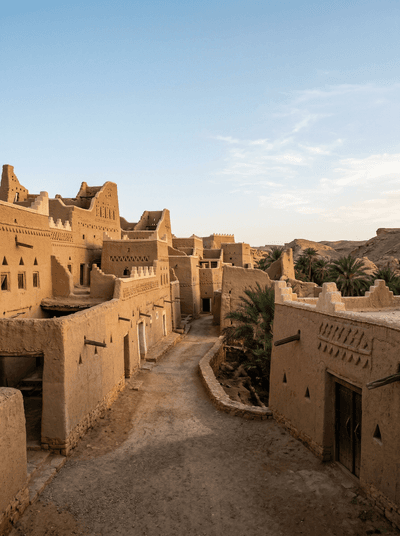
Diriyah
Saudi Arabia
Mud-brick fortress walls still sharp-edged against the Najdi sky after three centuries.
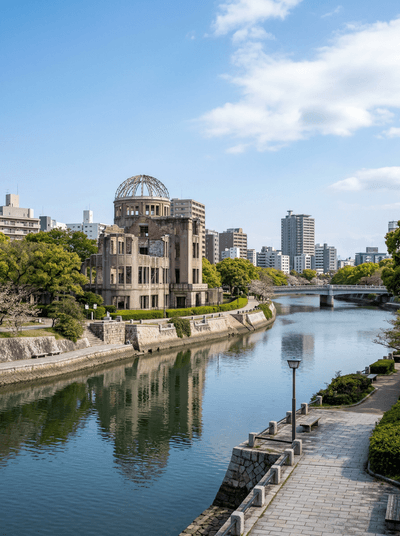
Hiroshima
Japan
Paper cranes by the million beside a dome that refused to fall.
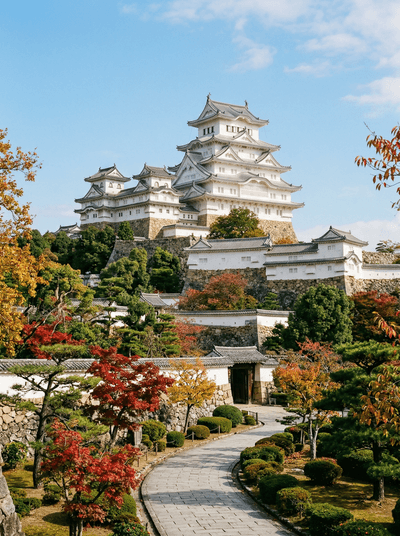
Himeji
Japan
A white heron of a castle above the blossom: original timber, four centuries old, never taken.
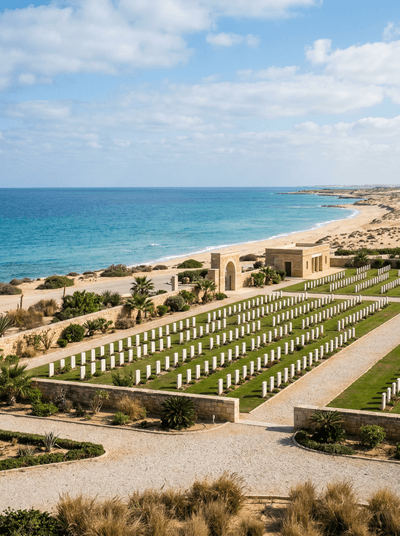
El Alamein
Egypt
White headstones in rows facing the Mediterranean, the silence of a battlefield that changed a war.
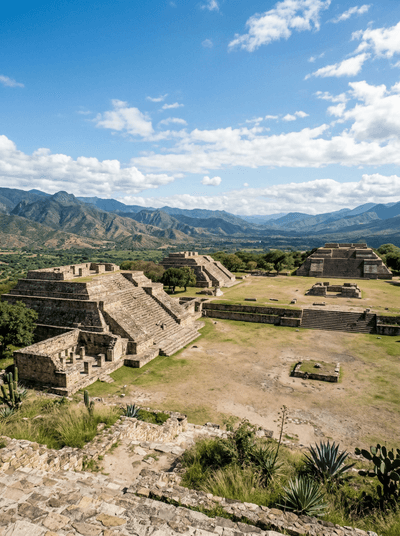
Monte Albán
Mexico
A Zapotec acropolis floats above the clouds on a mountaintop the ancients levelled by hand.
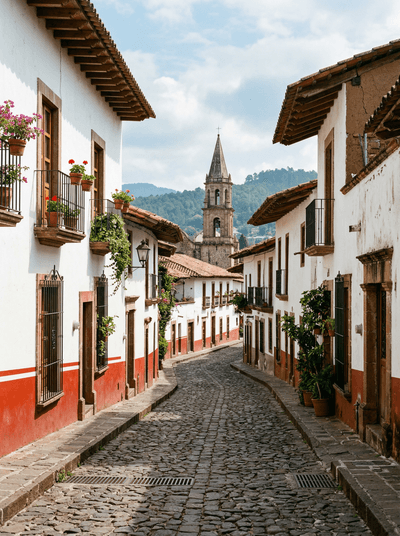
Pátzcuaro
Mexico
Plazas, lake routes and Purépecha craft traditions gather in a cool highland town.
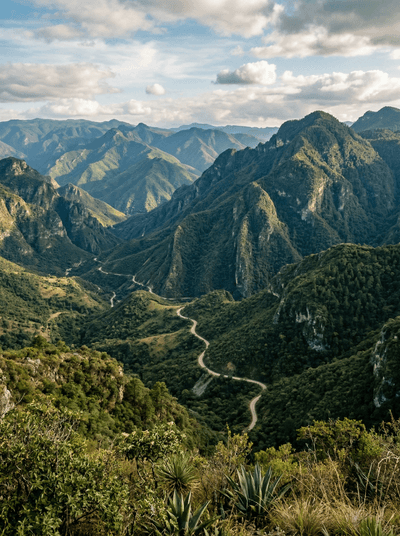
Sierra Gorda
Mexico
Five Franciscan missions hide in a canyon biosphere where desert, cloud forest and jungle collide.
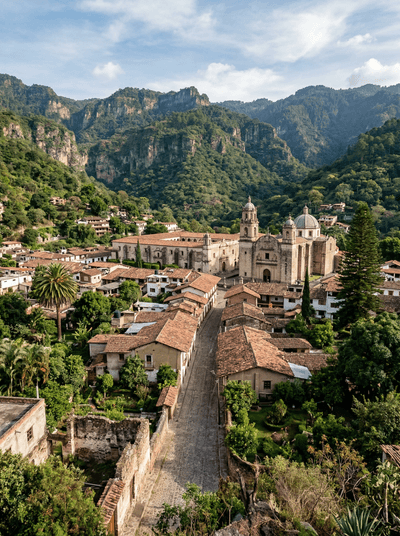
Malinalco
Mexico
An Aztec temple carved directly from a living mountaintop, eagle warriors etched into the rock floor.