Morocco
Volubilis
Roman mosaics lying open under the sun, in a city ringed by flowering olive groves.
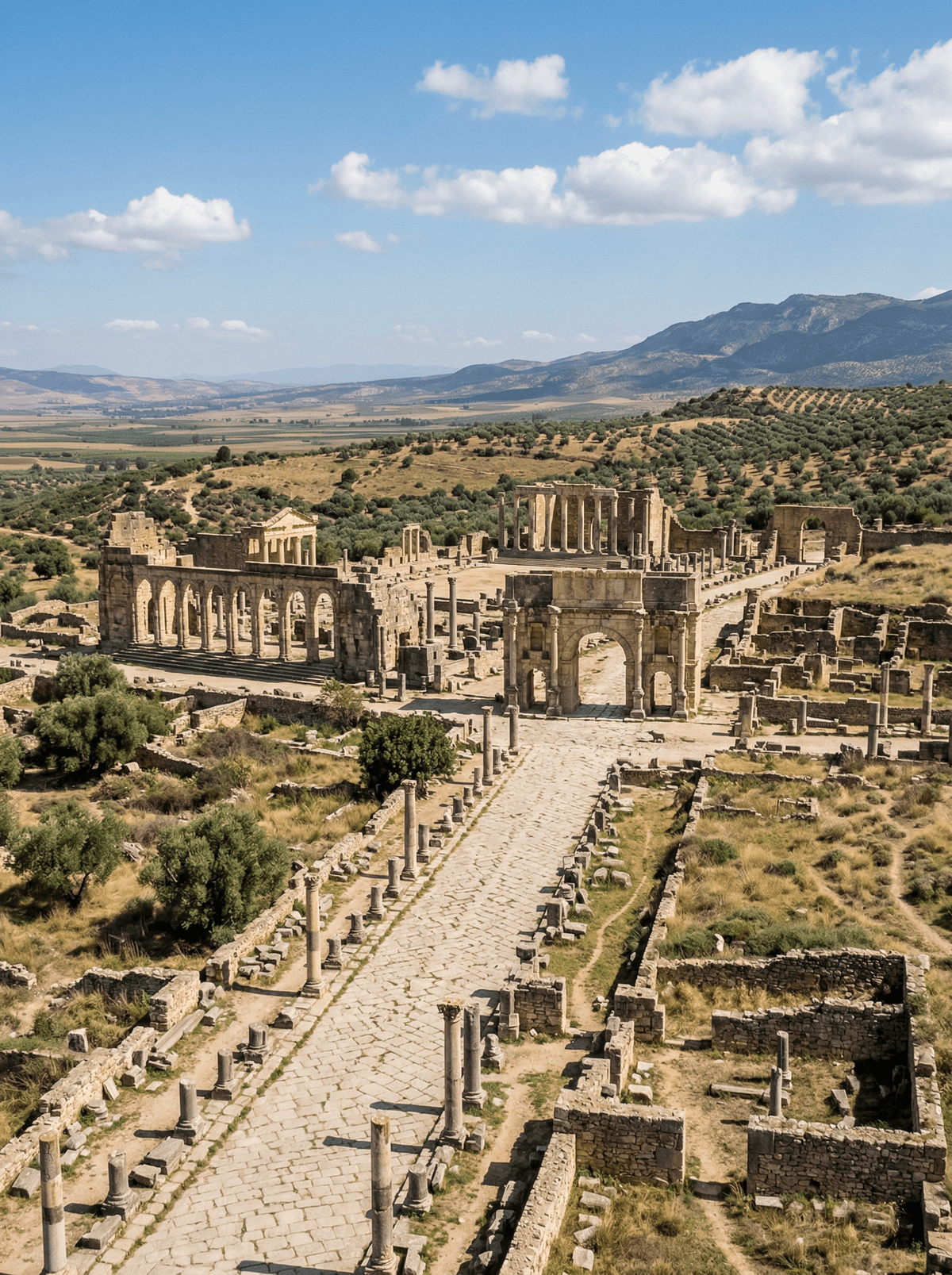
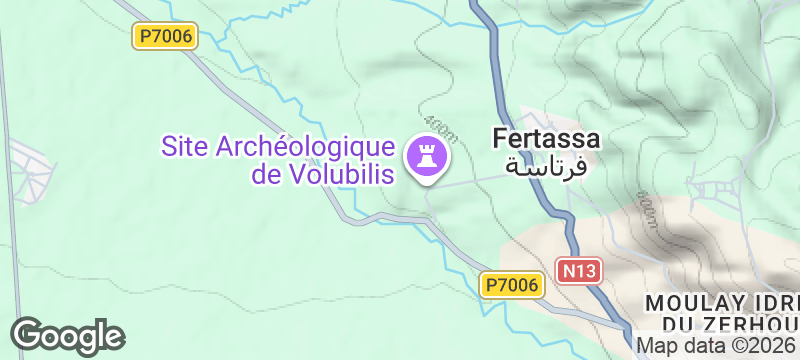
Volubilis stands on a shoulder of the Zerhoun, eighteen hectares of Roman street plan laid out in cut stone with the Rif filling the northern horizon. The mosaics are the reason people come and they are still where they were laid: Orpheus with his animals, sea creatures turning inside geometric borders, the Labours of Hercules. Olive trees run right up to the boundary and flower in spring.
This was the working end of Mauretania Tingitana, and it was a wine town before it was a ruin. Production flourished around Volubilis under Rome and amphoras from here reached Rome itself, which is the same valley belt that now grows most of Morocco's wine out of Meknes. The basilica and the Capitol still stand over the plain and give the best view of the region from anywhere in the site. From the Tangier Gate, the Decumanus Maximus draws a straight line through the town towards mosaics that still lie in their original rooms.
Solo
Go up to the Capitol first and work down. Reading the street plan from above turns the rest of the visit from a set of separate mosaics into one town, which is the difference between an hour here and three.
Couple
Come in spring, when the olive groves around the boundary are in flower and the afternoon sits around twenty-five degrees. It is the one window with the light, the blossom and none of the summer heat.
Family
Children can follow Roman streets and mosaics at their own pace, with the legible circuit turning fragments into a town. The Hercules mosaic is the detail that lands.
- Eighteen hectares make this the largest archaeological site in Morocco, listed by UNESCO in 1997.
- The Telegraph ranked it nineteenth in its fifty greatest relics of the Roman Empire.
- The basilica and the Capitol dominate the site and give a panoramic view over the surrounding plain.
- The Tangier Gate opens onto the Decumanus Maximus, with the Labours of Hercules mosaic beside the Roman street plan.
Olive oil from the Zerhoun slopes beneath the ruins, recognised by 2017 ministerial order as a geographical indication.
Wine from the belt that made this town's name under Rome, when amphoras from Volubilis reached the city itself; Domaine de la Zouina still bottles a Villa Volubilia.
Pergamon
Turkey
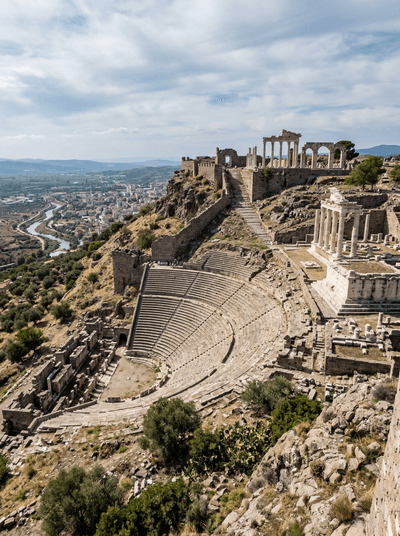
The ancient world's steepest theatre drops at a vertigo angle from a windswept hilltop acropolis.
Narni
Italy
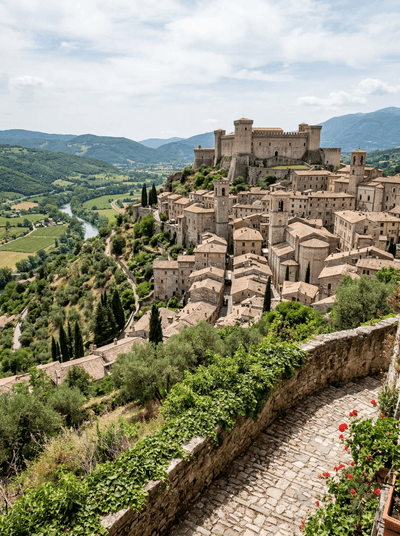
A hill town hiding an underground church discovered in 1979, frescoed walls sealed for centuries.
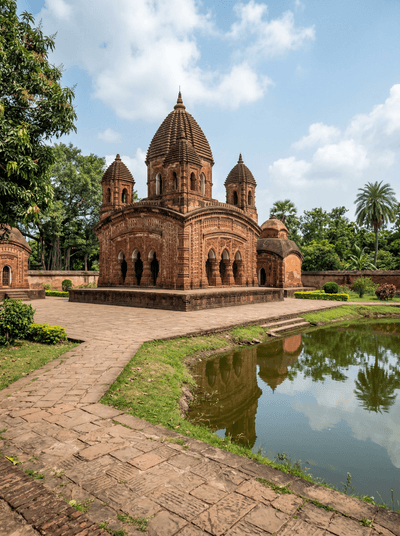
Bishnupur
India
Burnt-red terracotta temples carved with Hindu epics, their clay panels outliving four centuries of monsoon.
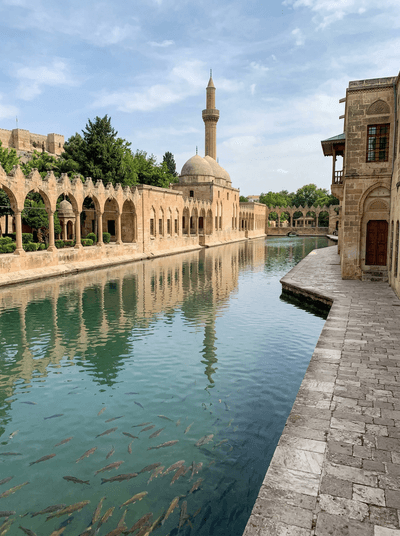
Şanlıurfa
Turkey
Abraham's cave meets the pool of sacred fish in a city haunted by Mesopotamia's oldest memories.
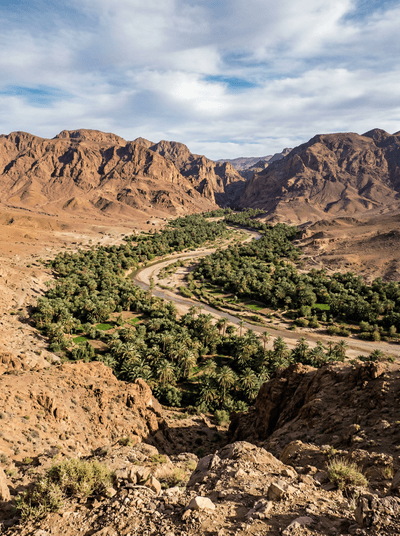
Draa Valley
Morocco
Two and a half million date palms carry a green river towards the Sahara.
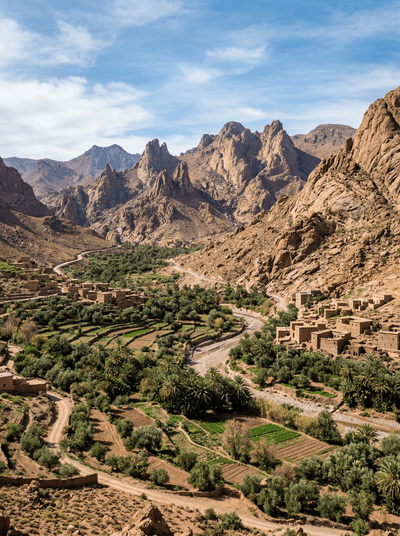
Ameln Valley
Morocco
Ochre villages disappear into Jbel Lekst while almond blossom clouds the valley floor.
Aguelmame Azigza
Morocco
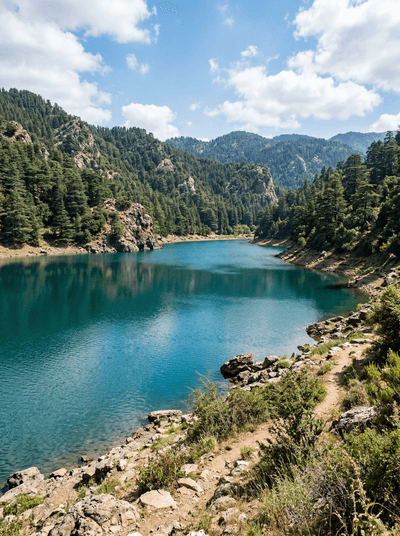
A blue-green lake fills a limestone bowl where cedar forest comes down to the water.
Souss-Massa National Park
Morocco
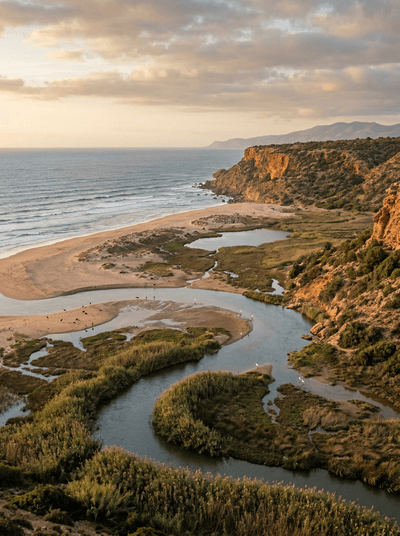
Red-faced ibises lift from Atlantic cliffs while migrants crowd a desert-edge estuary.