Turkey
Pergamon
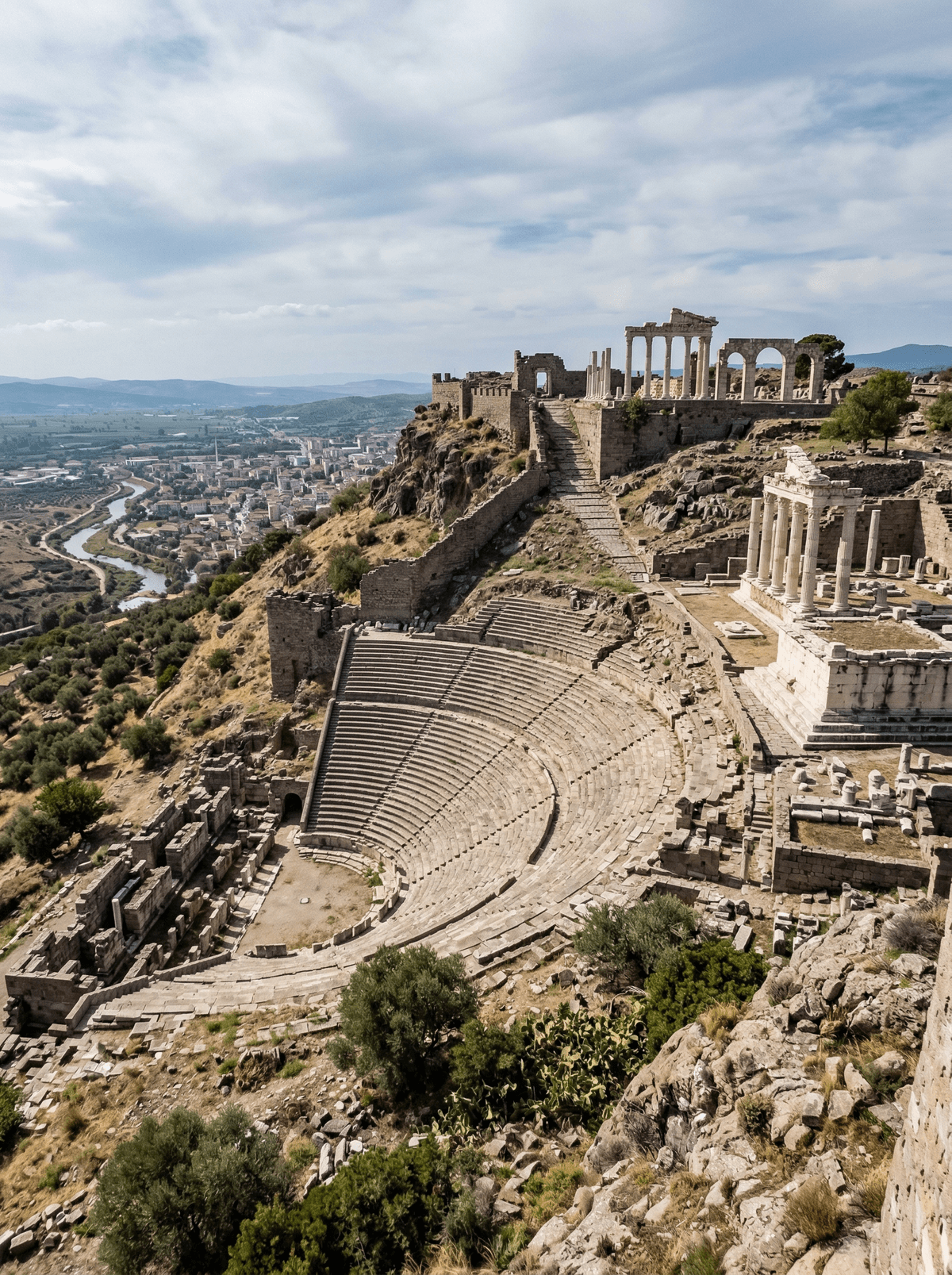
The ancient world's steepest theatre drops at a vertigo angle from a windswept hilltop acropolis.
The theatre drops away at an angle that makes your stomach lurch, eighty rows of stone seats plunging down the hillside. Wind whips across the acropolis, carrying the scent of wild thyme from the slopes below. From the top tier, the Aegean plain rolls out toward a haze that might be sea.
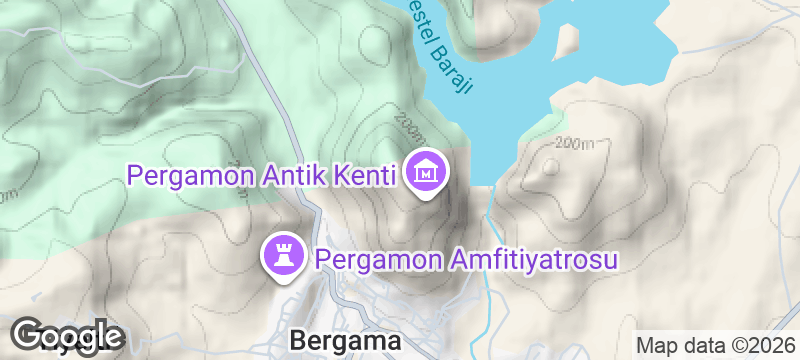
Pergamon, above modern Bergama in İzmir province, was among the leading intellectual centres of the ancient Mediterranean. Its acropolis, reached by cable car or a winding road, holds the ancient world's steepest theatre, a 10,000-seat structure carved into the hillside. The city rivalled Alexandria in learning: ancient writers put its library at 200,000 scrolls and said parchment was perfected here when Egypt cut off the papyrus. Below the hill lies the Asklepion, the healing sanctuary where Galen, antiquity's most influential physician, practised; the Great Altar, excavated in the 19th century, stands today in Berlin's Pergamon Museum. The Red Basilica, a massive 2nd-century temple later converted to a church, is one of the Seven Churches of Revelation.
Solo
Pergamon rewards the history-minded traveller. The acropolis, Asklepion and Red Basilica form a triangle of sites best explored at your own pace, with time to sit and absorb.
Couple
The cable car to the acropolis, the vertigo-inducing theatre and Bergama's relaxed town centre for köfte and piyaz make a day that balances spectacle with ease.
Family
The cable car, the sheer theatre and the Asklepion's healing tunnels give children tangible ways into ancient history. The lower town is flat and walkable for all ages.
- The Pergamon theatre is the steepest of the ancient world, 80 rows plunging down the hillside.
- Ancient writers said parchment was perfected in Pergamon when Egypt cut off the papyrus supply to its rival library.
- The Asklepion below the hill is where Galen, the most influential physician of antiquity, practised.
- A cable car connects the lower city to the acropolis, sparing the climb.
Bergama köfte, flat lamb meatballs grilled to order and served with piyaz white-bean salad.
Bergama tulum, a months-matured cheese with a porous bite, best beside olives and tomatoes.
Volubilis
Morocco
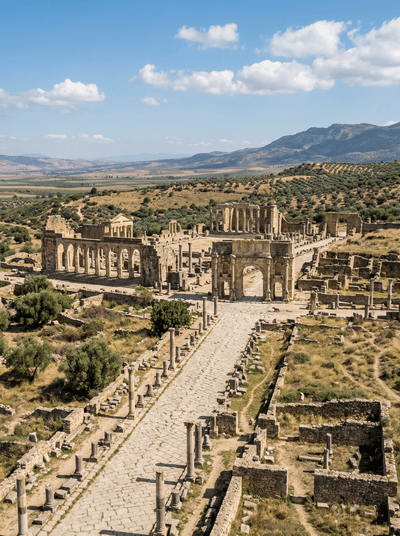
Roman mosaics lying open under the sun, in a city ringed by flowering olive groves.
Narni
Italy
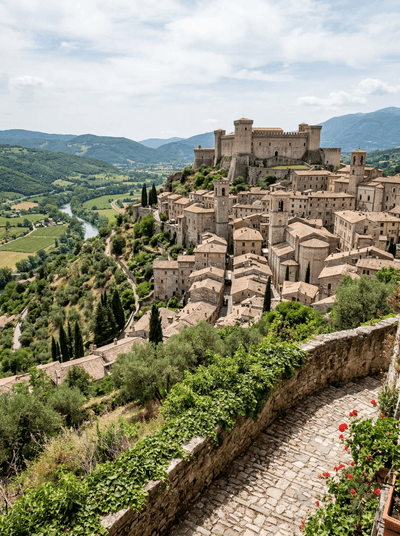
A hill town hiding an underground church discovered in 1979, frescoed walls sealed for centuries.
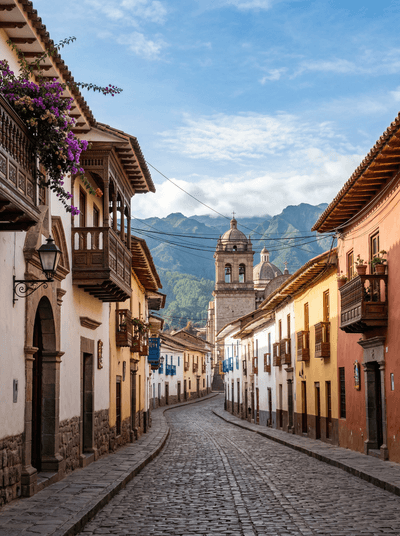
Ayacucho
Peru
Thirty-three colonial churches in a city whose Holy Week is Peru's most devoted.
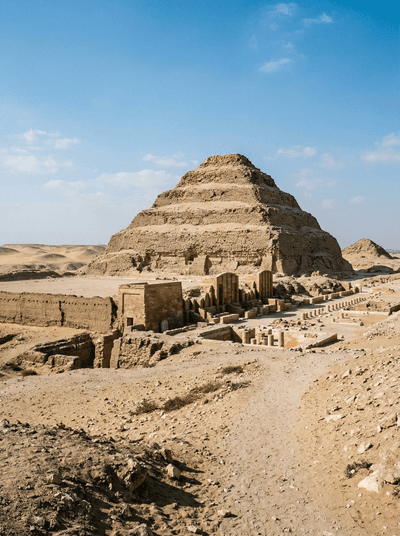
Saqqara
Egypt
The world's first monumental stone building, still standing on a desert plateau littered with unopened tombs.
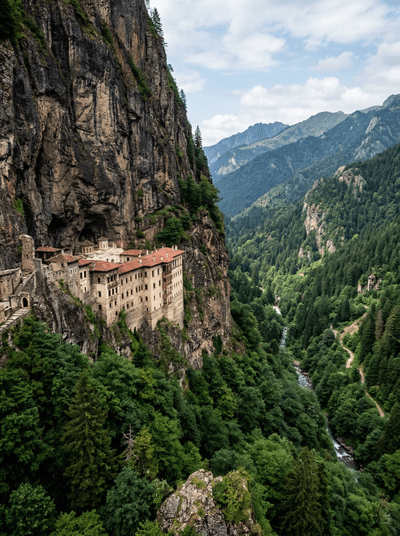
Sumela Monastery
Turkey
A monastery clinging to a cliff 300 metres above a misty Black Sea valley.
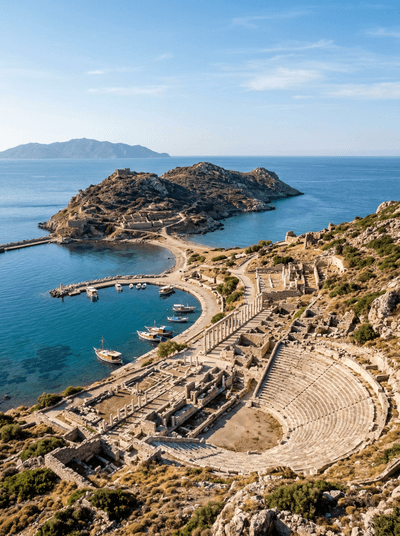
Knidos
Turkey
Two harbours face two different seas at a windswept cape where the Aegean meets the Mediterranean.
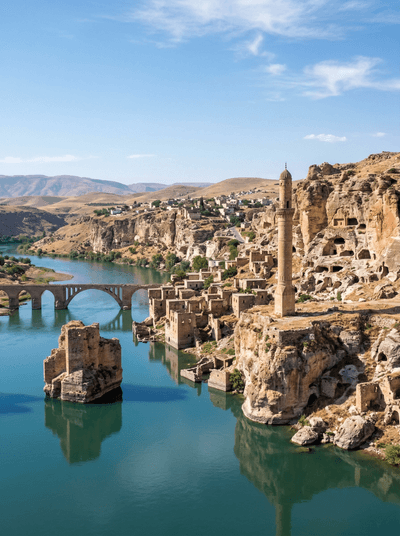
Hasankeyf
Turkey
A 12,000-year-old Tigris settlement now partly drowned by a dam, cave dwellings and minarets half-submerged.
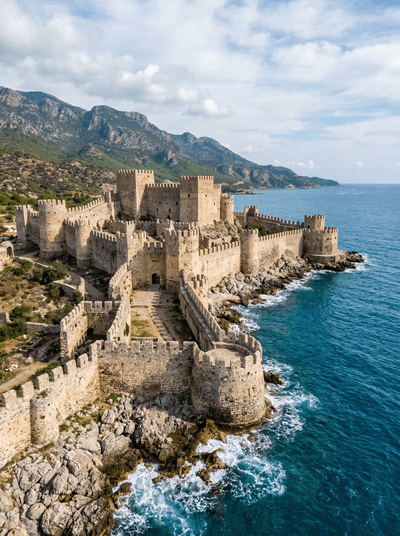
Mamure Castle
Turkey
Thirty-nine towers rise where a medieval fortress meets the Mediterranean surf.