Kiribati
Vostok Island
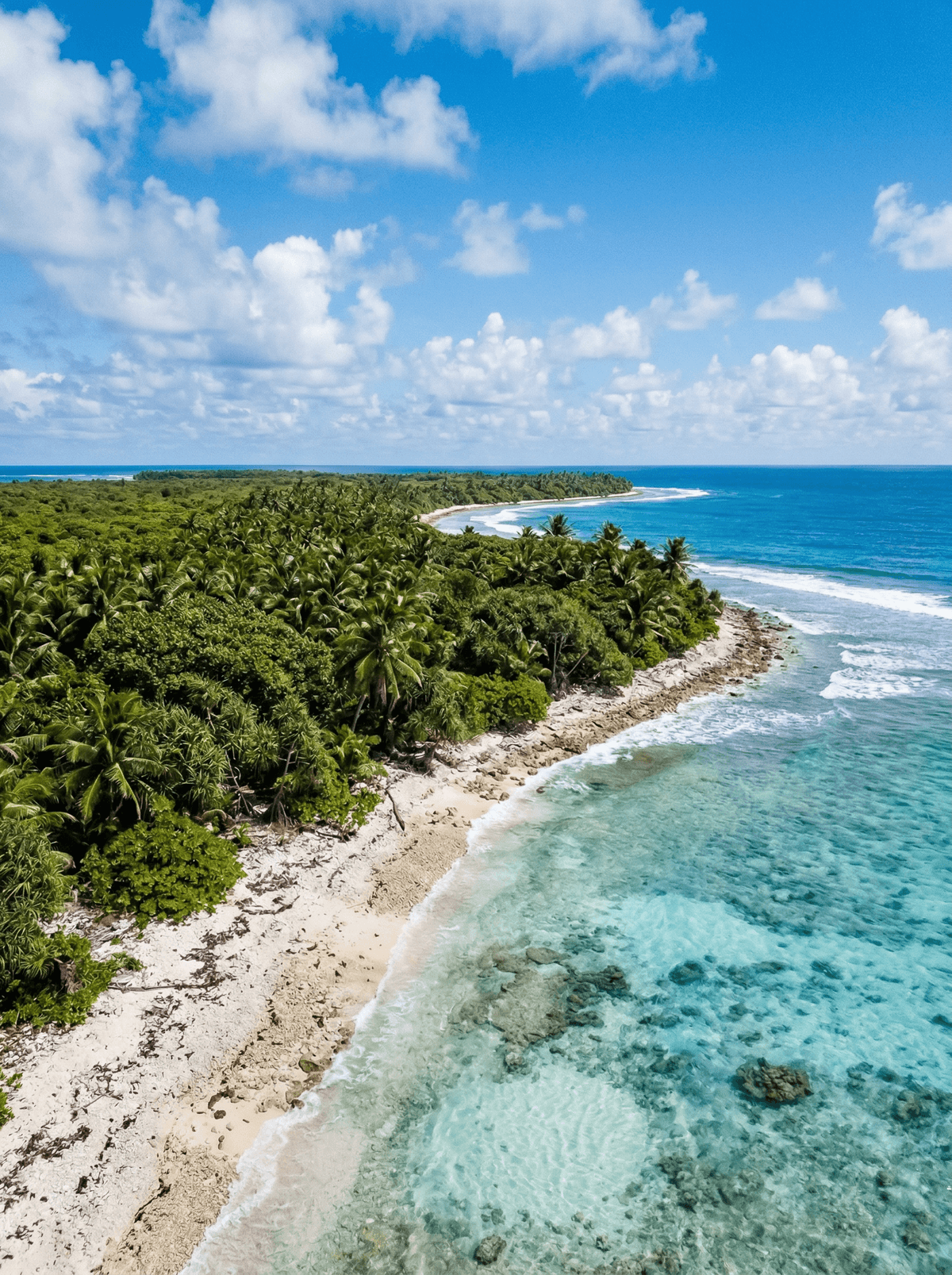
Trees grow right into the surf on a coral island entirely swallowed by forest.
From the air, Vostok Island looks like a solid green rectangle dropped into the Pacific. There is no beach visible from most approaches — just dense forest canopy running directly into the breaking surf. The boundary between land and sea has been erased by trees that refused to stop growing.
Vostok Island is almost entirely covered by Pisonia grandis forest — a canopy so dense and uniform that the island presents as a block of vegetation from every angle. The Pisonia trees grow directly into the surf zone on every side, making it nearly impossible to set foot on the island from any direction. Russian explorer Fabian von Bellingshausen discovered the island in 1820, giving it a Russian name that has outlasted every subsequent colonial administration. The forest canopy hosts large colonies of nesting seabirds whose guano fertilises the Pisonia trees in a closed nutrient cycle rarely found at this scale on any coral island. Vostok is uninhabited, with no infrastructure, no anchorage, and no easy landing point — one of the few places left where an entire island ecosystem operates entirely without human interference.
Solo
Vostok is not a destination you visit for comfort — it is a destination you attempt for the sheer improbability of a coral island that has been entirely consumed by forest. If you can get there, you will stand at the edge of one of the Pacific's most intact ecosystems. Getting through the treeline is another matter entirely.
- Vostok Island is almost entirely covered by Pisonia grandis forest — a canopy so dense and uniform that the island appears as a solid green rectangle from the air, with no visible beach on most approaches.
- The Pisonia trees grow directly into the surf zone on every side of the island; there is no clear boundary between forest and sea, making it nearly impossible to enter on foot from any direction.
- The island was discovered by Russian explorer Fabian von Bellingshausen in 1820 — giving a Russian name to what is now part of independent Kiribati in the middle of the equatorial Pacific — and has been virtually undisturbed since.
- The forest canopy hosts large colonies of nesting seabirds whose guano fertilises the Pisonia trees in a closed nutrient cycle rarely found at this scale on any coral island in the Pacific.
Expedition rations only. Vostok is uninhabited and almost impenetrable on foot.
Reef fish caught in the surrounding waters, grilled on whatever flat coral the forest hasn’t claimed.
Millennium Cave
Vanuatu
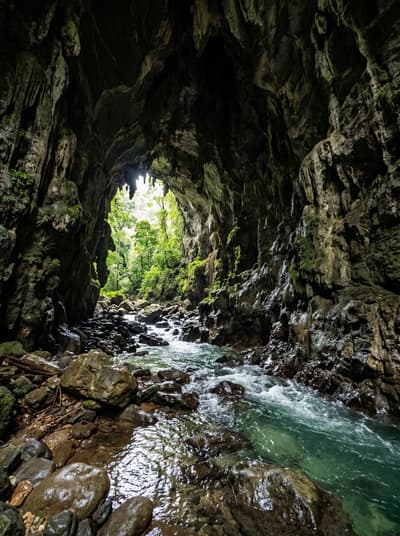
Scramble through jungle and wade chest-deep rivers to a cave you enter walking and exit floating.
Maryang-ri
South Korea
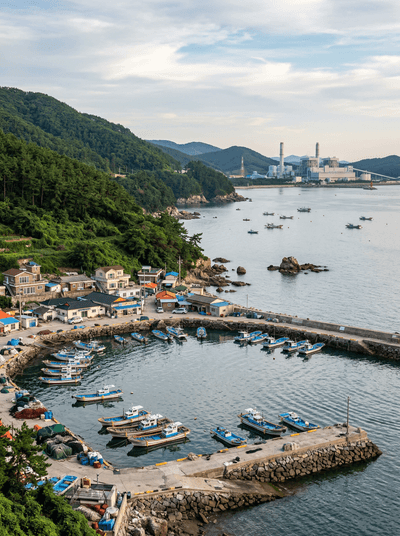
A five-hundred-year-old forest of camellia trees bleeding red flowers against the grey winter sea.
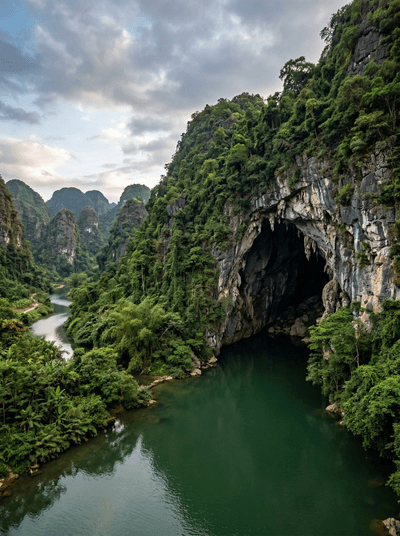
Phong Nha
Vietnam
Hidden jungle portals opening into subterranean river systems and limestone caverns.
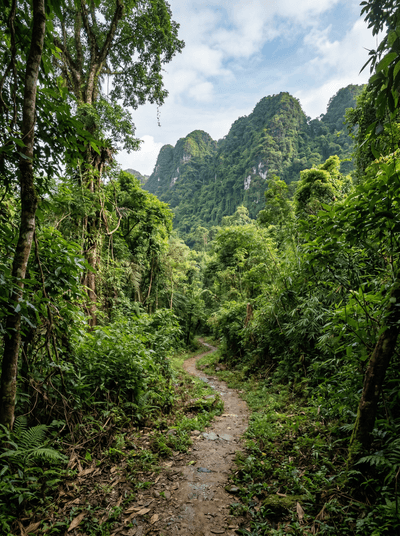
Cuc Phuong National Park
Vietnam
Millennium-old trees rising above a jungle floor swarming with millions of white butterflies each spring.
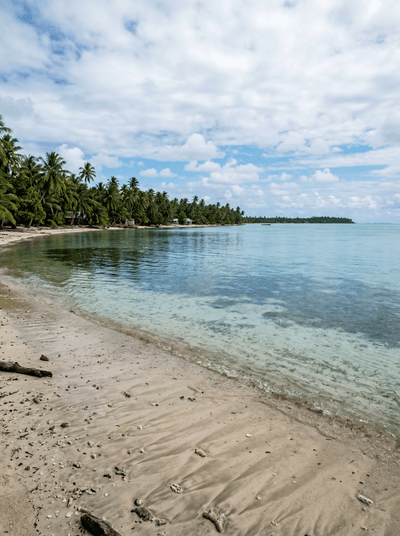
Betio
Kiribati
Rusting Japanese guns still point seaward from beaches where a thousand Marines fell in 76 hours.
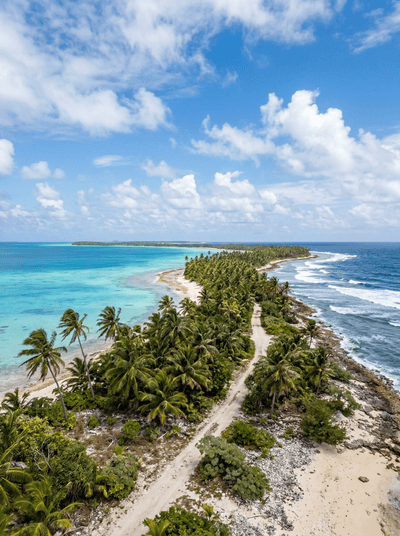
North Tarawa
Kiribati
Wade across turquoise shallows between villages where outrigger canoes are still the only road.
Kiritimati
Kiribati
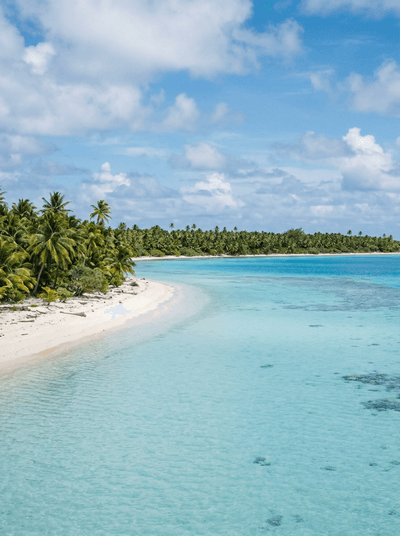
Bonefishers wade endless turquoise flats while millions of seabirds darken the sky above.
Abaiang
Kiribati
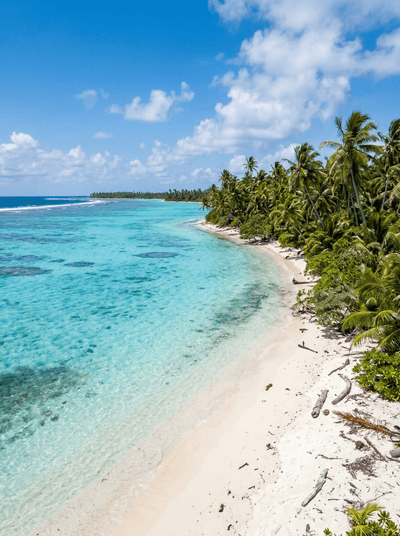
Foundations of a drowned village emerge at low tide — the Pacific already reclaiming this atoll.