Saudi Arabia
Wabar Craters
Meteor craters ringed by black glass and iron fragments deep in the Empty Quarter.
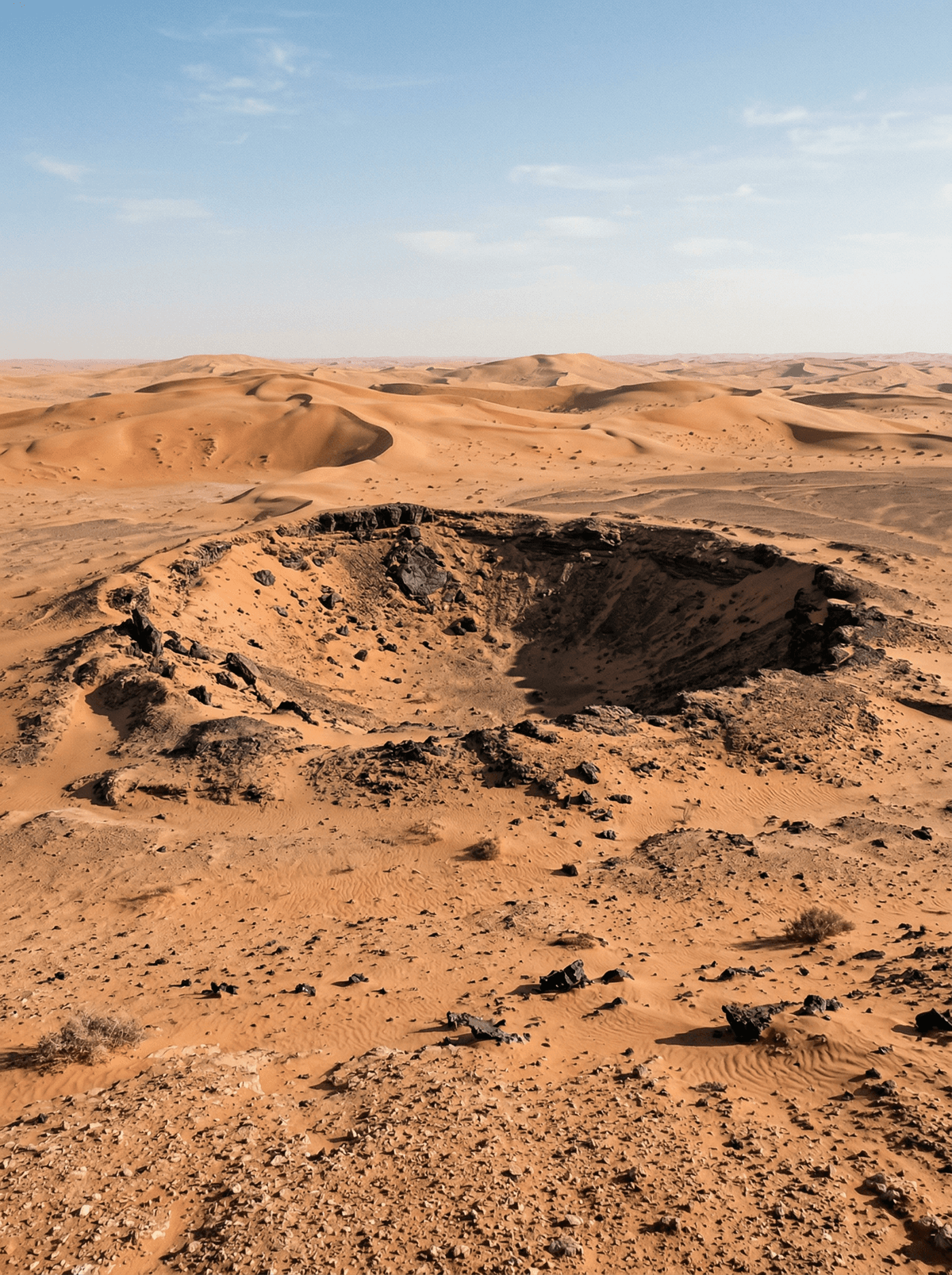
The sand around the Wabar Craters is littered with black glass — impactite, formed when a meteor struck the desert at cosmic velocity and fused the sand into something that looks like solidified night. The craters themselves are partially filled with wind-blown sand, their rims just visible above the dune surface. Reaching them requires a multi-day 4x4 expedition deep into the Empty Quarter, with no roads, no signals, and no margin for error.
The Wabar Craters are a group of meteor impact sites in the Rub' al Khali desert of Saudi Arabia, formed by an iron meteorite that struck the sand at some point in the last few centuries. The largest crater is over 100 metres wide, and the surrounding sand is scattered with impactite — black glass created by the heat of impact — and fragments of iron-nickel meteorite. Wilfred Thesiger searched for the craters during his crossings of the Empty Quarter in the 1940s, guided by Bedouin accounts of a destroyed city — Ubar, identified by some scholars with the Quranic Iram of the Pillars. The site was confirmed by satellite imagery and ground expeditions in the late twentieth century. Reaching the craters requires a multi-day expedition with experienced desert guides, making it one of the most remote accessible destinations in the world.
Solo
This is an expedition-grade destination — the kind of place that tests self-reliance and rewards it with something genuinely otherworldly.
Friends
Multi-day desert crossings require teamwork, planning, and shared endurance — the craters are the payoff for a group effort.
- Iron meteorite fragments and black desert glass — impactite — litter the sand around the crater rims.
- The craters lie deep in the Empty Quarter — reaching them requires a multi-day 4x4 expedition.
- The largest crater is over 100 metres wide, partially filled with sand blown in over centuries.
- Wilfred Thesiger searched for these craters in the 1940s — they remained largely mythical until satellite verification.
Zarb and Bedouin coffee — the only meal for days in the deep desert.
Expedition rations supplemented with foraged desert truffles if the season is right.
Millennium Cave
Vanuatu
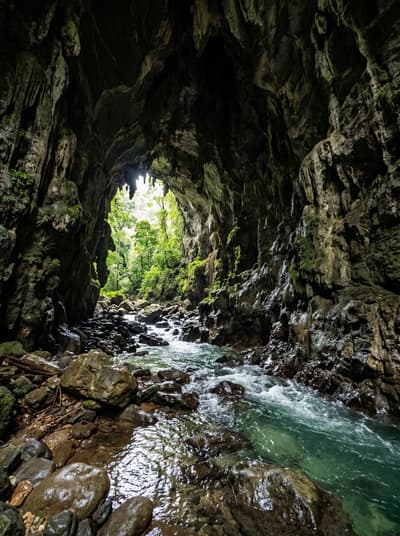
Scramble through jungle and wade chest-deep rivers to a cave you enter walking and exit floating.
Maryang-ri
South Korea
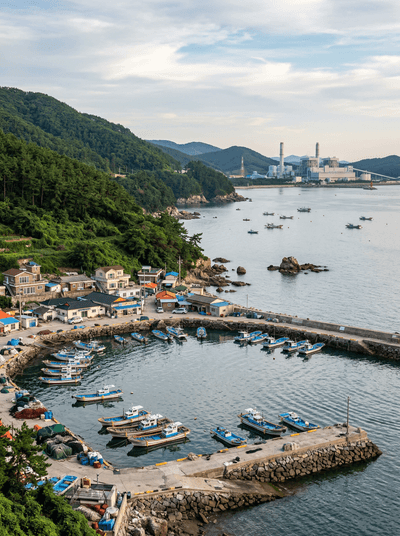
A five-hundred-year-old forest of camellia trees bleeding red flowers against the grey winter sea.
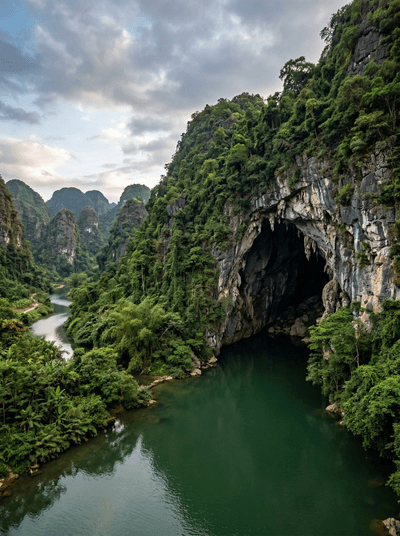
Phong Nha
Vietnam
Hidden jungle portals opening into subterranean river systems and limestone caverns.
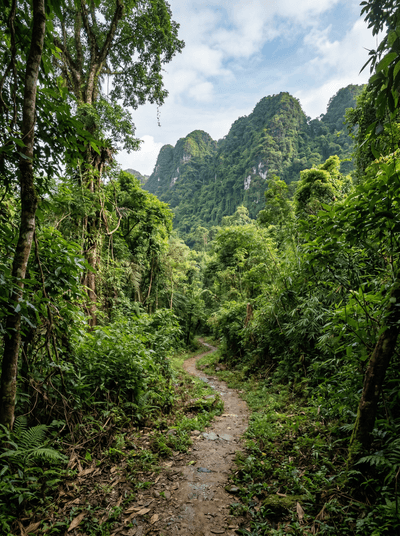
Cuc Phuong National Park
Vietnam
Millennium-old trees rising above a jungle floor swarming with millions of white butterflies each spring.
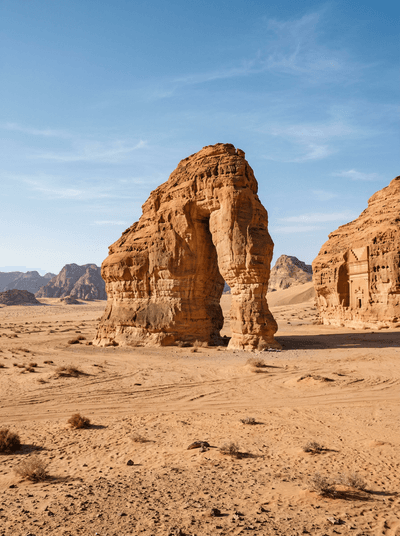
Al-Ula
Saudi Arabia
Nabataean tombs carved into sandstone cliffs that glow amber at dusk.
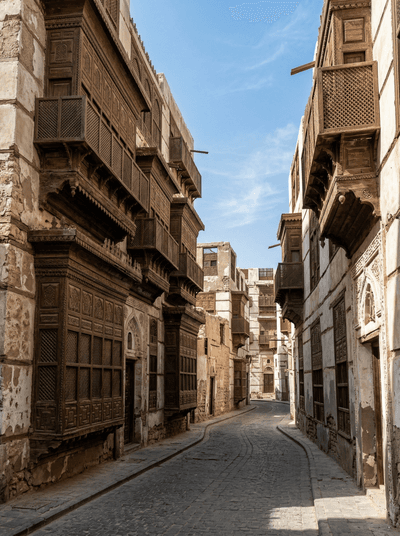
Jeddah Al-Balad
Saudi Arabia
Coral-stone towers with carved wooden balconies leaning over spice-scented alleys.
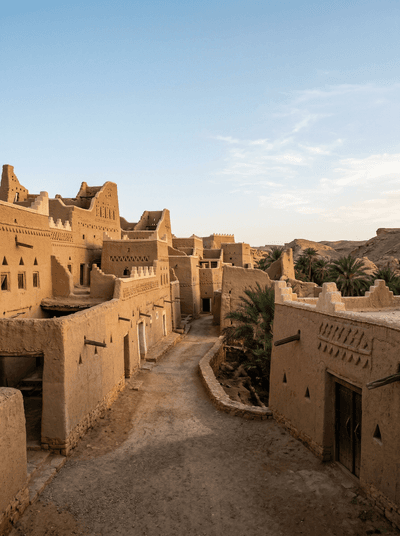
Diriyah
Saudi Arabia
Mud-brick fortress walls still sharp-edged against the Najdi sky after three centuries.
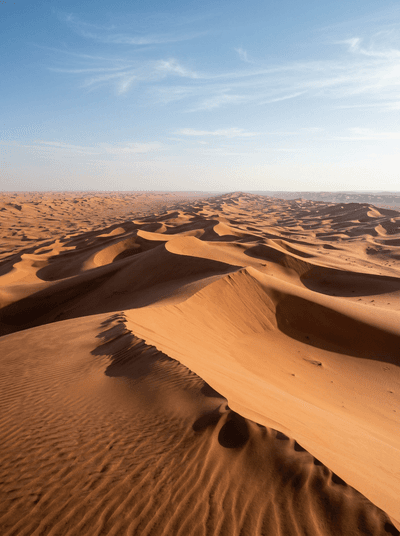
Rub' al Khali
Saudi Arabia
Dunes 250 metres high stretching unbroken to every horizon, silence pressing like weight.