Kenya
Wasini Island
A coral island with no cars or roads, reached by dhow where dolphins live.
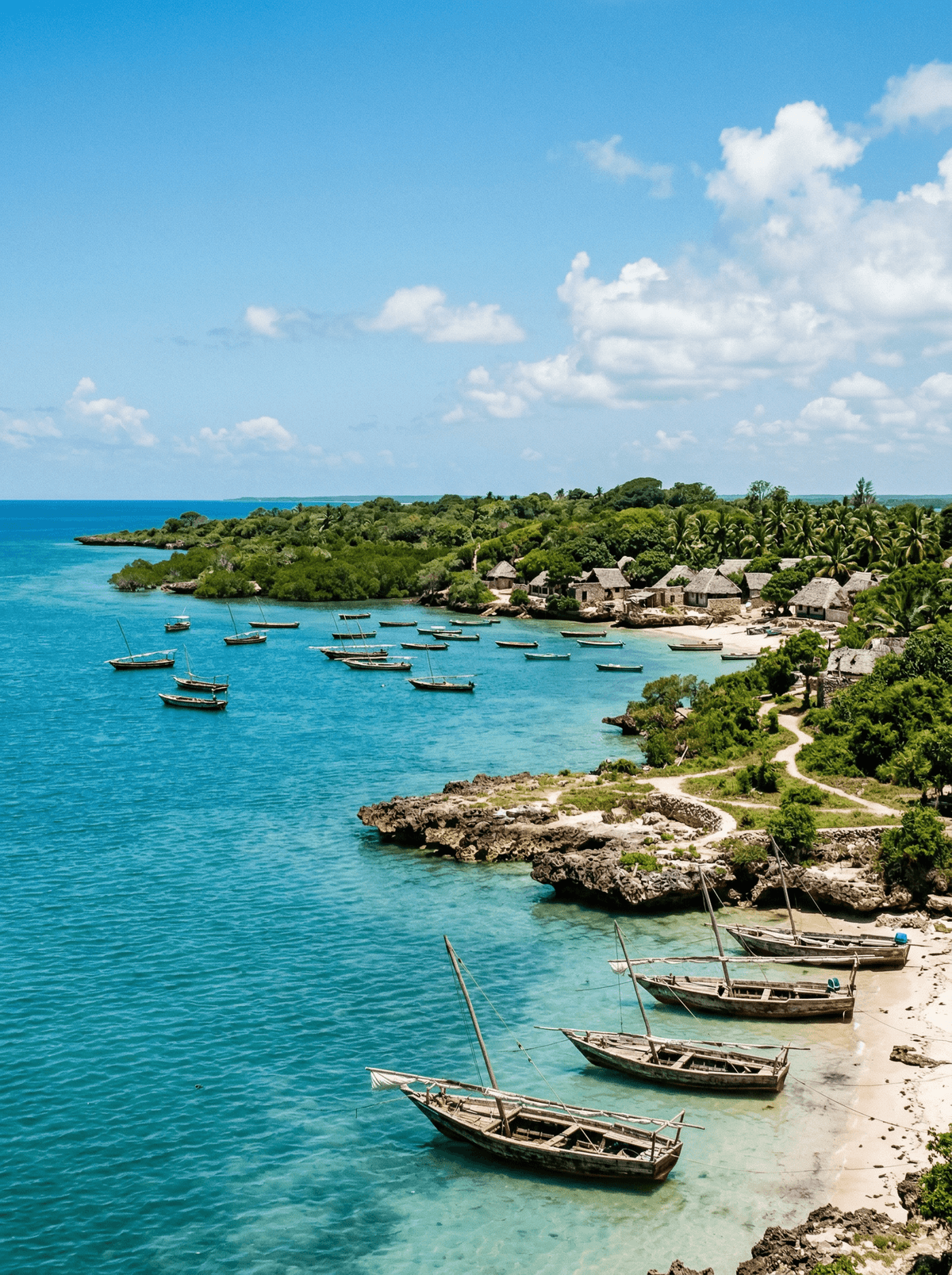
The dhow tilts against the tide across a channel that bottlenose dolphins keep year-round. Wasini appears slowly — a low line of coral rock and palms with no roads, no cars, no rush. The only sounds are the creak of the hull and the call to prayer drifting from the village mosque.
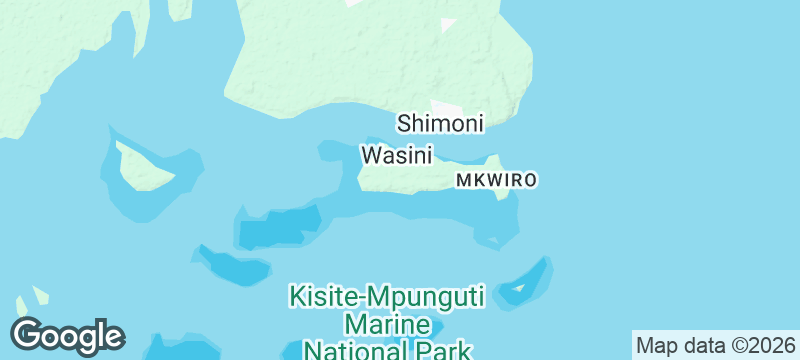
Wasini lies off Kenya's far south coast, a small coral island of two villages where every journey is on foot along coral-rag lanes. It is the gateway to Kisite-Mpunguti Marine Park, and the crossing from Shimoni is a wildlife trip in itself — bottlenose and humpback dolphins live in these channels year-round. On the island, a boardwalk winds through a garden of raised fossil coral sculpted by centuries of tides, and the island's kitchens have made a tradition of the long Swahili seafood lunch — crab pilau, grilled fish, coconut rice — eaten under palm shelters while the dhows dry on the sand. Old Swahili ruins crumble quietly between the houses; nothing on Wasini is in a hurry, including you.
Couple
A dhow through dolphin water to a car-free island where lunch arrives by boat — barefoot romance no resort can fake.
Family
Children love the crossing, the dolphins and the run of an island without vehicles — with a coral boardwalk sized for short legs.
- No vehicles and no roads — coral-rag lanes link two villages and everything arrives by dhow.
- Resident dolphins live in the channel, and the Shimoni crossing doubles as a spotting trip.
- A boardwalk crosses a garden of raised fossil coral carved by centuries of tide.
- The island's long Swahili seafood lunches — crab pilau at their heart — are a tradition in their own right.
Crab pilau — the island's signature dish and the heart of its long Swahili lunch.
Grilled reef fish with coconut rice, eaten under palm shelters by the drying dhows.
Celestún
Mexico
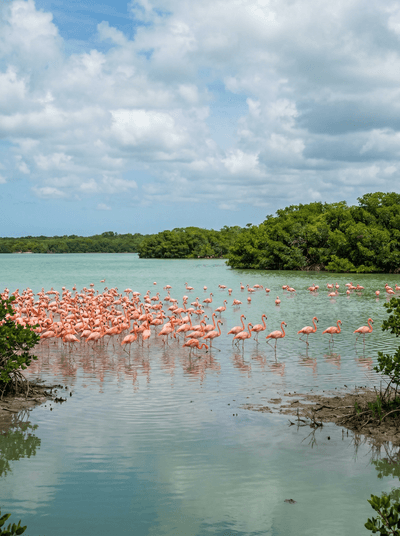
Mangrove water and Gulf light draw flamingos to a working Yucatán fishing village.
Assateague Island
United States
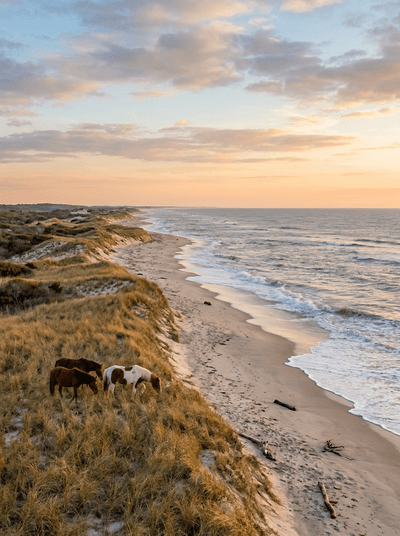
Wild ponies wade through salt marshes on a barrier island thirty-seven miles long.
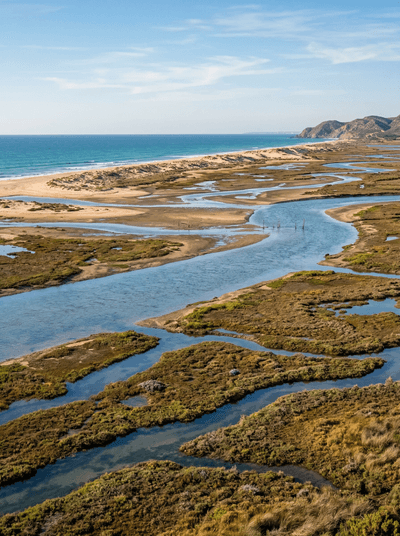
Ria Formosa
Portugal
A shifting labyrinth of barrier islands, salt marsh and seahorse nurseries off the Algarve.
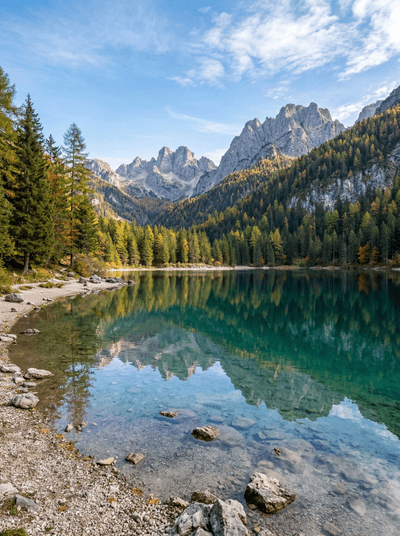
Lago di Tovel
Italy
An alpine lake that turned blood-red every summer until 1964, and never has again.
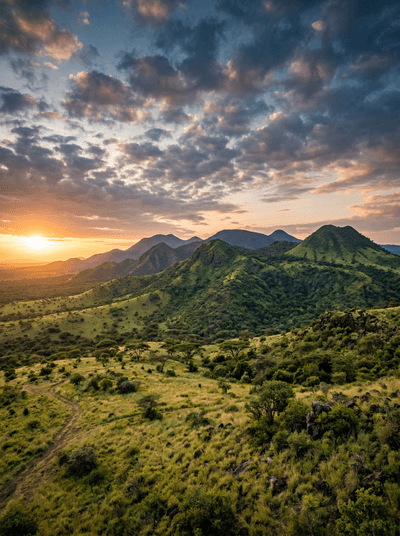
Chyulu Hills
Kenya
Volcanic hills said to have inspired Hemingway's green hills still glow emerald after rain.
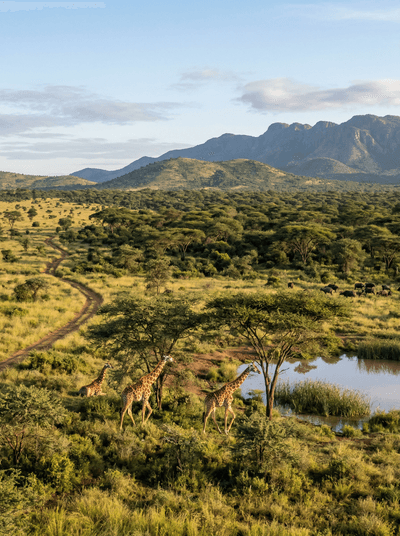
Meru National Park
Kenya
Born Free country — a park that collapsed under poaching and rebuilt itself from ruin.
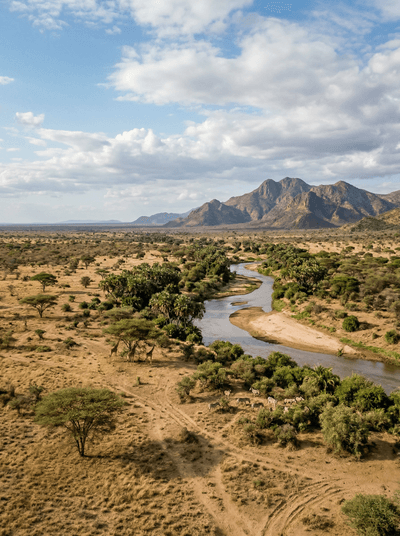
Samburu National Reserve
Kenya
Reticulated giraffes and Grevy's zebras browse along a palm-lined river through baked red earth.
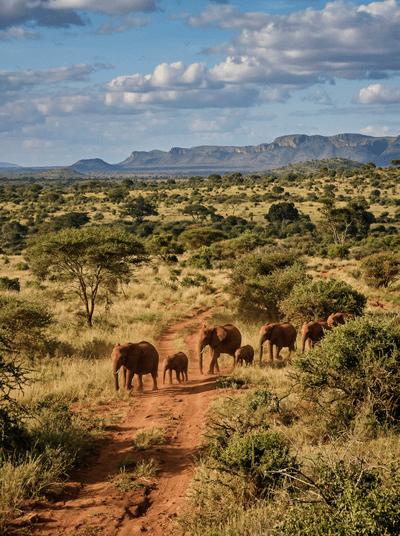
Tsavo National Park
Kenya
Red elephants ghost through rust-coloured scrubland where man-eating lions once stopped the railway.