France
Amboise
Leonardo da Vinci's last home, a royal château and caves in the cliff above the Loire.
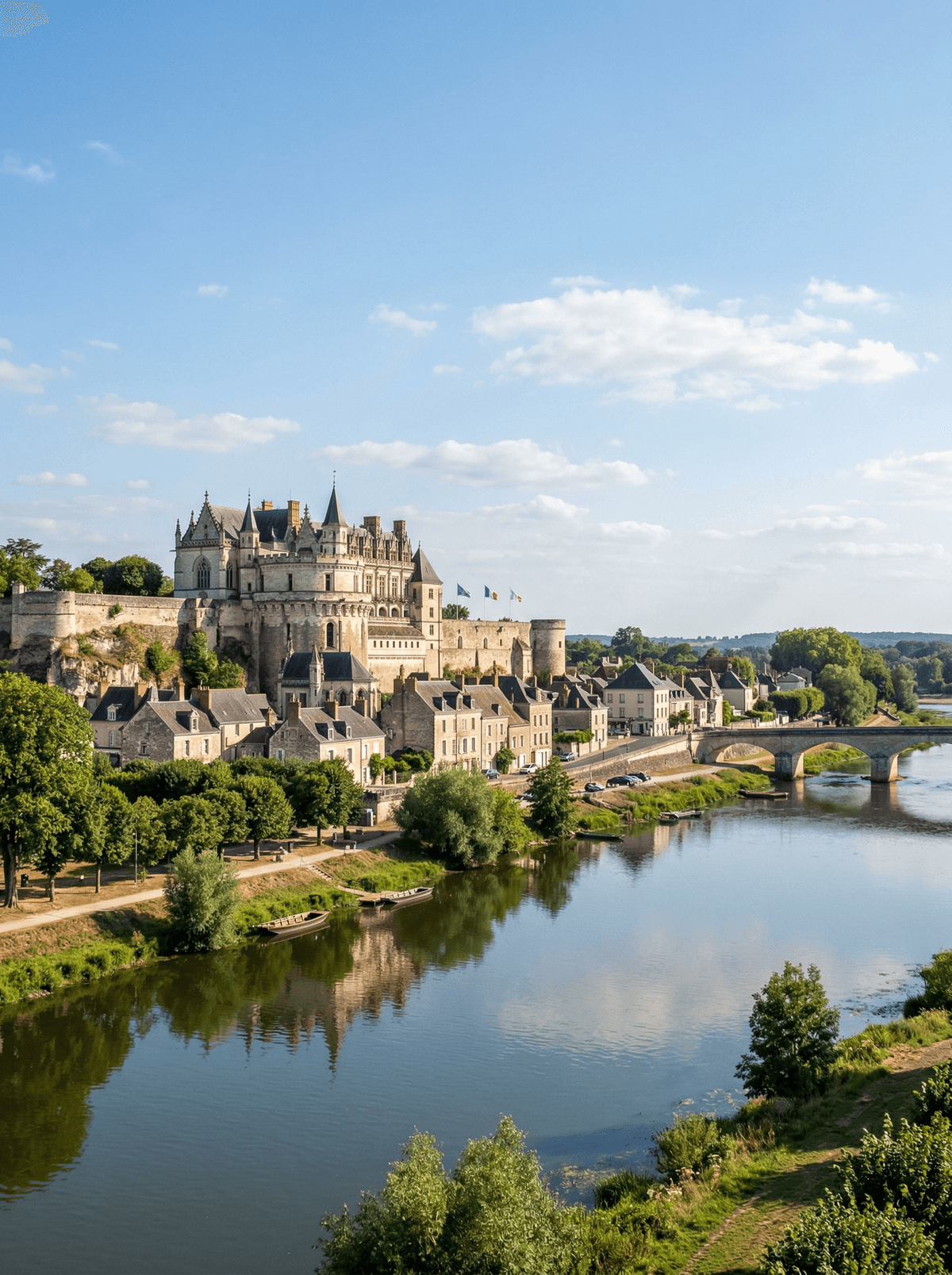
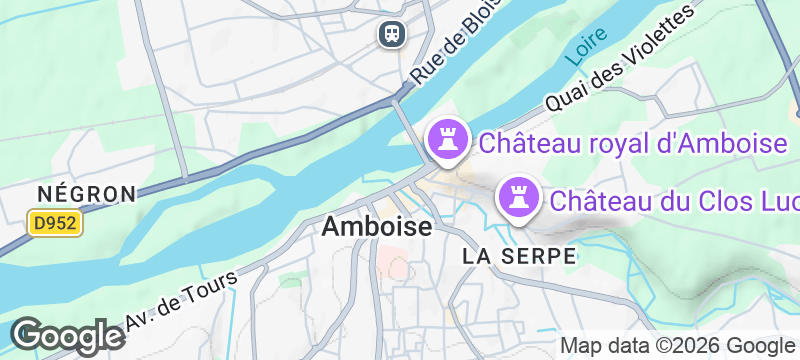
Leonardo da Vinci walked these streets in his last years, sketching machines and waterworks while the Loire rolled below the château terrace. Amboise is a compact riverside town on France's Loire that punches above its weight — a royal château on the cliff, Leonardo's final home and workshop at the Clos Lucé, and cellars and dwellings cut into the tufa beneath — with the market on the riverbank selling goat's cheese and Vouvray.
The royal château of Amboise crowns the cliff over the Loire, the residence Charles VIII turned from fortress into Renaissance palace after his Italian wars, and its terrace gives the view that explains why kings chose this bend of the river. François I brought Leonardo da Vinci here in 1516; the artist spent his last three years at the Clos Lucé, the manor a few hundred metres from the château, and he is buried in its chapel of Saint-Hubert. The Clos Lucé keeps his rooms and workshop, and its gardens hold working models of his machines. The town below sits on tufa, the soft Loire limestone, and the cliff is honeycombed with cave dwellings and wine cellars. Amboise is the natural base camp for the central Loire — Chenonceau and Chambord are a short drive — and hot-air balloons lift off over the river on summer evenings.
Solo
The Clos Lucé alone — Leonardo's rooms, his workshop, the garden where his machines are built at full scale — justifies the trip. Add the château terrace and the caves below and the day has more layers than most cities.
Couple
The Loire terrace at the château, the garden inventions at the Clos Lucé, the market along the waterfront. Amboise wraps Renaissance genius in a small-town warmth that makes an afternoon feel earned.
Family
Leonardo's machines in the Clos Lucé garden — working models of bridges, tanks and flying machines — win over children who would resist a standard château tour. The caves beneath the town add underground exploration.
- Leonardo da Vinci spent his last three years at the Clos Lucé — his rooms, workshop and garden machines are all there.
- The royal château terrace overlooks the Loire with a panorama that explains why kings chose this bend in the river.
- The town is compact and walkable along the river, with cave dwellings and wine cellars cut into the tufa cliff.
- Markets on the riverbank sell Loire goat's cheese, Vouvray and rillettes — the valley's larder in one place.
Sainte-Maure-de-Touraine — the ash-coated goat's cheese log with a straw through its middle — tangy and crumbling.
Nougat de Tours — a tart of candied fruit under an almond crust — the Touraine's pastry heritage.
Campeche
Mexico
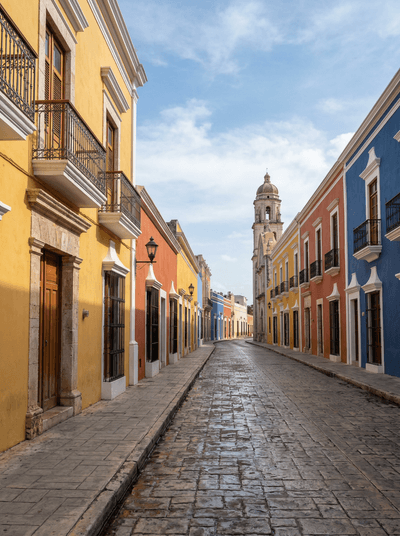
Pastel streets and surviving bastions face the Gulf from a fortified historic centre.
Mérida
Mexico
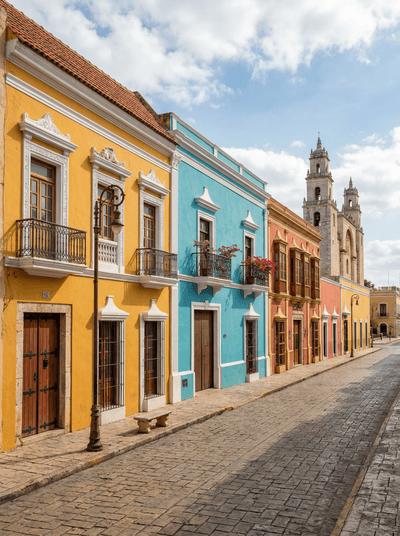
A white-walled city where henequen mansions age gracefully and Sunday streets fill with dancing.
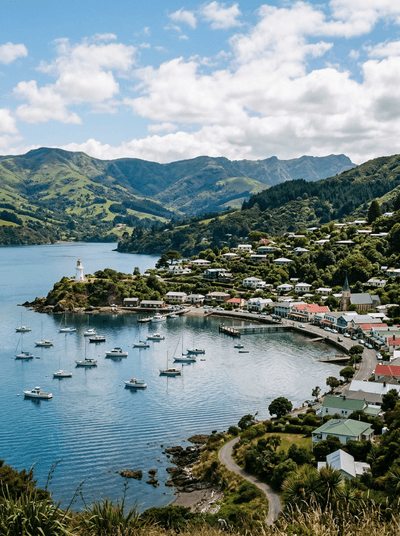
Akaroa
New Zealand
French street names and a crater harbour where the world's smallest dolphins feed.
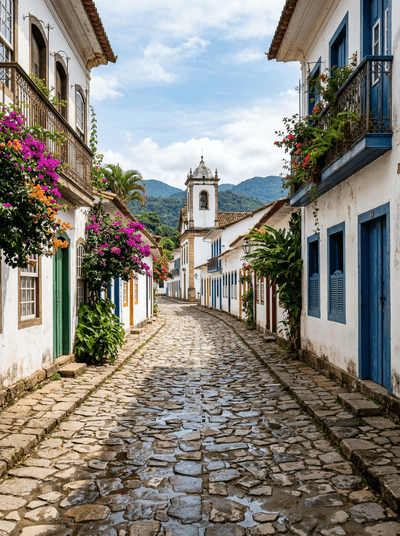
Paraty
Brazil
A colonial port the sea washes through on spring tides, with rainforest at its back.
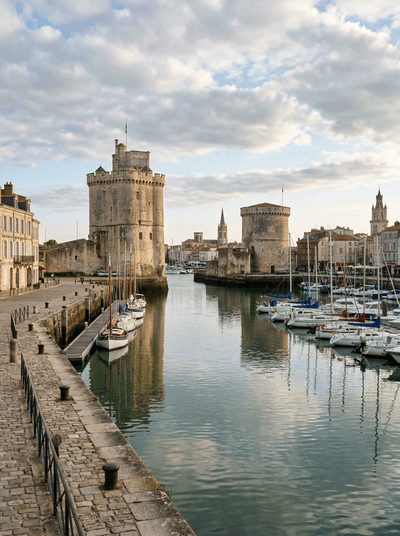
La Rochelle
France
Medieval towers guarding a harbour mouth where a chain once locked out the sea each night.
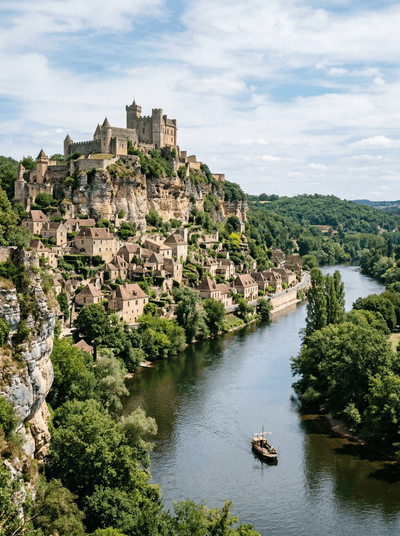
Beynac-et-Cazenac
France
A fortress village gripping a cliff high above the Dordogne's green coil.
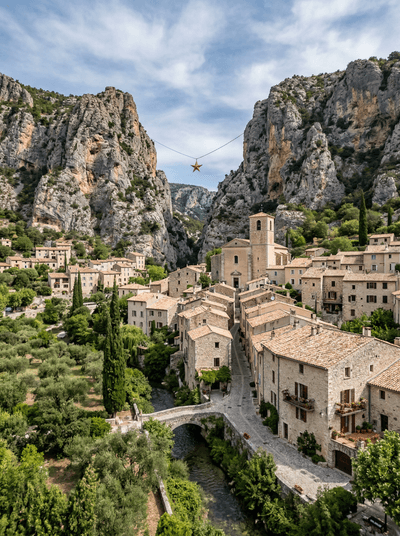
Moustiers-Sainte-Marie
France
A gold star on a chain slung between two cliffs above a village of faïence painters.
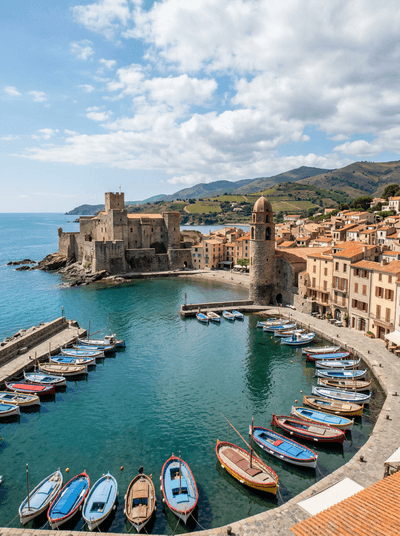
Collioure
France
Matisse's fishing port, where the light bends colour until red boats glow against violet water.