Brazil
Belém
Buyers hold açaí berries up to a phone torch at half four in the morning.
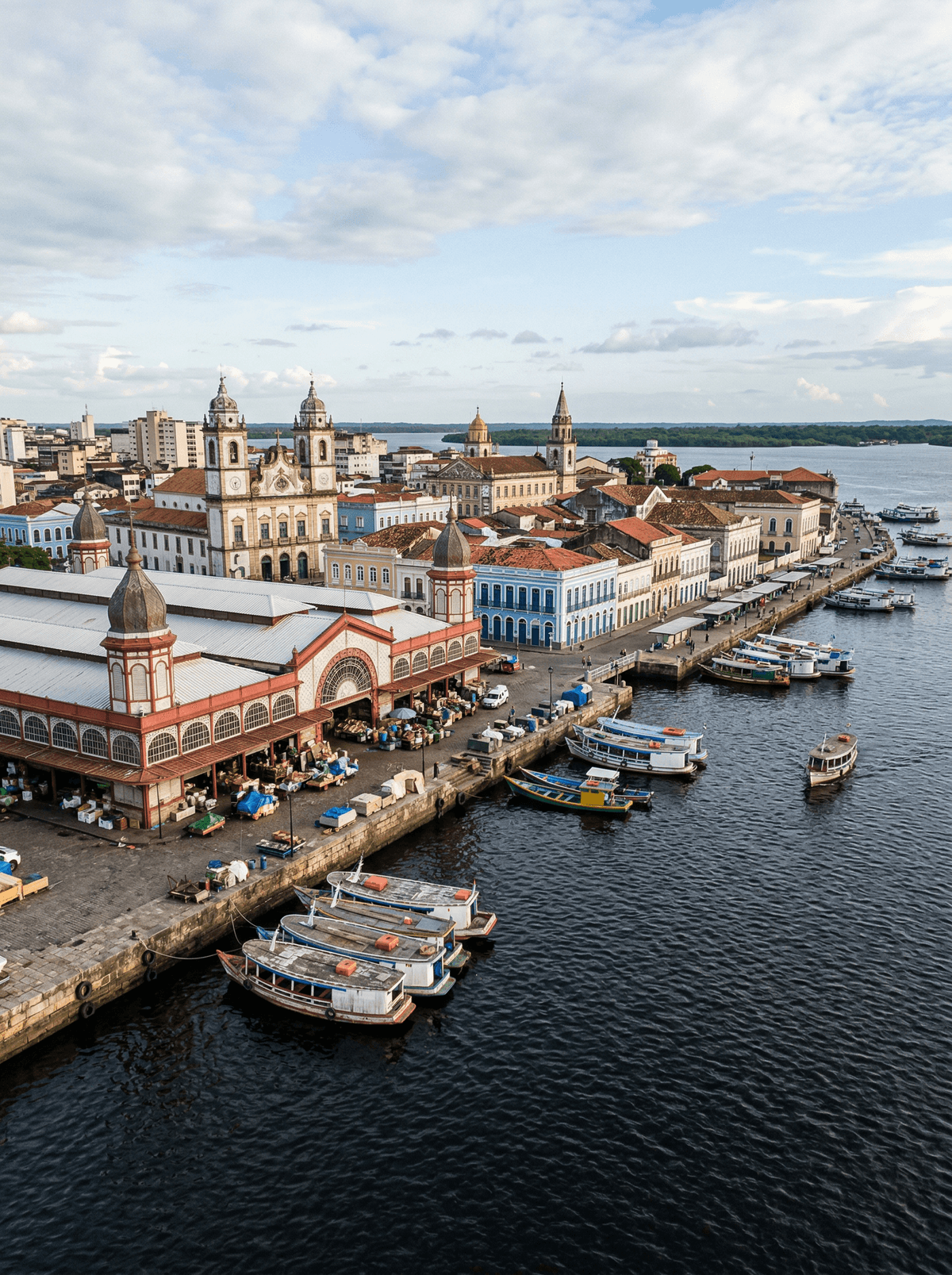
The Feira do Açaí starts at half past four in the morning on the Ver-o-Peso quay, when the boat comes in from Breves. Buyers pull berries out of the baskets and hold them up against a phone torch, taste one, spit it out, and only then start on the price. A rasa goes for sixty to a hundred reais and beats out about ten litres, or five if you want it thick enough to stand a spoon in.
Ver-o-Peso is 35,000 square metres of this, listed by IPHAN in 1977 and older than nearly everything around it: the Portuguese Crown put the Casa do Haver o Peso at the old Porto do Piri in 1625, and the buildings standing there now went up in the art nouveau of the belle époque. The complex is a set of named parts, the meat market and the fish market, the Solar da Beira, the Doca, the Feira do Açaí, the Ladeira do Castelo, and what moves through them is fruit and vegetables, meat, fish and shellfish, aromatic herbs, castanha do Pará and craftwork. Outside it, the city is shaded by thousands of mango trees left by the architect Antônio José Landi's planting, which is where the name Cidade das Mangueiras comes from; the species is Indian and was the first used here. October belongs to the Círio de Nossa Senhora de Nazaré, the largest religious event in the municipality and one of the largest in the country, and when the procession is over families sit down to pato no tucupi and maniçoba. Rain is a constant rather than a season here, at an annual average around 2,085 millimetres, with the temperature holding near 26.7 degrees all year.
Solo
Be on the Ver-o-Peso quay before five if you want the açaí trade rather than the visiting hour. After that the market runs on its own logic, meat in one hall and fish in another, herbs and castanha along the boulevard, and it takes exactly as long as you let it.
Couple
Eat what the state itself claims: pato no tucupi first, maniçoba second, and a tacacá from a corner tacacazeira somewhere in between. The mango canopy is what makes walking the old town bearable in the afternoon, and it is the reason the city has the name it does.
Family
The fruit is the education here: açaí, bacaba, cupuaçu, bacuri, pupunha, tucumã, muruci, piquiá and taperebá, most of which have no English name at all. October is the Círio, which is remarkable and very crowded, so it is a month to choose deliberately.
- Ver-o-Peso covers 35,000 square metres, was listed by IPHAN in 1977, and goes back to 1625, when the Portuguese Crown set the Casa do Haver o Peso at the old Porto do Piri.
- The Feira do Açaí trades before dawn off boats down from Breves, by the rasa, sixty to a hundred reais each, and a rasa beats out around ten litres.
- Thousands of mango trees shade the streets, a legacy of the architect Antônio José Landi's planting, which is why the city is called the Cidade das Mangueiras.
- The Círio de Nossa Senhora de Nazaré in October is the largest religious event in the municipality and among the largest in Brazil.
Pato no tucupi is what Pará puts its name to, and maniçoba, which they call the paraense feijoada, comes out beside it at the Círio lunch.
Tacacá is sold from tacacazeiras on the street corners, and the fish runs to pirarucu in coconut milk, peixada, caldeirada and tamuatá no tucupi.
Oxford
England
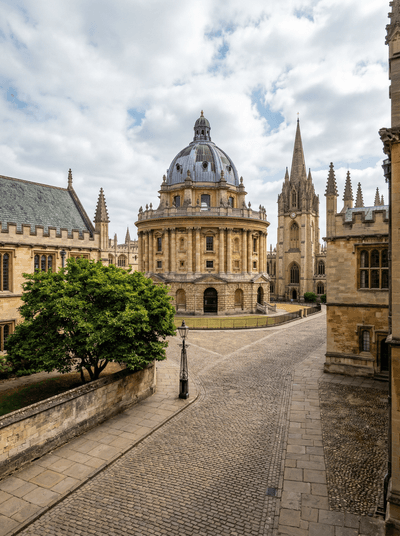
Gargoyles stare from spires so dense the skyline looks like a stone forest.
Cambridge
England
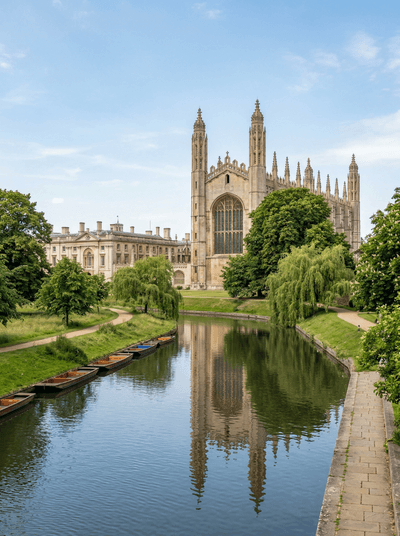
Punts glide beneath mathematical bridges over water that has mirrored genius for centuries.
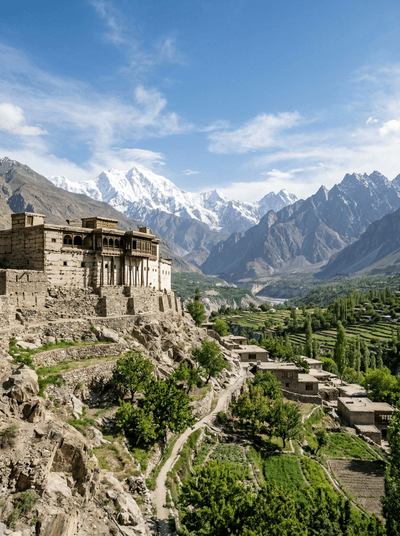
Karimabad
Pakistan
A 700-year-old fort perched above apricot terraces where the Mir of Hunza once surveyed three empires.
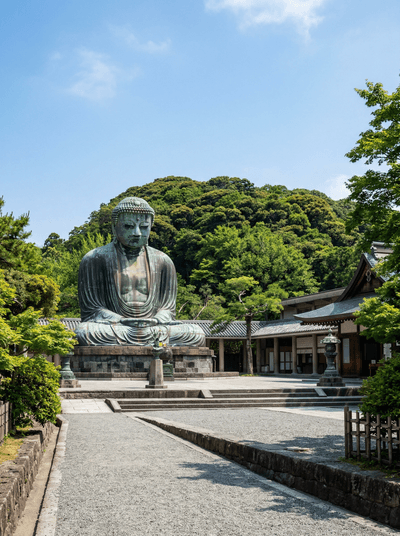
Kamakura
Japan
A bronze Buddha meditating outdoors for five centuries, since the sea took his hall.
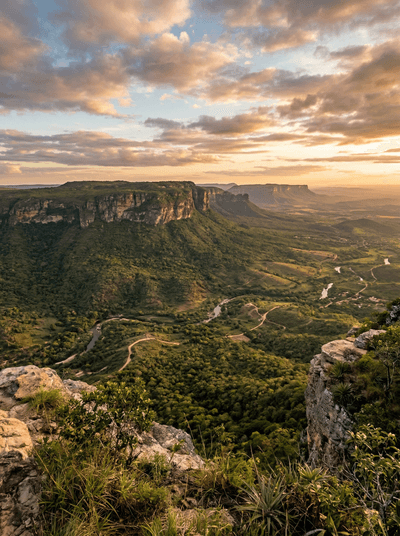
Chapada do Araripe
Brazil
Diggers call this rock pedras de peixe, fish stones, and that is exactly what is inside.
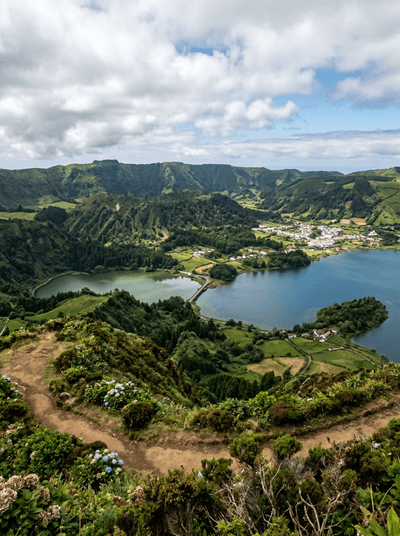
Sete Cidades
Brazil
Sandstone eroded into what look like seven separate cities, with rock paintings inside them.
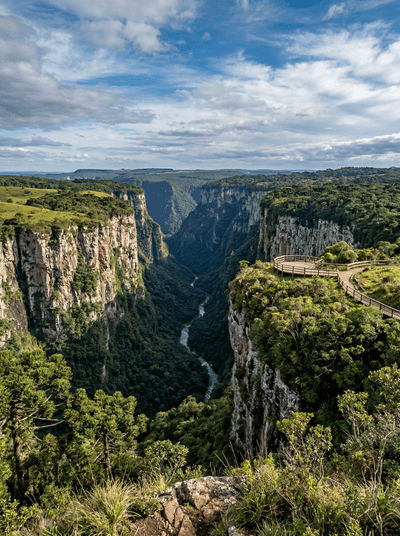
Aparados da Serra
Brazil
A five-hundred-metre waterfall drops straight off the rim into a gorge two kilometres wide.
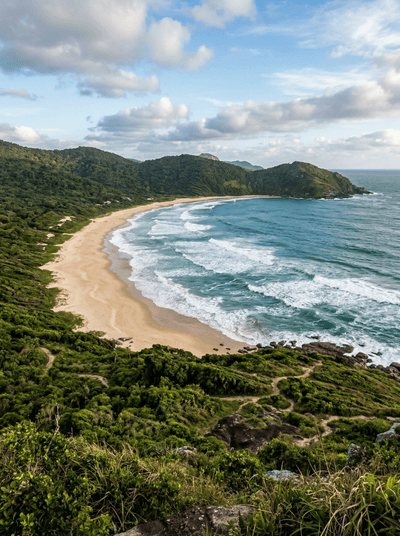
Praia do Rosa
Brazil
Right whales leave Antarctica to calve in this bay, and you watch from the headland.