Panama
Camino de Cruces
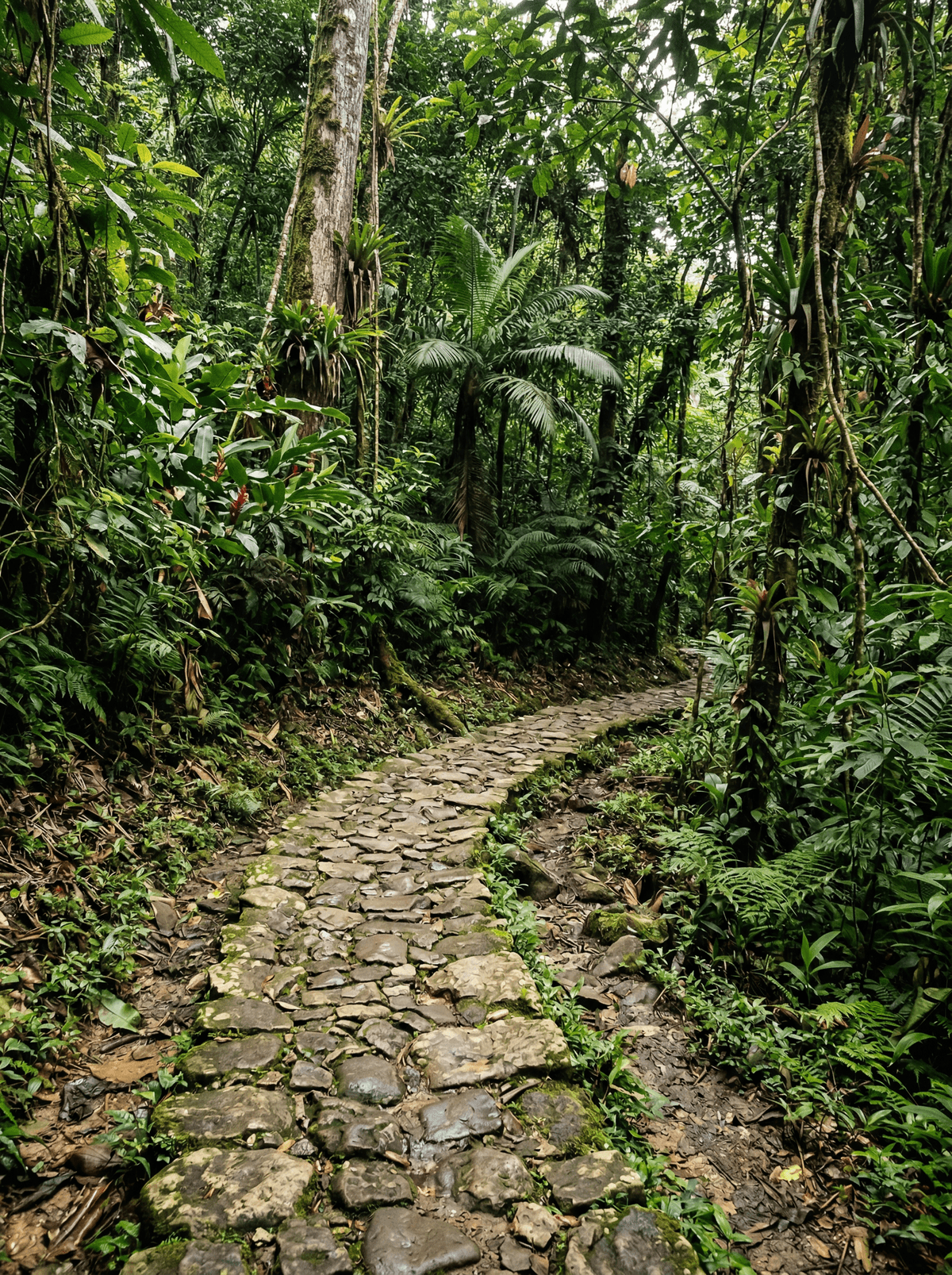
Spanish cobblestones buried in jungle — the treasure road that carried Inca gold across the isthmus.
The cobblestones appear through the mud like a memory surfacing — worn smooth, fitted tight, unmistakably deliberate beneath a canopy that has been trying to swallow them for five centuries. Your boots land where mule trains loaded with Inca silver once walked. The forest hums with insects and birdsong, and every few hundred metres the stones emerge again, confirming this is still a road — the oldest functioning route across the Americas.
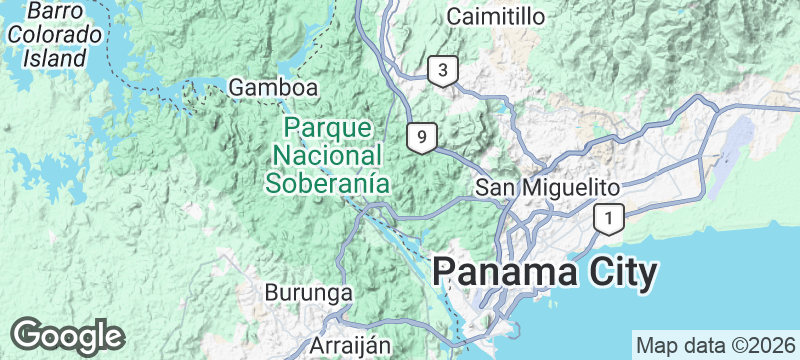
The Camino de Cruces was built around 1560 to carry silver from Peru and gold from Colombia across the Panamanian isthmus to the Caribbean coast. The original cobblestones survive in the jungle, visible between encroaching roots and creek crossings. Henry Morgan used this exact path in 1671 when he crossed the isthmus to sack Panama City. The trail runs 12 kilometres through Parque Nacional Camino de Cruces, a protected buffer zone adjacent to Soberanía National Park that keeps the biological corridor intact. Geoffroy's tamarins, white-faced capuchins, and spider monkeys range along the trail, drawn by the fruiting trees that line the old road.
Solo
Walking the Camino de Cruces alone turns a hike into a time-travel experience. The silence of the jungle, broken only by monkeys and birds, makes it easy to imagine the mule trains that once moved fortunes along these same stones.
Friends
The 12-kilometre trail is a satisfying day hike for a small group — challenging enough to feel earned, historical enough to spark conversation at every cleared section of cobblestone. The cold beer in Gamboa afterwards is half the reward.
Family
Older children will grasp the significance of walking on a 500-year-old treasure road, and the wildlife sightings — tamarins, capuchins, toucans — keep younger ones engaged. The trail is manageable for fit families and the history lesson is unforgettable.
- The Camino de Cruces was built around 1560 to carry silver from Peru and gold from Colombia across the isthmus to the Caribbean coast — the original cobblestones survive in the jungle, visible between encroaching roots.
- Henry Morgan used this exact path in 1671 when he crossed the isthmus to sack Panama City — the same stones, the same canopy, the same creek crossings.
- The trail runs 12 kilometres through Parque Nacional Camino de Cruces, a buffer zone adjacent to Soberanía National Park that keeps the corridor biologically connected.
- Geoffroy's tamarins, white-faced capuchins, and Geoffrey's spider monkeys range along the trail, attracted by the fruiting trees that line the old road.
Pack water and trail snacks — the jungle path offers no refreshments.
Gamboa's simple fondas serve rice and chicken for the weary hiker.
Cold beer at the nearest canal-zone bar after walking on 500-year-old stones.
Trollskogen (Öland)
Sweden
A forest of wind-warped oaks so twisted they look like a witch's spell gone wrong.
Millennium Cave
Vanuatu
Scramble through jungle and wade chest-deep rivers to a cave you enter walking and exit floating.

Maryang-ri
South Korea
A five-hundred-year-old forest of camellia trees bleeding red flowers against the grey winter sea.
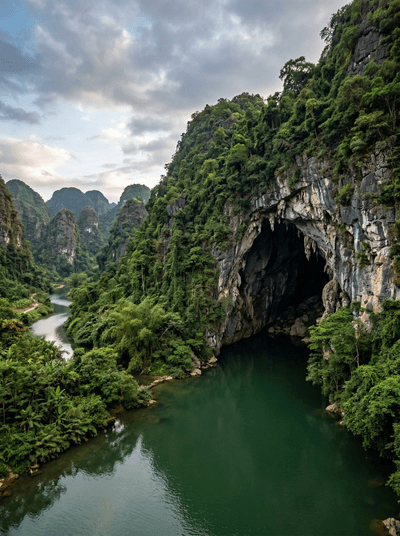
Phong Nha
Vietnam
Hidden jungle portals opening into subterranean river systems and limestone caverns.
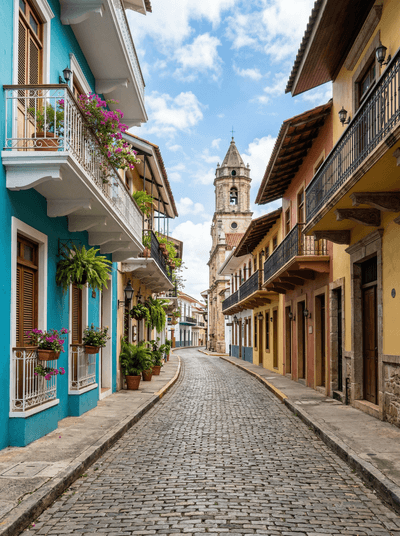
Casco Viejo
Panama
Crumbling baroque balconies where jazz drifts over a skyline of glass towers.
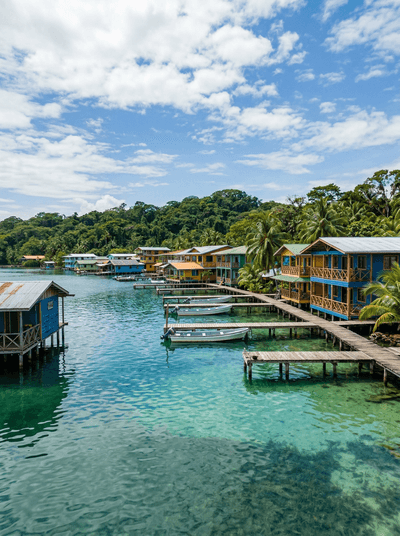
Bocas del Toro
Panama
Over-water bungalows on a Caribbean archipelago where sloths drift through mangrove canopies.
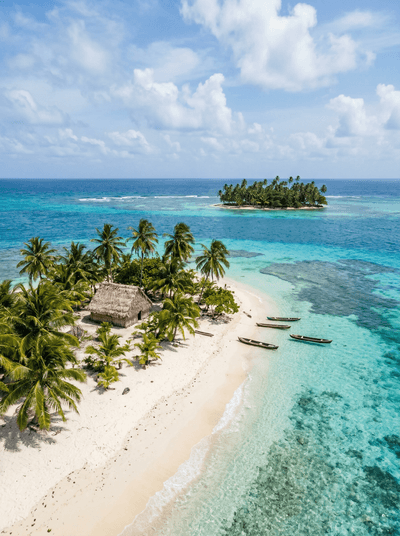
San Blas Islands
Panama
Palm-tufted coral islands governed by an indigenous nation that rejected the modern world.
Isla Coiba
Panama
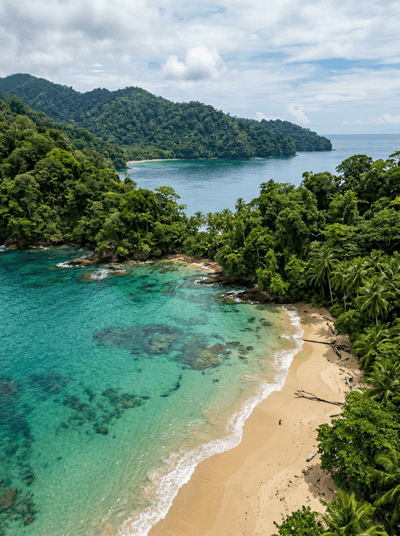
A former penal colony where eighty years of isolation let the Pacific reef thrive.