Brazil
Caraça Natural Park
Maned wolves climb the church steps for a tray of food, on no timetable at all.
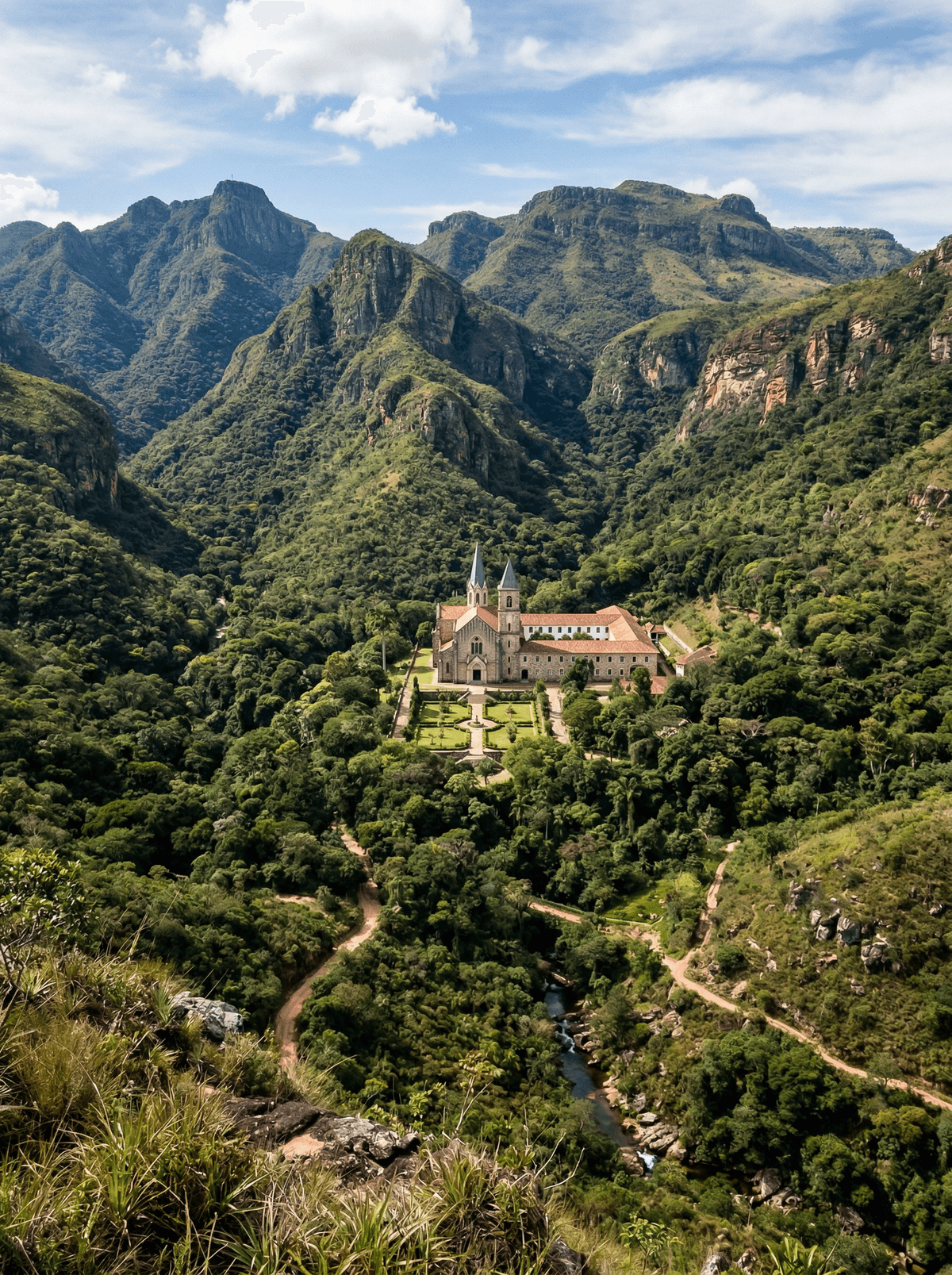
Dinner finishes at half past seven and people drift out to the steps of the church. Somebody has already put a tray down. Nobody can tell you whether the wolf will come, or when, because it keeps no hours, and the waiting turns out to be most of it: an hour on cold stone under the first neo-Gothic church anyone built in Brazil, listening for something on the gravel.
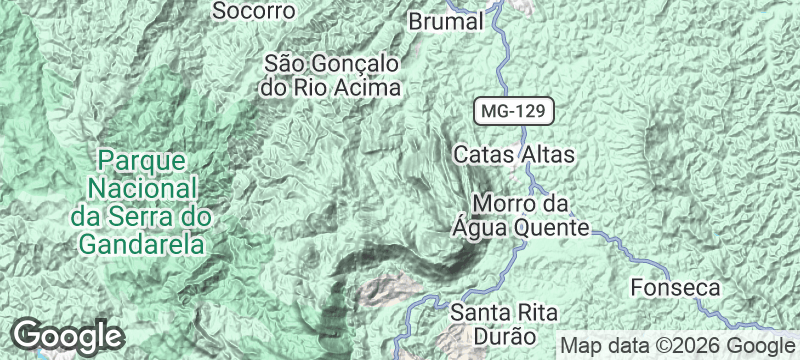
Caraça is a private nature reserve wrapped around a sanctuary and an old college in the mountains of central Minas Gerais, and the reserve alone accounts for roughly 51 per cent of all private reserve land in the state. A French priest pulled down the original chapel in 1876 and spent seven years replacing it with a neo-Gothic church, French in its lines and built out of the mountain it stands on; it was consecrated on 27 May 1883, and electric light reached the place ten years after that. The wolves are far more recent. Through 1982 the staff kept finding the bins turned over and assumed dogs, until the superior pointed out that dogs do not climb the serra, and one pair has been coming up to the church for a tray ever since, visible together only in April and May, with five the most ever counted at once. Around 70,000 people come each year and 20,000 stay the night, which is what the wait actually requires, because day visiting shuts at five.
Couple
Stay the night, because the whole reason to come happens after the gates close: day visiting ends at five and the wait on the steps is an after-dinner thing. Weekday and Saturday mass at six is guests-only for the same reason, and the eleven o'clock on Sunday is the one open to everybody.
Family
The gentle end of the walking is waterfalls, tanks and natural pools within reach of the buildings, and the wolf is a story you can tell a child honestly, which is that it might not turn up at all. Caves and peaks are guide-only, so put those on their own morning instead of tacking them onto an afternoon.
Solo
The rhythm does the work here: a breakfast you partly cook yourself on a wood stove, a day on the trails, dinner at half six, then the steps. Give it two nights. One pair of animals with no timetable is a poor thing to plan a single evening around, and the second night is usually the one that pays.
- The wolves started coming in 1982, when staff kept finding the bins turned over and the superior refused to blame dogs, on the grounds that dogs do not climb the serra.
- One pair lives around the sanctuary and they are seen together only in April and May; the most ever counted at the tray is five, three pups eating while the female watched from the steps and the male waited in the palms.
- The church is the first neo-Gothic church built in Brazil, French in style and made of the mountain it stands on, raised between 1876 and 1883 and consecrated on 27 May of that year.
- The trails run to waterfalls, tanks, natural pools and old buildings, while the caves and the peaks can only be walked with a guide.
Breakfast is partly yours to make, bread with an egg cooked on a wood stove, alongside green juice, home-made cakes, jams and pão de queijo.
The sweets are why people stop at the little shop on the way out: doce de leite, doce de abóbora and arroz-doce.
Taveuni
Fiji
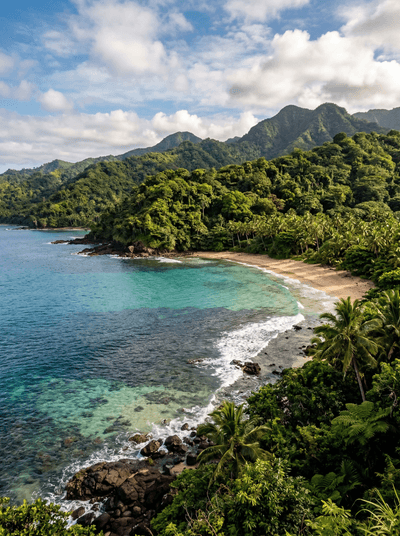
Stand astride the 180th meridian in rainforest, one foot in today, one in yesterday.
Parque Nacional Conguillío
Chile
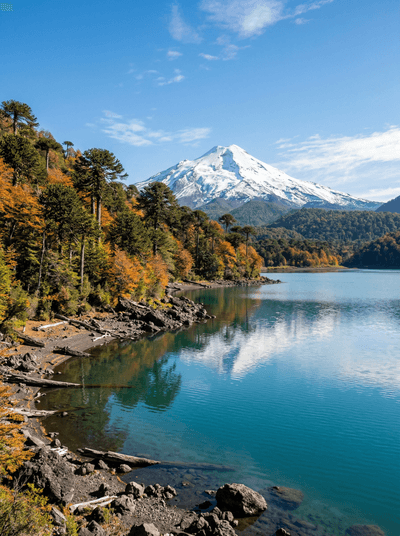
Araucaria crowns stand over black lava and clear lakes beneath Volcán Llaima.
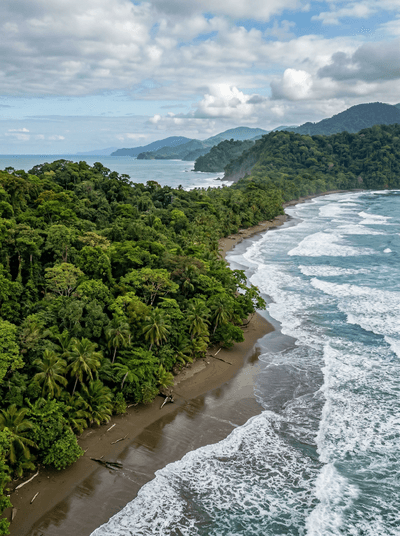
Corcovado National Park
Costa Rica
National Geographic called it the most biologically intense place on Earth. They undersold it.
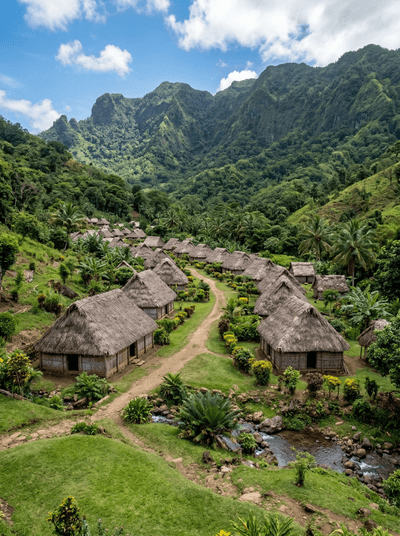
Navala Village
Fiji
Two hundred thatched bures, all built the same size, climb a valley above the Ba River.
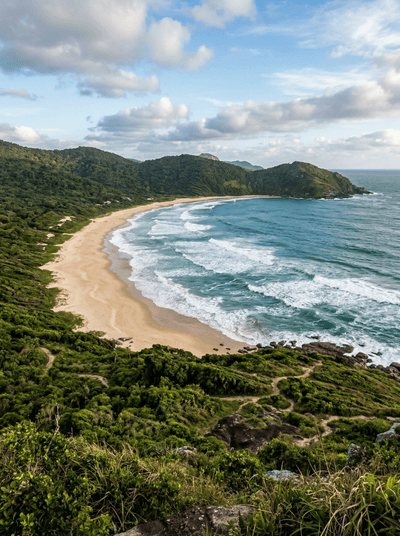
Praia do Rosa
Brazil
Right whales leave Antarctica to calve in this bay, and you watch from the headland.
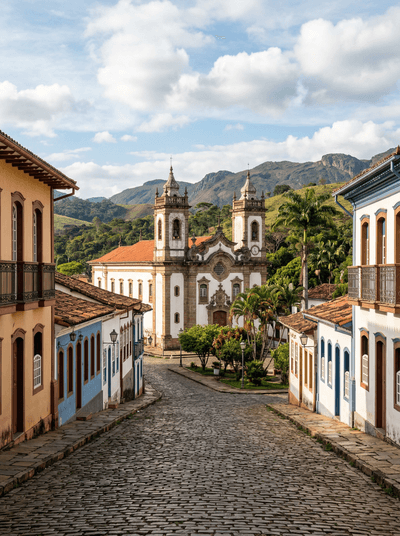
São João del-Rei
Brazil
Baroque towers answering each other across a valley, ringing the sex of whoever has just died.
Salvador
Brazil
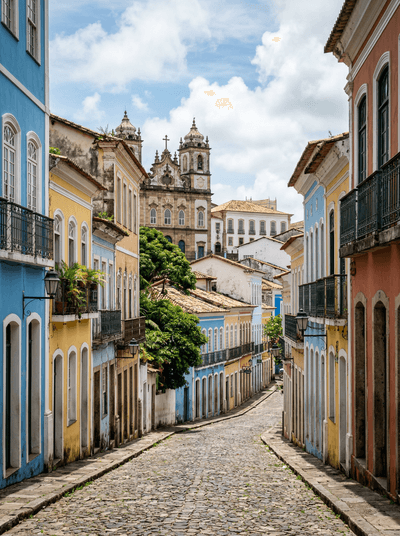
Drum rhythms ricocheting off colonial walls where song, dance and combat happen at once.
São Luís
Brazil
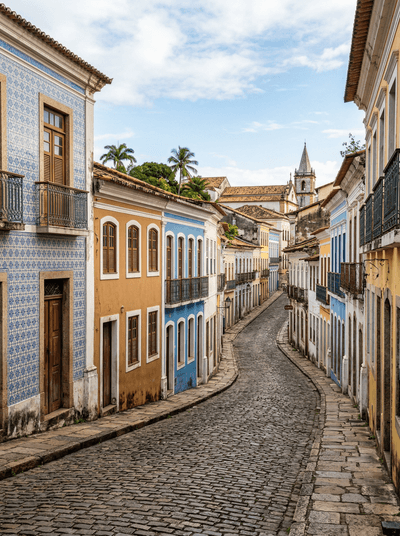
Hand-painted Portuguese tiles across four thousand colonial houses, cooling the walls against equatorial heat.