Peru
Caral
Pyramids as old as ancient Egypt's, rising from a silent desert valley where no one comes.
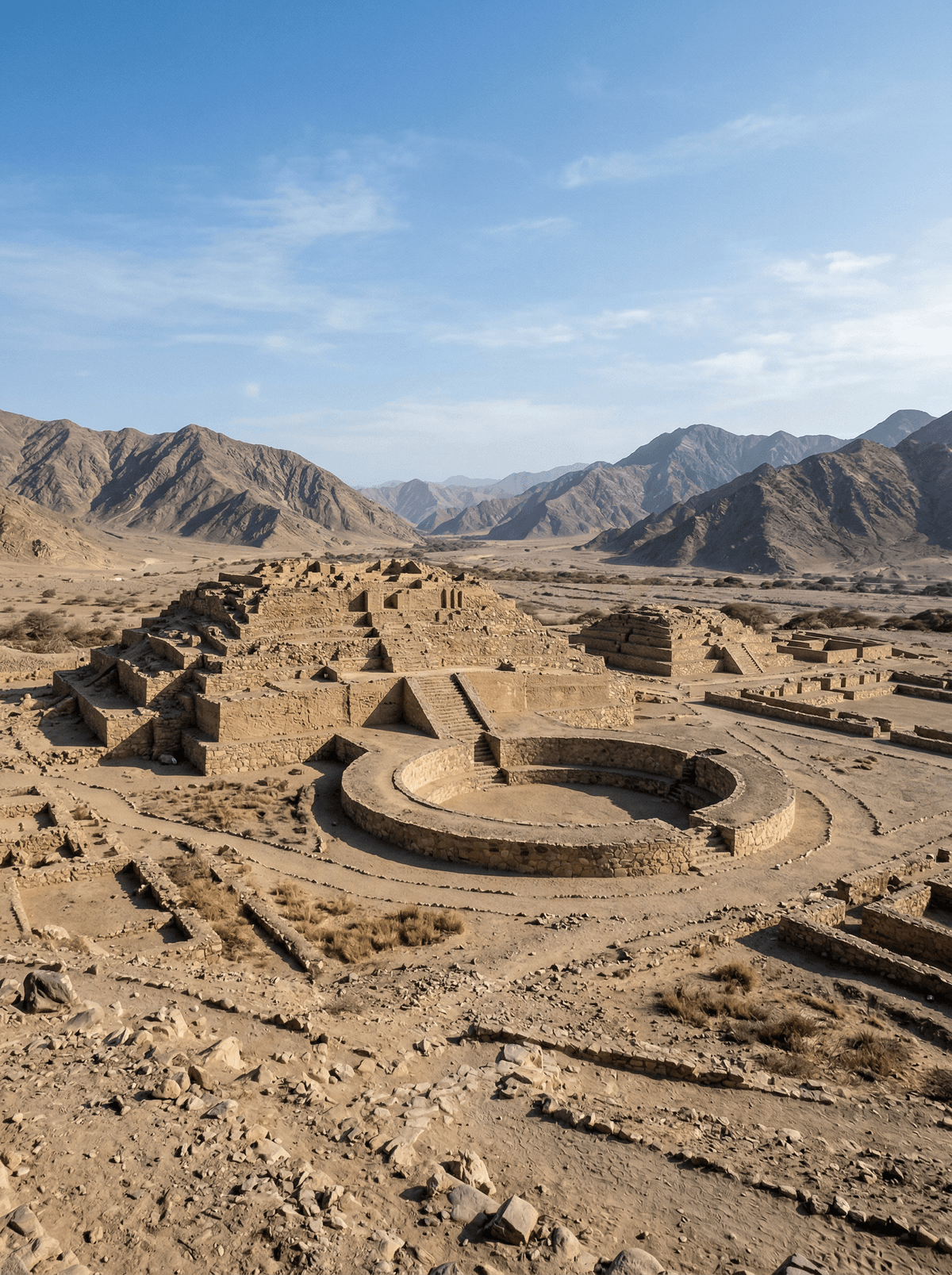
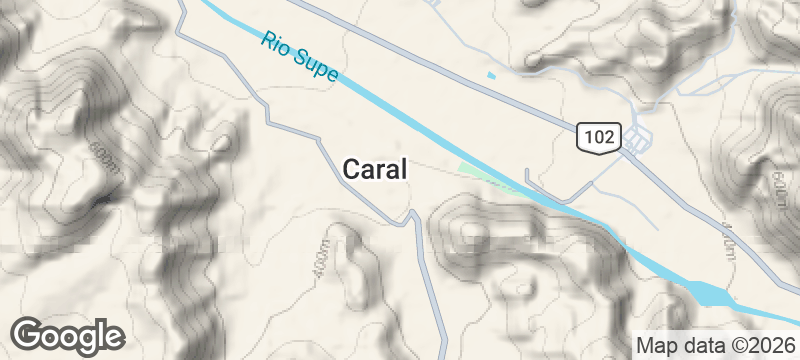
Six pyramids rise from a dry river valley in silence, their stepped platforms casting hard shadows on bleached earth. No gold was found here, no weapons, no fortifications — just the oldest city in the Americas, built on trade, textiles, and music. Caral in Peru sits in the Supe Valley, barely two hundred kilometres north of Lima, yet almost no one comes.
Caral is a UNESCO World Heritage Site dating to approximately 2600 BCE, making it roughly contemporary with the Egyptian pyramids at Giza and the oldest known urban centre in the Western Hemisphere. The site covers 66 hectares and includes six large platform mounds, sunken circular plazas, and residential areas — all built without pottery or metalwork. Excavations led by archaeologist Ruth Shady since 1996 have uncovered quipus (knotted string records), bone flutes, and evidence of a trade network extending from the Pacific coast to the Amazon. The absence of weaponry or defensive structures suggests a society organised around commerce rather than conflict. Caral remains largely unvisited despite its proximity to Lima, with most visitors numbering in the dozens on any given day.
Solo
The near-empty ruins reward contemplation — walking among 5,000-year-old structures with no crowds, no queues, and no audio guides. The day trip from Lima is straightforward, but the sense of discovery belongs to you alone.
Couple
The quiet monumentality of the site — pyramids rising from an empty valley, older than almost anything on Earth — creates a shared sense of awe that louder, busier ruins cannot. Combine with a seafood lunch in Supe on the way back.
Family
Caral offers children a tangible encounter with deep history — climbing platforms older than the Egyptian pyramids — in a safe, open landscape with no precipitous drops. The scale of time becomes real when you can touch the walls.
- Construction at Caral began around 3000 BCE — making it contemporaneous with Egypt's pyramids and among the oldest cities ever built.
- The site contains six large pyramidal platforms, the largest rising 18 metres, arranged around a central sunken amphitheatre.
- No evidence of warfare has been found at Caral — no weapons, no defensive walls, no battle damage — in 5,000 years of occupation.
- Acoustic tests of the sunken amphitheatre confirm it was acoustically designed as a performance space — the sound carries clearly across the whole structure.
Supe Valley roadside stalls grilling fresh anchovies and serving ceviche from the catch landed that morning at the coast.
Carapulcra — dried potato stew with pork and peanuts — a dish with roots as ancient as the ruins themselves.
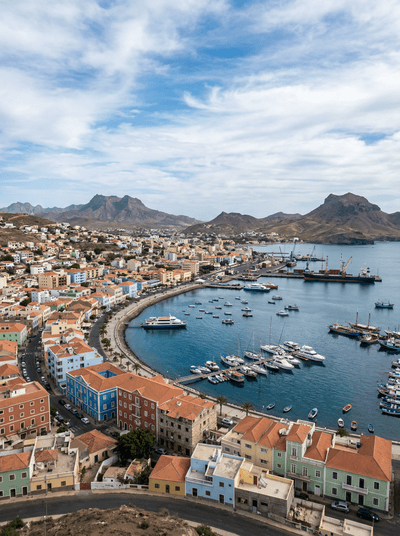
Mindelo
Cape Verde
Morna music drifts from dimly lit bars where Cesária Évora once sang barefoot for sailors.
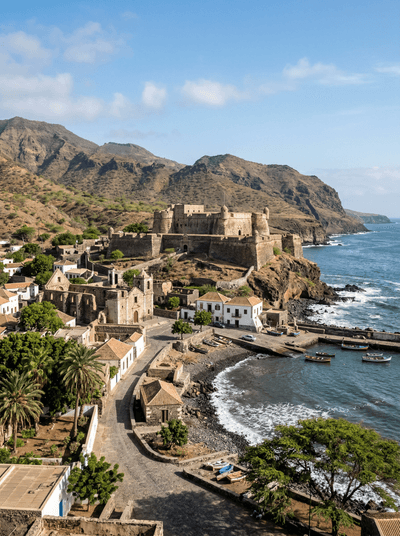
Cidade Velha
Cape Verde
First colonial city in the tropics — a slave pillory still stands in the silent square.

Fukuoka
Japan
Yatai street stalls steaming under canvas where strangers share ramen at midnight.
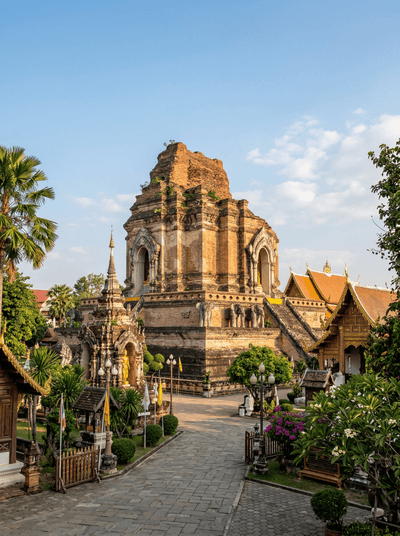
Chiang Mai
Thailand
Monks in saffron robes walking barefoot past tattooed expats and ancient brick chedis at dawn.
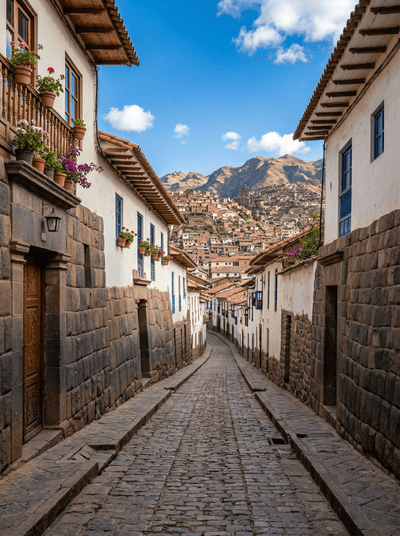
Cusco
Peru
Inca walls fitted so tightly a knife blade won't slide between the stones.
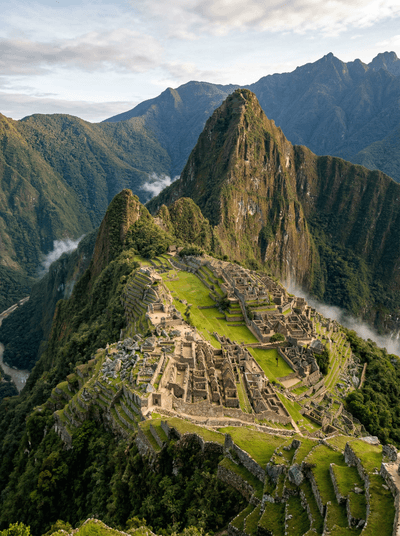
Machu Picchu
Peru
Cloud forest parts at dawn to reveal granite terraces balanced on the edge of the world.
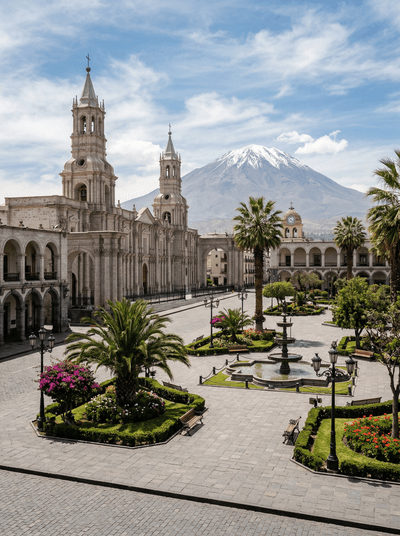
Arequipa
Peru
A city carved from white volcanic stone where every building glows amber at sunset.
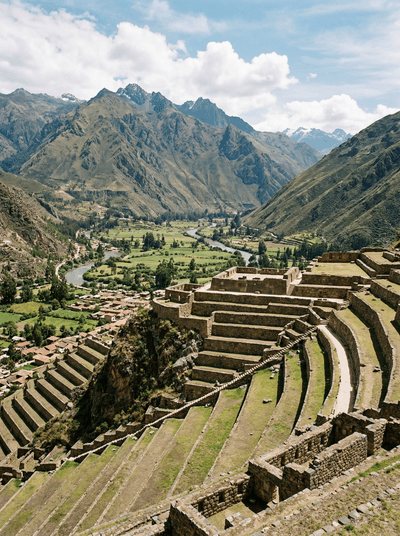
Sacred Valley (Ollantaytambo)
Peru
Inca water still flows through stone channels beneath the windows of a living fortress town.