Argentina
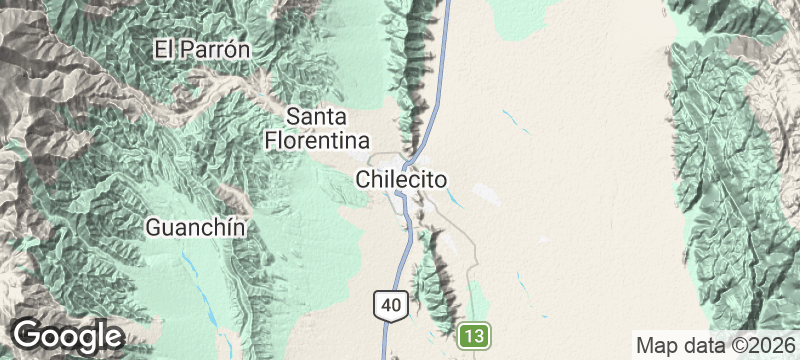
Chilecito
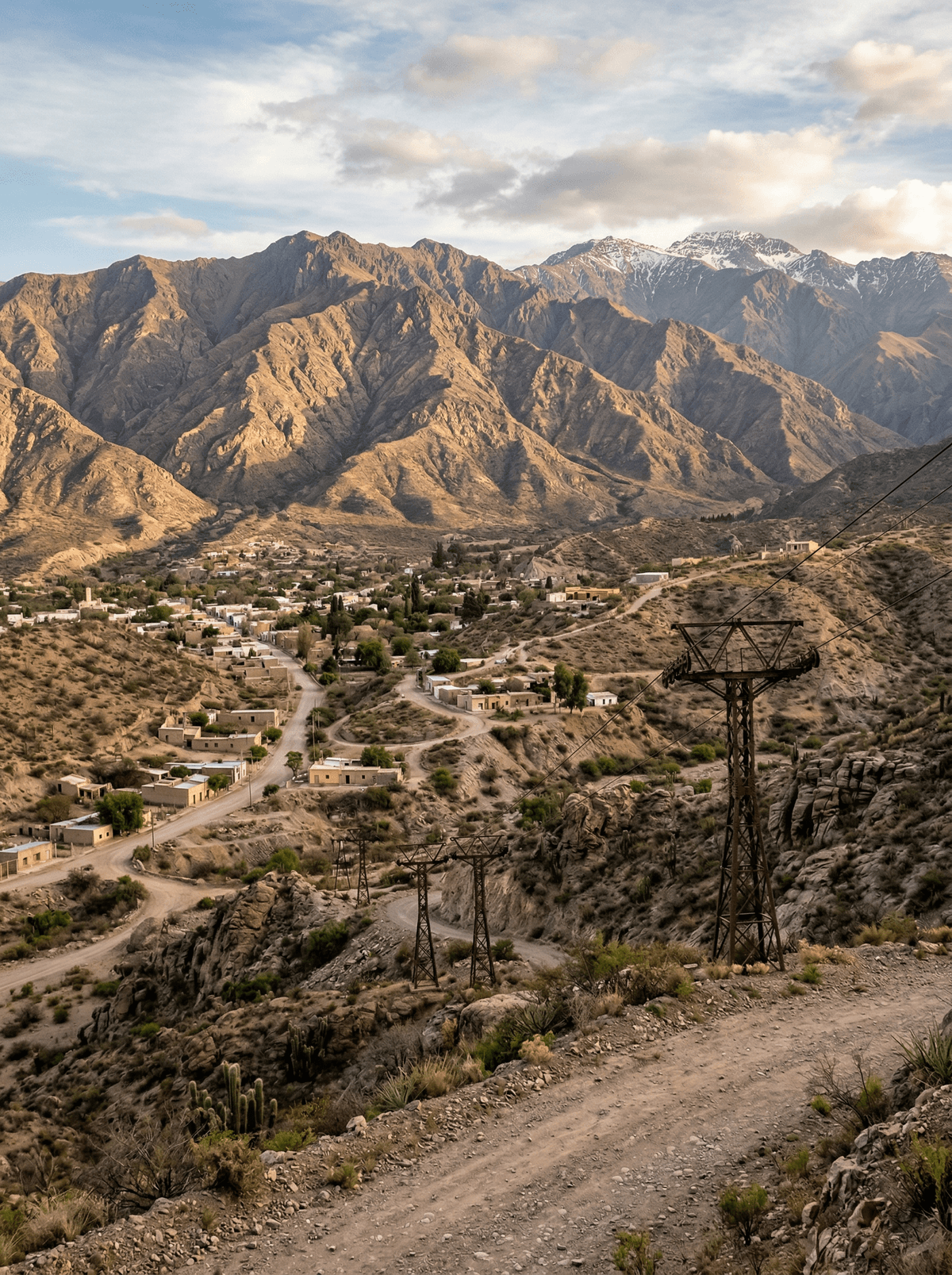
An aerial tramway climbs to a gold mine past four thousand metres, silent since the 1920s.
Chilecito sits in the Famatina Valley beneath a six-thousand-metre mountain wall, connected to a former gold mine high on it by one of early-twentieth-century South America's most extraordinary engineering works — a cable-carril built from 1903 that carried ore down from above 4,500 metres and now rusts in silence at its stations above the town. The valley below grows wine the world found thirty years after Mendoza's.
The La Mejicana cableway ran some 35 kilometres from town to the mine workings, gold coming down by the tonne until operations ceased in the 1920s; today it is a national monument, towers and cabins surviving at station after station up the mountain. The lower stations are reached on foot from the town side and the higher ones by rough track — viewed on authorised routes only, never entered as an abandoned playground, because a century-old industrial ruin at altitude deserves exactly that respect. The valley floor produces Torrontés, Bonarda and Cabernet through family bodegas and one of Argentina's great wine cooperatives, with visits moving at the valley's own deliberate pace; siesta is properly observed, and the Cuesta de Miranda's dramatic mountain road bends away to the north for the drive that frames it all.
Solo
The rusting iron towers stepping up the mountain reward the traveller who arrives with a full day and an interest in what industrial ambition looks like a century after the ambition ran out.
Couple
Two days cover a landscape and food culture most Argentine travellers never meet — the mountain road one morning, the valley bodegas after siesta, and the cableway stations above town on the second day.
- The monument-listed cableway kept its towers, cabins and stations up the mountainside.
- Lower stations are walked to from town; higher ones belong to authorised routes only.
- Famatina Valley bodegas pour Torrontés and Bonarda along the valley road.
- Siesta closes the town each afternoon — the valley keeps its own clock.
Patero wine — foot-trodden the traditional way — from bodegas along the valley road.
Empanadas riojanas and olives from local groves in the sun-baked foothills.
Arenal & La Fortuna
Costa Rica
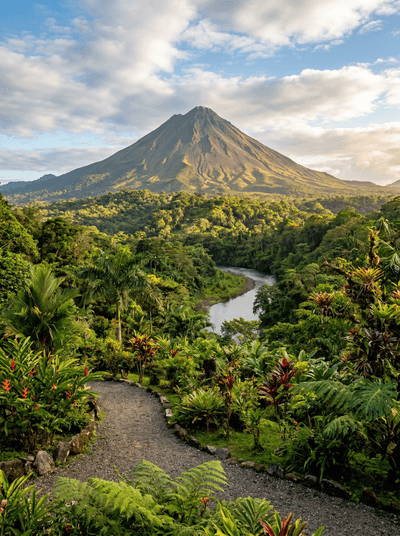
Hot springs steaming through jungle beneath a volcano's perfect cone at dusk.
Drakensberg
South Africa
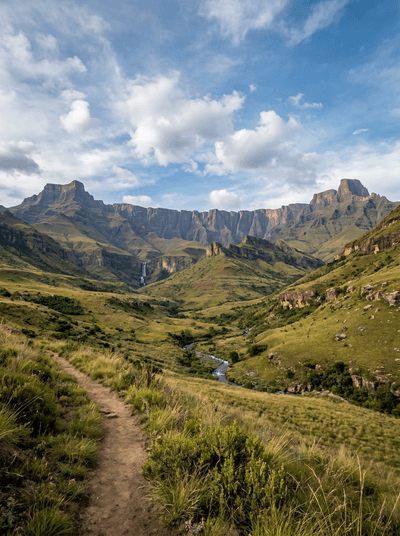
Basalt walls rise above sandstone caves painted across thousands of years.
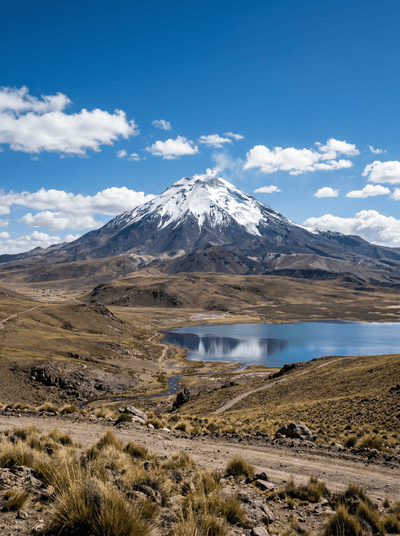
Parque Nacional Volcán Isluga
Chile
Volcanic horizons and high wetlands surround living Aymara settlements in the altiplano.
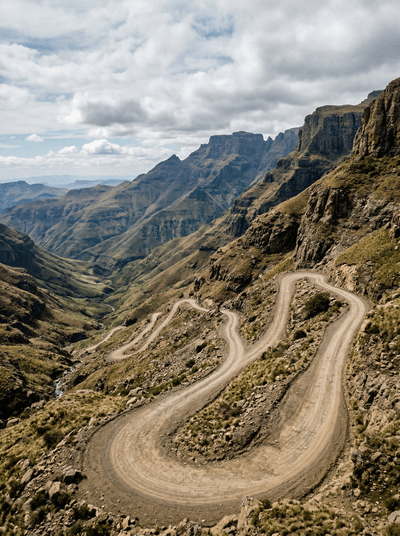
Sani Pass
South Africa
A switchback road climbs from green foothills to a high border above the clouds.
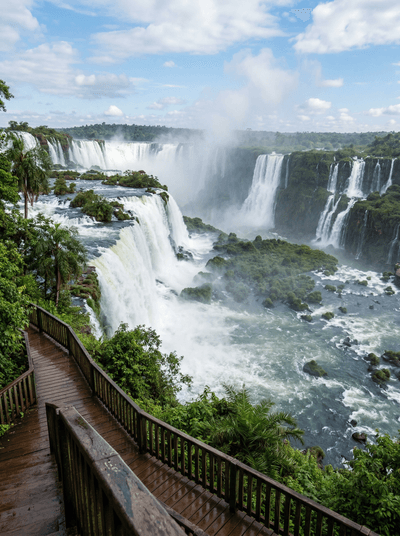
Iguazú Falls
Argentina
A river shatters into hundreds of waterfalls around the thunder of the Devil's Throat.
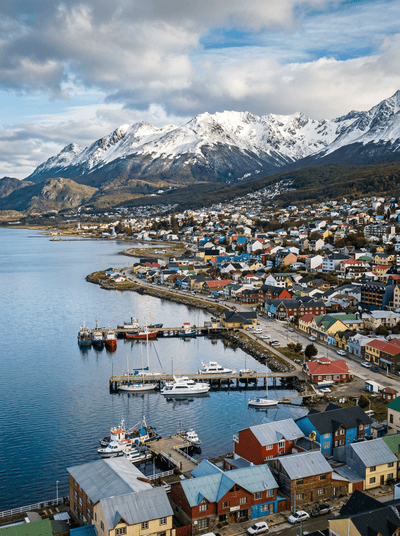
Ushuaia
Argentina
The port where Antarctica begins — beech forest climbing to glaciers at the planet's edge.
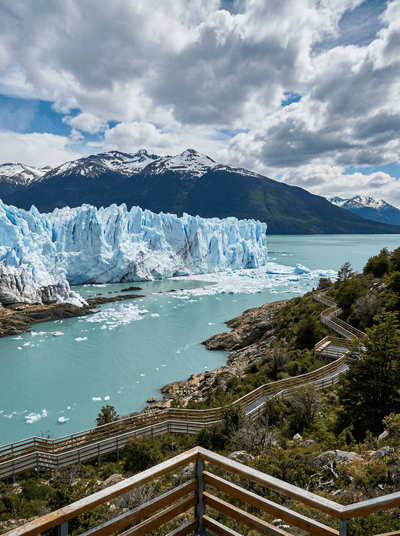
El Calafate
Argentina
A glacier calves office-block towers of ice into turquoise water as you watch.
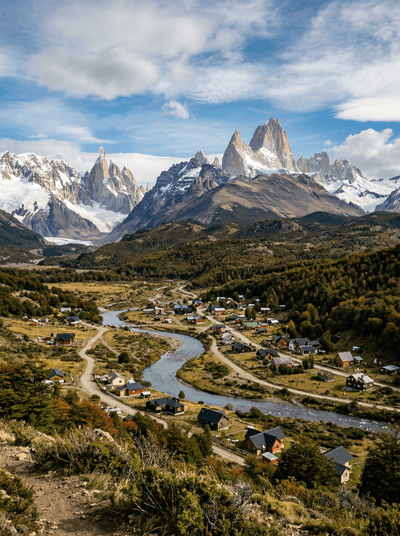
El Chaltén
Argentina
Granite spires pierce Patagonian cloud — condor country of vertical stone and wind.