Costa Rica
Cloudbridge Nature Reserve
Dead cattle pasture transformed into cloud forest in twenty years — quetzals returned before anyone expected.
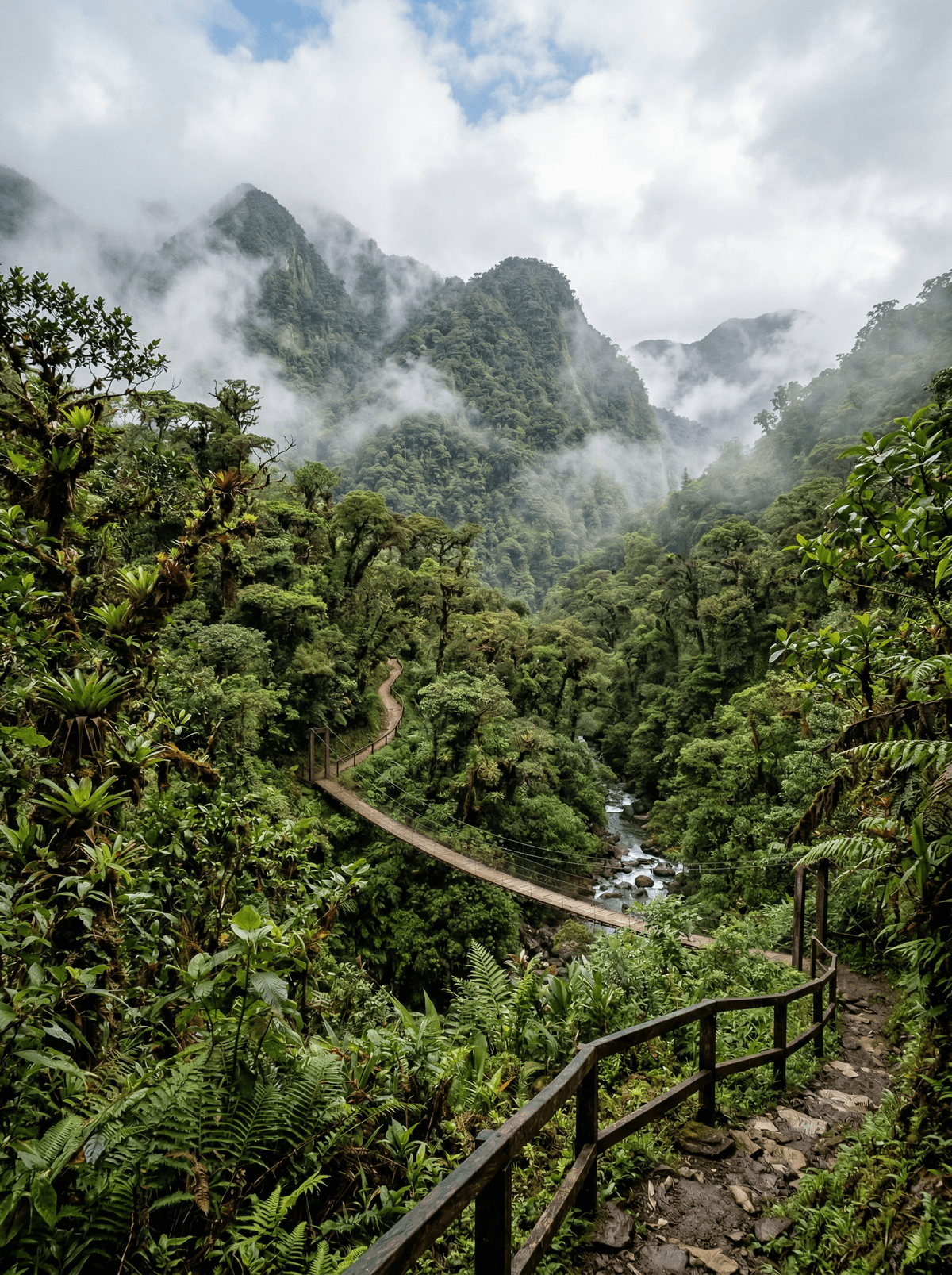
The trees here are young enough that you can watch the cloud forest rewriting itself. Mist rolls through canopy that did not exist at the turn of the millennium, clinging to branches planted by hand on hillsides that were bare cattle pasture. Cloudbridge is a living time-lapse of ecological recovery.
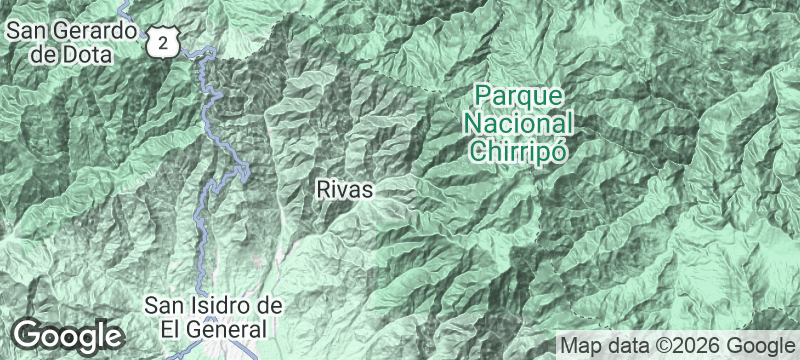
Cloudbridge was bought as degraded grazing land in 2000, and native trees in their tens of thousands have gone into its slopes since — planted, tagged and mapped so the recovery can be read hillside by hillside. Resplendent quetzals were recorded nesting in the young forest barely a decade after the first saplings went in, an endorsement no annual report could match. The reserve sits on the walking route toward Cerro Chirripó and doubles as an acclimatisation stop, where trekkers, researchers and volunteers share the trails. It is not a museum of what was lost — it is proof of what comes back when land is given the chance.
Solo
Walking regenerating forest alone carries a quiet optimism that stays with you — every tagged sapling is a promise kept.
Couple
A small reserve where one walk shows the before-and-after of reforestation — grounded, unpretentious and quietly moving.
- Bought as bare cattle pasture in 2000, the reserve has been replanted with native trees ever since.
- Resplendent quetzals returned to nest in the regenerating forest within roughly a decade.
- The reserve sits on the walking route toward Chirripó and serves as an acclimatisation stop.
- The reserve is a working recovery rather than a finished park, its planted natives tagged and mapped hillside by hillside.
Hearty trout and gallo pinto where San Gerardo de Rivas meets the reserve path.
Chorreadas — sweet corn pancakes — with strong farm coffee from the valley slopes.
Rannoch Moor
Scotland
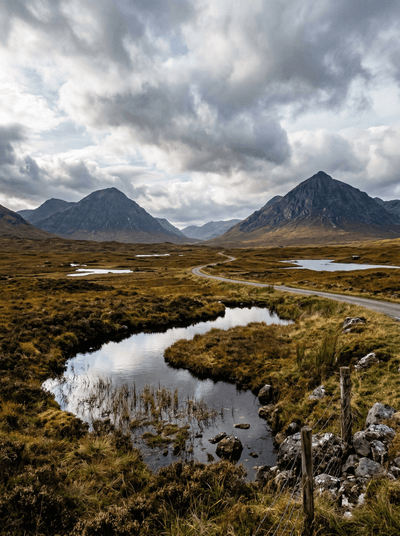
Fifty square miles of nothing — Britain's last emptiness, crossed by one road and one railway.
Al Madam
United Arab Emirates
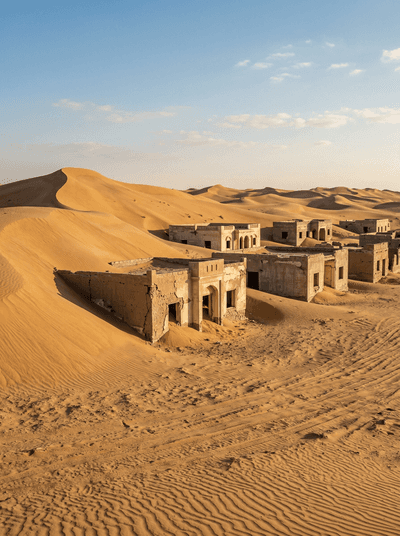
Sand pours through the doorways of a village the desert is swallowing whole.
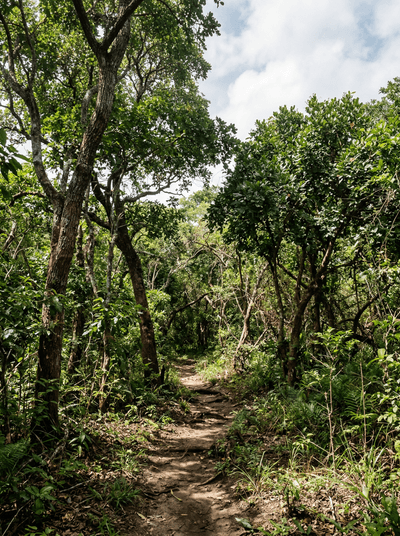
Arabuko-Sokoke Forest
Kenya
East Africa's largest coastal forest shelters the golden-rumped sengi — and nothing else does.

Wistman's Wood
England
Twisted ancient oaks dripping with moss in a silence so deep it hums.
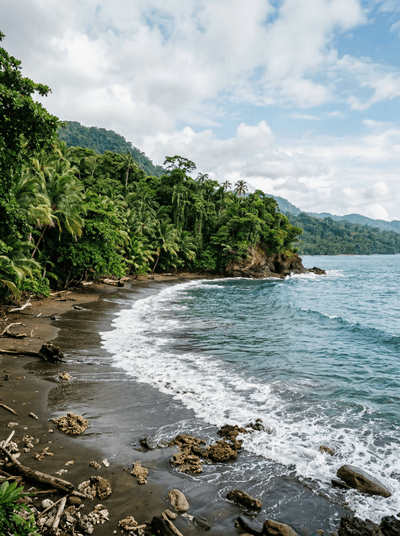
Gandoca-Manzanillo Wildlife Refuge
Costa Rica
Manatees shelter in tea-dark lagoons; the reef grows an oyster known nowhere else.
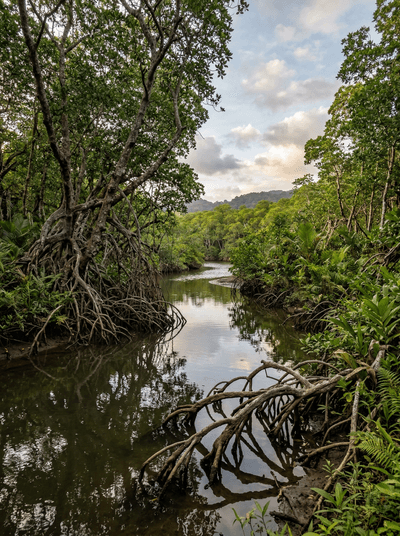
Térraba-Sierpe Wetlands
Costa Rica
Central America's largest mangrove system — root tunnels where caimans drift and spoonbills flash pink.
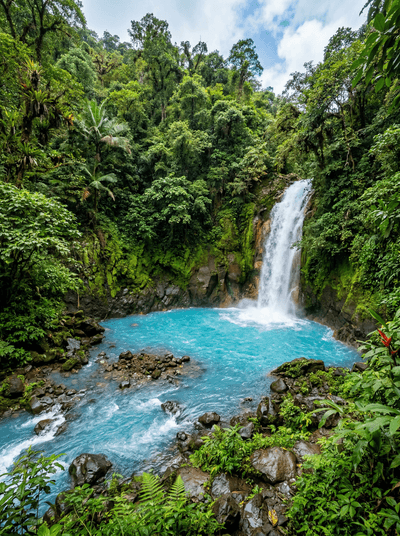
Río Celeste
Costa Rica
Two clear rivers collide and turn supernatural blue — no dye, no trick, just volcanic alchemy.
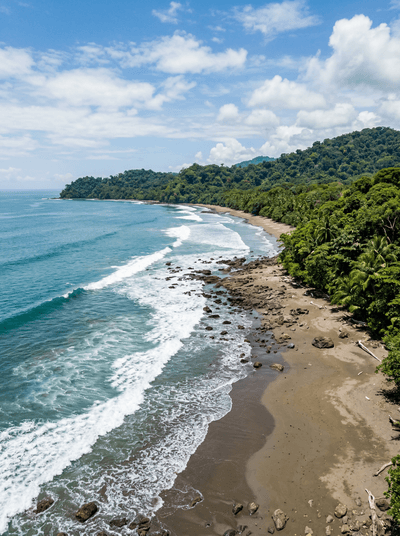
Pavones
Costa Rica
One of Earth's longest left-hand waves — ride for a full minute on a good swell.