Peru
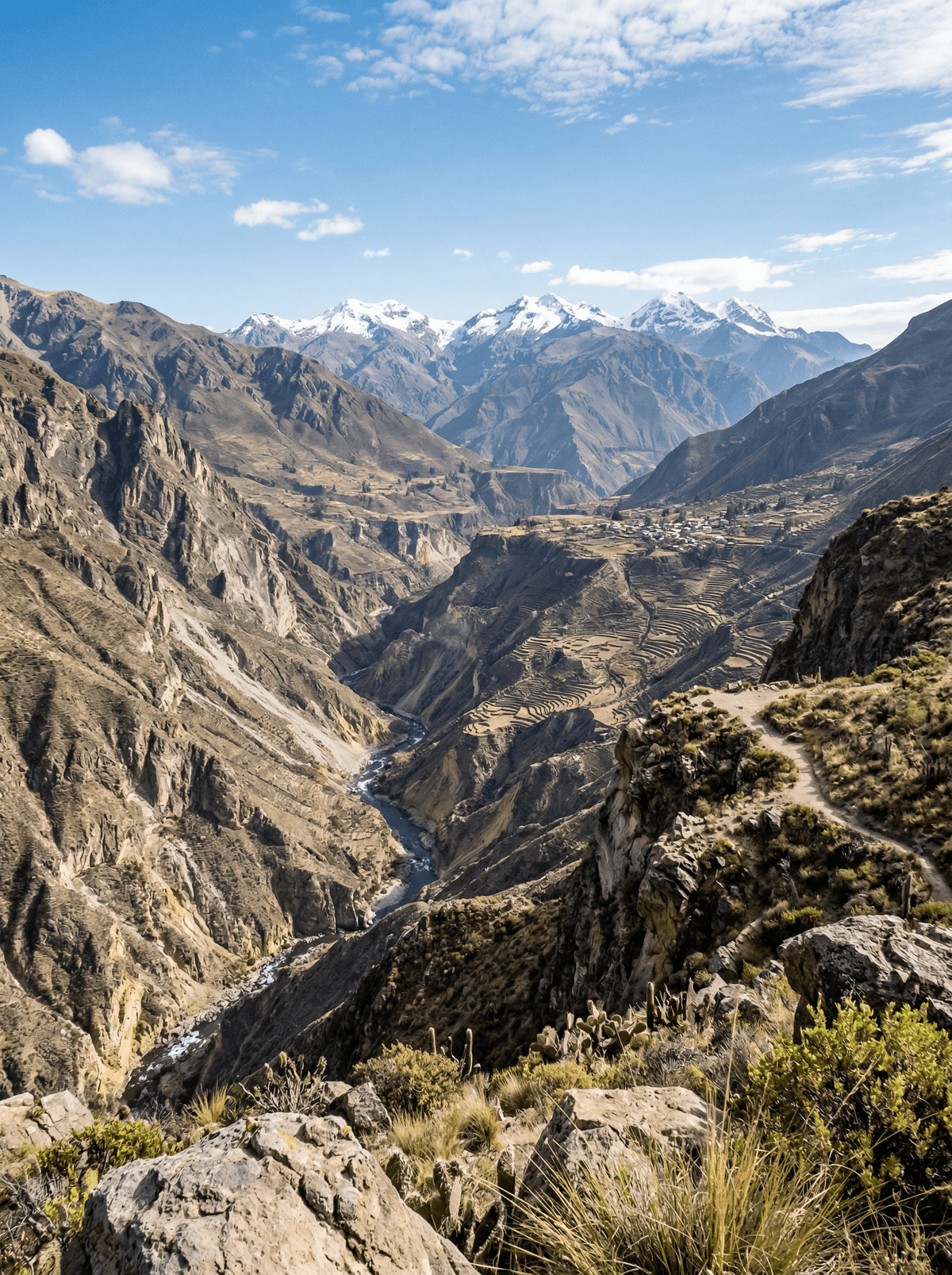
Colca Canyon
Condors riding dawn thermals out of a chasm that dwarfs the Grand Canyon.
The canyon withholds its scale at first. You stand at Cruz del Cóndor in the cold thin air, and the depth below is a dark abstraction. Then the thermals rise, and Andean condors may appear — three-metre wingspans tilting on invisible currents — and the scale lands when you realise the birds climbing past you have come up from a very long way down.
Colca is among the deepest canyons on Earth — outdoing the Grand Canyon — but the abyss is only half the story. Pre-Inca terraces stripe the canyon walls, still farmed by Collagua and Cabana communities through irrigation channels laid over a thousand years ago, and the valley's villages carry that heritage in church, dress and fiesta. Condors use the morning thermals on their own terms; no sighting is ever scheduled, which keeps the terraces and villages essential rather than incidental. Paths descend to the canyon floor through settlements reached by foot and mule alone — Sangalle's palm-fringed oasis deep below, and a serious climb back out. At Chivay, the valley's hub, volcanic springs steam beside the river.
Solo
The canyon descent is demanding but rich — sleeping at the oasis under walls that took millions of years to carve resets your sense of time.
Couple
Dawn at Cruz del Cóndor together, then Chivay's volcanic springs at dusk — a day that becomes a reference point.
Family
The condor viewpoint needs no trekking, the Chivay springs keep gentler, shallower pools, and the rim villages keep their herds, churches and terraces at gentle gradients.
- One of Earth's deepest canyons — the void at Cruz del Cóndor swallows whole mornings.
- Collagua terraces a thousand years old still feed the valley's villages.
- Condors ride the dawn thermals on their own schedule — never a guarantee, always a hope.
- Chivay, the valley's hub, keeps volcanic springs steaming for the evening after.
Alpaca charqui rehydrated in soups that have warmed canyon walkers for centuries.
Quinoa soup and a cold beer at a canyon-rim table after the springs.
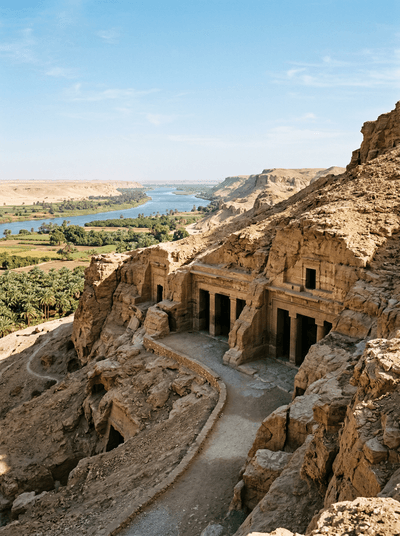
Beni Hasan
Egypt
Rock-cut tombs high on a cliff face, their four-thousand-year-old wrestlers still mid-grapple on the walls.
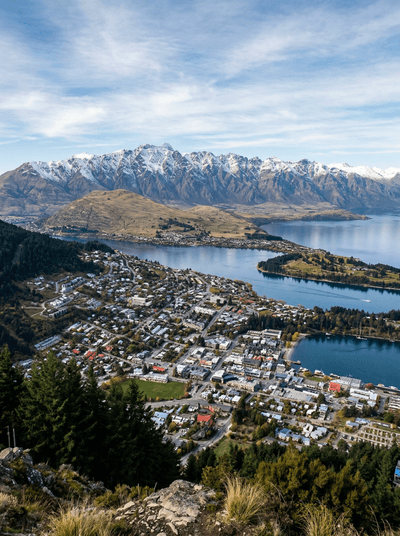
Queenstown
New Zealand
The town where bungee jumping was born, cradled between a glacial lake and jagged peaks.
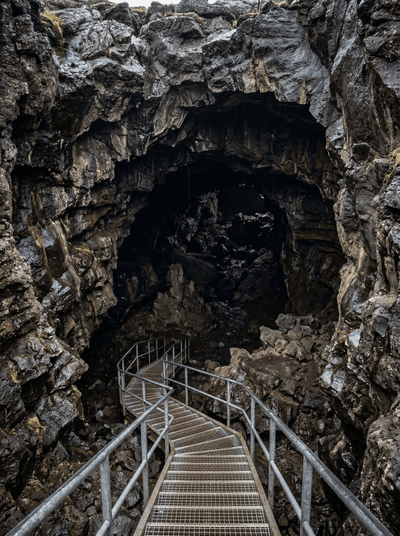
Vatnshellir Cave
Iceland
Descending an 8,000-year-old spiral staircase into the frozen, colourful heart of a lava tube.
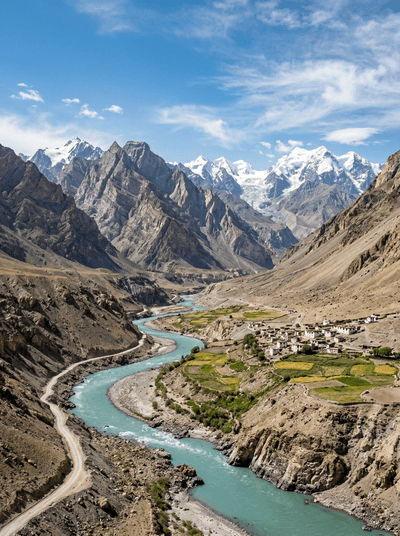
Zanskar Valley
India
Cliff-clinging monasteries above a frozen river that was for centuries the only winter road.
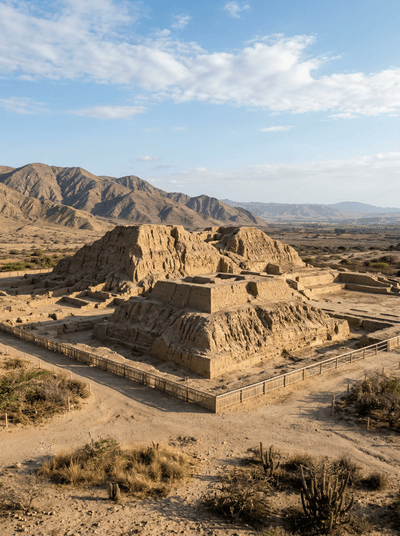
Sipán
Peru
An unlooted Moche royal tomb whose gold rewrote the archaeology of the Americas.
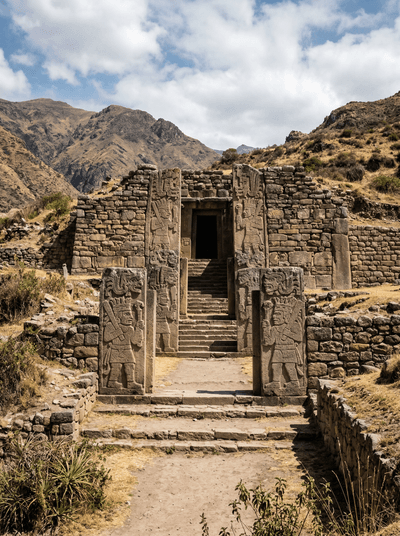
Sechín
Peru
Temple walls carved with warriors and the dismembered — 3,600-year-old stone testimony.
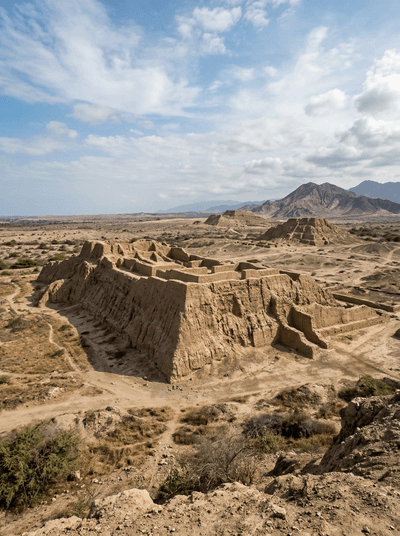
Túcume
Peru
A plain of eroded adobe pyramids rising from sugar cane like a drowned civilisation.
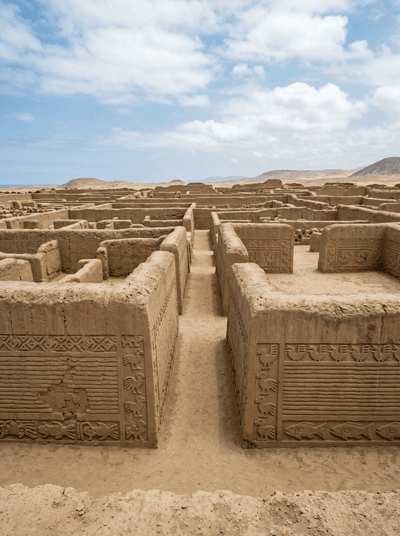
Chan Chan
Peru
The Americas' greatest earthen city — walls still carved with fish and waves after a millennium.