Peru
Túcume
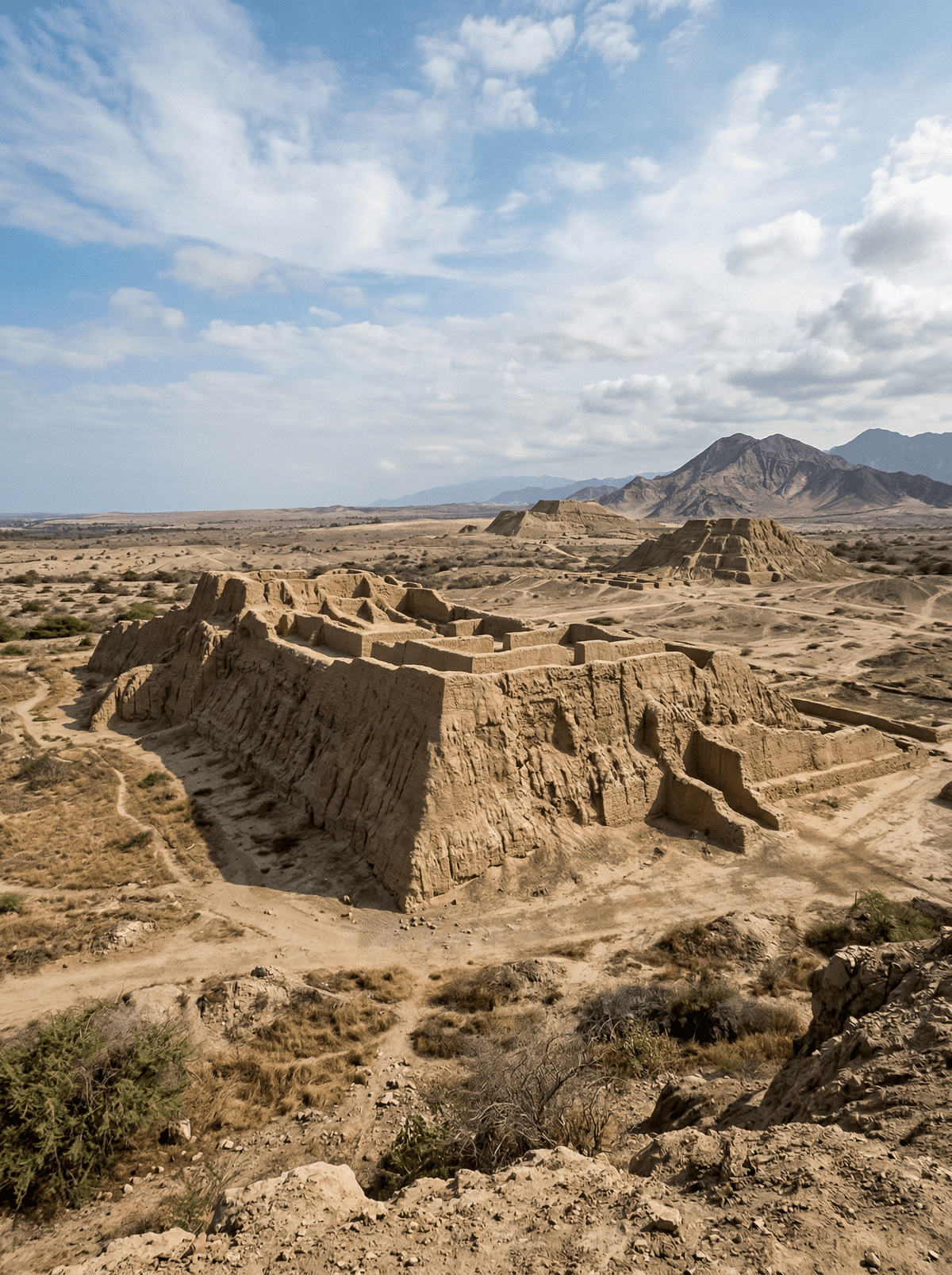
A plain of eroded adobe pyramids rising from sugar cane like a drowned civilisation.
The pyramids rise from the sugar-cane plain like weathered hills, so eroded and sand-draped they barely read as buildings — until you climb the viewpoint hill and see the whole ceremonial city spread below. Túcume shocks by sprawl rather than height: an entire civilisation's architecture, most of it still under the sand.
Túcume is one of the great adobe complexes of Peru's north coast — a spread of monumental platform mounds, some twenty-six by the traditional count, raised by the Lambayeque culture from around 1000 CE and used in turn by Chimú and Inca successors. Huaca Larga, the giant among them, runs some 700 metres — adobe architecture at a scale the Americas rarely attempted. Thor Heyerdahl of Kon-Tiki fame made Túcume his last great excavation in the late 1980s, and the site museum carries the ceramics, textiles and metalwork his teams and their successors recovered. The mounds themselves are fragile, walked around rather than over; the authorised viewpoint on the sacred hill at the complex's heart delivers the panorama that makes the whole plain make sense.
Solo
A fraction of the south's visitors, and mounds still holding most of their secrets — walking here keeps the feel of discovery museums can't sell.
Couple
Sugar cane on one side, sand-veiled pyramids on the other — the empty-site stillness becomes a shared moment.
Family
Children can count the mounds from the viewpoint and let the museum rebuild the city in their heads. Marked paths, water, hats.
- Twenty-six mounds by the traditional count spread across the plain — a whole ceremonial city.
- Huaca Larga runs some 700 metres, adobe building at continental scale.
- Thor Heyerdahl made Túcume his final major excavation in the late 1980s.
- Cerro Purgatorio, the sacred hill at the complex's heart, reveals the full sprawl in one sweep.
Arroz con pato — duck braised with dark beer and coriander, the rice stained green — Lambayeque's masterpiece.
River prawns sautéed with garlic and ají where the season and the valley provide.
Paestum
Italy
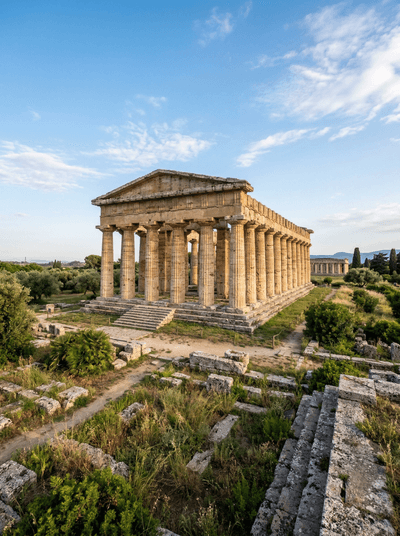
Three Greek temples older than the Parthenon, still standing in an open Cilento field.
Agrigento
Italy
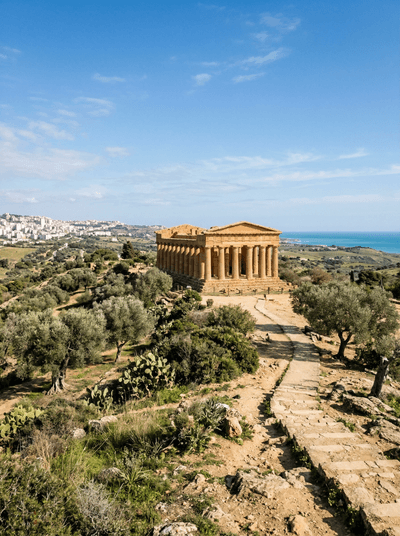
Greek temples lit gold at night along a ridge, almond blossoms carpeting the valley below.
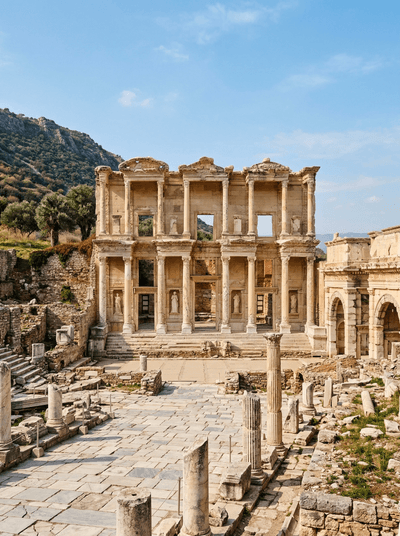
Ephesus
Turkey
Marble streets still grooved by Roman chariot wheels lead to a library that held 12,000 scrolls.
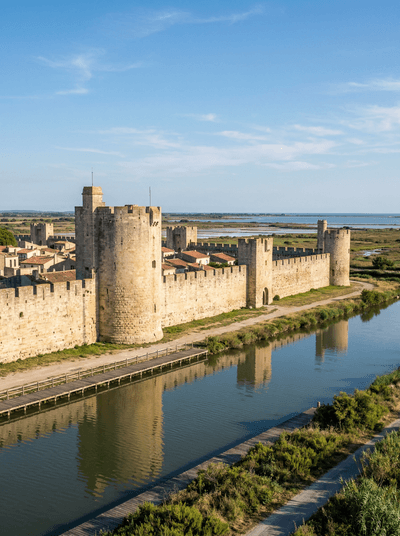
Aigues-Mortes
France
Crusader ramparts stranded on salt flats where the sea withdrew and left a walled port behind.
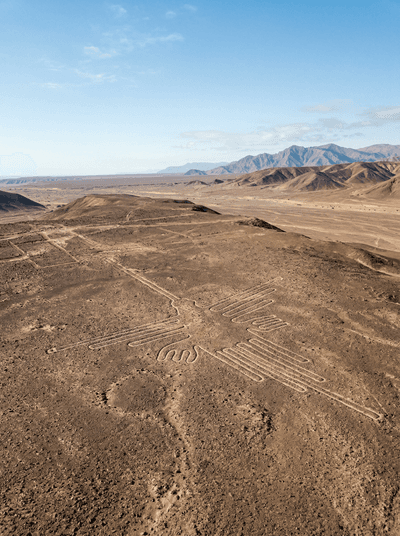
Nazca
Peru
Ancient figures etched so large across the desert they resolve only from above.
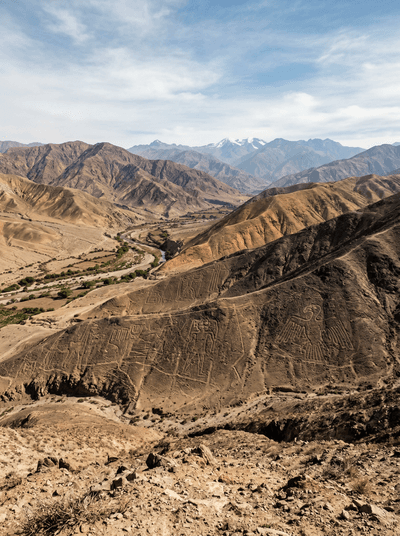
Palpa
Peru
Hillside geoglyphs with human faces, in a valley the tour planes ignore.
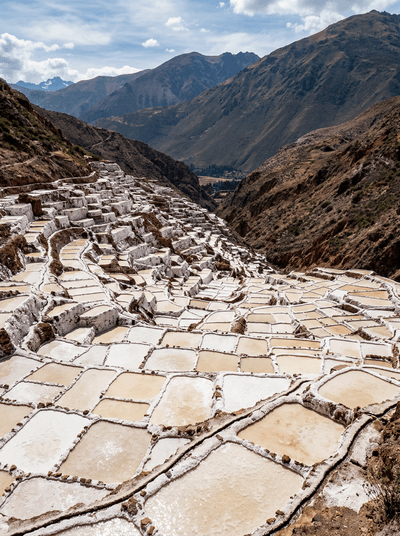
Salineras de Maras
Peru
Thousands of salt pans cascading down a mountainside, hand-harvested since before the Inca.
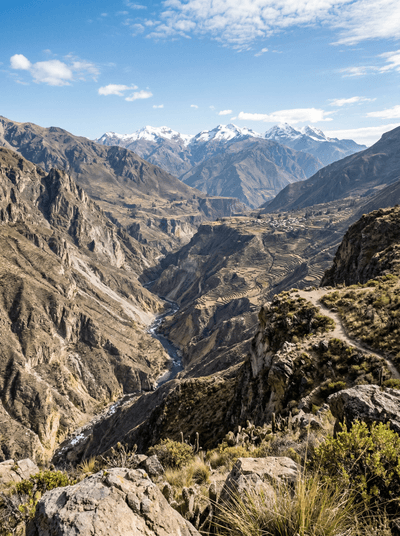
Colca Canyon
Peru
Condors riding dawn thermals out of a chasm that dwarfs the Grand Canyon.