Peru
Chan Chan
The Americas' greatest earthen city — walls still carved with fish and waves after a millennium.
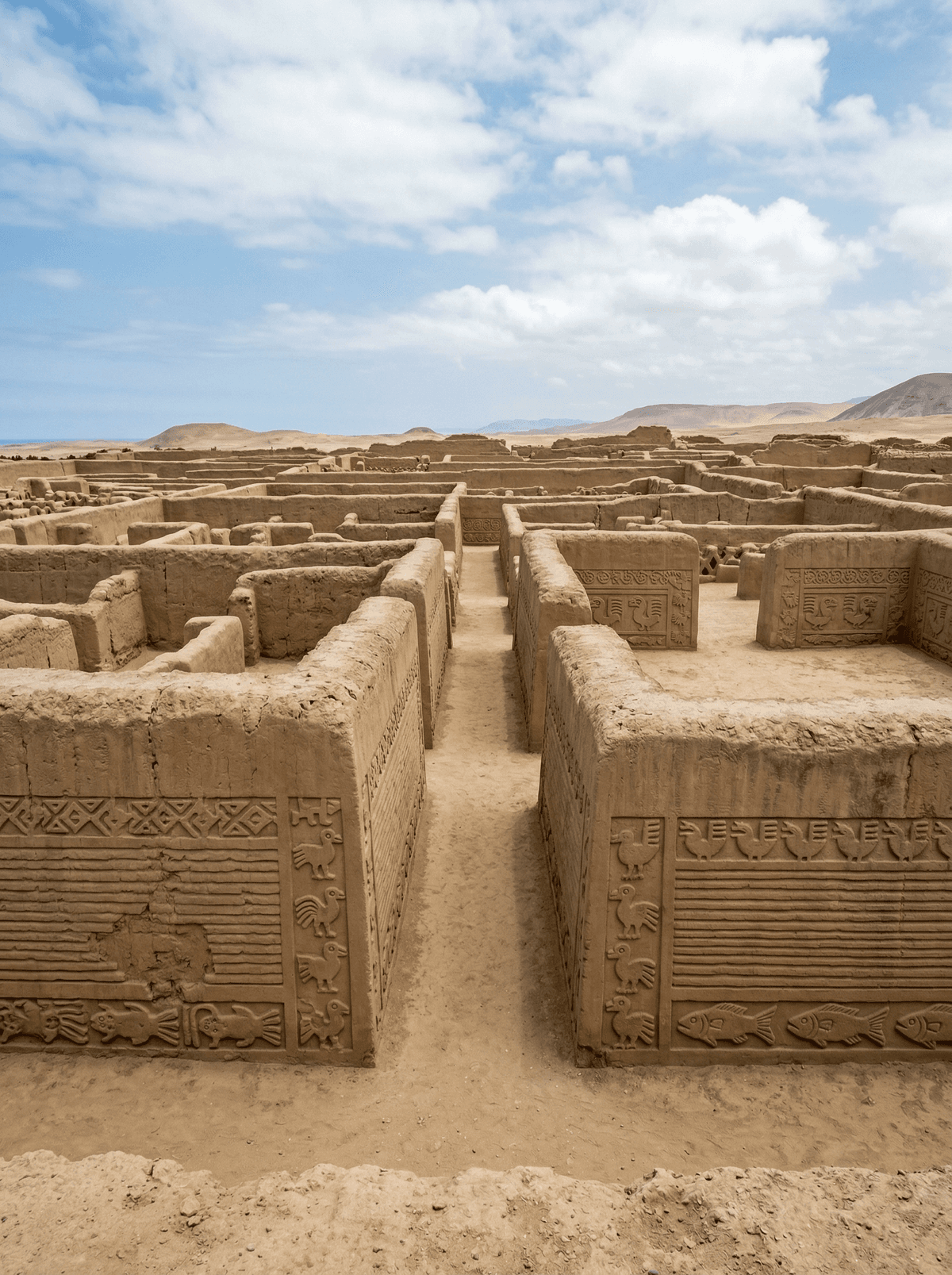
The walls still speak. Fish, waves, seabirds and fishing nets run in relief along adobe surfaces that have stood in the coastal desert for a thousand years. In the conserved palace circuit the corridors narrow and widen like a rhythm — intimate passages opening into ceremonial plazas where silence sits heavy in the dry air.
Chan Chan was the capital of the Chimú kingdom and remains the most extensive pre-Columbian earthen city in the Americas — a UNESCO site whose walled royal compounds, the ciudadelas, succeeded one another as rulers did, each a labyrinth of courtyards, audience halls and water reservoirs pressed from mud. Visitors walk a conserved sector rather than the vast whole: its friezes of marine life, patterned like woven textiles in earth, survive a millennium of desert sun because conservation never stops — UNESCO has carried Chan Chan on its danger list since 1986, rain and rising groundwater forever negotiating with the adobe. Trujillo sits minutes away, which makes the pairing easy: mud metropolis by morning, Huanchaco's reed boats by sundown.
Solo
The carved friezes and corridor acoustics reward close solo attention — you can hear wind move through walls built for kings.
Couple
Repeating waves and fish along golden-brown walls make these Peru's most photographed ancient surfaces — early light, unhurried pace.
Family
A city built entirely of mud grips children instantly, and the sea-creature reliefs are theirs to find. Sun cover and barrier respect non-negotiable.
- The Chimú capital is the Americas' most extensive earthen city.
- Marine friezes — fish, waves, nets — still pattern the conserved palace walls.
- Walled ciudadelas succeeded one another as rulers did, labyrinth after labyrinth.
- Carried on UNESCO's danger list from 1986, the city survives by ceaseless conservation.
Seco de cabrito from Trujillo's picanterías — goat slow-cooked in coriander and chicha.
Shámbar on Mondays — the wheat, pulse and pork stew the whole city sits down to.
Paestum
Italy
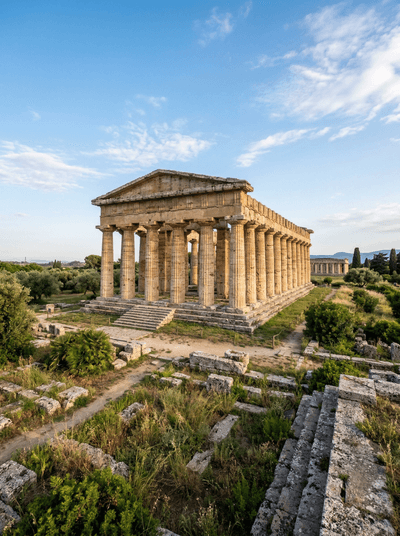
Three Greek temples older than the Parthenon, still standing in an open Cilento field.
Ephesus
Turkey
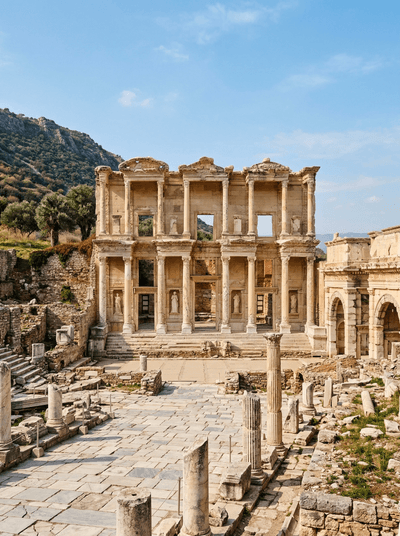
Marble streets still grooved by Roman chariot wheels lead to a library that held 12,000 scrolls.
Agrigento
Italy
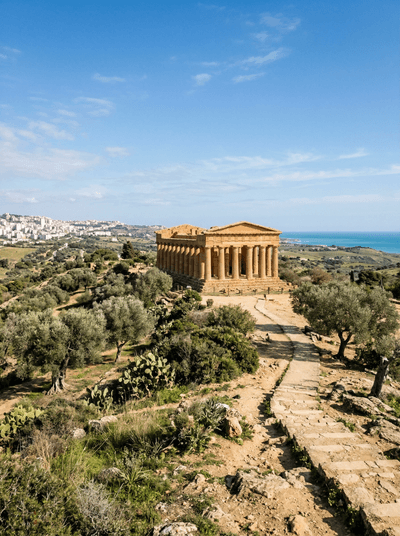
Greek temples lit gold at night along a ridge, almond blossoms carpeting the valley below.
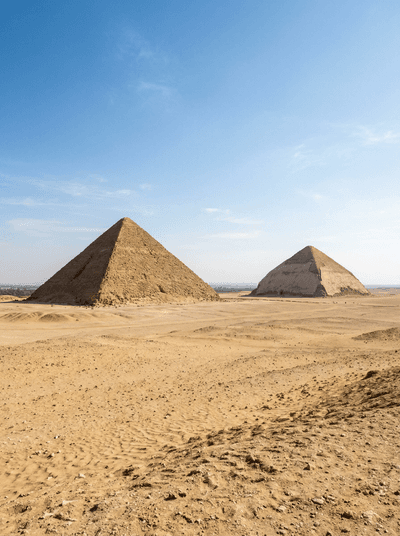
Dahshur
Egypt
Two experimental pyramids alone in empty desert — one bent, one red, hardly a visitor.
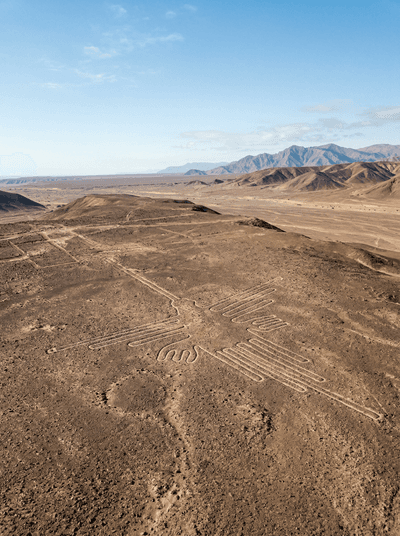
Nazca
Peru
Ancient figures etched so large across the desert they resolve only from above.
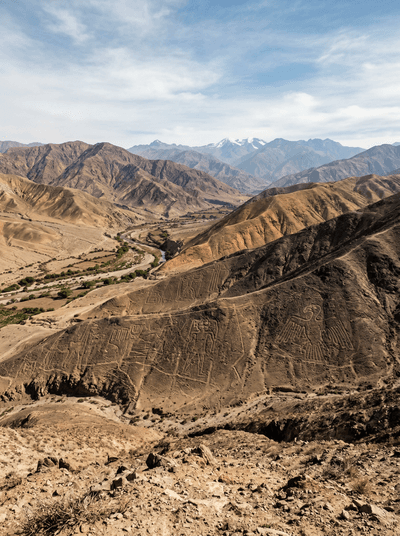
Palpa
Peru
Hillside geoglyphs with human faces, in a valley the tour planes ignore.
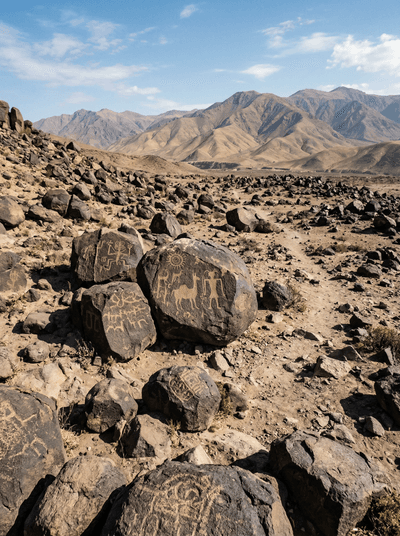
Toro Muerto
Peru
A desert of engraved boulders — thousands of petroglyphs, barely a visitor.
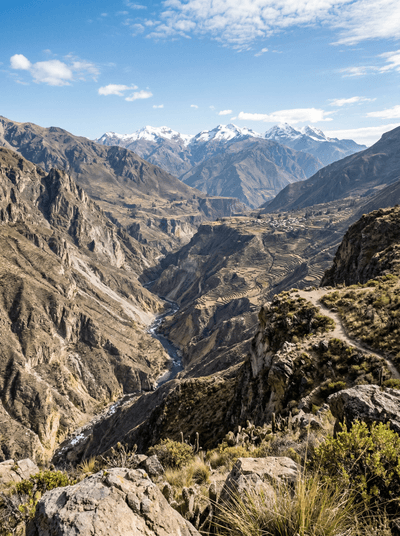
Colca Canyon
Peru
Condors riding dawn thermals out of a chasm that dwarfs the Grand Canyon.