Portugal
Cromeleque dos Almendres
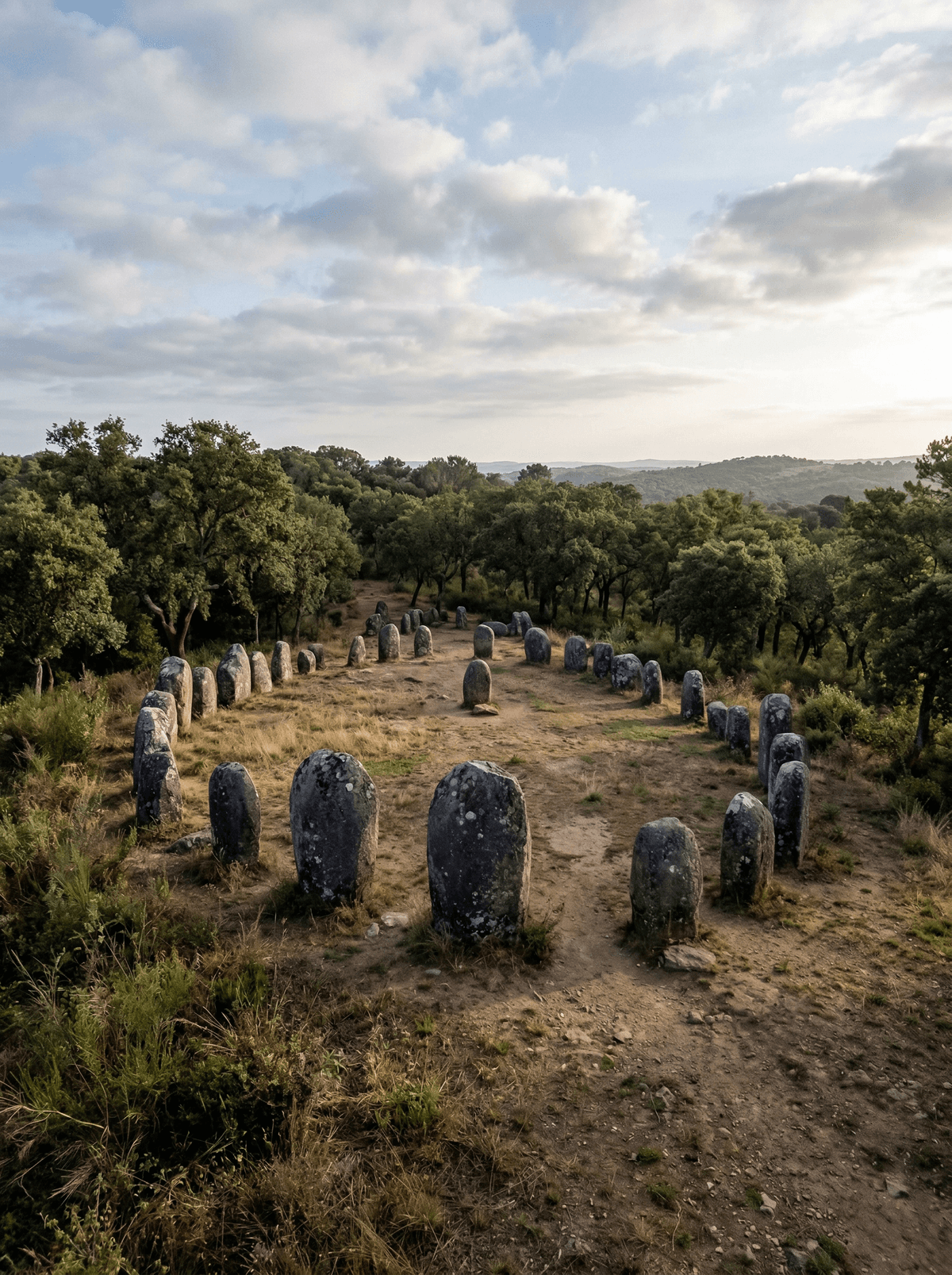
Older than Stonehenge, nearly a hundred stones stand in a clearing of cork oaks.
You reach them along a rough track that winds between cork oaks, their bark stripped to reveal red trunks — an approach that asks patience and rewards it. Then the clearing opens and the stones appear: nearly a hundred of them, standing in rough ovals, some shoulder-height, others barely knee-high, all silent. No ticket booth — just the clearing, the cork oaks and the oldest stone circle in the Iberian Peninsula.
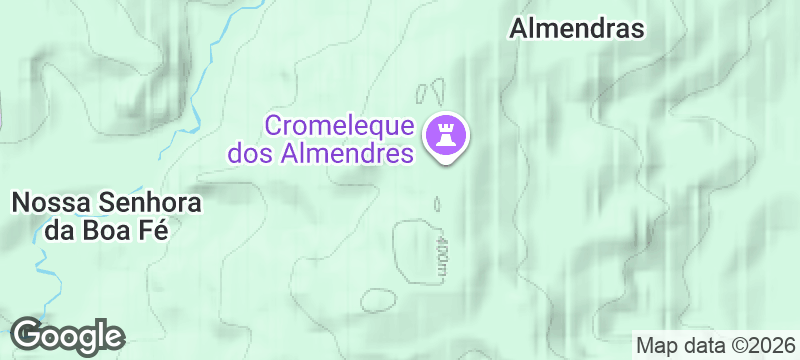
The Cromeleque dos Almendres is a megalithic enclosure near Évora, its earliest phases dating to around 6,000 BCE — predating Stonehenge by roughly two millennia. Ninety-five granite stones stand in two concentric ovals on a gentle slope amid working cork oak woodland, several bearing carved circles, staffs and a schematic human figure, and the site's orientation corresponds to solstice sunrises. Rediscovered in the 1960s, its purpose — observatory, ritual ground, or both — is still debated. Évora's municipality keeps the site open through a protective visitor circuit, so the walk among the stones is now gently channelled rather than fenced off, and the solitary Menir dos Almendres stands a couple of kilometres away. The monument itself is compact — an hour or two rather than a full day — which is precisely why it pairs so naturally with Évora's old town and the Alentejo's megalithic scatter beyond.
Solo
Arriving alone at a stone circle seven millennia old, with no sound but wind through cork oaks, is the sort of moment solo travellers live for — even the rough track in works as a filter.
Couple
The approach through cork oak forest, the gradual reveal of the stones and the deep quiet make Almendres feel like a discovery meant for two, with Évora's restaurants a short drive away.
Family
Older children with any feel for ancient history will be awestruck — walking among stones older than the pyramids, spotting the carved motifs, picnicking under cork oaks. Education at its most vivid.
- The largest megalithic enclosure in Iberia: 95 granite stones raised millennia before Stonehenge.
- A municipal protective circuit keeps the visit open while guarding the stones.
- Several stones still carry engraved circles, staffs and a schematic figure.
- The alignment corresponds to solstice sunrise, a deliberate astronomical design.
Alentejo olive oil pressed from centuries-old groves, poured generously over everything.
Ensopado de borrego — lamb stew thick with bread, Alentejo comfort at its deepest.
Taveuni
Fiji
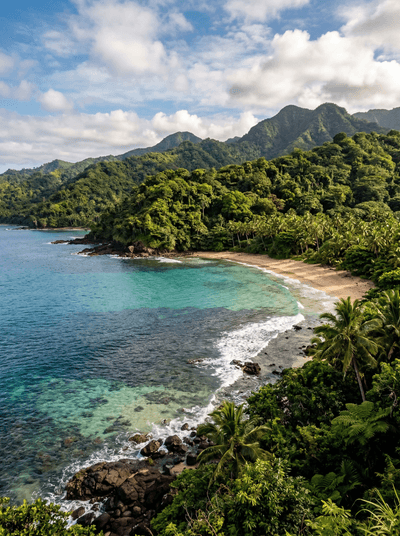
Stand astride the 180th meridian in rainforest, one foot in today, one in yesterday.
Parque Nacional Conguillío
Chile
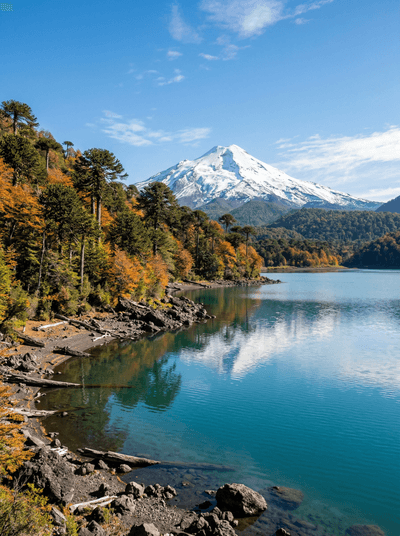
Araucaria crowns stand over black lava and clear lakes beneath Volcán Llaima.
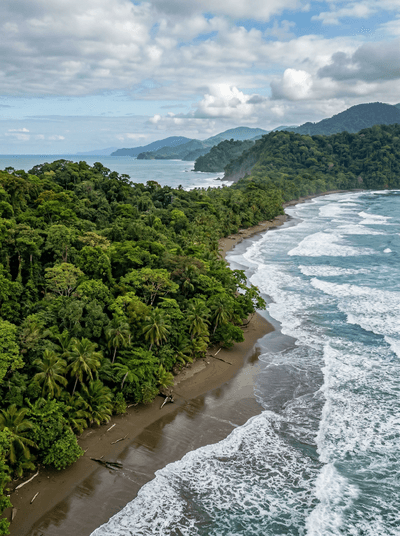
Corcovado National Park
Costa Rica
National Geographic called it the most biologically intense place on Earth. They undersold it.
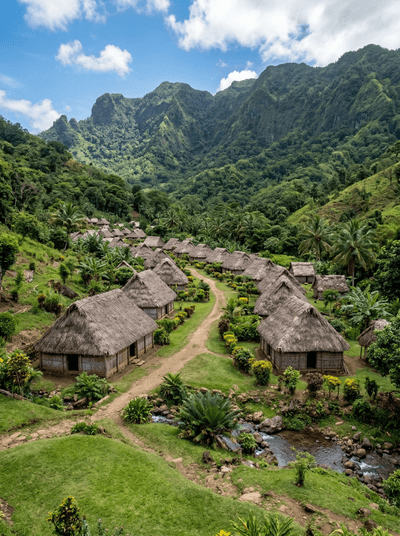
Navala Village
Fiji
Two hundred thatched bures, all built the same size, climb a valley above the Ba River.
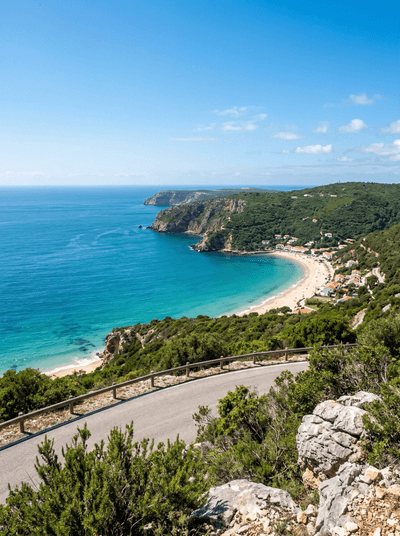
Arrábida
Portugal
Turquoise coves locked between limestone cliffs and monastery forest above the sea.
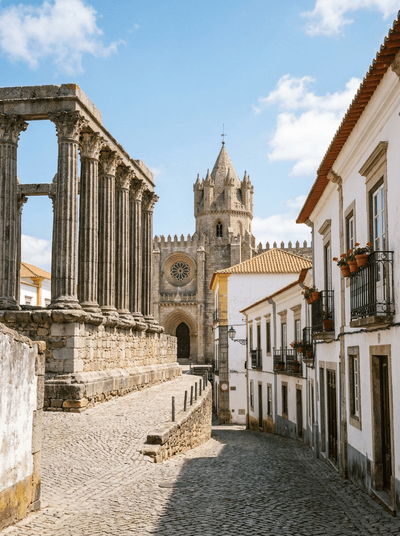
Évora
Portugal
A Roman temple stands intact beside a chapel the monks lined with their own dead.
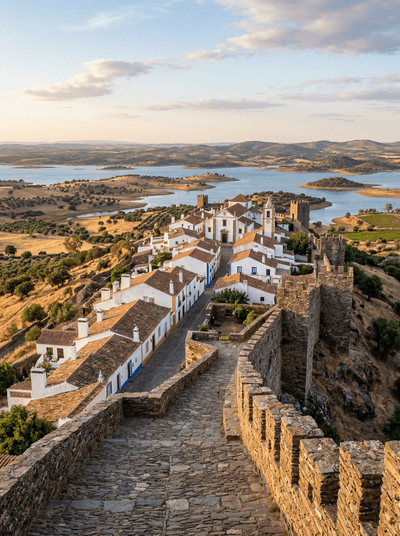
Monsaraz
Portugal
A walled village of whitewashed stone above a lake so still it doubles the sky.
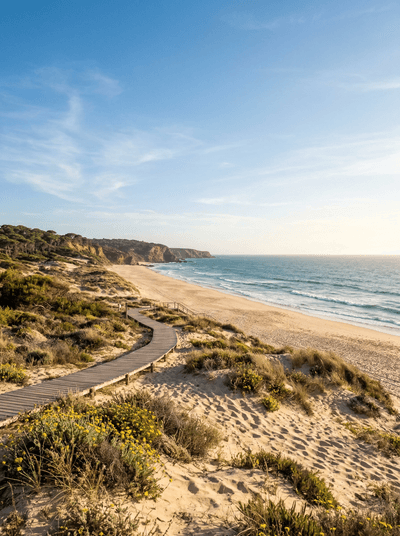
Comporta
Portugal
Rice paddies end where the dunes begin, an undeveloped Atlantic beach running for hours.