Argentina
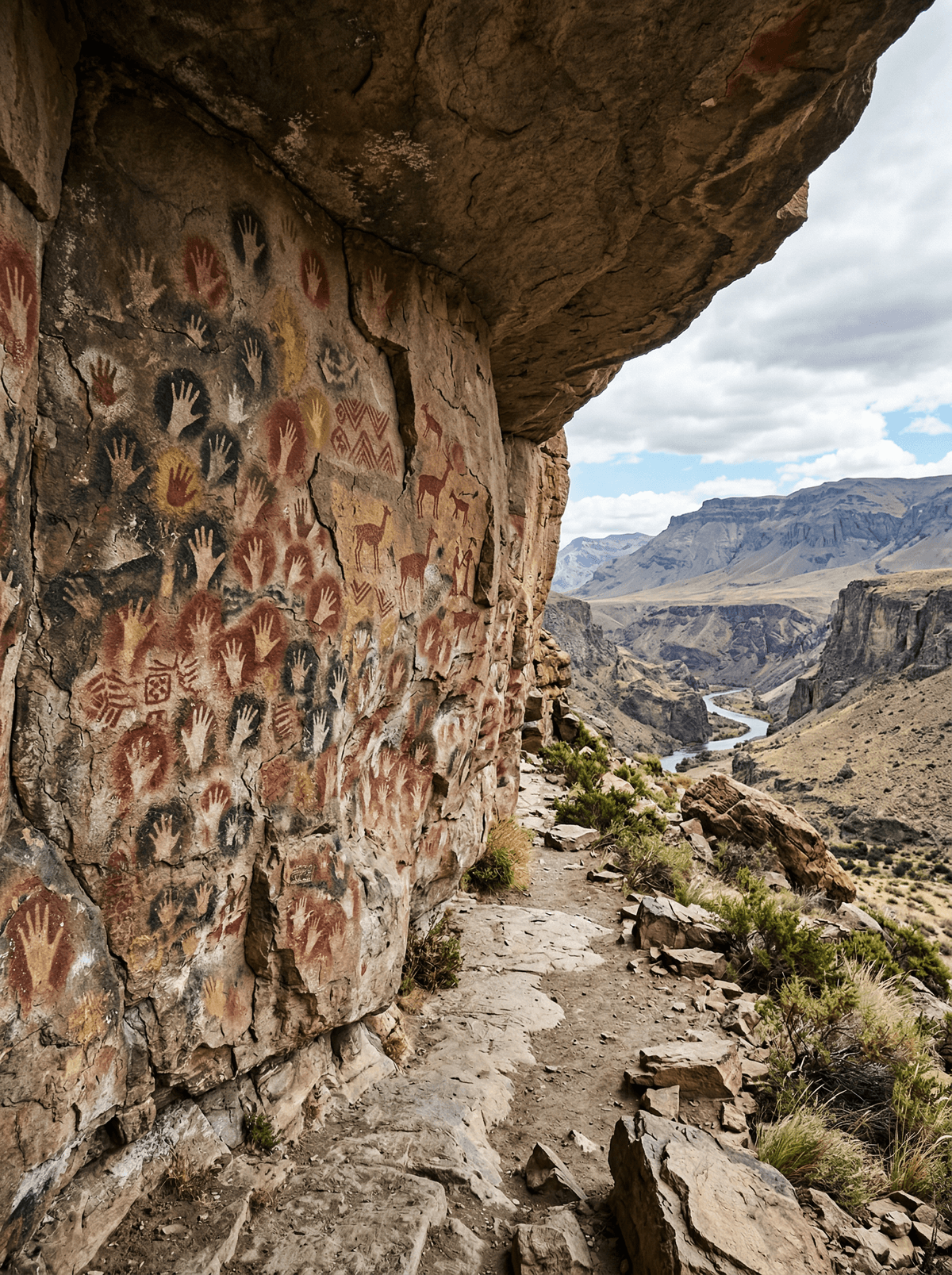
Cueva de las Manos
Handprints stencilled on canyon walls over nine millennia — a people's signature in ochre.
The painted hands are everywhere — stencilled in red, black, white and yellow across the rock of the Pinturas River canyon, beside running guanacos and geometric patterns no one has fully decoded. The oldest were made around 9,300 years ago by people who pressed a palm to the rock and blew ochre through a bone tube, and the stencils have barely faded. They are looking back at you.
Cueva de las Manos holds the most extensive early rock art in the Americas, UNESCO-listed, its painted sequence running from roughly 9,300 years ago to about 700 AD across at least a dozen cultural styles — negative hand stencils first, then hunting scenes and abstract geometry. Researchers read many of the hands as adolescent, possibly the trace of initiation rites among the ancestors of the Tehuelche, and the dry basalt canyon carved by the Río Pinturas preserved the mineral-and-fat pigments with extraordinary completeness. Visits run as timed guided circuits along the site trail, taken in arrival order; the gateway town lies more than 150 kilometres north, so the dependable plan arrives early and provisioned, then extends into the canyon's authorised trails while the light lasts.
Solo
Standing before the panels in a small guided group, the canyon silent around you, reading nine millennia of human gesture on rock recalibrates scale in a way that stays for years — and the remoteness makes the encounter feel earned.
Couple
The cave and the canyon complement each other into a full day: red basalt walls, condors nesting in the cliffs above on their own terms, and the slow reveal of each panel taken without racing it.
- Hand stencils crowd the shelter walls by the hundred, sprayed around palms held to the rock.
- Ochre, manganese and white mineral pigments have barely faded across nine millennia.
- Visits are guided and timed along the site trail, joined in arrival order.
- The UNESCO site sits in deep Patagonian wilderness, its gateway town far up Ruta 40.
Cordero patagónico at an estancia on the canyon road, slow-cooked on an iron cross.
Lunch carried from the gateway town — the site itself is a timed circuit, not a stop with services.
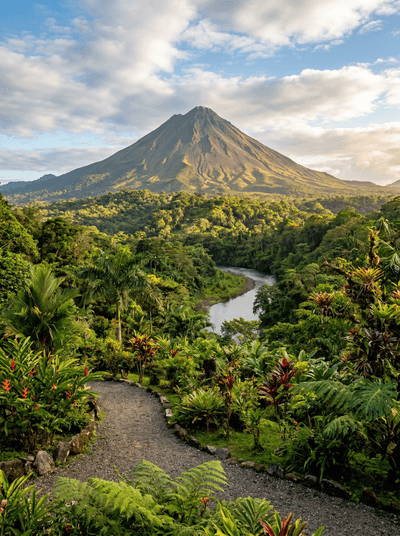
Arenal & La Fortuna
Costa Rica
Hot springs steaming through jungle beneath a volcano's perfect cone at dusk.
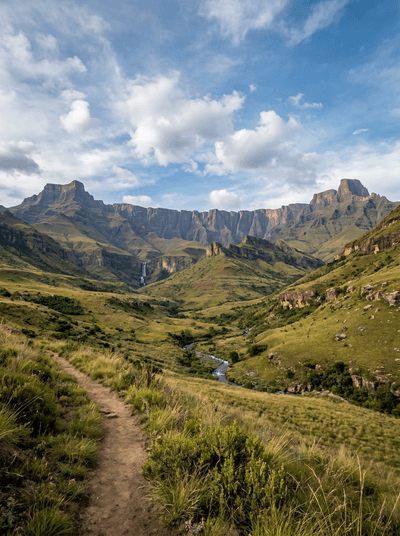
Drakensberg
South Africa
Basalt walls rise above sandstone caves painted across thousands of years.
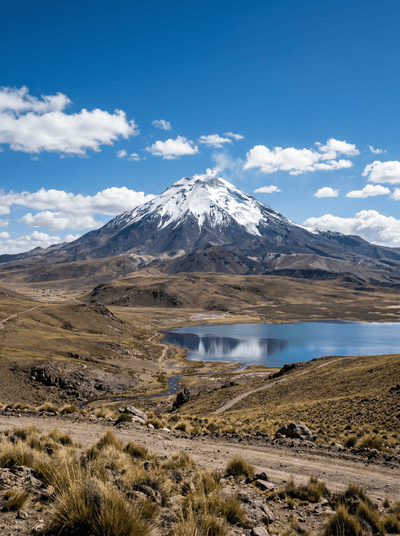
Parque Nacional Volcán Isluga
Chile
Volcanic horizons and high wetlands surround living Aymara settlements in the altiplano.
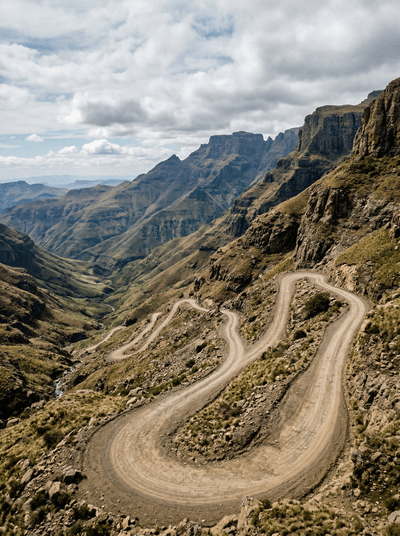
Sani Pass
South Africa
A switchback road climbs from green foothills to a high border above the clouds.
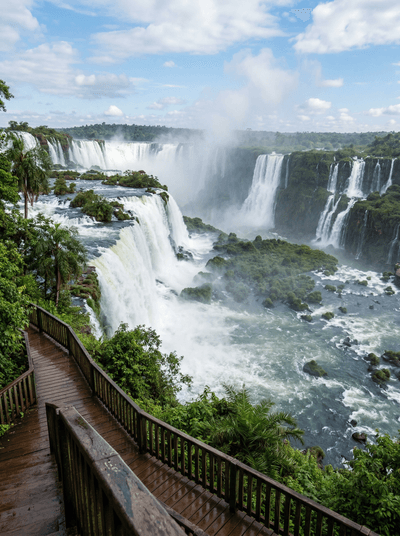
Iguazú Falls
Argentina
A river shatters into hundreds of waterfalls around the thunder of the Devil's Throat.
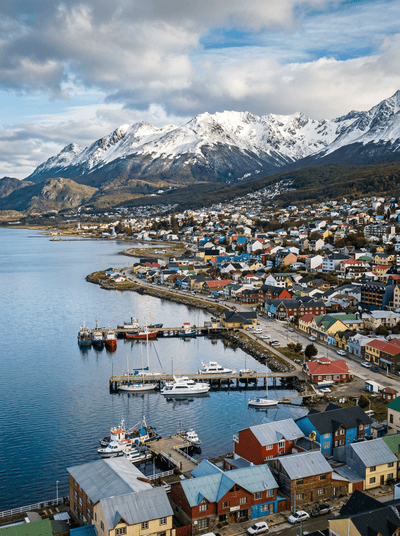
Ushuaia
Argentina
The port where Antarctica begins — beech forest climbing to glaciers at the planet's edge.
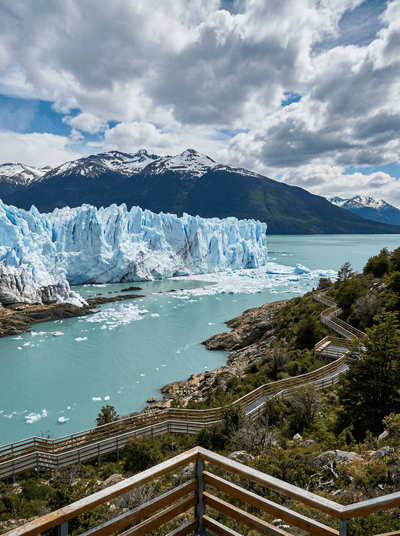
El Calafate
Argentina
A glacier calves office-block towers of ice into turquoise water as you watch.
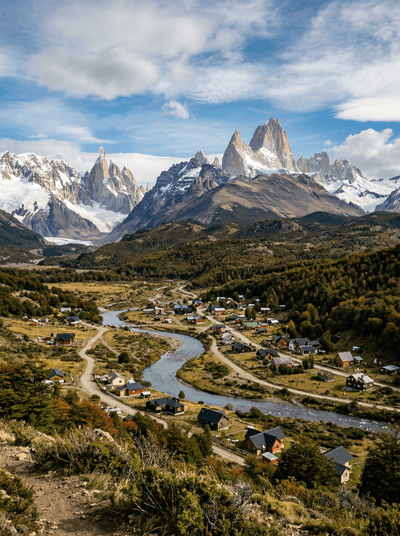
El Chaltén
Argentina
Granite spires pierce Patagonian cloud — condor country of vertical stone and wind.