Pakistan
Derawar Fort
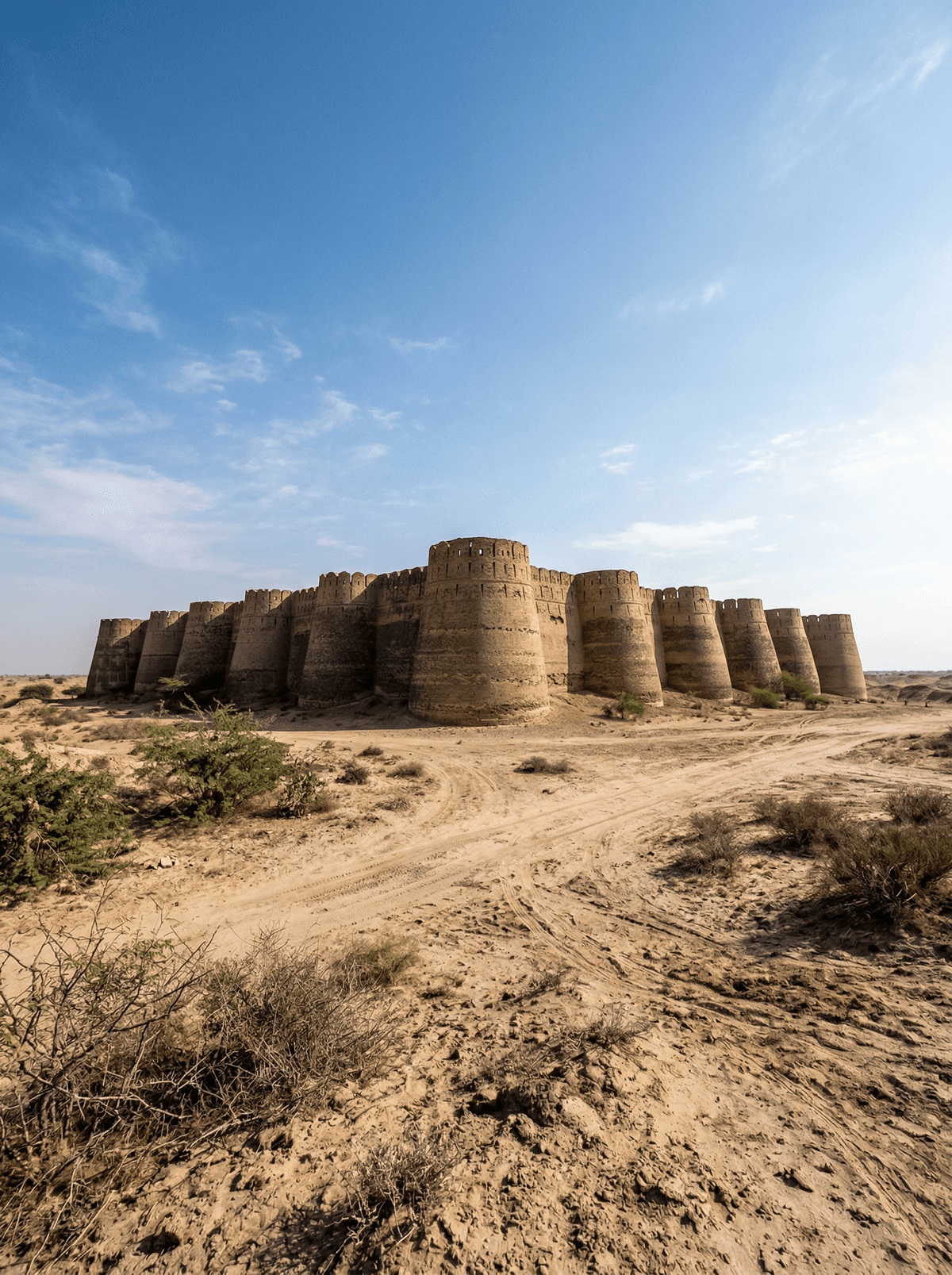
Forty sand-coloured bastions rise from a desert so flat the fortress appears to float.
Forty bastions of sand-coloured brick rise from a desert so flat and featureless that the fort appears to hover above the earth. The walls curve in a perfect square, their crenellations casting sawtooth shadows across the Cholistan sand. Nothing else competes for the horizon. Derawar is a monument to improbability — a fortress built where no fortress has any logical reason to exist.
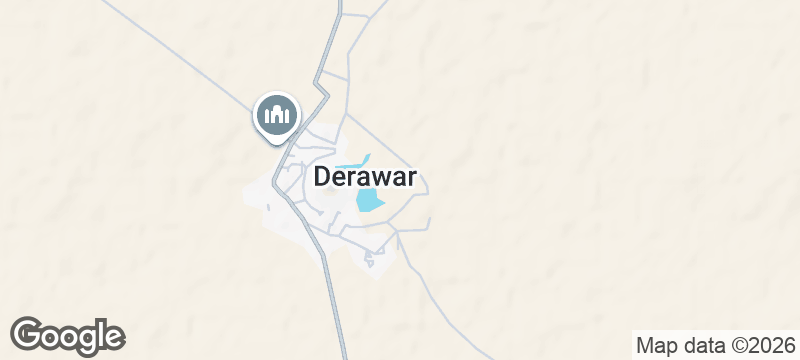
Derawar Fort stands in the Cholistan Desert of southern Punjab, roughly 100 kilometres south of Bahawalpur. Built in the 9th century by Rai Jajja Bhatti, a Hindu Rajput ruler, it was later captured by the Abbasi nawabs of Bahawalpur, whose descendants still technically own the site. The fort's forty bastions rise 30 metres above the desert floor, forming a perimeter of approximately 1.5 kilometres. Inside the walls, a mosque, a graveyard of the nawabs, and a series of underground rooms survive. The Cholistan Desert surrounding Derawar is home to the Marrecha and Channan nomadic tribes, who herd camels and goats across the sand flats. The annual Cholistan Desert Rally — Pakistan's most prominent motorsport event — passes near the fort each February, briefly filling the emptiness with dust and engine noise.
Solo
The approach across empty Cholistan — sand, scrub, and then this impossible fortress rising from nothing — is a moment of pure solitary awe. Derawar is the lone traveller's mirage made real.
Couple
Sunrise turns the forty bastions from grey to gold in minutes. Camping in the desert beside the fort, with no light pollution for hundreds of kilometres, is romance of the ancient kind.
Friends
A 4x4 expedition into the Cholistan Desert to camp beneath the bastions — time it for the February desert rally and you get motorsport, nomadic culture, and medieval architecture in a single weekend.
- The fort's 40 bastions form a perfect square, each bastion separated by exactly the same distance — a geometric precision that makes the structure visible from 20 kilometres of flat desert.
- The Abbasi Mosque beside the fort, built 1756, uses the same proportions as Lahore's Badshahi Mosque but stands alone in the Cholistan Desert with no city around it.
- The Nawab of Bahawalpur's family cemetery immediately adjacent to the fort contains marble tombs still maintained and occasionally visited by descendants.
- Sunrise over the fort from the east turns the sand walls deep copper — the light lasts 20 minutes before the desert bleaches everything back to uniform beige.
Cholistan's nomadic Marrecha tribespeople slow-cook goat in desert sand pits — the meat falls from the bone by dusk.
Sohan halwa from nearby Bahawalpur — dense, cardamom-laced, crumbling like sweet amber between your fingers.
Mindelo
Cape Verde
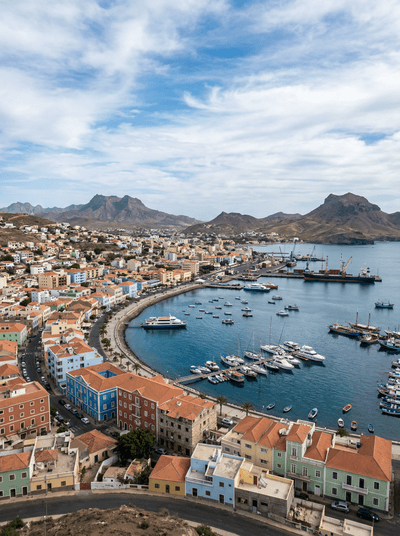
Morna music drifts from dimly lit bars where Cesária Évora once sang barefoot for sailors.
Cidade Velha
Cape Verde
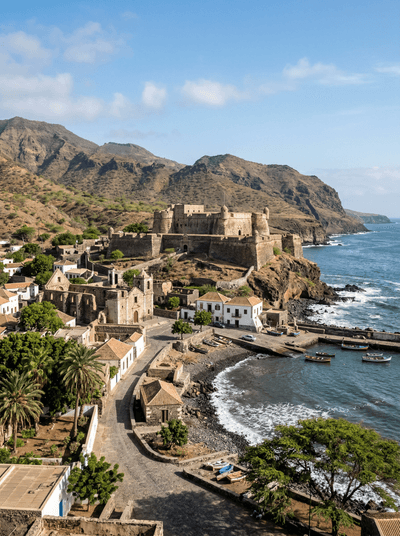
First colonial city in the tropics — a slave pillory still stands in the silent square.
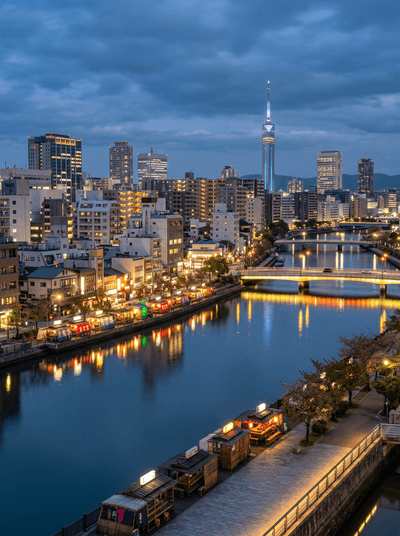
Fukuoka
Japan
Yatai street stalls steaming under canvas where strangers share ramen at midnight.
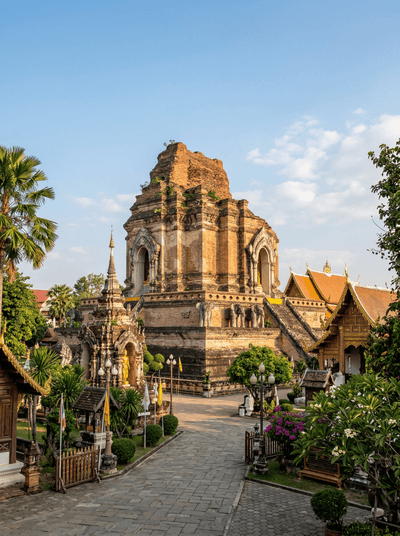
Chiang Mai
Thailand
Monks in saffron robes walking barefoot past tattooed expats and ancient brick chedis at dawn.
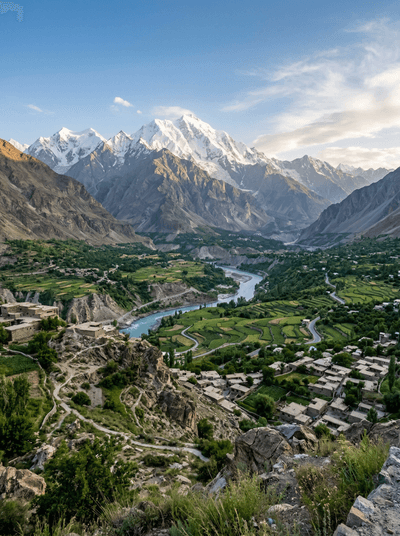
Hunza Valley
Pakistan
Apricot orchards cascading down terraces where three of Earth's mightiest mountain ranges collide.
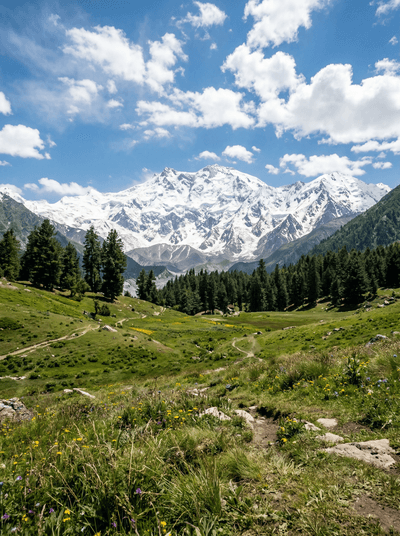
Fairy Meadows
Pakistan
A wildflower carpet at 3,300 metres where Nanga Parbat's killer face fills the entire sky.
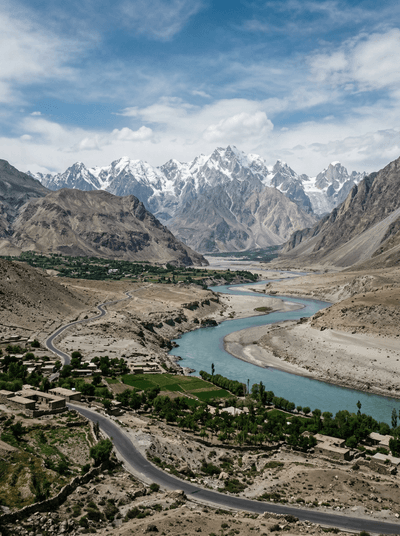
Skardu
Pakistan
Sand dunes and glacial lakes sharing the same valley floor beneath Karakoram granite walls.
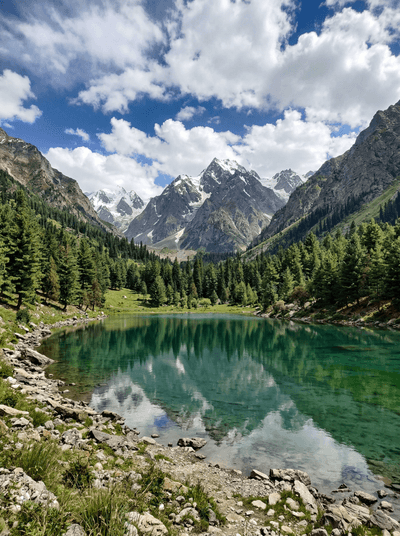
Naltar Valley
Pakistan
Three lakes cycling through turquoise, emerald, and sapphire depending on the angle of light.