Egypt
Djara Cave
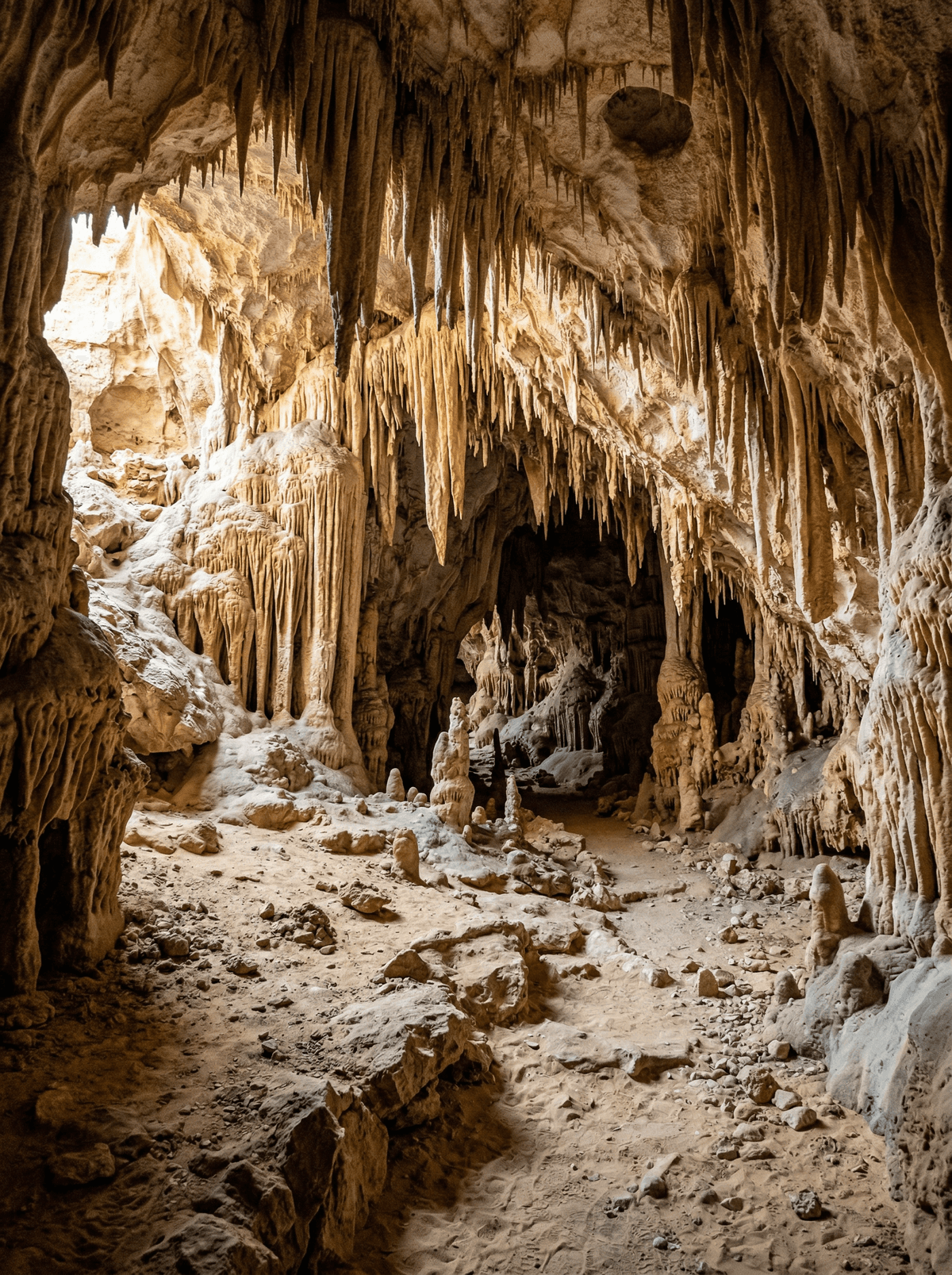
Stalactites hanging in a desert cave where someone painted giraffes when the Sahara was green.
You drop through a narrow opening in the desert floor and the Sahara disappears. Stalactites hang in the darkness, formed when this landscape was green savannah. On the walls someone recorded giraffes, ostriches and cattle — animals that have not lived here for seven thousand years.
Djara Cave hides in the Western Desert between Bahariya and Farafra, a dripstone cavern from the Neolithic wet phase, when the Sahara held grasslands and lakes. A sandy slope leads down past a great stalagmite densely covered with engravings to a hall of stalactites, and 133 figures are known from its walls — giraffes, antelope, ostriches, human hunters — the record of a pastoral world that dried away. The geographer Gerhard Rohlfs found the cave in 1873; the desert then kept it hidden again until 1989.
Solo
Join an organised expedition and keep a night for the dunes — the cave is the destination, the silence the reward.
Friends
Share the two-day 4WD between you — a day for the dunes, an hour underground among the stalactites.
- The stalactites grew under monsoon rains around 11,000 years ago — geology from a climate the desert erased.
- The 133 known figures show giraffes and cattle drawn by people who lived on open savannah.
- Rohlfs mapped it in 1873; it was lost for over a century before a guide found it again in 1989.
- Reaching it is a pre-organised two-day 4WD expedition from Bahariya or Farafra — the emptiness is real.
Dinner is what the expedition carries — bread baked in the sand, stores from town, tea on the desert floor.
Back in Bahariya the camp kitchens put hot tagines on the table after two days of rations.
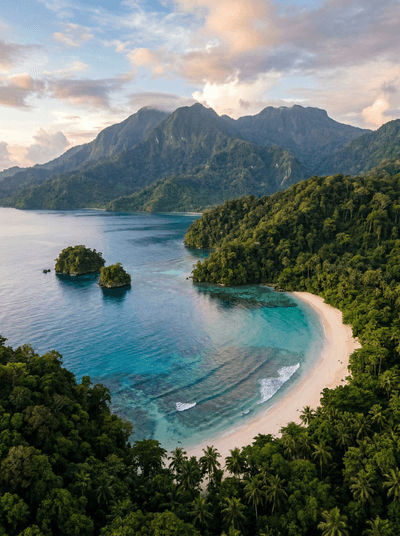
Seram Island
Indonesia
Maluku's mother island rises roadless from the coast, walked only with its hosts.
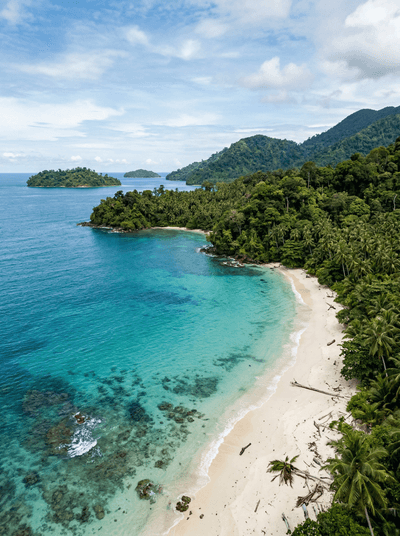
Mentawai Islands
Indonesia
Sago smoke in the longhouse, heavy water on the reef: the Mentawais run two worlds.
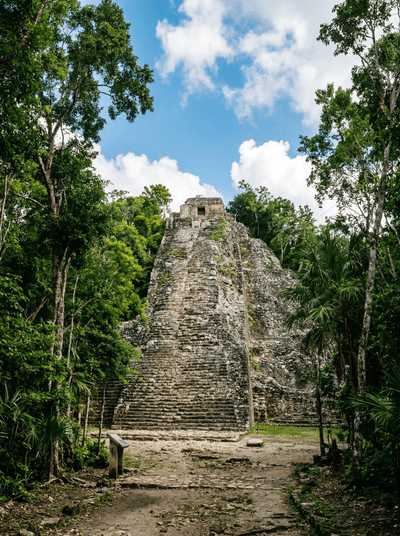
Cobá
Mexico
Raised white roads link Maya groups through forest beside the lakes of Cobá.
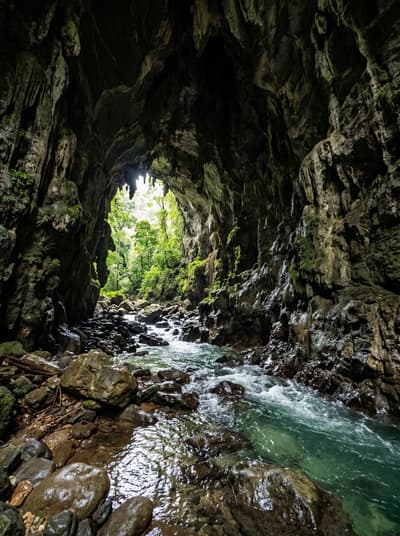
Millennium Cave
Vanuatu
Enter the cave on foot; leave it swimming down a jungle gorge.
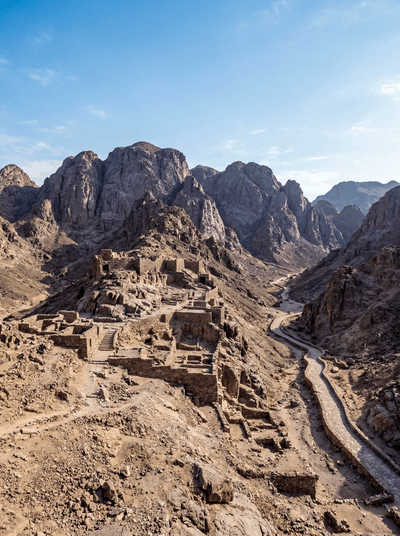
Mons Porphyrites
Egypt
The Roman Empire's only source of imperial purple stone, quarries still scarring red mountains.
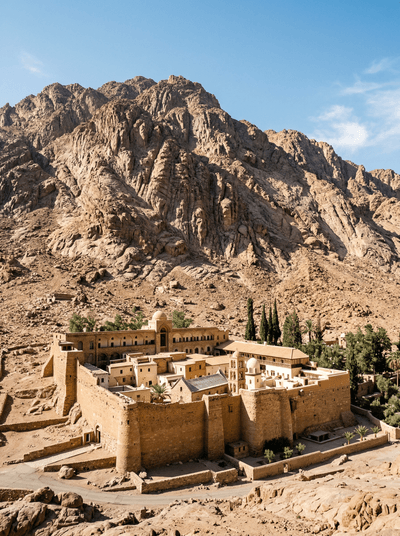
St. Catherine
Egypt
Granite peaks where Moses may have stood, a burning bush still growing behind monastery walls.
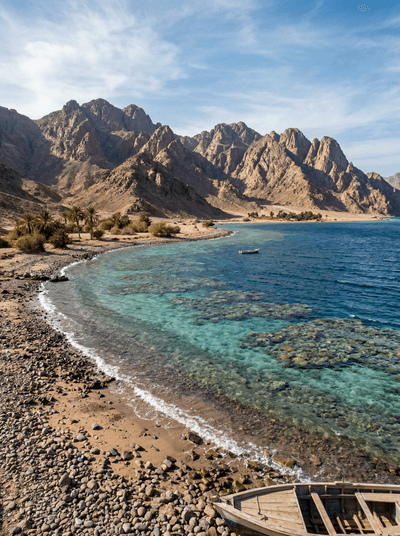
Ras Abu Galum
Egypt
Camel trail ending at a Bedouin beach where the reef starts a metre from your mat.
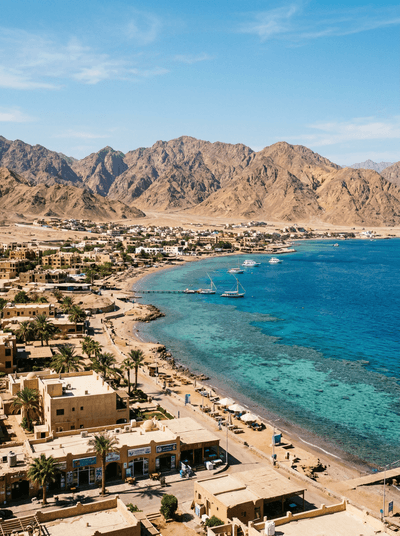
Dahab
Egypt
Desert mountains plunging into reef walls where freedive ropes disappear into blue-black nothing.