Argentina
Esteros del Iberá
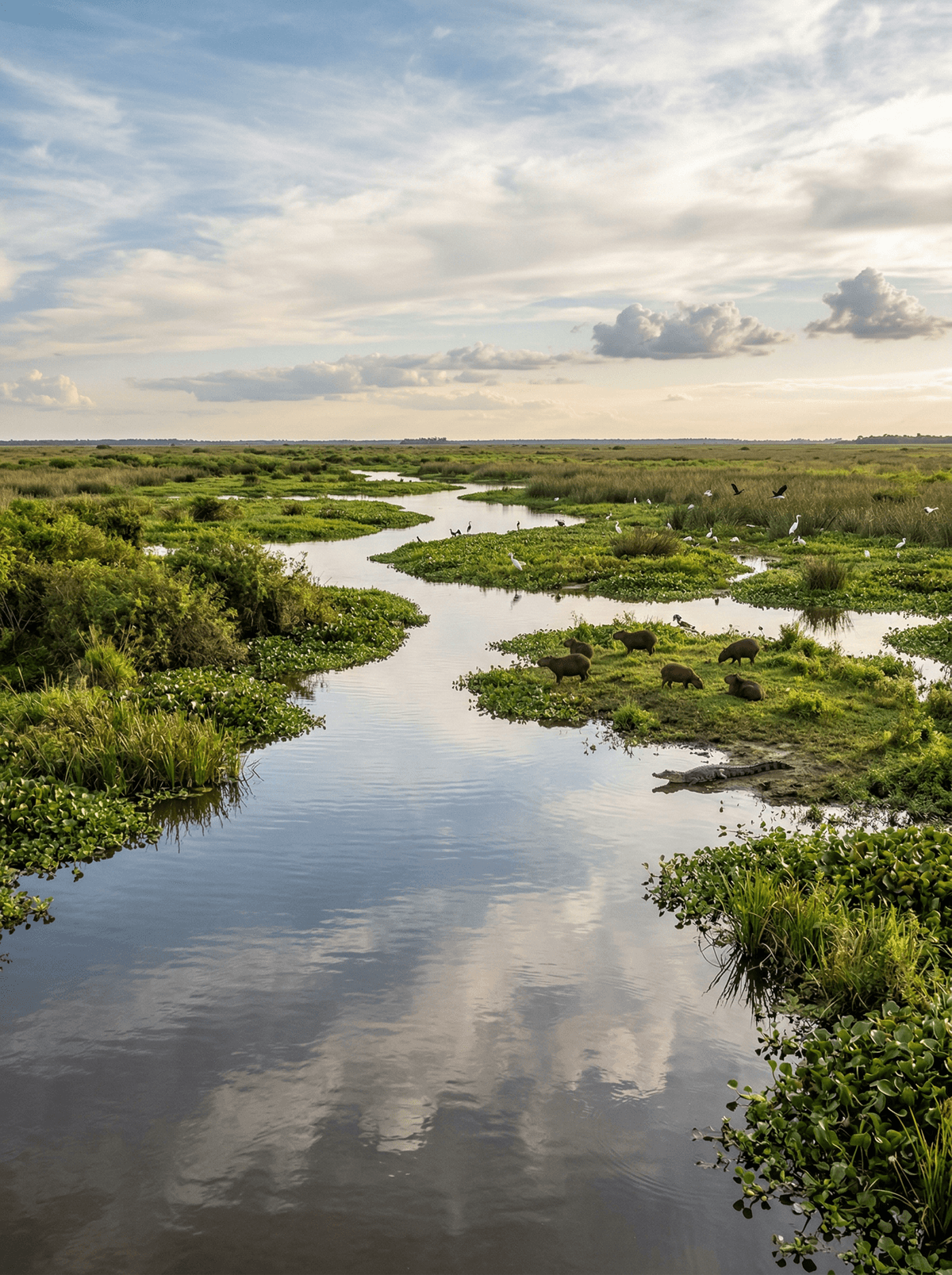
Caiman drift among giant lily pads in a marsh where time itself pools and stills.
The Iberá wetlands spread some 13,000 square kilometres of floating islands, black-water lagoons and gallery forest — South America's second-greatest wetland after the Pantanal — and the marsh deer step through jade-coloured water plants with a deliberateness that suggests they know the light is good. Caimans hold the morning banks without moving; capybara graze the reed edges in groups at dusk. Nothing here is scheduled, and everything is close.
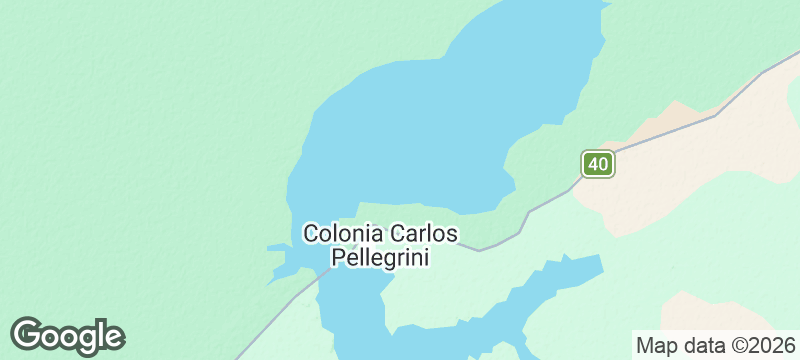
Iberá is a shallow basin that captures rain with no route to the sea; its protected heart — provincial reserve plus national park — now exceeds seven hundred thousand hectares. The rewilding here is the continent's most ambitious: giant anteaters, pampas deer, tapirs and peccaries returned, and jaguars breeding wild again after seventy years' absence from Argentine Mesopotamia. The wetland opens through several distinct portals rather than one gate — choose the portal first, then match lodging, access road and authorised activities to that exact place, with Colonia Carlos Pellegrini the best-known base for boat routes among the floating islands. Wildlife keeps its own diary: patient observation at honest distances beats any sightings list, and the slow accumulation of dawns afloat is the method.
Solo
Iberá rewards accumulated time — four nights at one base, the same boat at dawn each day, builds a reading of the wetland's rhythms no two-day visit approximates.
Couple
A sunrise boat through the lagoons — deer in the shallows, caiman surfacing beside the hull, capybara on the floating islands — makes people reassess what they thought they knew about Argentina.
Family
The animals are abundant, visible and comprehensible to any age — every boat trip produces encounters, and the range from capybara to caiman to anteater holds different interests at once.
- Iberá's freshwater biodiversity stands second only to the Pantanal on the continent.
- Jaguars, giant anteaters and tapirs have been returned to the marsh by an ongoing rewilding.
- Guided boats from the wetland portals move quietly among caiman and capybara.
- Marsh deer stand in the sunset shallows, doubled in water too still to ripple.
Dorado — the river tiger — grilled whole over coals at a posada on the marsh edge.
Chipá and mbejú from a Corrientes roadside stall on the approach.
Scilly Isles
England
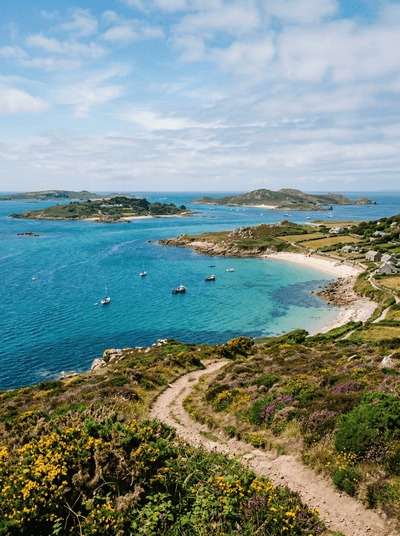
Sub-tropical islands where palm trees grow wild twenty-eight miles from the English mainland.
Munroe Island
India
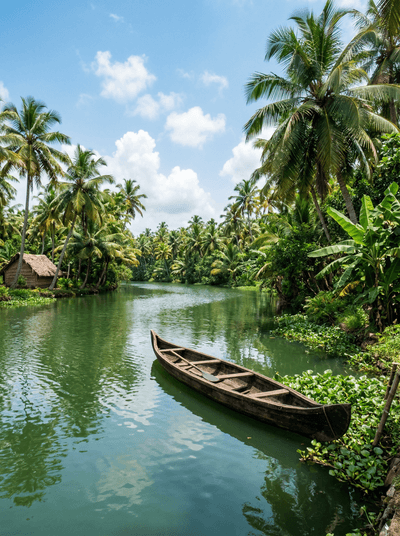
A sinking backwater island navigated by silent dugout canoes through arched and claustrophobic mangrove tunnels.
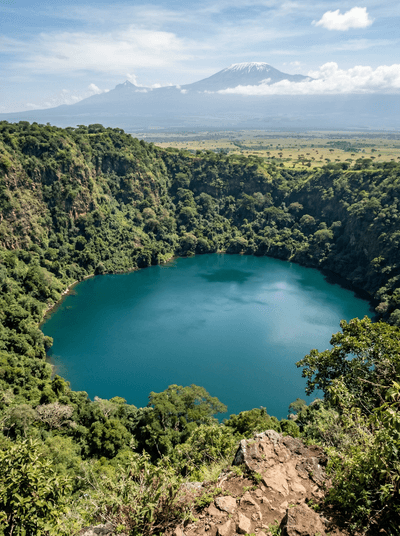
Lake Chala
Tanzania
A crater lake of implausible turquoise holds a fish found nowhere else.
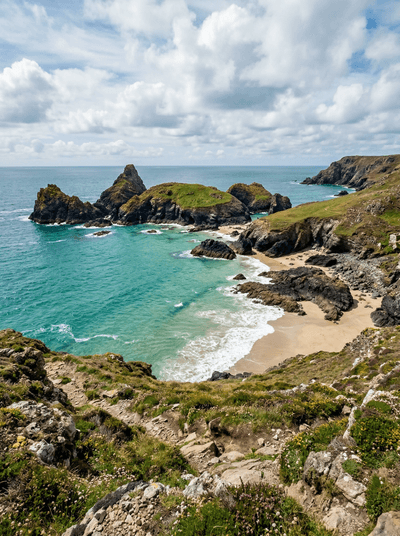
Kynance Cove
England
Serpentine rock stacks glowing red and green between turquoise tidal pools.
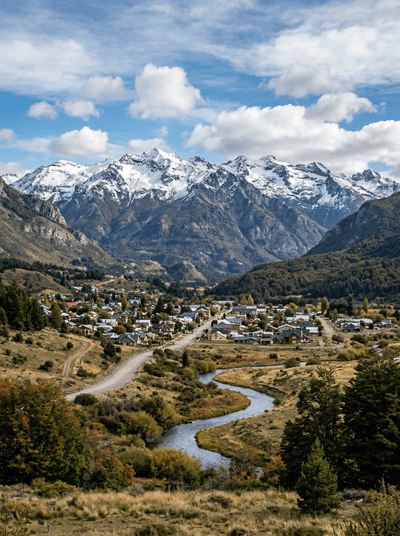
Esquel
Argentina
A 1922 steam locomotive wheezes across Patagonian steppe on rails from a vanished century.
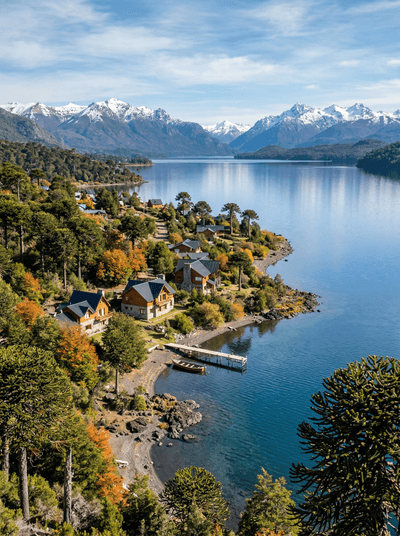
Villa Pehuenia
Argentina
Monkey puzzle trees cast dinosaur-era silhouettes over twin lakes rimmed in volcanic sand.
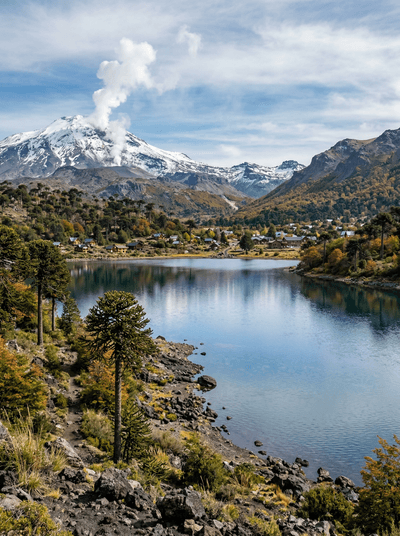
Caviahue
Argentina
Hot springs steam through araucaria forest inside a volcanic caldera dusted with snow.
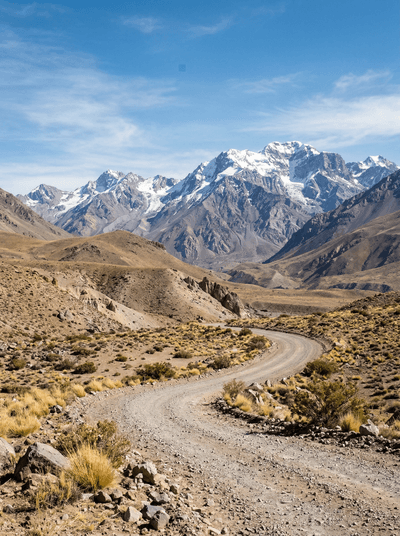
El Leoncito National Park
Argentina
Observatories under Argentina's clearest sky, where the Milky Way is bright enough to shadow.