Brazil
Foz do Iguaçu
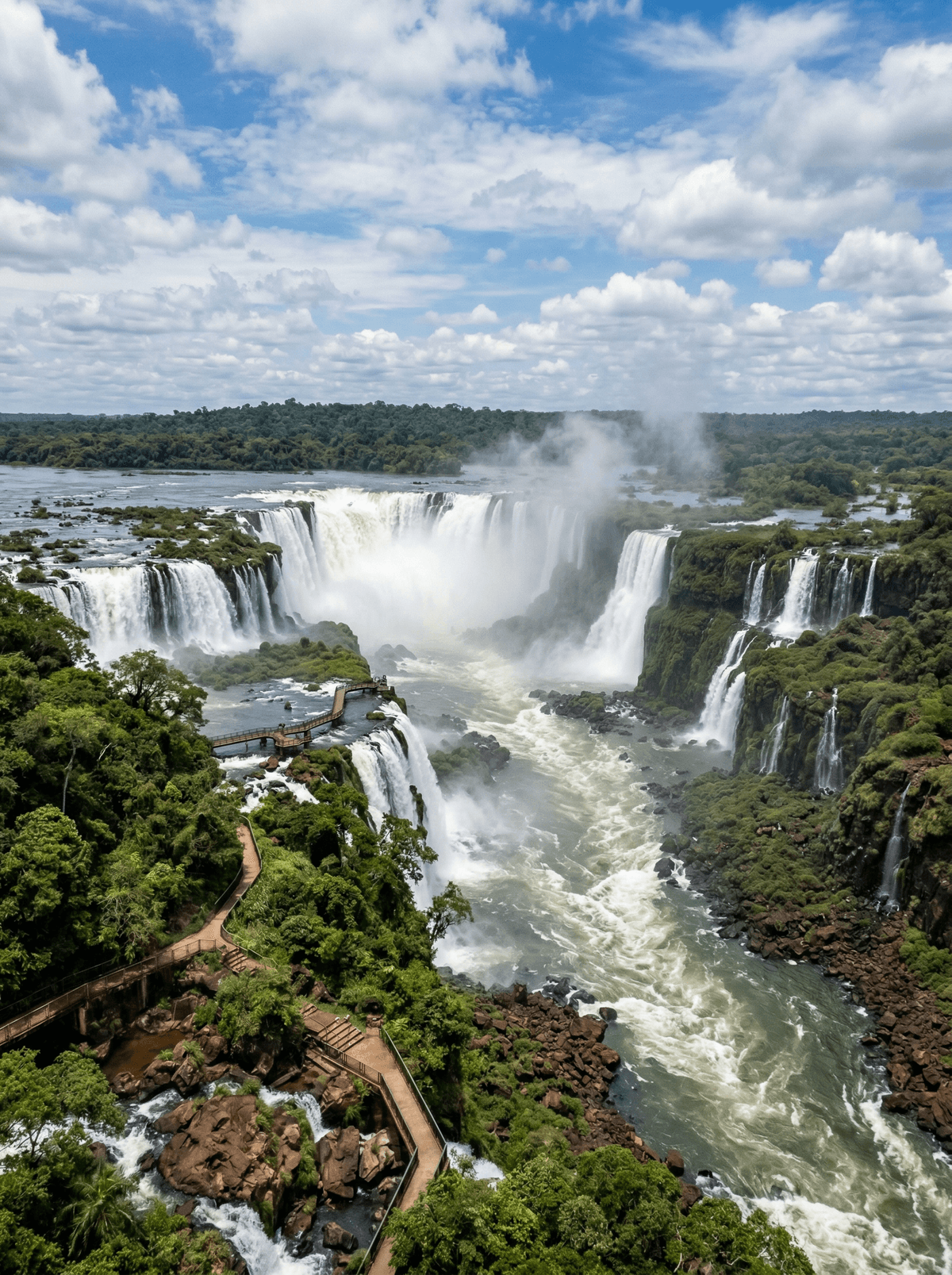
Two hundred and seventy-five waterfalls, and the one at the centre is called the Devil's Throat.
You hear it a long time before you see it. Two hundred and seventy-five falls are strung along the Iguaçu here, and the Brazilian approach to them is a walk of about a kilometre and a half, from the visitor centre out to the viewpoint at the Garganta do Diabo, which is the one in the middle that everything else arranges itself around. What holds them is 185,000 hectares of Atlantic Forest running across fourteen Paraná municipalities.
The national park dates from 10 January 1939. UNESCO listed it in 1986, and on 11 November 2011 the falls were voted one of the New7Wonders of Nature. More than 1.8 million people came in 2023, making it the second most visited national park in Brazil. It is also among the last places the Atlantic Forest jaguar holds on: a census run from 224 camera points either side of the border, over four consecutive months and more than 450,000 images, put about 93 jaguars in the 582,000-hectare Corredor Verde, against roughly forty in 2005, and that corridor carries around a third of all the jaguars left in the biome. Nobody meets one on the trail, and the city at the gate has a life of its own, with the second-largest Arab community in Brazil after São Paulo, some 25,000 descendants.
Couple
The Brazilian side is the wide view, the one that shows you the whole system at once, and the trail is short enough to walk twice. Take it late, when the buses have thinned out and the light is across the water.
Family
Panoramic buses do the distance, the trail itself is about a kilometre and a half, and there are nine food and water points inside the gates. Children get the spray, the coatis and a buffet at Porto Canoas that runs from noon to four every day of the year.
Friends
Foz is three countries at once and the eating is where that shows. The Arab restaurants and pastry shops around the mosque are the group meal here, from fattoush and tabbouleh to baklava and mamul, and none of it involves crossing a border.
- The Trilha das Cataratas runs about a kilometre and a half from the visitor centre to the viewpoint at the Garganta do Diabo, with the panoramic buses carrying you out to it.
- The park protects 185,000 hectares of Atlantic Forest across fourteen Paraná municipalities, and it took more than 1.8 million visitors in 2023, second only to Tijuca.
- Nine food and water points sit inside the park, two food courts and seven kiosks, with the Porto Canoas buffet open every day of the year from noon until four.
- A camera-trap census across 224 points in Brazil and Argentina counted about 93 jaguars in the 582,000-hectare Corredor Verde, roughly a third of those left in the Atlantic Forest.
Porto Canoas puts a Brazilian buffet on a deck over the Rio Iguaçu where the Trilha das Cataratas runs out: salads and sauces, hot dishes, a run of meats and exactly one fish, eaten with the falls still in your ears.
In town, shawarma, kibe and fattoush, and baklava and mamul from the pastry shops by the mosque, because Foz has the second-largest Arab community in Brazil.
K'gari (Fraser Island)
Australia
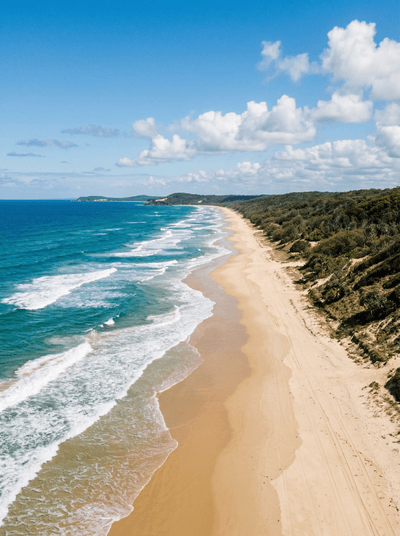
Freshwater lakes glow blue above the sea on the world's largest sand island.
Vallon-Pont-d'Arc
France
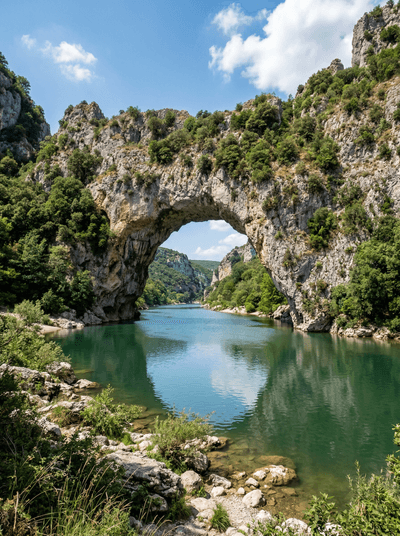
Gateway town to the Ardèche canyon, its stone arch and 36,000-year-old cave paintings.
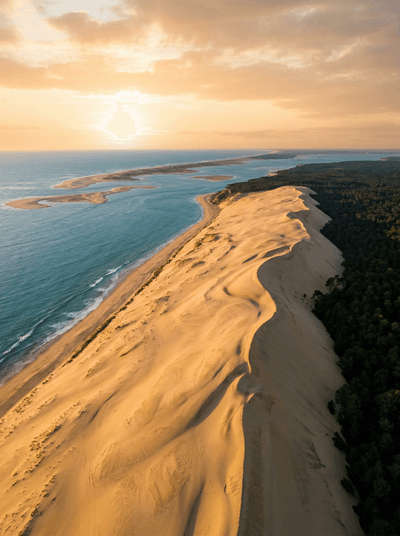
Dune du Pilat
France
Europe's tallest sand dune — a hundred metres of hot grain, the Atlantic crashing below.
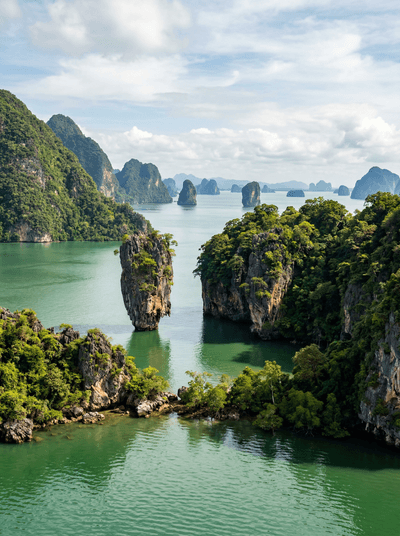
Phang Nga Bay
Thailand
A forest of vertical limestone monoliths bursting from green water like dragon's teeth.
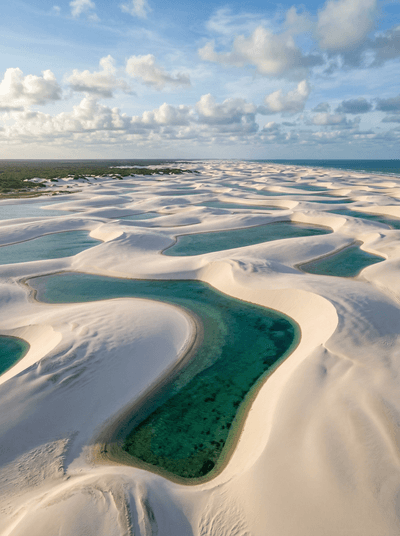
Lençóis Maranhenses
Brazil
Thousands of rain-filled lagoons between white dunes stretching to the horizon like another planet.
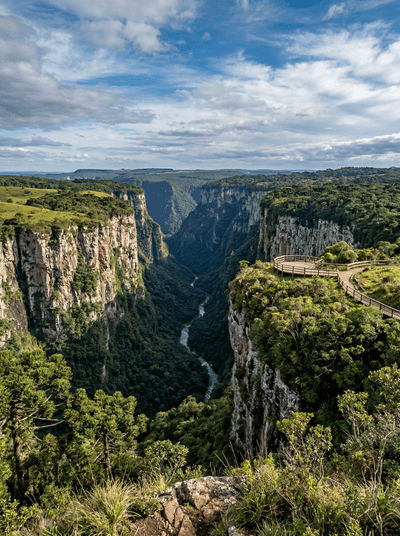
Aparados da Serra
Brazil
A five-hundred-metre waterfall drops straight off the rim into a gorge two kilometres wide.
Serra do Cipó
Brazil
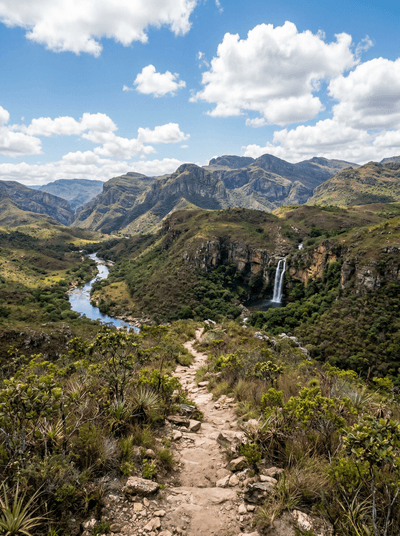
Stone meadows of flowers that hold their shape long after they dry, along a quartzite spine.
Pantanal
Brazil
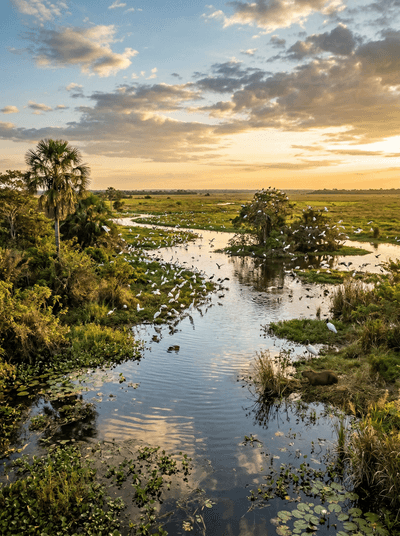
When the water drops the animals come out, and the odds on a jaguar shorten.