Brazil
Vale do Catimbau
Sandstone cathedrals hiding paintings made under the overhangs some six thousand years ago.
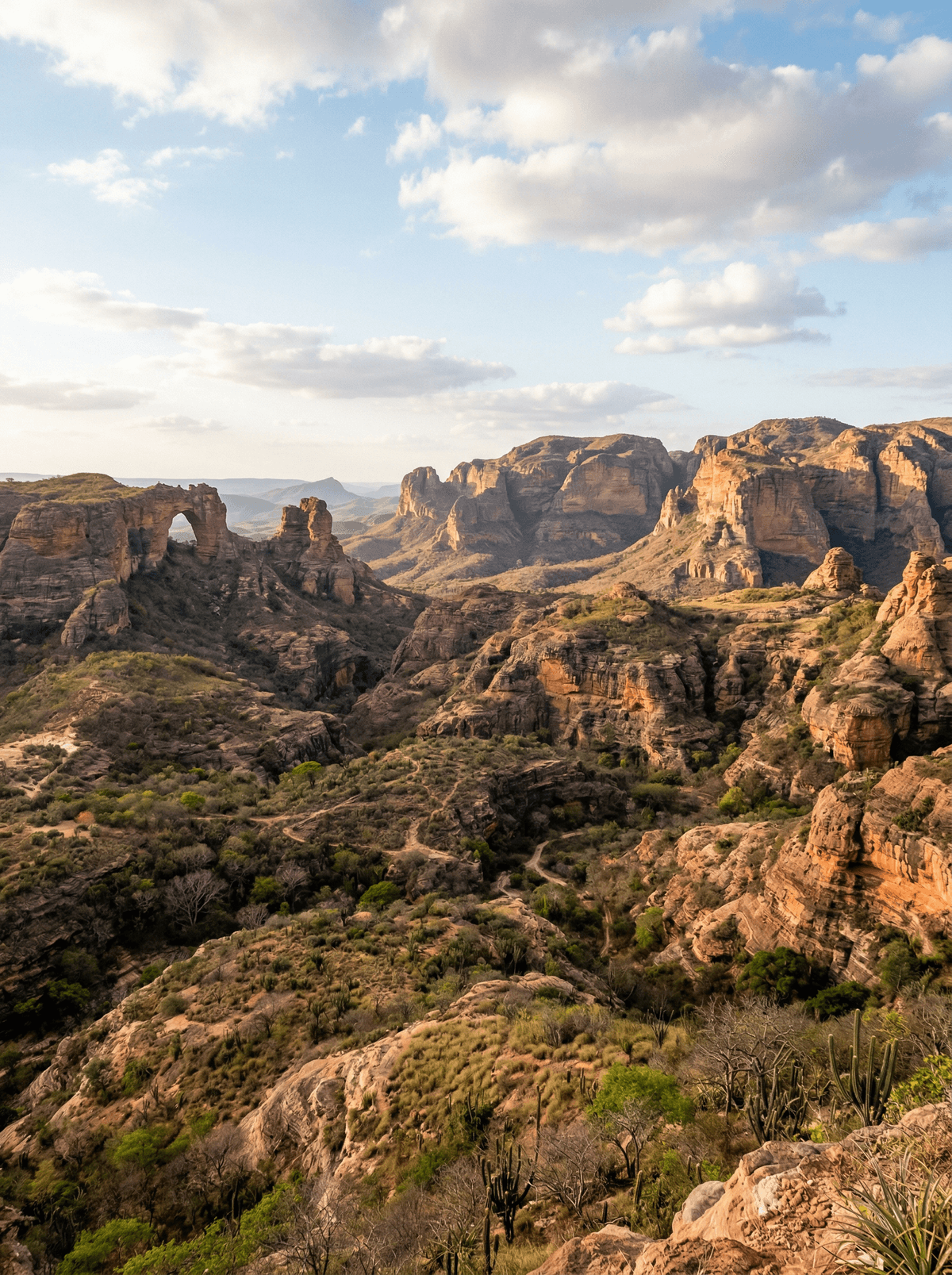
The rock here has been worked on twice, by two different hands. Erosion took the sandstone of an old basin and left chapadões, canyons and caves standing out of the caatinga; then people came and painted the undersides of the overhangs. Vila do Catimbau sits at the gate to it, with the guides' association, shops selling the same figures again on pottery, and lizards out on the warm stone in front of you.
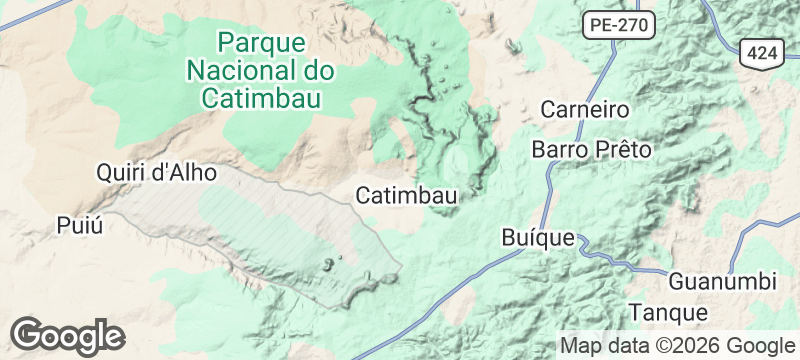
Catimbau became a national park in December 2002 and takes in 62,300 hectares of Pernambuco across Buíque, Ibimirim and Tupanatinga. Twenty-seven archaeological sites lie inside it, which makes it the second largest archaeological park in the country, and the inscriptions and paintings on its shelters are put at around six thousand years old. The stone is older by a long way: the Cachoeira do Catimbau geosite, 850 metres from the village and rated of national relevance, exposes Paleozoic Tacaratu sandstone laid down by braided rivers, with alveolar erosion hollowing out the cave beside it. The caatinga growing on it carries endemic cacti and bromeliads, and the wildlife you actually see is the wildlife that holds still on rock, papa-vento lizards especially, along with mocó, tatu-peba, galo-de-campina and seriema. Trails are short and graded easy, the guides' association works out of Vila do Catimbau, and the waterfall follows the rain, thinning to almost nothing across a seven-month dry season.
Solo
Take a guide for what they know, since the walking itself is graded easy: the sites are scattered over three municipalities and 62,300 hectares, and the association is in Vila do Catimbau. Go early or late, with the light low on the sandstone and the lizards are out. Treat the waterfall as a rainy-season proposition; it thins to almost nothing through the seven dry months.
- The park covers 62,300 hectares across Buíque, Ibimirim and Tupanatinga, created in December 2002 around chapadões, canyons and small caves that erosion cut out of the sandstone.
- Twenty-seven archaeological sites make this the second largest archaeological park in Brazil, and the inscriptions and paintings under its shelters are put at around six thousand years old.
- Trails are short and graded easy, and Vila do Catimbau at the gate holds the guides' association and shops selling craftwork painted with the same figures as the rock.
- The Cachoeira do Catimbau, 850 metres from the village, is a geosite of national relevance in Paleozoic Tacaratu sandstone laid down by braided rivers, with alveolar erosion hollowing the cave beside it.
Galinha de capoeira off the wood-burning stove is the meal the Vila do Catimbau houses put out, with feijão verde, fried macaxeira and artisanal queijo coalho, and coffee strained at the table.
The rest of the agreste table is here too: bode assado or guisado, carne de sol and baião de dois, in a district whose milk is the thing Buíque is known for.
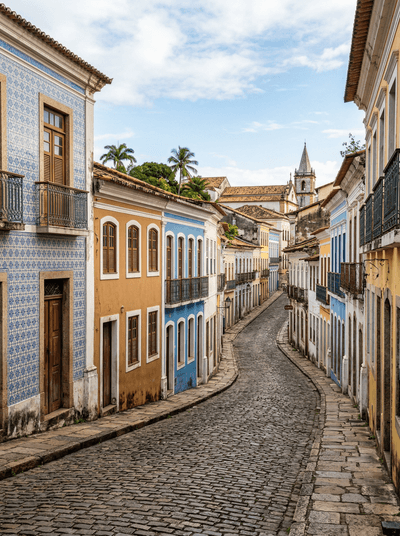
São Luís
Brazil
Hand-painted Portuguese tiles across four thousand colonial houses, cooling the walls against equatorial heat.

Brasília
Brazil
A modernist capital conjured from red dust where Niemeyer's concrete curves defy the cerrado.
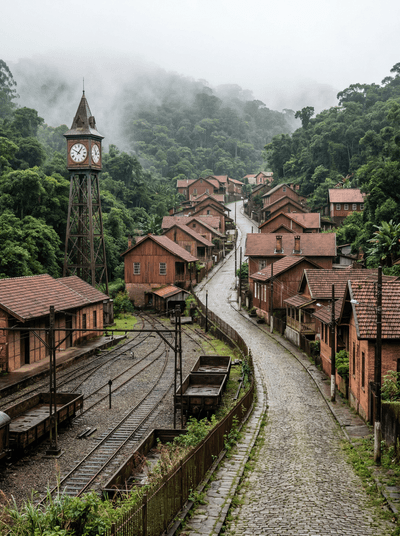
Paranapiacaba
Brazil
A fog-wrapped Victorian railway village built by the British in the Atlantic Forest above São Paulo.
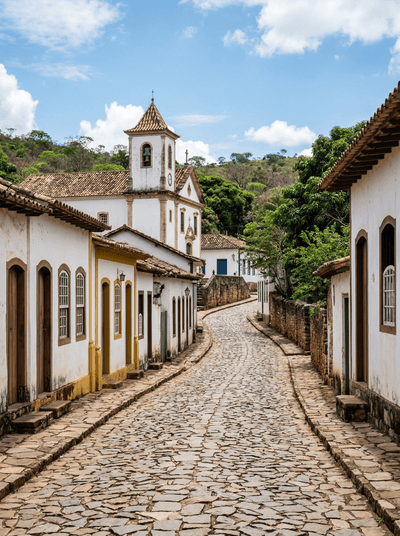
Goiás Velho
Brazil
Hooded men with torches run the streets at midnight, hunting Christ through an eighteenth-century gold town.