Portugal
Guimarães
Where Portugal was born — the first capital's castle and cobbled streets still standing.
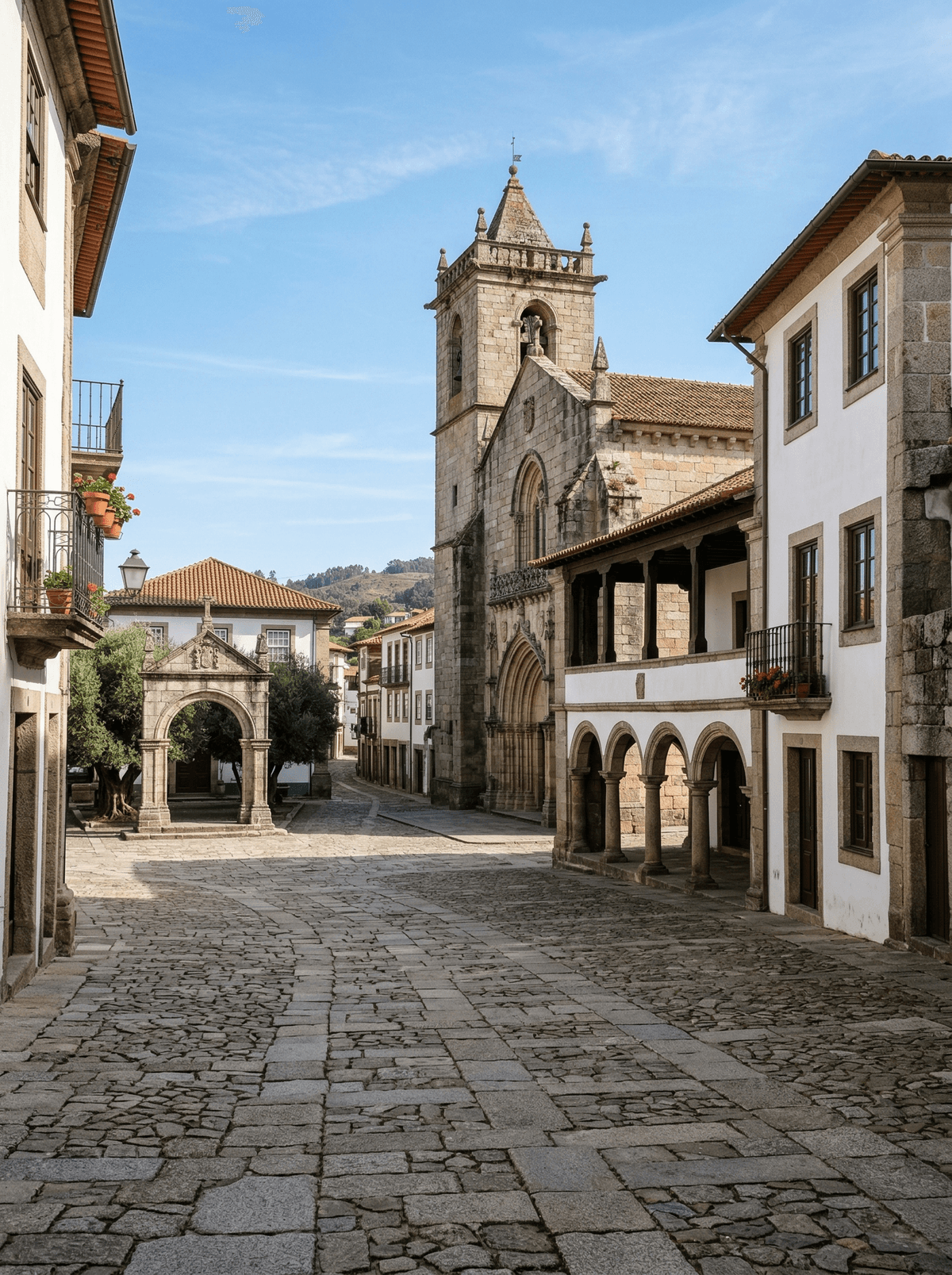
Cobblestones polished by ten centuries of footfall lead past stone arcades where light falls in slats across café tables. The castle on the hill is no ruin — it stands complete, thick-walled and defiant, and the town wears its claim on its own walls: Aqui nasceu Portugal. Here Portugal was born.
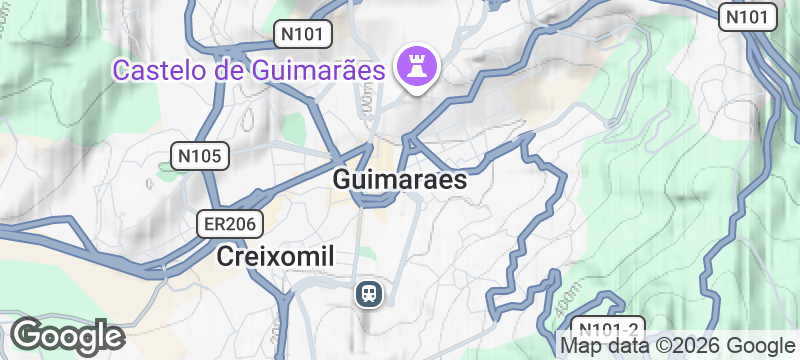
Guimarães is the acknowledged cradle of the nation — Afonso Henriques, by cherished tradition born in this castle, carved out the independent kingdom in 1143. The UNESCO-listed centre clusters around the tenth-century fortress and the fifteenth-century Palace of the Dukes of Braganza, its forest of brick chimneys visible across the rooftops, and the Largo da Oliveira — named for an olive tree said to have miraculously revived — anchors lanes of granite balconies and ironwork that still work as the city's everyday core. Penha hill rises wooded behind the town with the Minho panorama from its summit, the university crowd keeps café culture sharp and evenings lively, and the Festas Gualterianas — torch-lit processions that have wound through these streets since the fifteenth century — belong to the town's long memory.
Solo
A medieval centre walkable in a morning, then Largo da Oliveira with a coffee and a book until the mood shifts — the birthplace-of-a-nation story gives solo wandering a sense of occasion.
Couple
Penha's summit in golden-hour light, dinner under stone arcades, and a town grand in history but small enough to hold hands across. Guimarães romances quietly.
Family
A real castle with ramparts to climb and a ducal palace to explore — Portuguese history made tangible in ways textbooks never manage.
- 'Aqui nasceu Portugal' is written on the walls — the first king's own castle above.
- UNESCO listed the centre in 2001, its grid and buildings largely fourteenth to sixteenth century.
- The Braganza ducal palace bristles with brick chimneys over the old town.
- Few walkable zones anywhere pack Romanesque and Gothic this densely.
Torta de Guimarães — a pastry roll of egg cream and ground almond, dusted with sugar.
Rojões à minhota — fried pork with cumin, blood sausage and roast potatoes.
Cidade Velha
Cape Verde
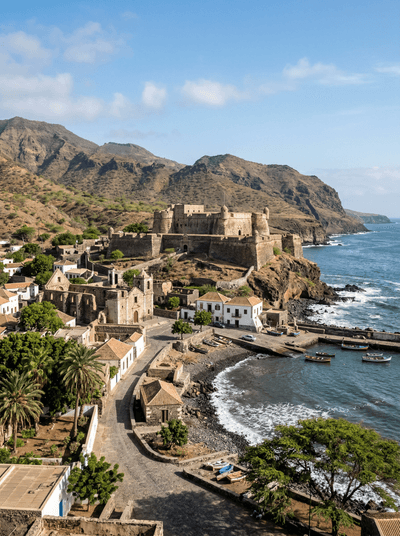
The tropics' first colonial city keeps its slave pillory standing in the square.
Ait Benhaddou
Morocco
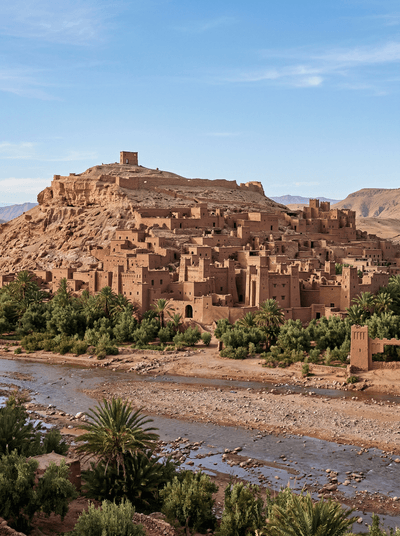
One man who lives here has been in ten films, because crews keep casting the village.
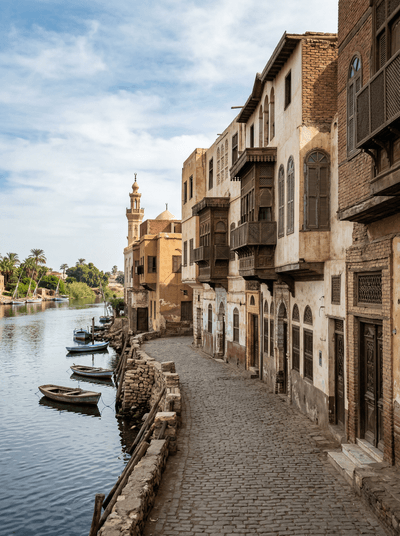
Rosetta
Egypt
Ottoman mansions with mashrabiya screens leaning over lanes where the key to hieroglyphs was found.
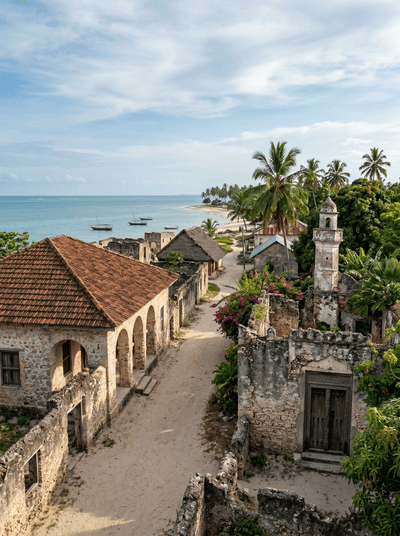
Bagamoyo
Tanzania
The enslaved named this port 'lay down your heart,' and its coral lanes remember.
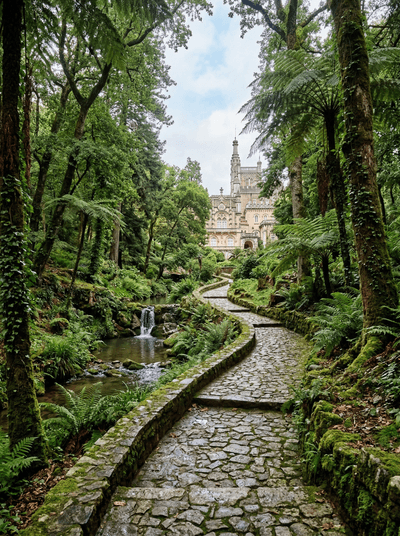
Buçaco Forest
Portugal
A walled forest of seven hundred species, its cedar Via Crucis climbing cathedral canopy.
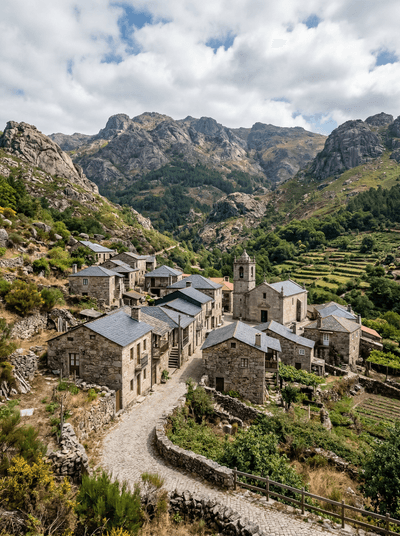
Pitões das Júnias
Portugal
A monastery abandoned to wolves and rain crumbles beside a waterfall at the road's end.
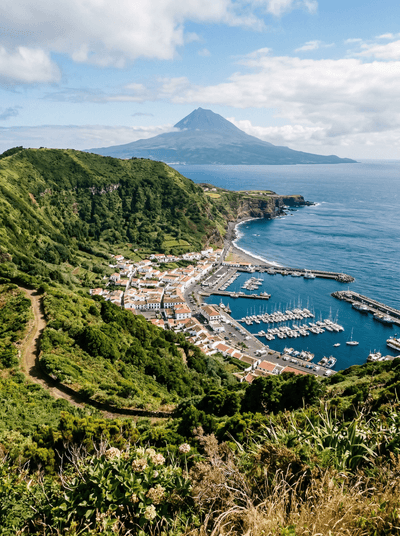
Faial
Portugal
Transatlantic sailors paint crew crests on the harbour walls — decades of voyages in pigment.
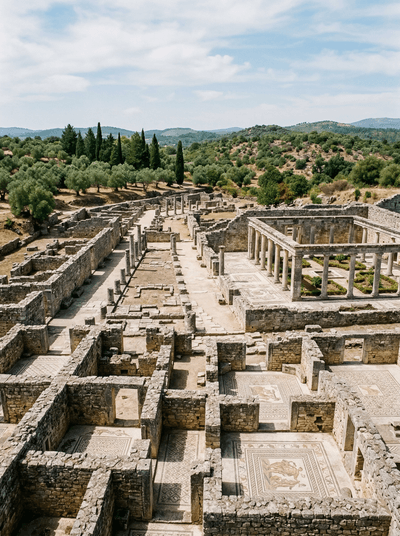
Conimbriga
Portugal
Roman mosaics under open sky, their dolphins still leaping two thousand years on.