Pakistan
Harappa
Seals bearing a script nobody alive can read — the other capital of Indus civilisation.
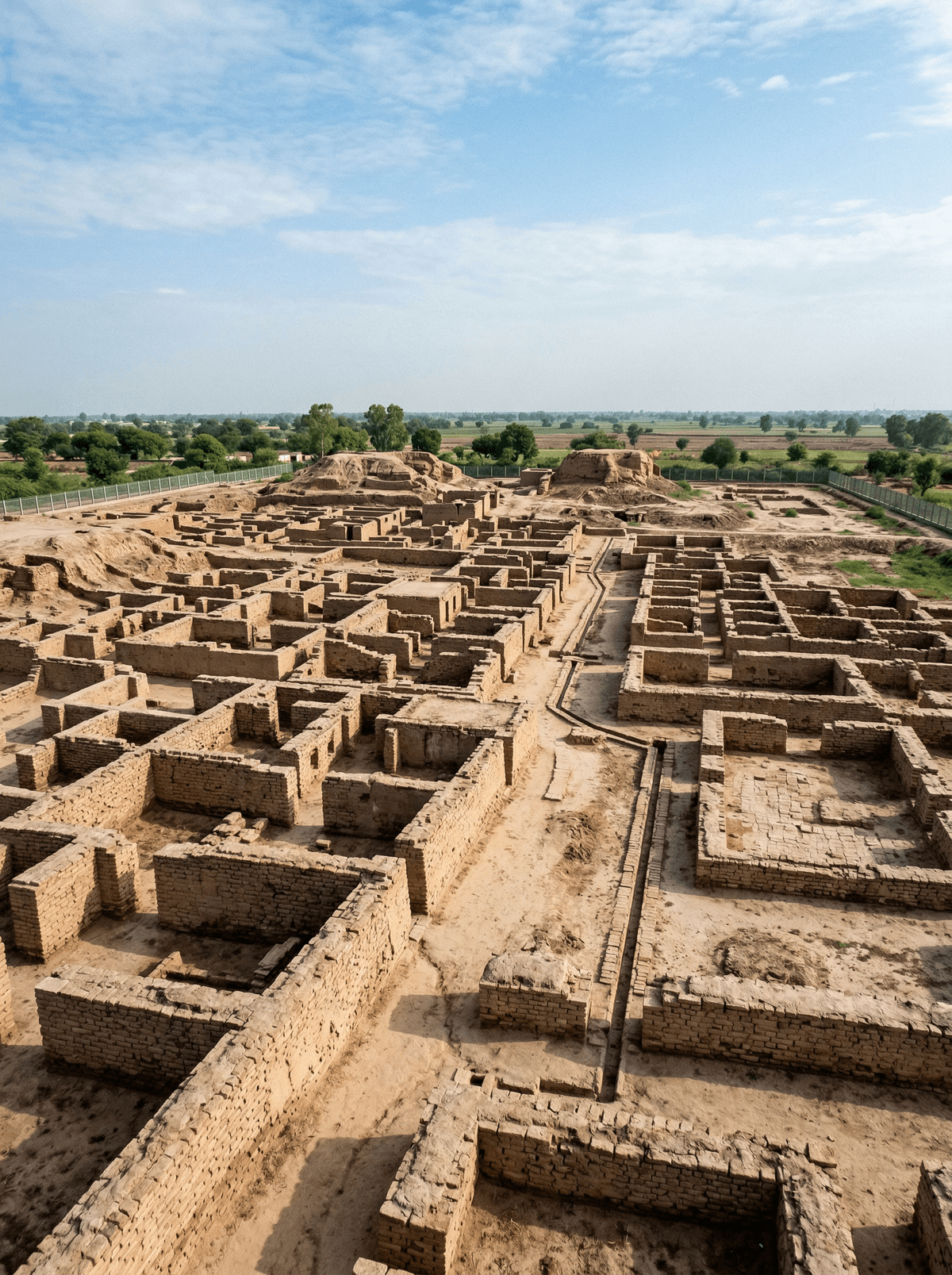
The bricks are so precisely cut they could pass for modern masonry — except they were laid 4,500 years ago. Harappa's excavated mounds rise from Punjab's flat agricultural plain, the remains of a city that housed tens of thousands when most of humanity still lived in huts. The seals in the museum bear a script that remains undeciphered, each symbol a sentence nobody alive can read.
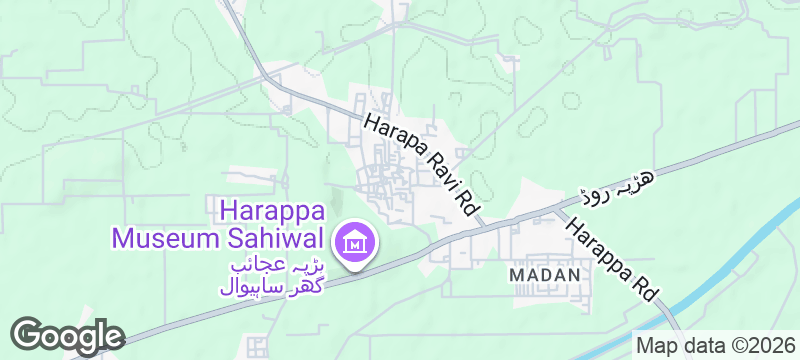
Harappa is one of the two great urban centres of the Indus Valley Civilisation, alongside Mohenjo-daro in Sindh. At its peak around 2600 BCE the city covered over 150 hectares, with planned streets, standardised brick, granary platforms and drainage millennia ahead of their time. Alexander Cunningham surveyed the mounds in the 1870s — after railway contractors had already carted off ancient brick as ballast for the Lahore-Multan line — and systematic excavation began in the 1920s. The on-site museum shows terracotta figurines, copper tools, painted pottery and the famous seals whose pictographic script has resisted every decipherment attempt. The exposed layers span close to two millennia, from the earliest Ravi Phase settlement to the civilisation's decline around 1300 BCE.
Solo
Standing on foundations older than the pyramids, reading undeciphered seals, meeting a civilisation that vanished without leaving a translatable word — Harappa is profoundly compelling alone.
Couple
A site where 4,500 years of habitation lie exposed layer by layer — a shared encounter with one of the world's earliest urban societies.
- The kilometre-wide mound holds brick streets, granary platforms, and a workers' quarter that reveals an organised urban economy.
- The Indus script — found here and at hundreds of other sites — remains undeciphered, an enduring mystery.
- The museum's standardised weights reveal a trade network that reached three thousand kilometres.
- The site sits outside the tourist circuit — no queue between you and one of humanity's first cities.
Doodh jalebi in Sahiwal — hot spirals of batter swimming in fresh warm milk.
Maize roti with mustard-leaf saag — Punjab's winter classic, earned after the mounds.
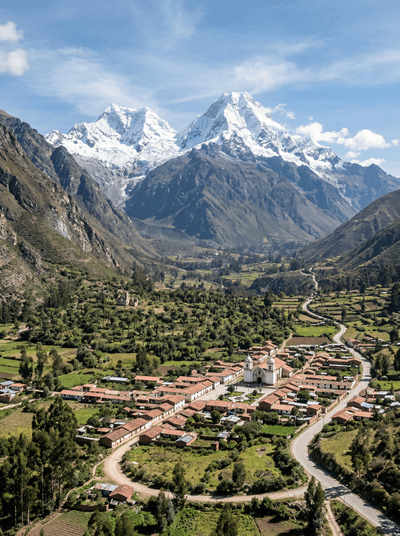
Yungay
Peru
A buried city marked by four palm tips piercing the debris that entombed it.
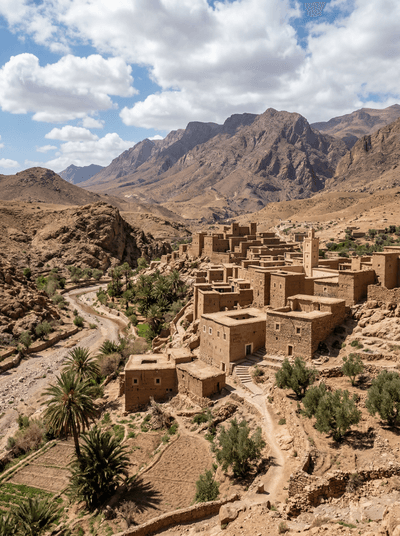
Tazenakht
Morocco
Siroua wool drinks pomegranate red beneath thousands of hand-tied knots and orange borders.
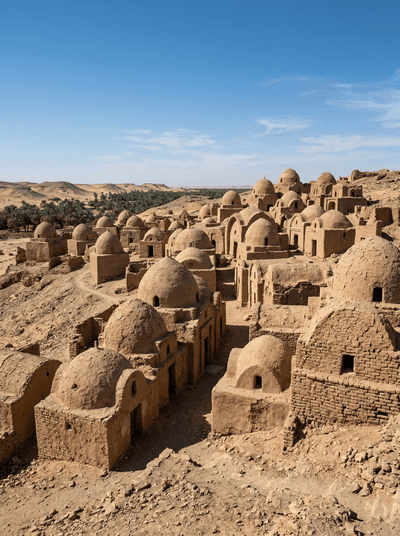
Al-Bagawat
Egypt
Domed desert chapels with fourth-century biblical murals, among the oldest Christian art on Earth.
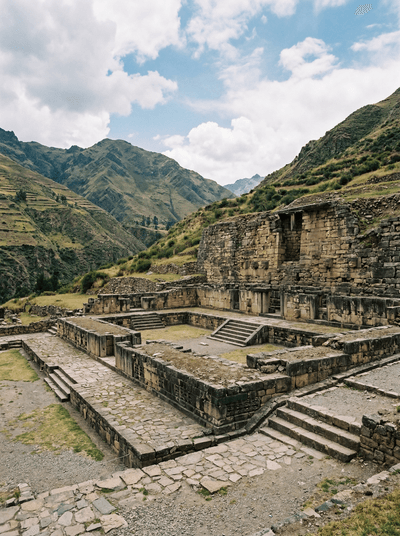
Chavín de Huántar
Peru
Underground galleries where a fanged god has waited in the dark for 3,000 years.