Peru
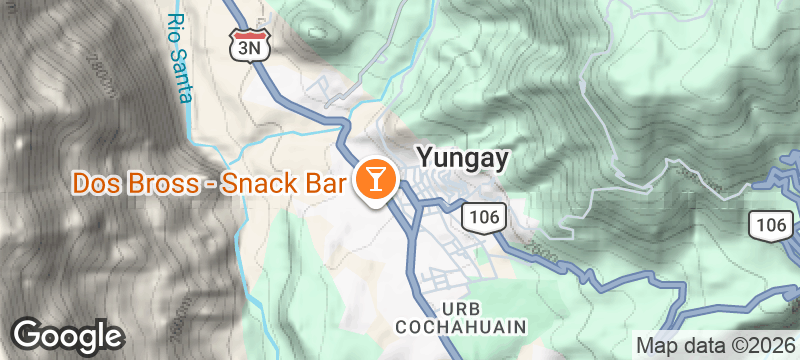
Yungay
A buried city marked by four palm tips piercing the debris that entombed it.
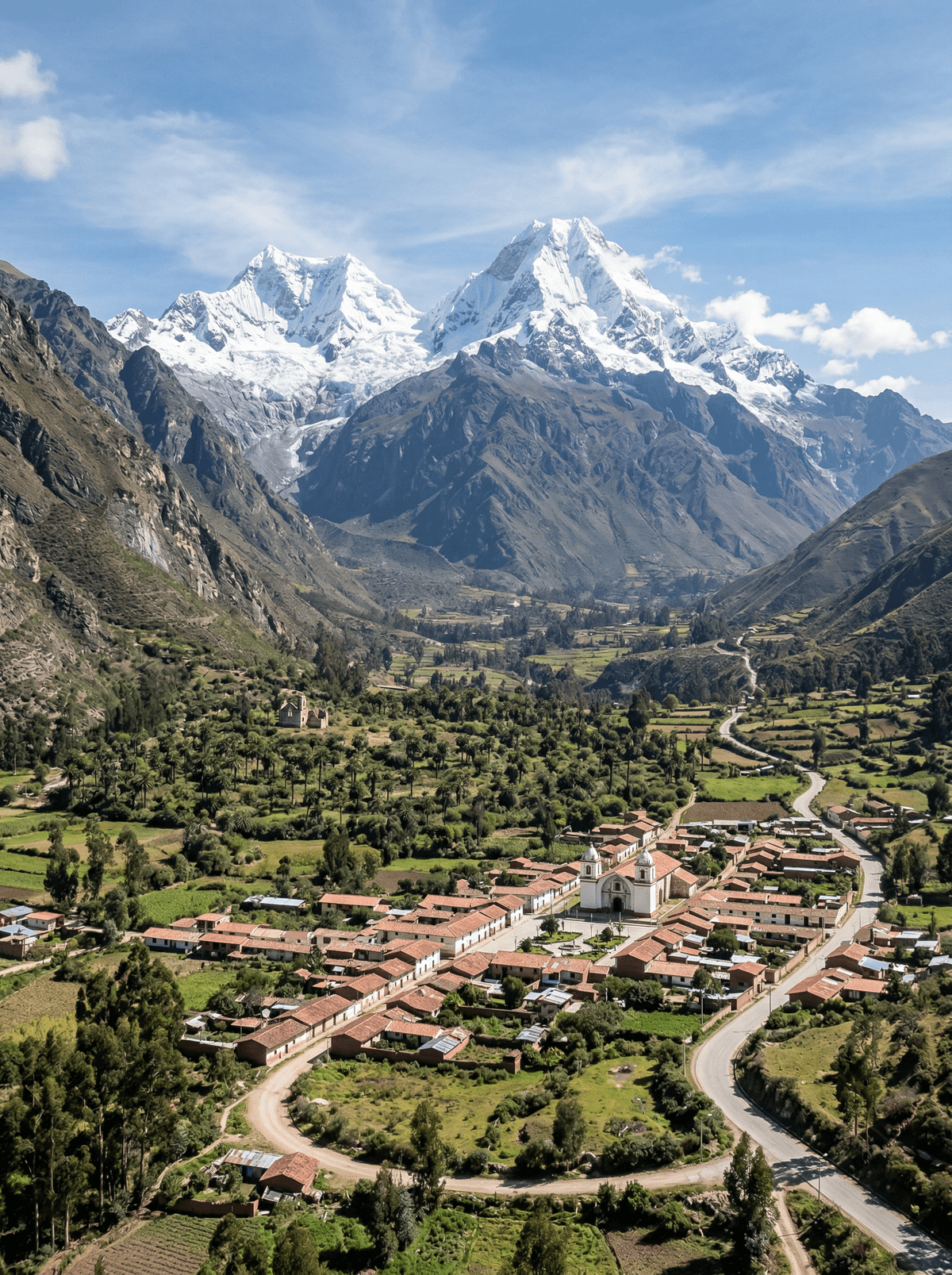
Four palm tips rise from a flat debris field where a city used to stand. The silence is deliberate. Beneath metres of rock and ice lie the streets and cathedral of old Yungay, buried in minutes on a Sunday afternoon in 1970 — while Huascarán, which sent the avalanche, holds the skyline above in terrible serenity.
On 31 May 1970, the great Áncash earthquake shook loose a rock-and-ice avalanche from Huascarán's north face that buried Yungay almost entirely — one of the twentieth century's deadliest single disasters, its toll running to many thousands by every accounting. The Campo Santo preserves the site as consecrated ground: the cathedral's palms still piercing the surface, a statue's raised arm, buses fused where they stopped, all beneath the mountain that did it. A new Yungay stands rebuilt to the north and provides the base. This is a place of remembrance before it is anything else — walked quietly, read carefully, and carried out of the valley with the Cordillera Blanca's beauty permanently reframed.
Solo
Yungay demands stillness — a memorial best processed alone, at your own tempo, in profound quiet.
Couple
Visiting together adds shared witness: the mountains' beauty reframed by what they can do, sobering and binding at once.
- The 1970 avalanche from Huascarán buried the city in minutes — among the century's worst.
- Palm tips and a statue's arm still pierce the preserved debris field.
- The Campo Santo is consecrated remembrance ground, walked in quiet.
- Huascarán itself fills the sky above — beauty and catastrophe in one frame.
Olluco soup ladled thick at new Yungay's market — earthy, warming, restorative.
Bread and Áncash cheese before the memorial, eaten in the ordinary living town.
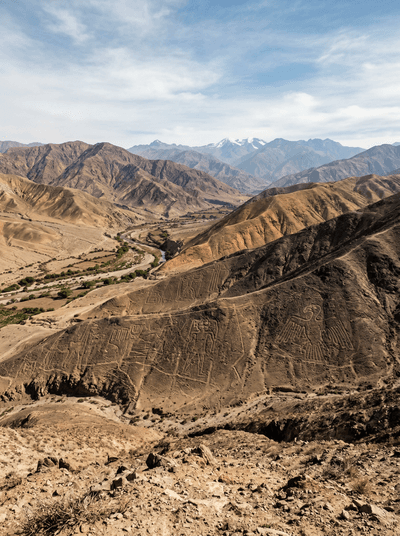
Palpa
Peru
Hillside geoglyphs with human faces, in a valley the tour planes ignore.
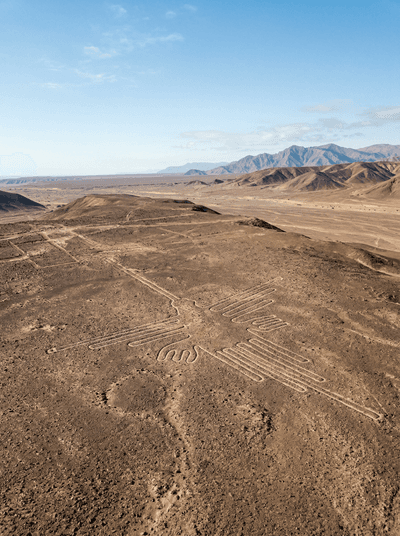
Nazca
Peru
Ancient figures etched so large across the desert they resolve only from above.
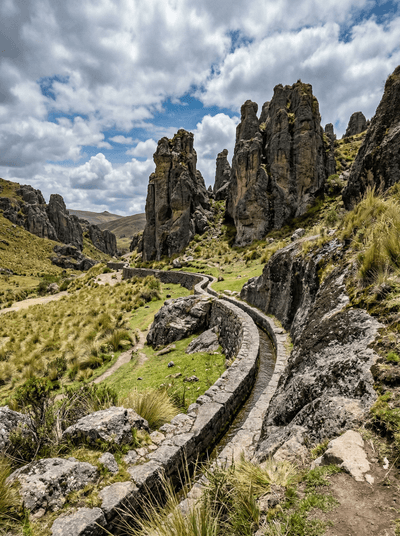
Cumbemayo
Peru
Pre-Inca aqueducts carved through living rock — still channelling water after millennia.
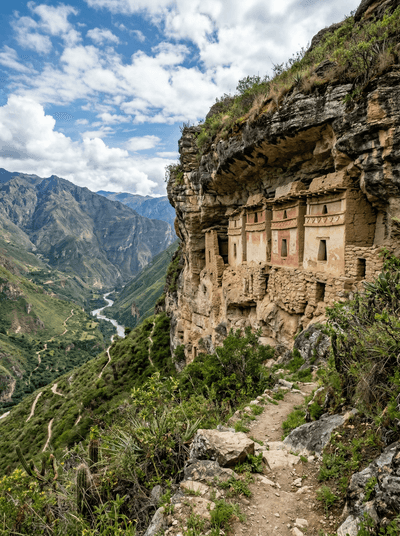
Revash
Peru
Miniature painted houses for the dead, set into a cliff above swirling cloud forest.