Peru
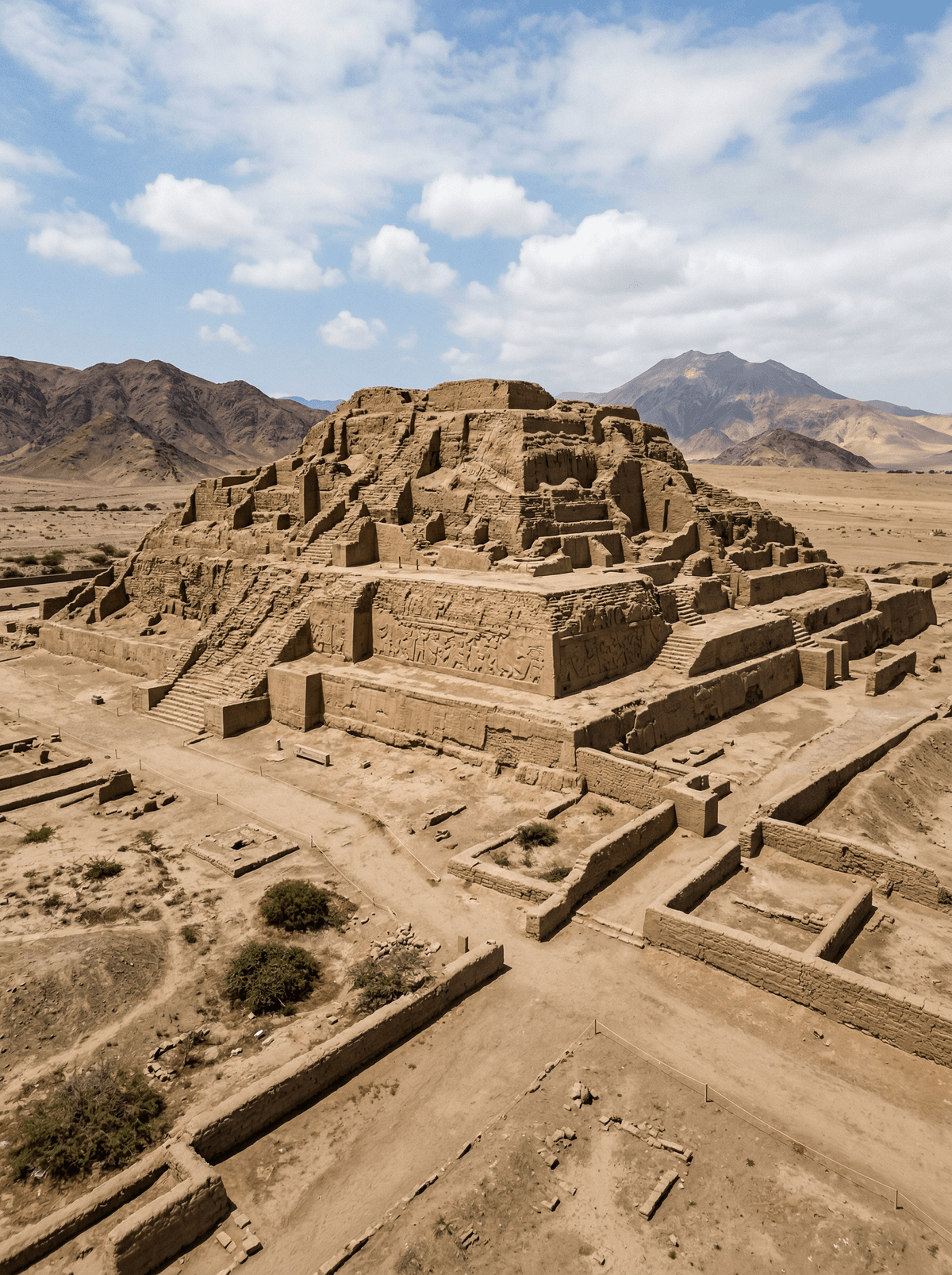
Huacas de Moche
Moche murals of spider gods and warrior priests, the paint still vivid after 1,500 years.
Polychrome reliefs blaze from the stepped walls of an adobe pyramid — the fanged face of Ai Apaec repeated in reds, yellows and blacks that should have faded centuries ago. The desert air preserved them. Fifteen centuries of colour, still articulate against the dust.
Huacas de Moche, on Trujillo's edge beneath Cerro Blanco, was the Moche world's ceremonial core — Huaca de la Luna and Huaca del Sol facing each other across the remains of the city between them. The Luna is the revelation: successive construction phases, each new temple built over and preserving the last, expose tier after tier of moulded, painted walls — Ai Apaec's fanged visage, warrior processions, rope-bound prisoners — a centuries-long record of one civilisation's art in a single building. Excavation here also uncovered evidence of ritual sacrifice matching the imagery, presented archaeologically at the excellent site museum rather than as horror-show garnish. The Sol across the plain — often cited as South America's most massive adobe building — remains largely unexcavated, fixing the scale of everything.
Solo
The mural tiers reward lingering — phase over phase of painted evolution, read at the pace the detail deserves.
Couple
Late-afternoon light warms the reliefs to their richest, and Moche village's picanterías wait across the fields.
Family
Spider gods and warrior processions tell stories without a guidebook — a guide's framing prepares older children for the harder imagery.
- Ai Apaec's fanged face repeats across the Luna's painted, moulded tiers.
- Each temple was built over the last — centuries of art preserved layer on layer.
- Huaca del Sol is often cited as South America's most massive adobe building.
- The site museum anchors the sacrifice evidence in archaeology, not spectacle.
Seco de cabrito in Moche village, the goat braised until it falls from the bone.
Chinguirito — dried ray cured in lime — coastal cooking as old as the pyramids.
Agrigento
Italy
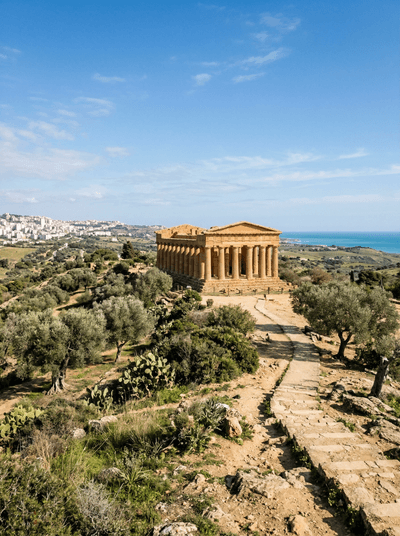
Greek temples lit gold at night along a ridge, almond blossoms carpeting the valley below.
Ephesus
Turkey
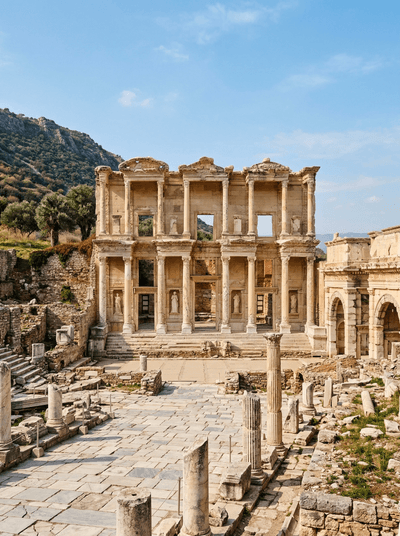
Marble streets still grooved by Roman chariot wheels lead to a library that held 12,000 scrolls.
Paestum
Italy
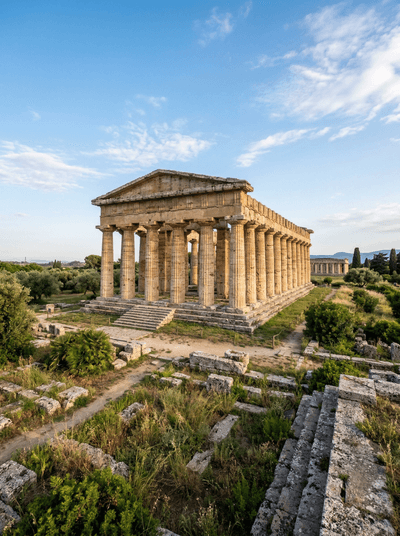
Three Greek temples older than the Parthenon, still standing in an open Cilento field.
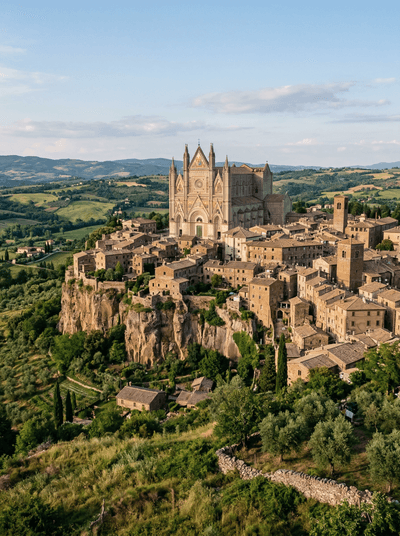
Orvieto
Italy
A city balanced on volcanic tufa, its underground carved into Etruscan tombs and medieval wells.
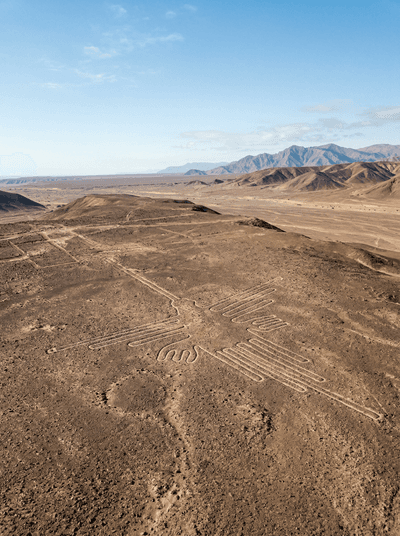
Nazca
Peru
Ancient figures etched so large across the desert they resolve only from above.
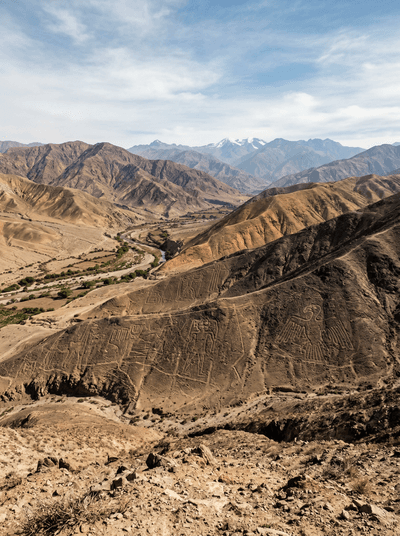
Palpa
Peru
Hillside geoglyphs with human faces, in a valley the tour planes ignore.
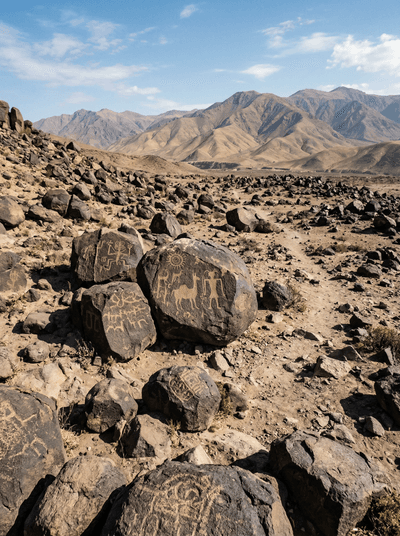
Toro Muerto
Peru
A desert of engraved boulders — thousands of petroglyphs, barely a visitor.
Colca Canyon
Peru
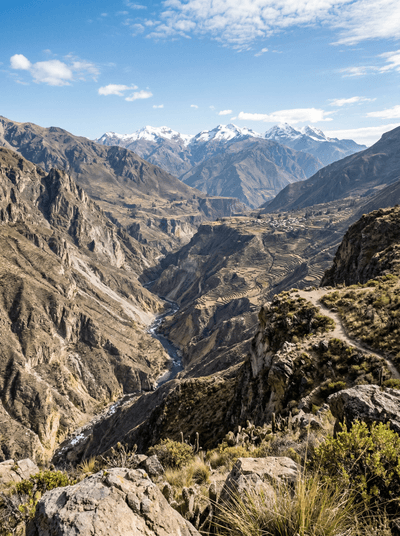
Condors riding dawn thermals out of a chasm that dwarfs the Grand Canyon.