Egypt
Kom Ombo
A temple split between crocodile god and falcon, mummified crocs filling the gallery beside it.
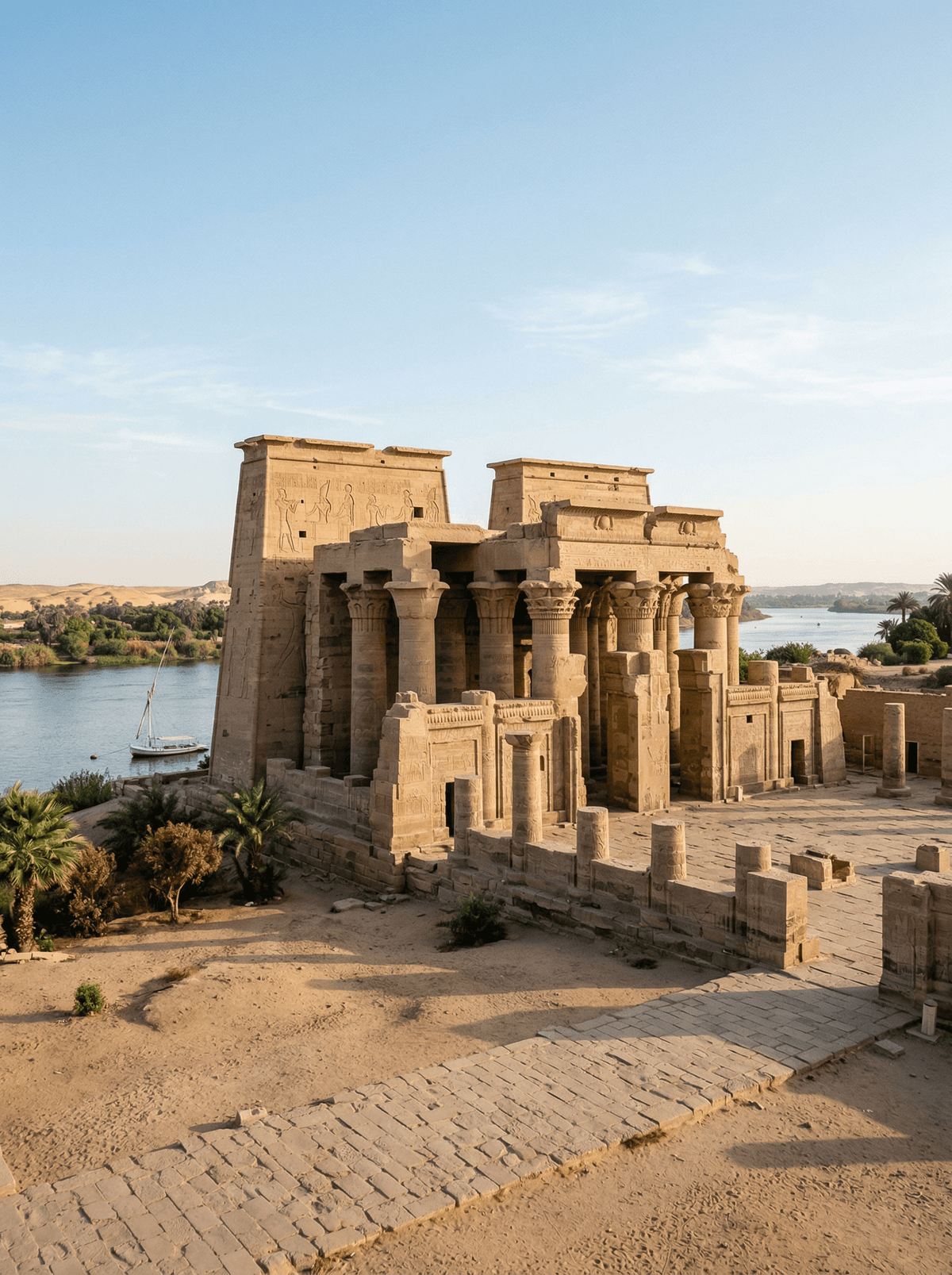
The temple stands right on the Nile's edge, columns catching the last amber light as cruise boats drift past below. Inside, mummified crocodiles lie in their gallery — from hatchlings to three-metre adults, preserved by the dry Upper Egyptian air.
Kom Ombo is a Ptolemaic temple unique in Egypt for its symmetrical double design, dedicated to two gods at once: Sobek the crocodile and Horus the falcon. The entire layout is split into mirrored halves — every hall, sanctuary and processional route duplicated, one side for each deity. Built between the second and first centuries BCE on a promontory where crocodiles once basked, it keeps its Crocodile Museum close by, open since 2012 and included in the temple ticket.
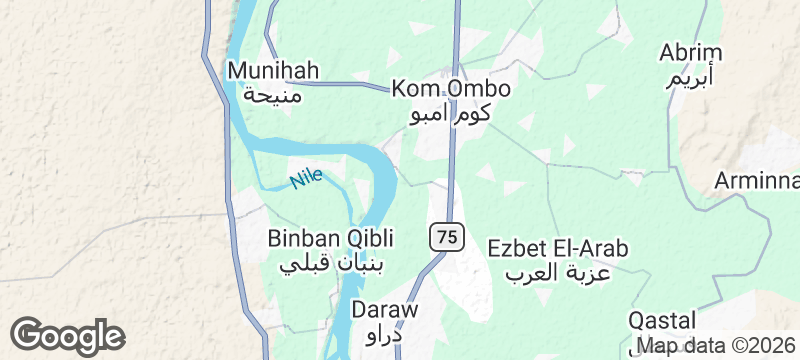
Couple
Time the visit for the last hour of light, walk both processional routes, and take tea beside the river as the boats drift in.
- The temple has two identical entrances, sanctuaries and processional routes — one for Sobek, one for Horus.
- The Crocodile Museum displays 22 mummified crocodiles excavated from the surrounding ground.
- A working Nilometer — the calibrated shaft that measured each year's flood — survives on the river face.
- Cruise itineraries still call here toward sunset, when the columns catch the amber.
Tea and shisha at the cafes beside the temple as the Nile slides past at sunset.
The farmland around the temple keeps the stalls in fresh dates and pressed sugarcane.
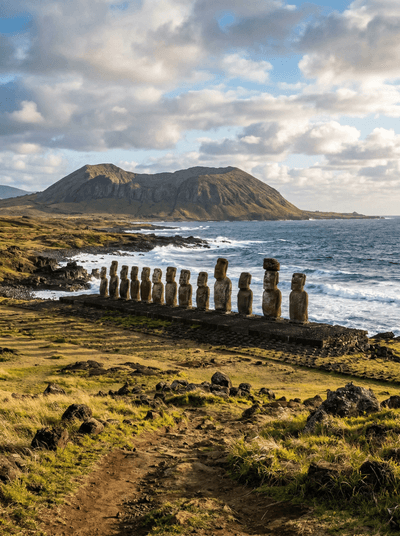
Rapa Nui (Easter Island)
Chile
Moai, grassed craters and a living Polynesian culture meet in the open Pacific.

Kennedy Island
Solomon Islands
A coral islet where a future president waited to be found, and two scouts found him.
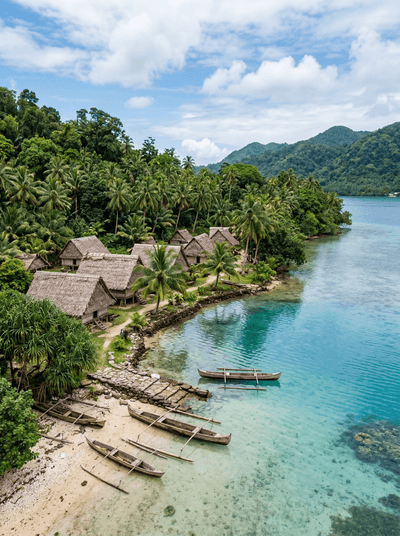
Yap
Micronesia
Stone money too heavy to move, so ownership transfers by word alone on this jungle island.
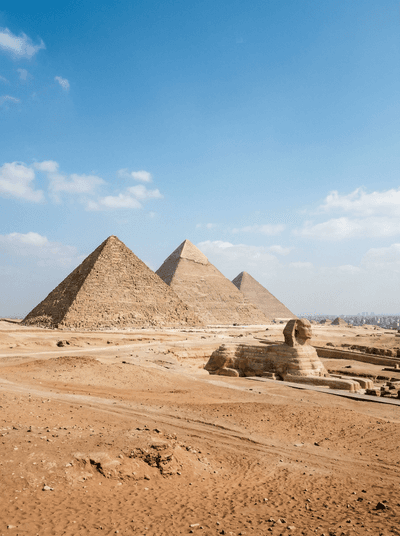
Giza
Egypt
Camel shadows stretch across sand where the last ancient wonder meets the Sahara's edge.
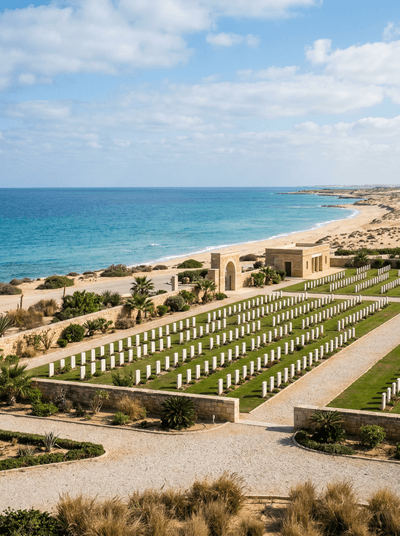
El Alamein
Egypt
White headstones in rows facing the Mediterranean, the silence of a battlefield that changed a war.
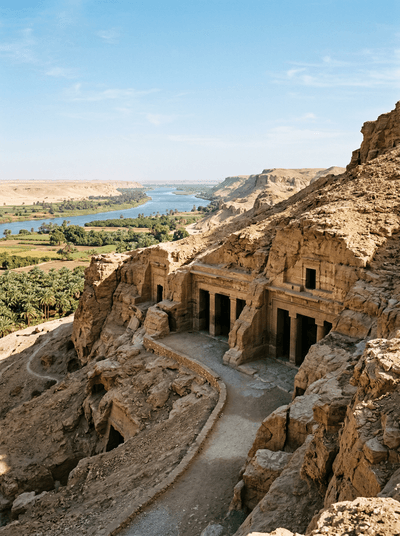
Beni Hasan
Egypt
Rock-cut tombs high on a cliff face, their four-thousand-year-old wrestlers still mid-grapple on the walls.
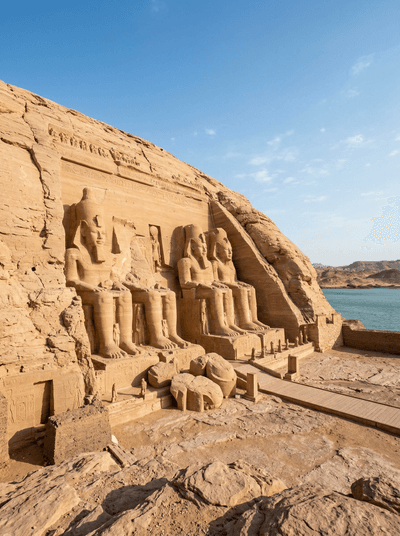
Abu Simbel
Egypt
Twice a year, dawn crawls sixty metres through solid rock to light a pharaoh's face.