Pakistan
Makli Necropolis
Half a million graves in carved stone — Sindh's kings, saints, and scholars in silent assembly.
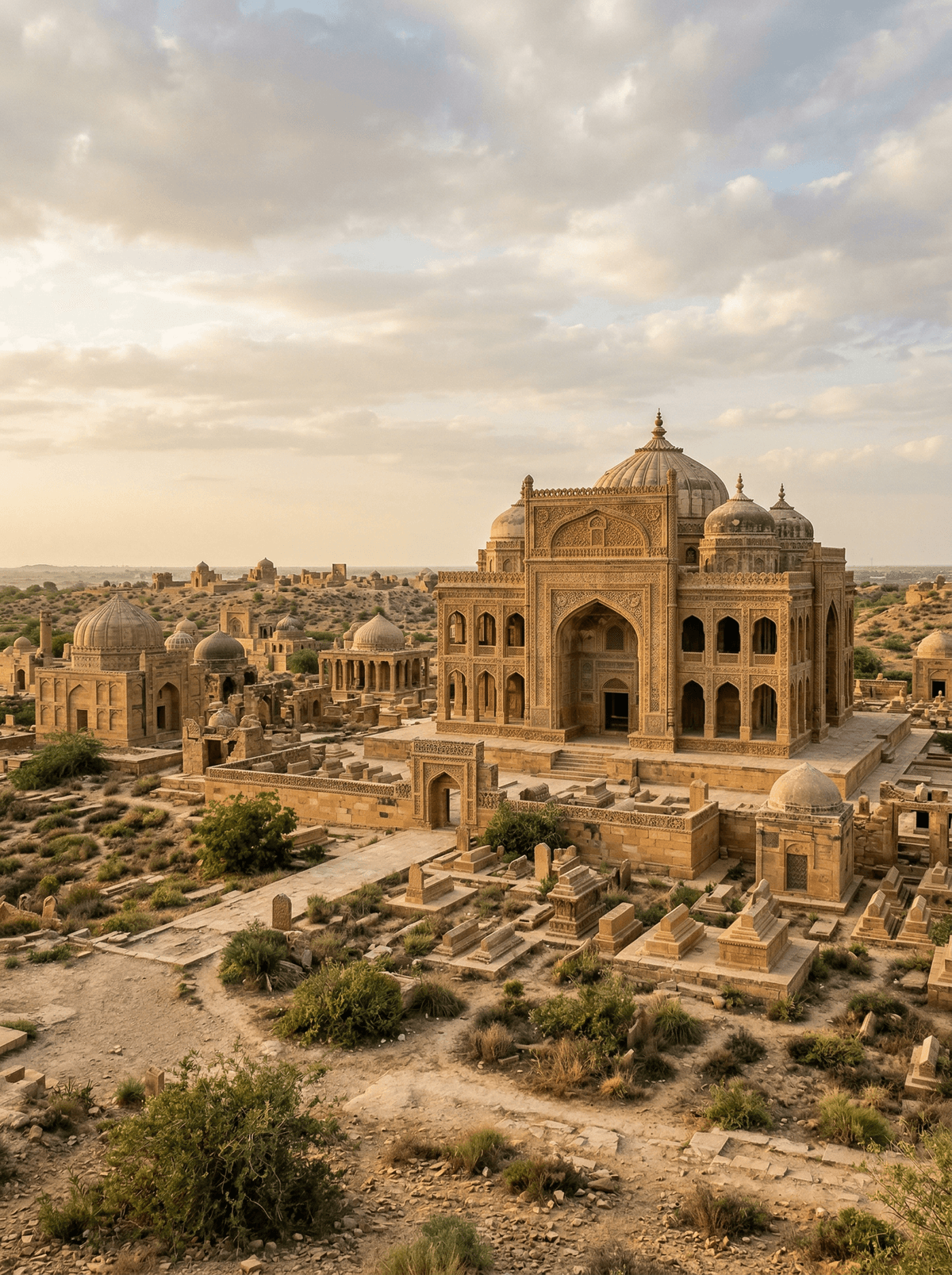
Half a million graves spread across 10 square kilometres of Sindh's dry plain, and you are the only living figure among them. Carved sandstone canopies, pierced lattice screens, and glazed tile domes rise from the dust at Makli in Pakistan — a city of the dead more architecturally ambitious than most cities of the living.
Makli Necropolis near Thatta in Sindh is the largest funerary site in the world by area, a UNESCO World Heritage Site containing an estimated 500,000 graves spanning six centuries. The most elaborate tombs belong to the Samma and Tarkhan rulers of the 14th to 18th centuries, carved in sandstone with intricate Hindu-Islamic fusion stonework: hunting scenes, celestial motifs, and Quranic calligraphy coexist on the same panels. Each carved surface is different — a visual record of a dynasty in cultural transition. Despite its UNESCO listing, the necropolis receives a fraction of the visitors of comparable South Asian heritage sites. You walk the grid of tombs almost entirely alone, with only the wind and the distant Indus delta shimmer for company.
Solo
Makli is profoundly solitary. Walking alone through 10 square kilometres of carved tombs — each different, each silent — with almost no other visitors is an experience that sits outside ordinary travel.
Couple
For couples drawn to atmosphere over activity, Makli delivers. The scale, the silence, and the intricacy of six centuries of funerary art create an emotional weight that amplifies when shared quietly.
- The necropolis contains around 500,000 graves spread over 10 square kilometres — rulers, saints, scholars, and ordinary citizens of medieval Sindh.
- The most elaborate tombs are carved from local sandstone in a style that blends Persian, Mughal, and Hindu motifs — nowhere else shows this exact fusion.
- Shah Jahan Khan's tomb, built 1644, uses the same red Agra sandstone as the Taj Mahal — indicating Sindh's connections to the Mughal court at its peak.
- The necropolis is a UNESCO World Heritage Site that receives a fraction of the visitors of better-known Mughal sites — the silence among the tombs is absolute.
Sindhi fish curry from Thatta's bazaar — river fish with tamarind and green chillies.
Fresh dates from riverside gardens, some of the sweetest in Sindh.
Lassi with rose syrup and cardamom from tea stalls near the necropolis gate.
Mindelo
Cape Verde
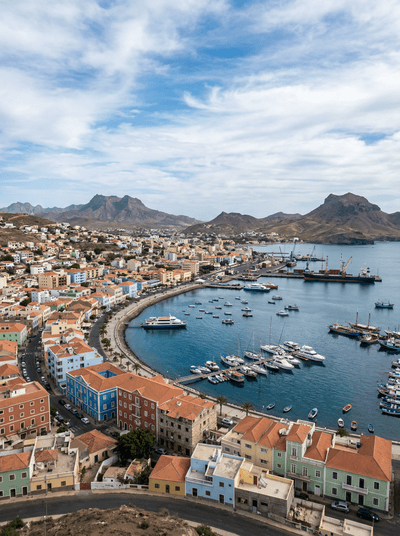
Morna music drifts from dimly lit bars where Cesária Évora once sang barefoot for sailors.
Cidade Velha
Cape Verde
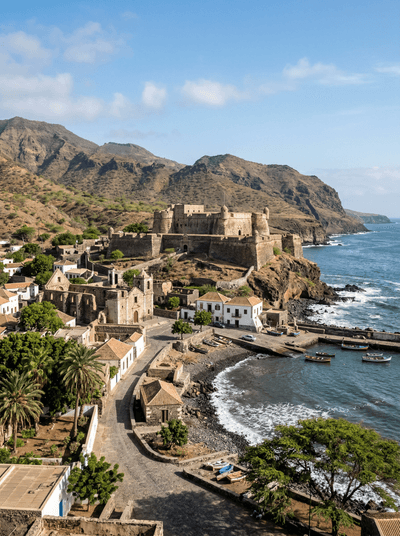
First colonial city in the tropics — a slave pillory still stands in the silent square.
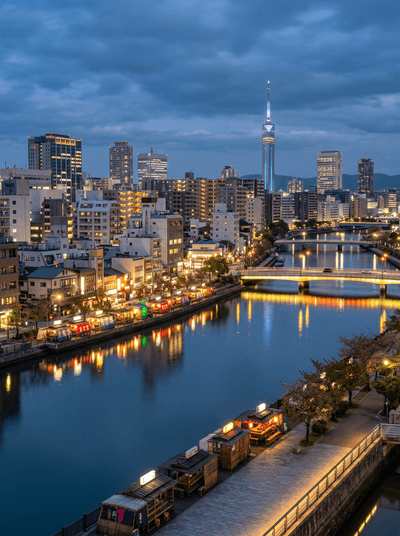
Fukuoka
Japan
Yatai street stalls steaming under canvas where strangers share ramen at midnight.
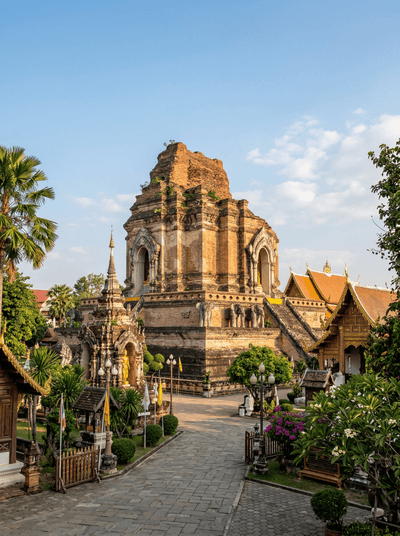
Chiang Mai
Thailand
Monks in saffron robes walking barefoot past tattooed expats and ancient brick chedis at dawn.
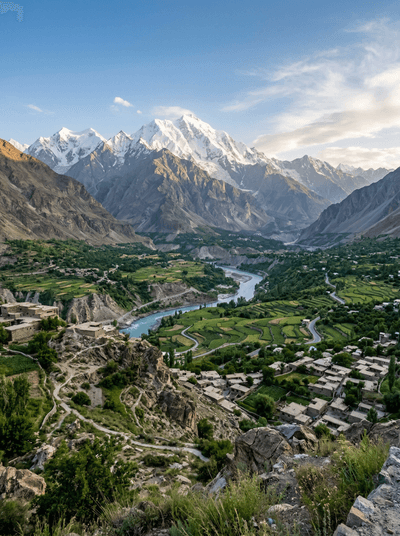
Hunza Valley
Pakistan
Apricot orchards cascading down terraces where three of Earth's mightiest mountain ranges collide.
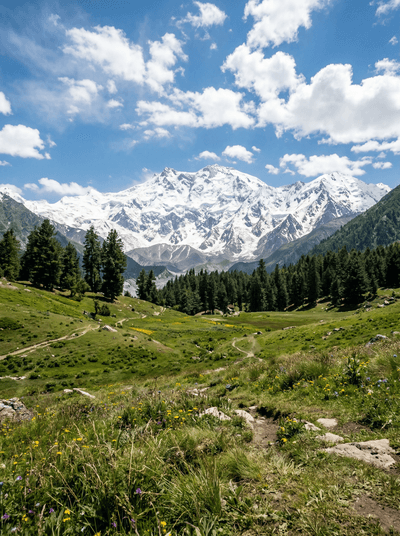
Fairy Meadows
Pakistan
A wildflower carpet at 3,300 metres where Nanga Parbat's killer face fills the entire sky.
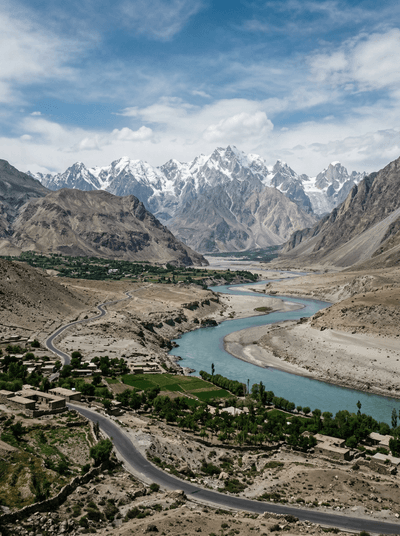
Skardu
Pakistan
Sand dunes and glacial lakes sharing the same valley floor beneath Karakoram granite walls.
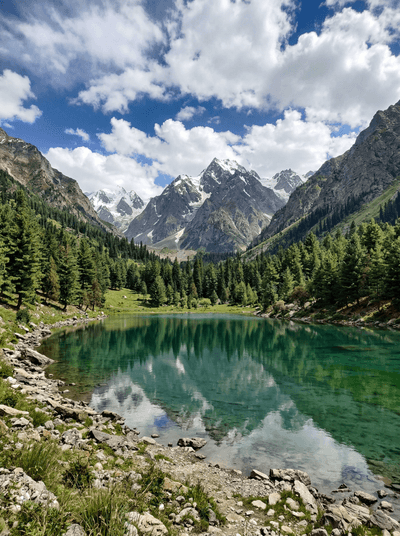
Naltar Valley
Pakistan
Three lakes cycling through turquoise, emerald, and sapphire depending on the angle of light.