Egypt
Meidum
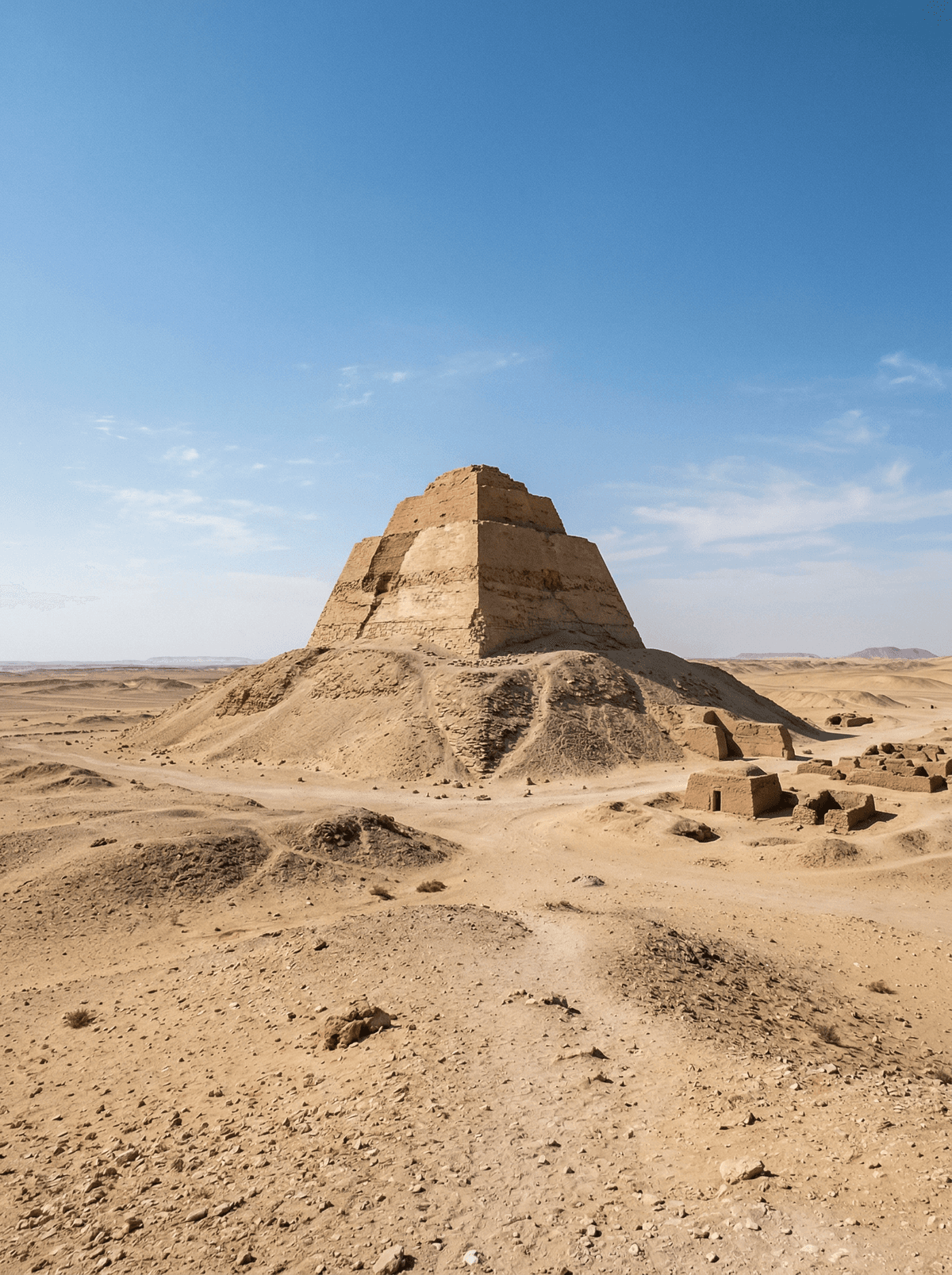
A pyramid that peeled apart, exposing its stone skeleton like an anatomical diagram of pharaonic ambition.
The Meidum pyramid rises from flat farmland like a stone tower that lost its cladding — because it did. The outer layers collapsed or were stripped away, exposing the stepped core and leaving a shape unlike any other pyramid in Egypt. Wind through the surrounding sugarcane is the only sound.
Meidum is Egypt's great transitional pyramid, likely begun under Huni and reworked by Sneferu while step pyramids gave way to true smooth-sided ones. Whether its casing collapsed catastrophically or was quarried away over centuries is still an open argument in Egyptology — what remains is a three-tiered core above a skirt of rubble. The nearby mastabas produced the Meidum Geese, among the earliest and finest painted scenes Egypt ever made, now in the Egyptian Museum; the pyramid's interior is currently closed for safety.
Solo
Come on a weekday morning with a driver from Cairo, walk the rubble skirt alone, and have Egypt's strangest pyramid to yourself.
Couple
Pair the pyramid with a Fayoum afternoon — the collapsed giant first, the oasis's lakes and pottery villages after.
- The exposed core is a one-off silhouette — a pyramid's anatomy lesson standing in open farmland.
- The Meidum Geese, painted here, are counted among the earliest masterpieces of Egyptian art.
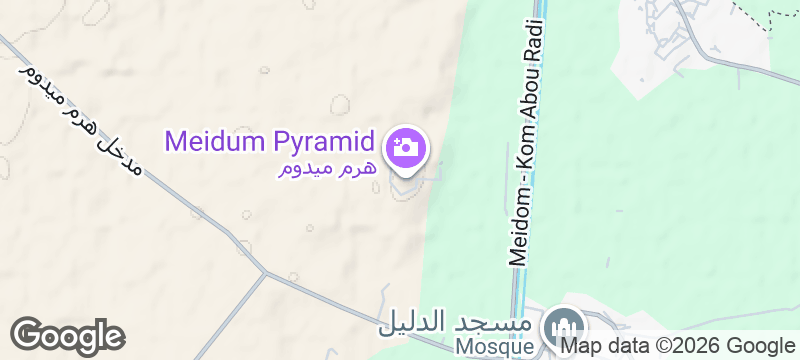
- Ninety kilometres from Cairo, the site often has no other visitor on a weekday morning.
- Collapse or quarrying? The debate is live, and the rubble skirt is the evidence either way.
Pack lunch from Cairo or Fayoum — the pyramid stands alone in farmland with nothing sold nearby.
The sugarcane fields around the site keep the passing carts in cold pressed juice.
Parque Nacional Lauca (Parinacota Village)
Chile
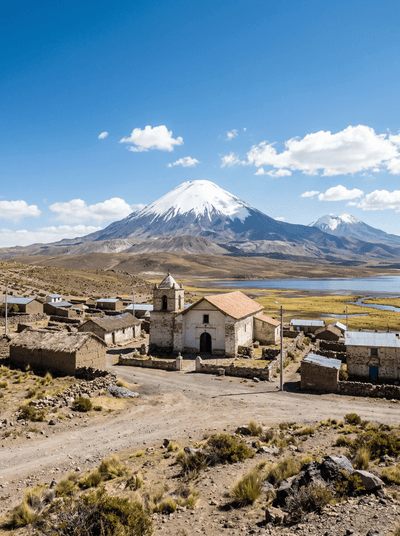
A white Andean church sits beneath volcanoes in Lauca's immense high-altitude light.
Katas Raj Temples
Pakistan
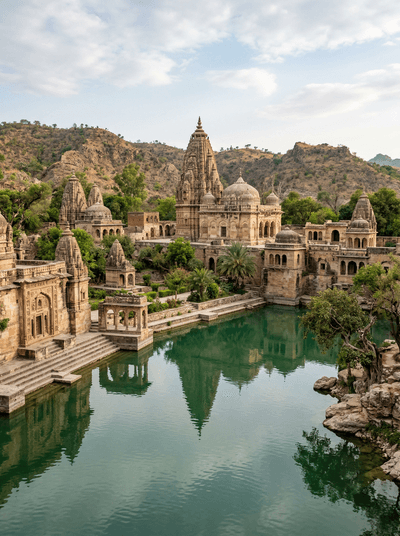
Hindu temples circling a sacred pool that Shiva's tears allegedly filled, still worshipped in Muslim Pakistan.
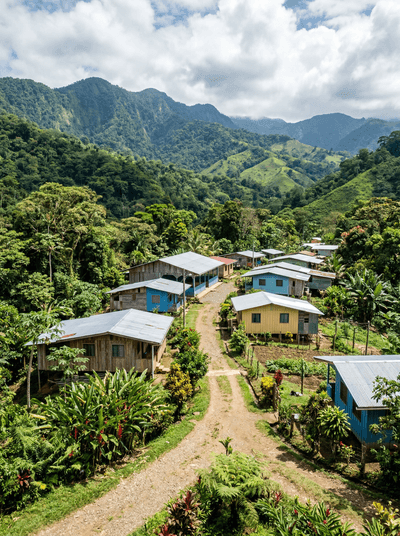
Boruca
Costa Rica
Hand-carved devil masks and a three-day battle re-enacting indigenous resistance to the Spanish conquest.
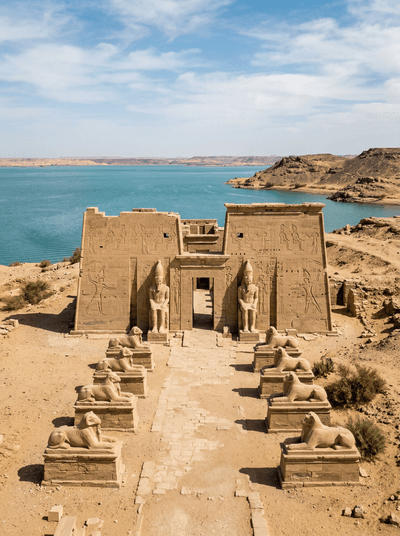
Wadi el-Seboua
Egypt
A sphinx-lined avenue rising from Lake Nasser's shore to Ramesses II's relocated Nubian temple.
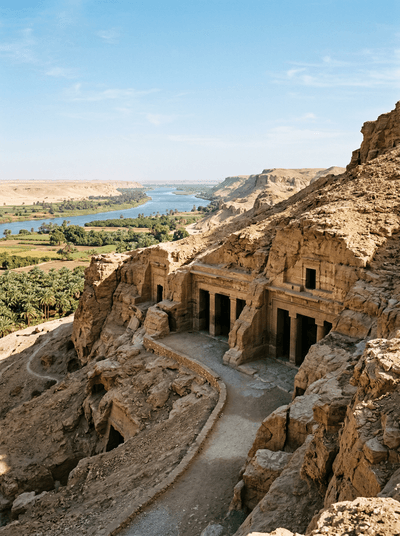
Beni Hasan
Egypt
Rock-cut tombs high on a cliff face, their four-thousand-year-old wrestlers still mid-grapple on the walls.
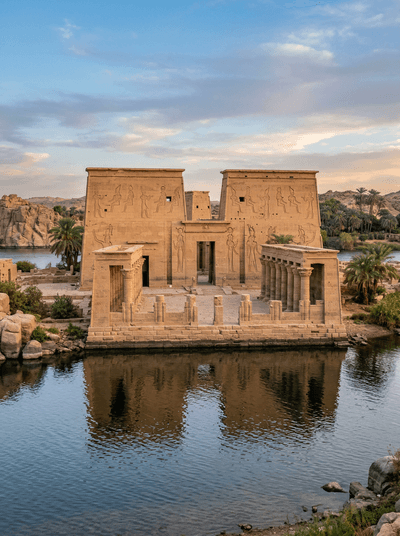
Philae Temple
Egypt
A temple rescued from rising waters, reassembled stone by stone on an island in the Nile.