Portugal
Monsanto
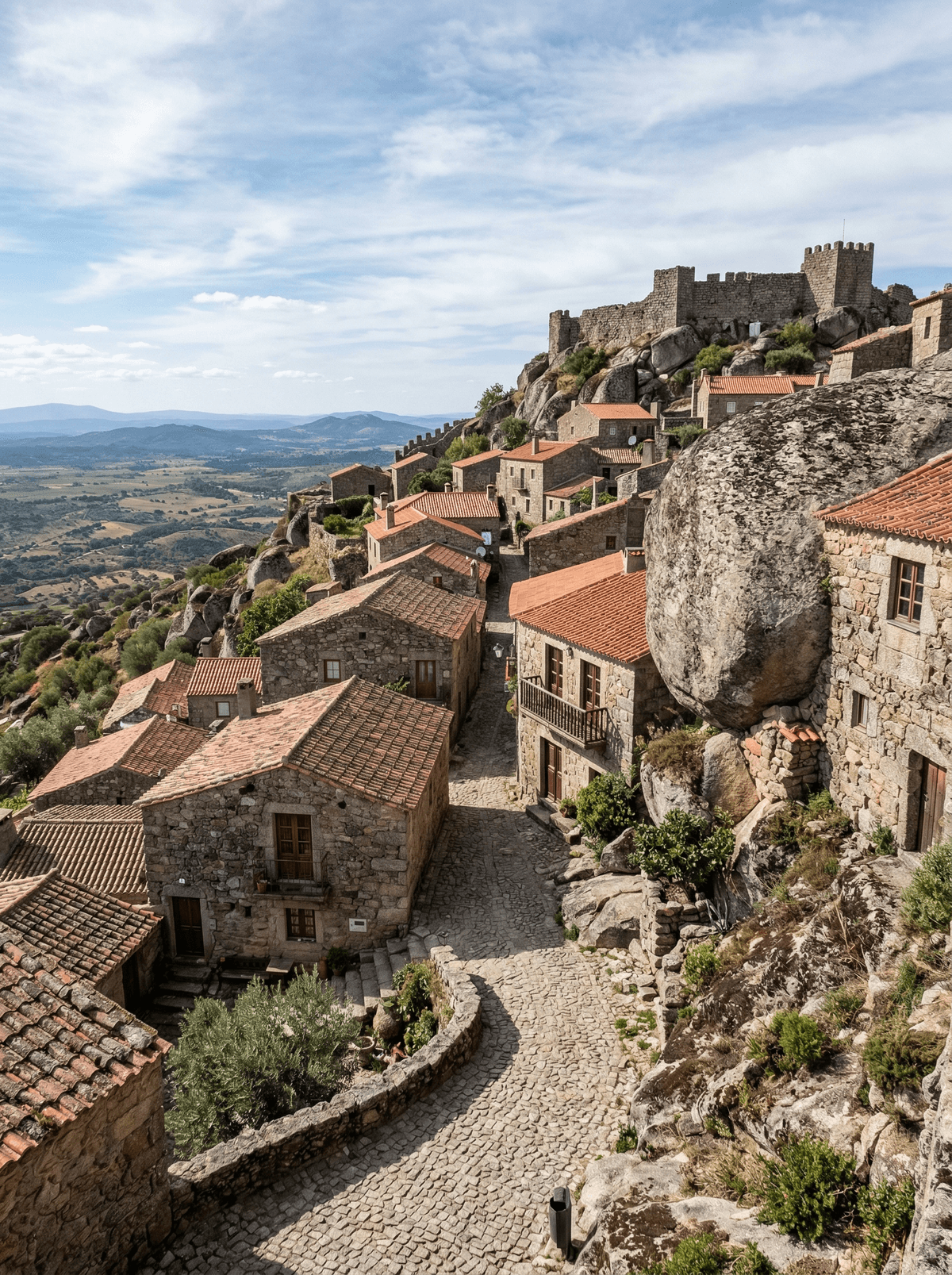
Houses built under boulders the size of houses, a village swallowed by its own granite hilltop.
Granite boulders the size of buildings loom over doorways, serve as rooftops, and form entire walls of houses in Monsanto, Portugal. The village doesn't sit on the hill — it grows from it, stone merging with stone until you cannot tell where the mountain ends and human habitation begins. Paths wind between rock faces polished smooth by eight centuries of shoulders brushing past.
Monsanto was voted 'the most Portuguese village in Portugal' in 1938, a title it wears in the form of a silver rooster planted atop its castle ruins. The settlement dates to at least the 12th century, when the Knights Templar built a fortress on the granite inselberg rising 758 metres above the Beira Baixa plains. Rather than quarrying the massive boulders, residents built around, under, and between them — creating a vertical labyrinth of passages and stairways carved from living rock. The annual Festa das Cruzes in May commemorates a medieval siege: villagers threw a calf over the walls to convince attackers they had food to spare, a bluff that allegedly ended the siege. From the castle ruins at the summit, the view extends across the Spanish border into Extremadura.
Solo
Monsanto is a place to wander without a map, ducking under boulders and climbing stone stairs that lead to views you didn't expect. The village is compact enough to explore in a day but strange enough to hold your attention for longer.
Couple
The intimate scale and surreal architecture create a sense of private discovery. Stay in a casa built beneath a boulder, eat goat cheese between rock walls, and watch sunset from a castle ruin where the boulders glow amber.
- Monsanto was declared 'the most Portuguese village in Portugal' in a 1938 national competition — the granite rock integration was cited as uniquely Portuguese.
- Houses were not built from quarried stone but by using existing boulders as walls and roofs — some inhabited dwellings use a single boulder as their entire ceiling.
- The castle at the summit has Bronze Age engravings on the rock face below its walls.
- Every Easter, villagers throw clay pots of flowers from the castle battlements in the Festa dos Castelos, commemorating a 12th-century siege.
Maranhos — goat offal wrapped and slow-cooked in the animal's stomach, a dish that rewards the brave.
Local goat cheese and chestnut dishes at a café built between two boulders.
Mindelo
Cape Verde
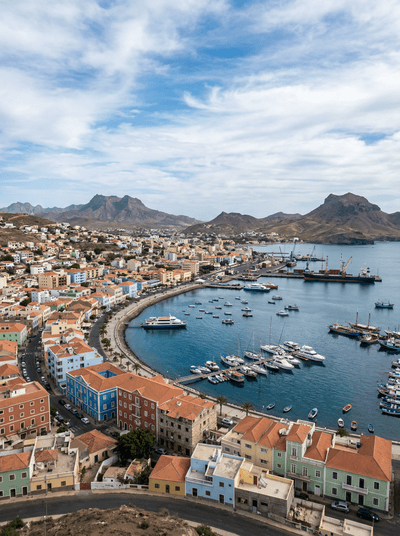
Morna music drifts from dimly lit bars where Cesária Évora once sang barefoot for sailors.
Cidade Velha
Cape Verde
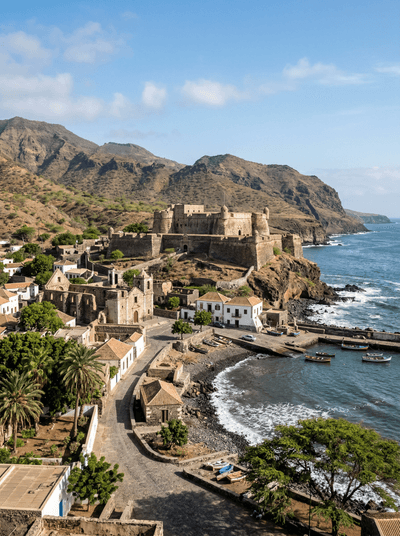
First colonial city in the tropics — a slave pillory still stands in the silent square.

Fukuoka
Japan
Yatai street stalls steaming under canvas where strangers share ramen at midnight.
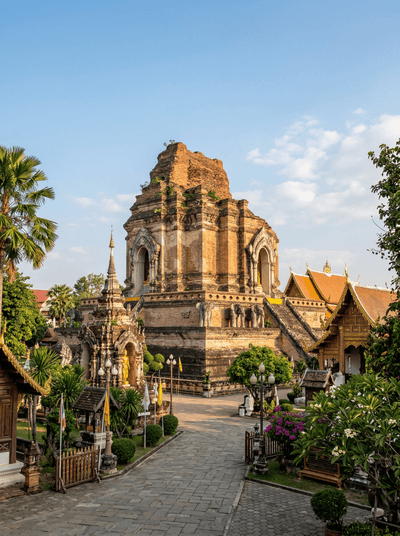
Chiang Mai
Thailand
Monks in saffron robes walking barefoot past tattooed expats and ancient brick chedis at dawn.
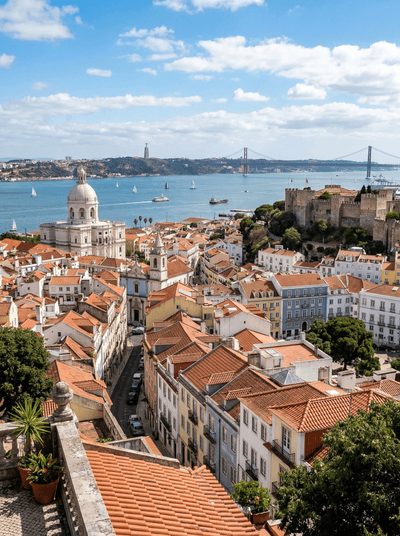
Lisbon
Portugal
Seven hills of crumbling azulejo facades where fado drifts from open doorways at dusk.
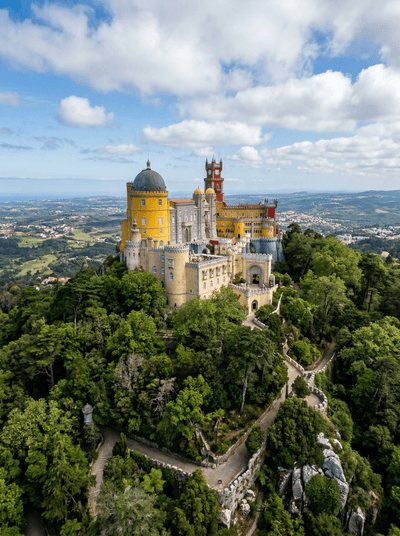
Sintra
Portugal
Moss-cloaked palaces vanish into mountain fog, each winding path revealing towers you weren't told about.
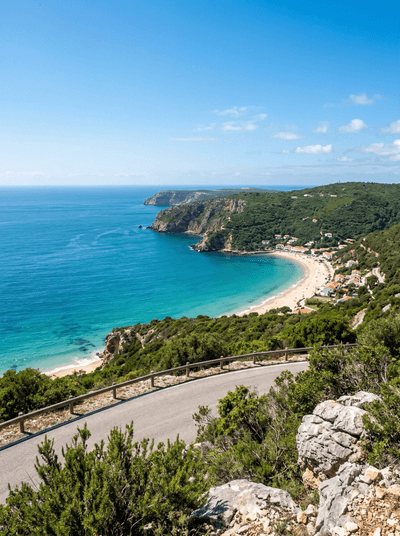
Arrábida
Portugal
Turquoise coves locked between limestone cliffs and ancient monastery forest above the sea.
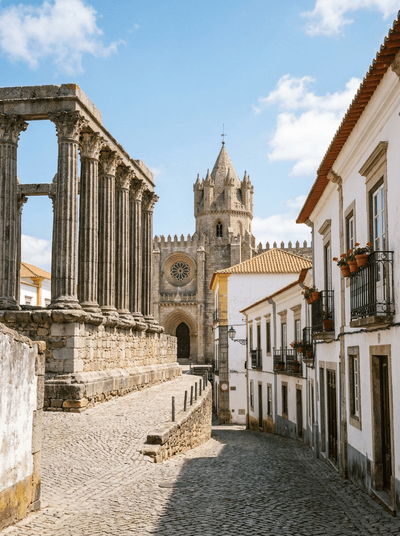
Évora
Portugal
Monks' skulls and femurs line a chapel ceiling beneath a Roman temple still intact.