Saudi Arabia
Najran
Mud-brick fortresses and pre-Islamic tombs where Arabia's deep south meets the frankincense route.
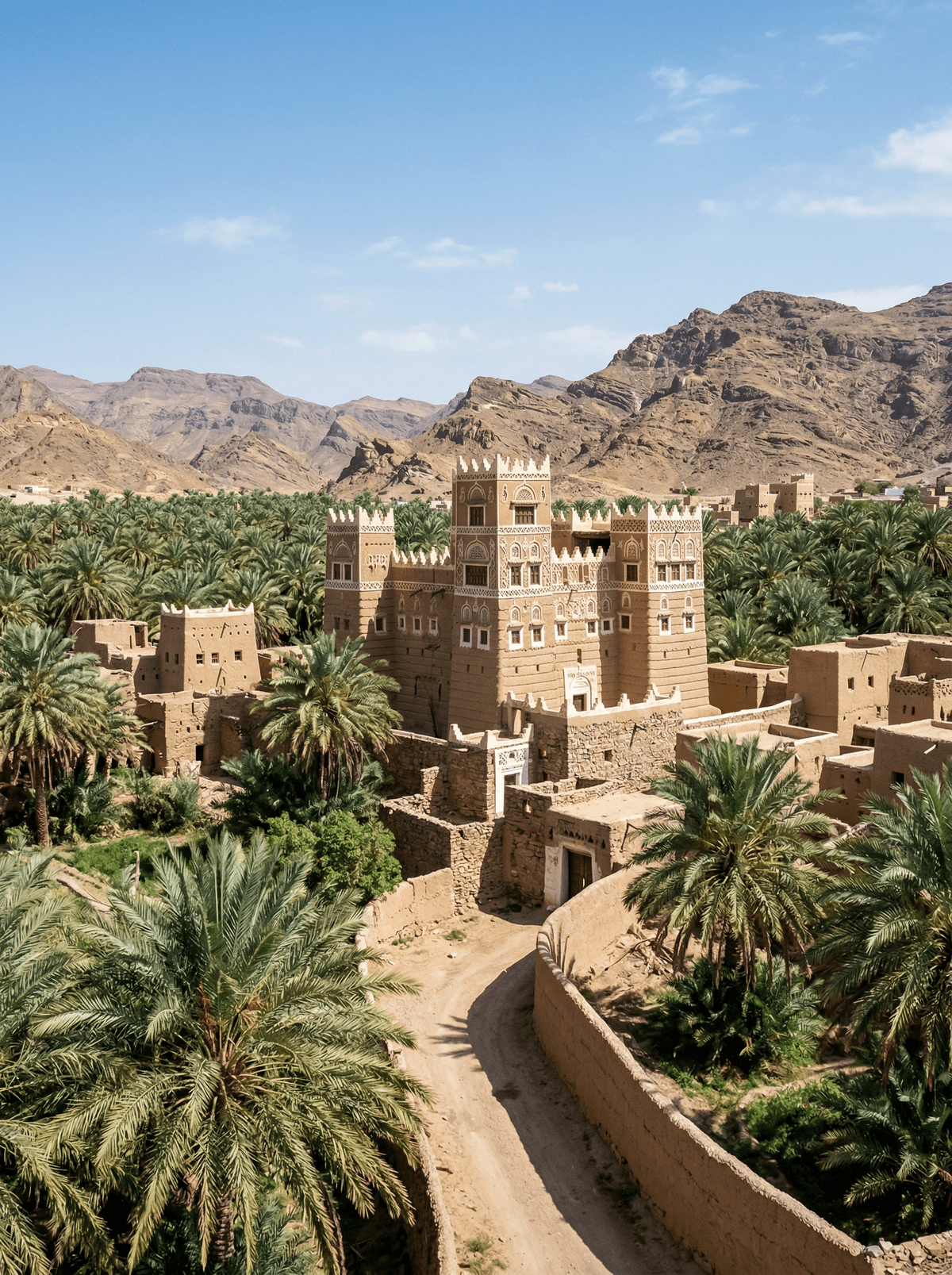
Emara Palace stands three storeys of mud-brick and plaster against the Najran sky, its windows cut narrow for defence and its walls thick enough to absorb the southern heat. Below the palace, the old quarter's houses are painted with geometric patterns in a tradition that links this region more to Yemen than to the cities of the Najd plateau. The air here is drier than the coast, warmer than the mountains, and scented with the dust of a region where Arabian and Yemeni traditions meet.
Najran sits near Saudi Arabia's southern border, in a region where Arabian, Yemeni, and East African cultural influences intersect. The Al-Ukhdood archaeological site — mentioned in the Quran — preserves pre-Islamic inscriptions, rock carvings, and the remains of a walled settlement dating to the first millennium BCE. Emara Palace, built in the traditional Najdi-Yemeni style, is one of the most photogenic mud-brick structures in the kingdom. The city's proximity to the ancient frankincense trade routes gave it centuries of strategic importance, and the architectural traditions here — painted facades, multi-storey towers, narrow defensive streets — reflect a culture shaped by both commerce and conflict.
Solo
The remoteness and archaeological depth make Najran a destination for the independently minded — few tourists, rich history, and a frontier atmosphere.
Couple
The painted houses and mud-brick palace create a visual richness that rewards slow exploration together, with no crowds to navigate around.
- Emara Palace — a three-storey mud-brick fortress — dominates the city with its distinctive tower and decorative plasterwork.
- Al-Ukhdood archaeological site preserves pre-Islamic inscriptions, tombs, and carved rock faces in situ.
- The proximity to the frankincense route means the city's heritage stretches deep into Arabian trading history.
- Traditional mud-brick houses with geometric painted facades line the old quarter's winding streets.
Haneed — lamb slow-roasted whole until it falls from the bone — served on a bed of fragrant rice.
Najran's wild mountain honey, dark and complex, eaten with warm flatbread and fresh butter.
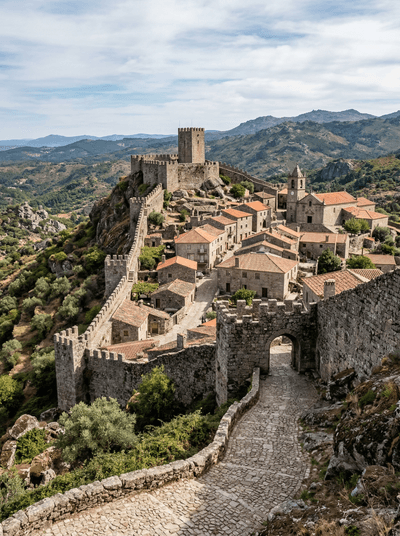
Sortelha
Portugal
A walled medieval village where houses grow from the bedrock itself, granite merging with granite.
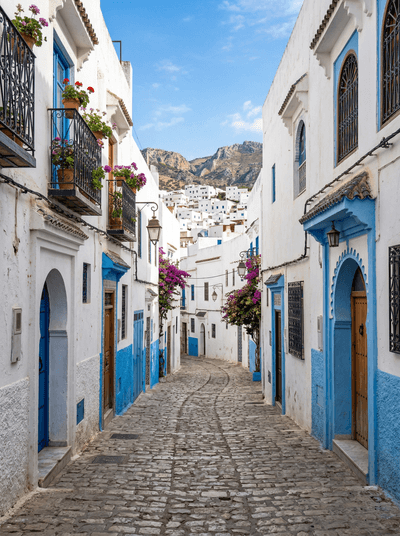
Tétouan
Morocco
An Andalusian medina transplanted to Africa — white plaster, iron balconies, trailing jasmine.
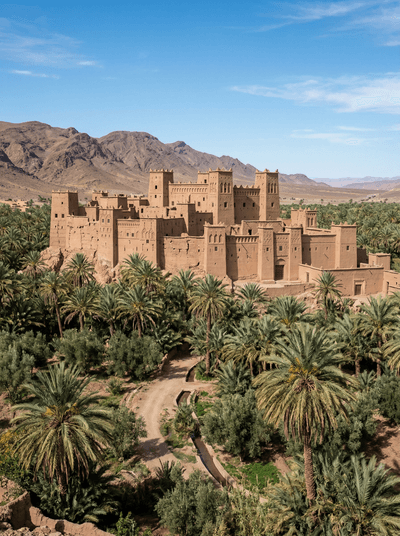
Tamnougalt
Morocco
A 16th-century kasbah village where Jewish and Muslim quarters share crumbling mud-brick walls.
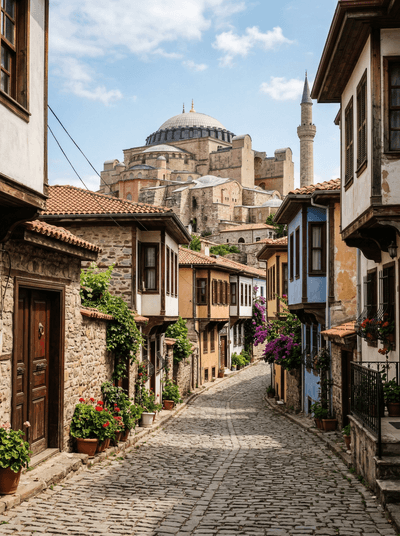
Vize
Turkey
A forgotten Thracian capital where Roman walls, Byzantine churches, and Ottoman baths share one quiet street.
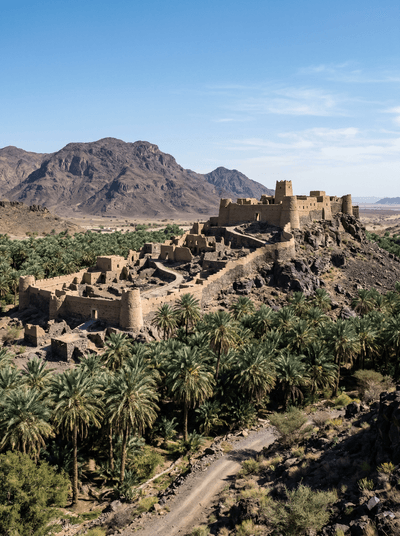
Khaybar
Saudi Arabia
Black lava fields surrounding a green oasis where fortress ruins crown every hilltop.
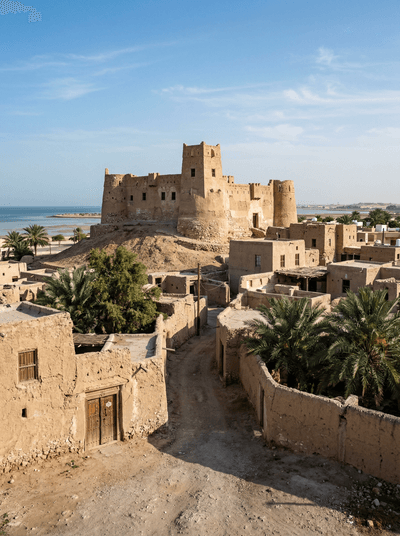
Tarout Island
Saudi Arabia
A Dilmun temple buried beneath a Portuguese fort on one of Arabia's oldest inhabited islands.
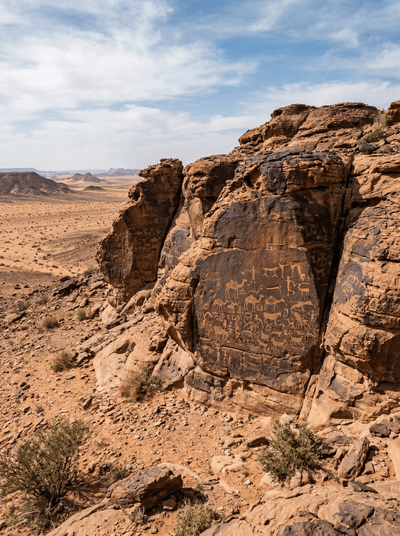
Jubbah
Saudi Arabia
Petroglyphs of camels, ibex and hunters carved into sandstone ten thousand years ago.
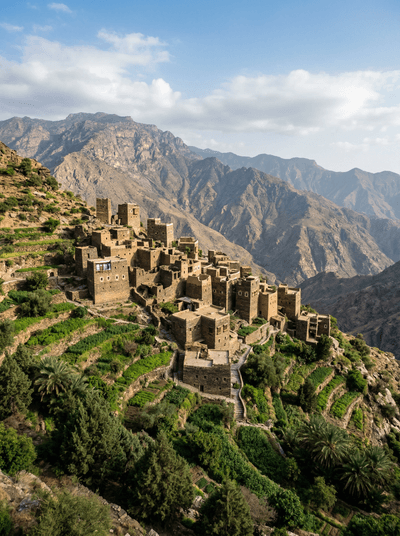
Tanomah
Saudi Arabia
Juniper forests catching cloud on mountain ridges where baboons patrol the misty undergrowth.