Saudi Arabia
Tarout Island
A Dilmun temple buried beneath a Portuguese-era fort on one of Arabia's oldest inhabited islands.
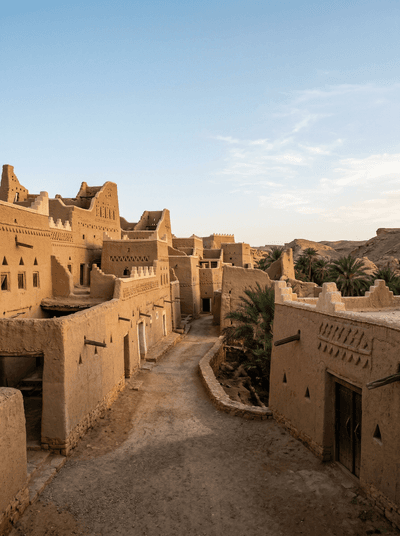
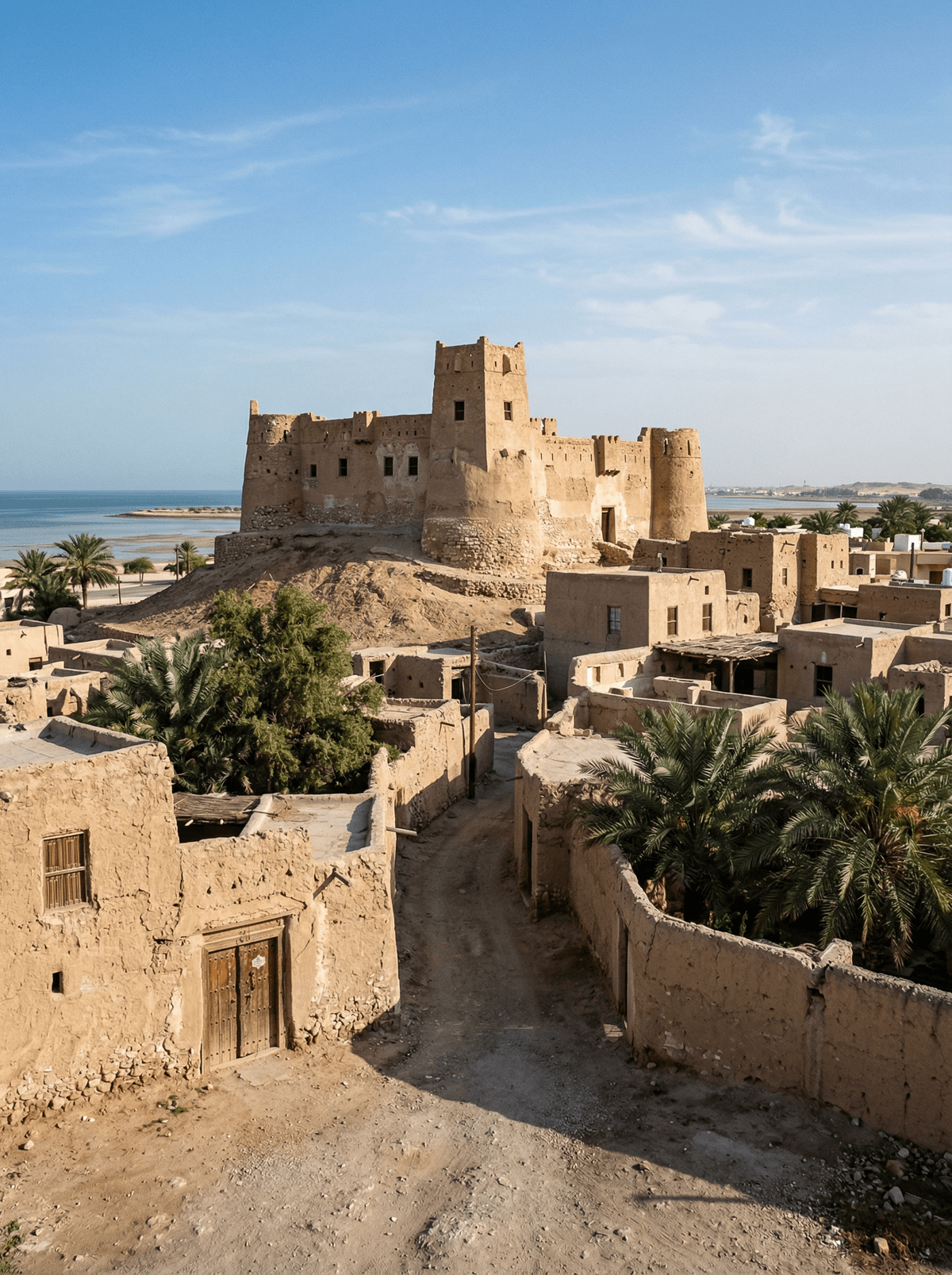
Tarout Castle sits on a mound that has been sacred or strategic for seven thousand years — a Dilmun temple beneath, a Portuguese-era fort above, the layers compressing time into a single hilltop. Around it, the old quarter's coral-stone houses and narrow lanes keep the atmosphere of a Gulf pearl-trading settlement.
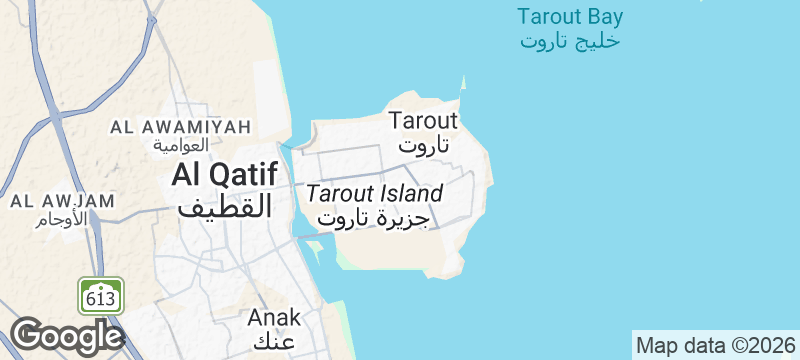
Tarout Island, in Saudi Arabia's Eastern Province, has held human life since the fifth millennium BCE — few places in the Gulf go back further. It was a centre of the ancient Dilmun civilisation — the trading culture that linked Mesopotamia with the Indus Valley — and Dilmun, Greek and Portuguese-era finds have all come out of its soil. A causeway connects the island to Qatif, so the lanes of the old quarter and the fishing harbour are an easy drive, with the castle mound rising above the old quarter's rooftops.
Solo
The archaeological layers — Dilmun, Greek, Portuguese, pearl-trade — reward the kind of curious, self-guided exploration solo travellers excel at.
Couple
Walking the old quarter's coral-stone lanes together, with the castle rising above and the Gulf breeze carrying salt air, is quietly atmospheric.
- Archaeology traces some seven thousand unbroken years of settlement here — Gulf history at its deepest.
- Tarout Castle stands on the ruins of a Dilmun-era temple, with Portuguese-era fortifications layered above.
- The old quarter's coral-stone houses and narrow lanes keep the atmosphere of a Gulf pearl-trading island.
- A causeway links the island to Qatif — seven millennia of history, an easy drive from the coast.
Freshly caught hammour grilled dockside with lime, chilli and coriander at the island's fish market.
Harees — a silky porridge of wheat and lamb — slow-stirred for hours in the Gulf tradition.
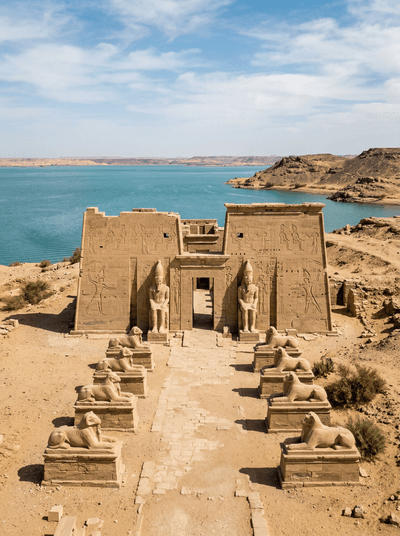
Wadi el-Seboua
Egypt
A sphinx-lined avenue rising from Lake Nasser's shore to Ramesses II's relocated Nubian temple.
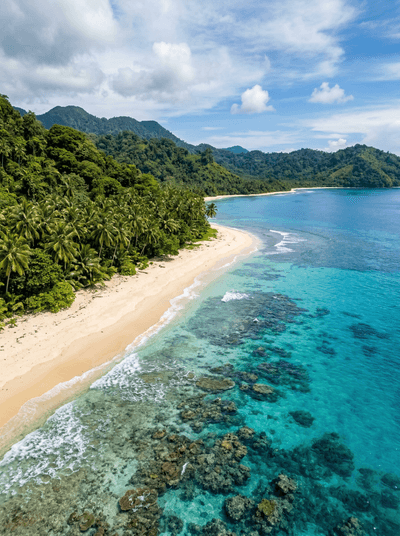
Santa Ana Island
Solomon Islands
Canoe houses carved inside and out, on an island where the coffins are canoes too.
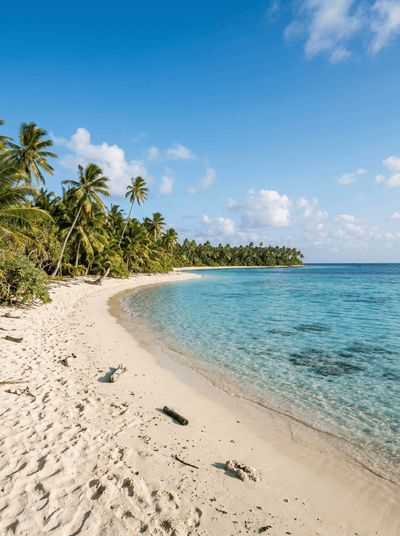
Nanumea
Tuvalu
Japanese bombs found this atoll's church in 1943; a landing craft still rusts on the reef.
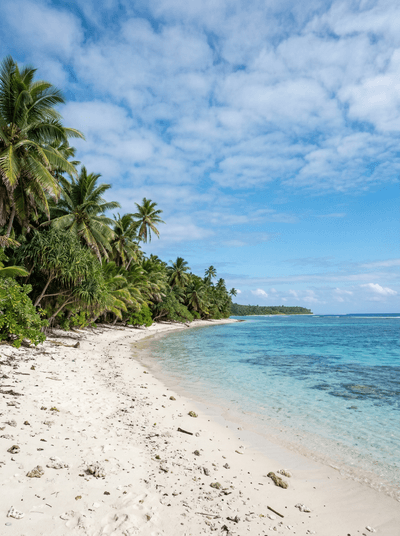
Niutao
Tuvalu
This island swallowed its lagoons: two lie landlocked inside Niutao, one joined underground to the sea.