
Wales
Preseli Hills
The hills that sent bluestones to Stonehenge, a capstone balanced on three points for 5,000 years.
Stonehenge began here. The bluestones of the great circle on Salisbury Plain were carried from the Preseli Hills, a ridge of moorland and rocky tors in north Pembrokeshire, west Wales, and at Pentre Ifan below the ridge a capstone five metres long has balanced on three stone points for more than 5,000 years.
Pentre Ifan is a tomb stripped to its bones, the mound long gone, and its outline frames the hills that supplied its stone as well as Stonehenge's. The Golden Road runs 7.4 miles along the crest, a track said to have been walked for 5,000 years by travellers to and from Ireland, past the burial cairns on Foel Eryr and Foel Feddau, the jagged tor of Carn Menyn, and Bedd Arthur, an eye-shaped ring of stones named as Arthur's grave; a short detour reaches Foel Cwmcerwyn, the highest point, where the Mabinogion sets Arthur's battle with the boar Twrch Trwyth. The path is unmarked on open hill, boggy in places, and the weather changes fast, so this is a ridge for a map, boots and a full rucksack. At Castell Henllys the national park has rebuilt an Iron Age village on the actual footprints of its roundhouses, the only place in Britain where that has been done, with living-history demonstrations of the Demetae tribe's world and a café for afterwards. The Preselis are Pembrokeshire's inland half, older and quieter than the coast, and they explain the most famous monument in Britain.
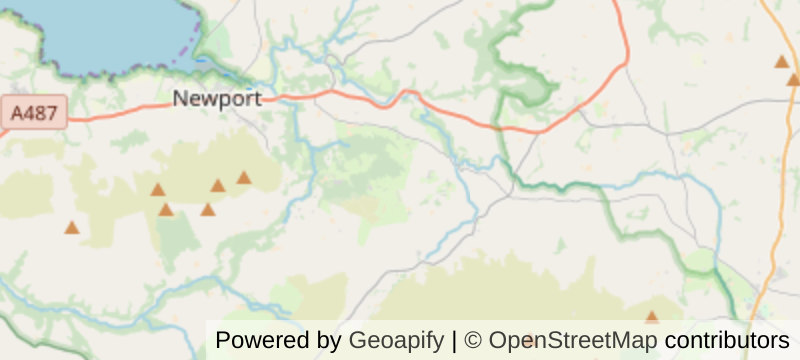
Map data © OpenStreetMap contributors · Powered by Geoapify
Solo
Walk the Golden Road end to end with a map and compass, and stand on Carn Menyn thinking about where its stones went.
Couple
Pentre Ifan at dusk when the capstone goes black against the sky, and a farmhouse bed under the hills.
Family
Roundhouses and Iron Age demonstrations at Castell Henllys, then the short walk to Pentre Ifan to touch a five-thousand-year-old stone.
Friends
A ridge walk with a car left at each end, a cairn for lunch, and a pub at the end.
- Pentre Ifan's five-metre capstone has rested on three uprights for more than 5,000 years, the bare bones of a Neolithic tomb, with the Preseli Hills framed behind it.
- Those hills are the source of the bluestones that went into Stonehenge, and into Pentre Ifan itself.
- Castell Henllys is the only Iron Age village in Britain where the roundhouses have been rebuilt on the exact spots they stood 2,000 years ago, after decades of excavation.
- The Golden Road runs 7.4 miles along the Preseli ridge, a route said to date back 5,000 years, past Bronze Age cairns, the tor of Carn Menyn and a ring of stones called Bedd Arthur.
Lunch at Blasus, the café at Castell Henllys, after a morning among the roundhouses.
Cawl and Blas boards at Blas at Fronlas in Newport, the town under the hills, or baked local crab and Preseli lamb at the Morawelon Café by the sea.
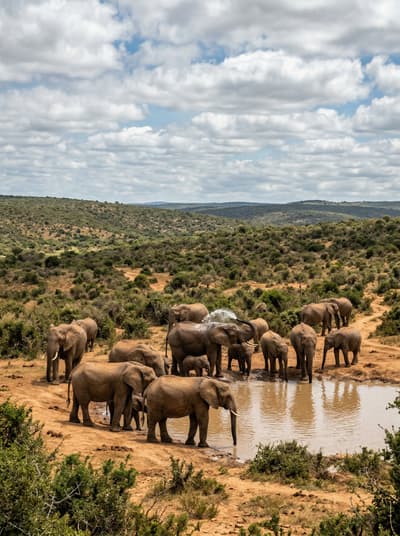
Addo Elephant National Park
South Africa
Elephants gather at a dust-ringed waterhole close enough to hear each breath.
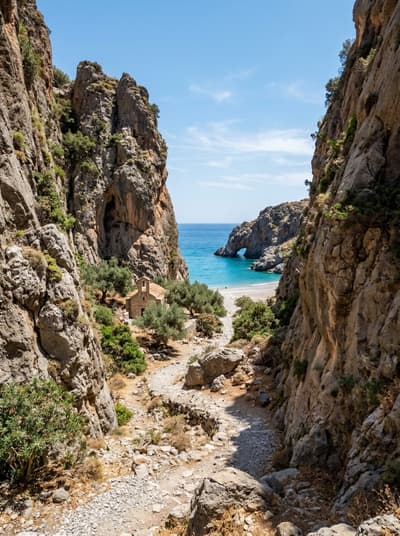
Agiofarango Gorge
Greece
Three hundred hermits once lived this gorge — a cave chapel and the Libyan Sea remain.
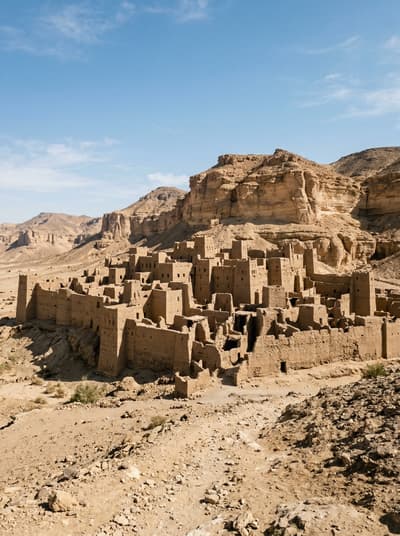
Ain Umm al-Dabadib
Egypt
Roman aqueducts tunnelling beneath deep desert to water farmland the Sahara has since taken back.
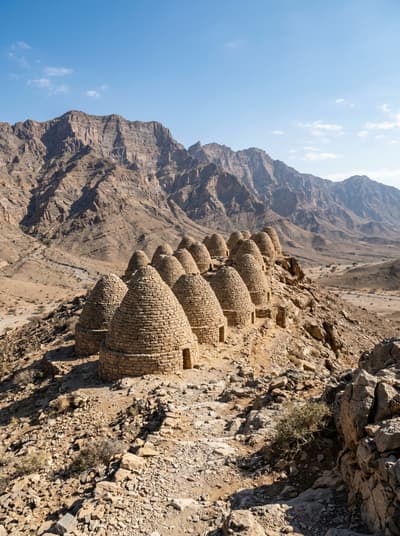
Al Ayn Beehive Tombs
Oman
Stone beehive tombs older than the pyramids hold a clean line along the ridge.
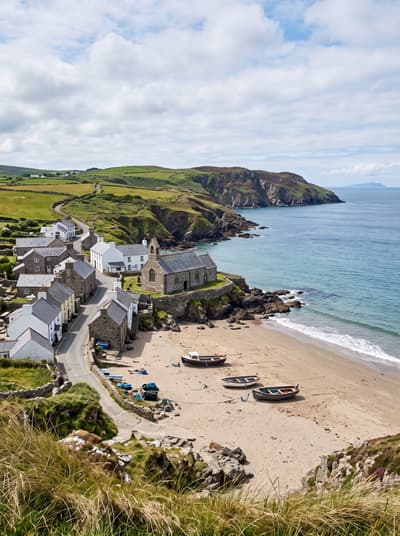
Aberdaron
Wales
A church on the sand where pilgrims ate their last meal before the island crossing.
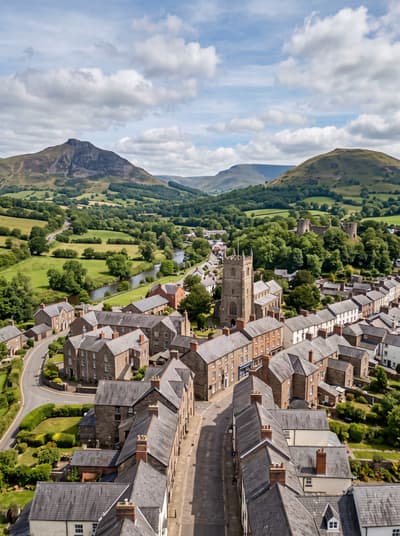
Abergavenny
Wales
A market town under three mountains that fills with food producers one weekend each September.
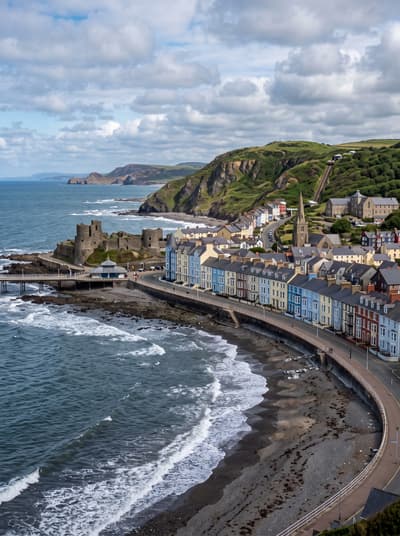
Aberystwyth
Wales
Starlings swirl under the pier at dusk, a cliff railway climbs, the national library watches.
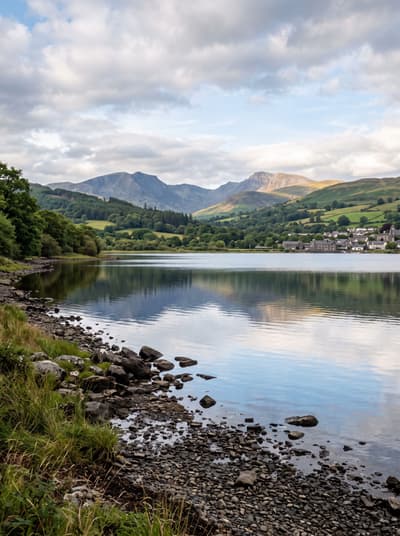
Bala and Llyn Tegid
Wales
Wales's largest lake, an ice-age fish found nowhere else, and a drowned village upstream.