Argentina
Serranía de Hornocal
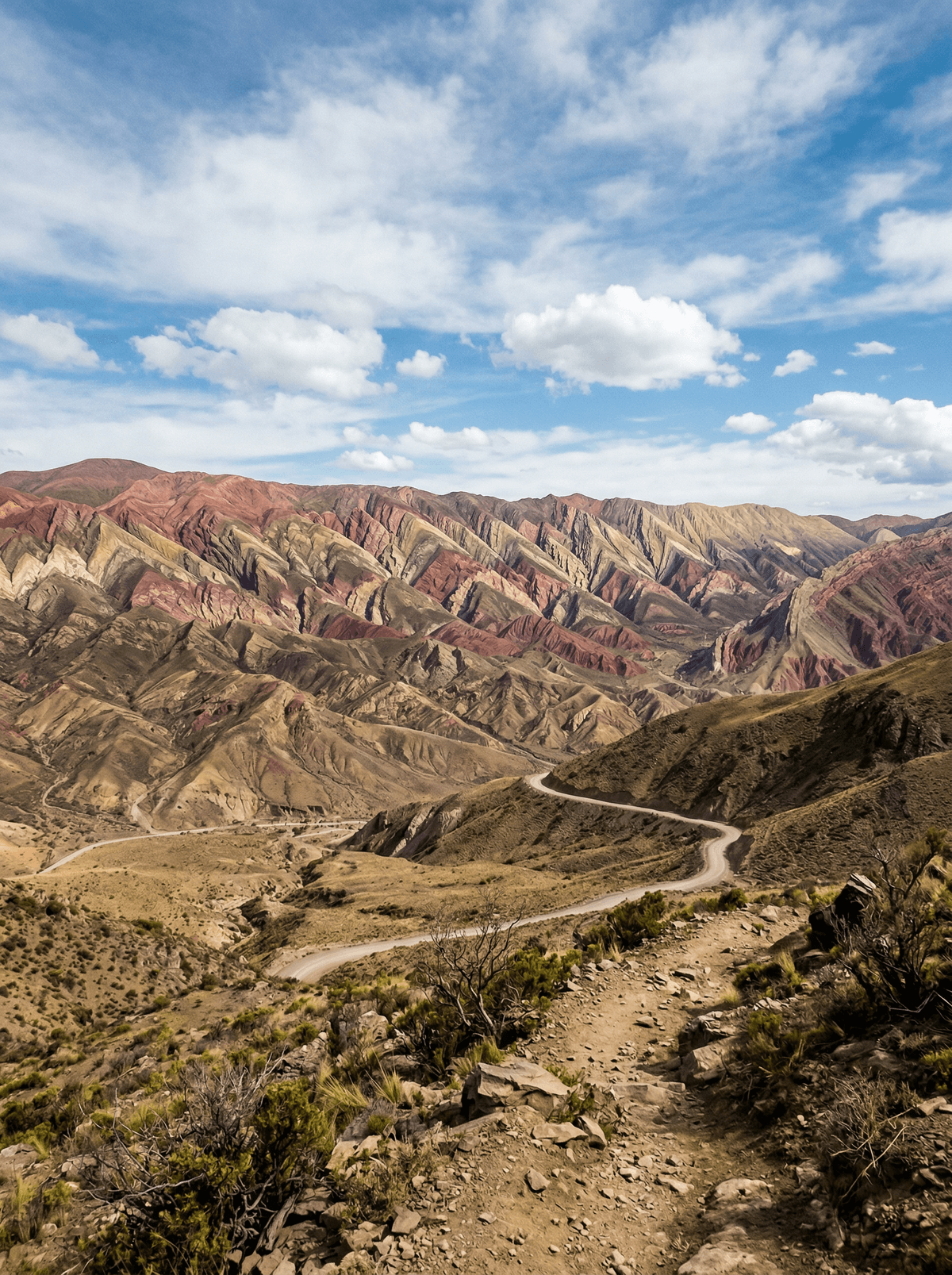
Fourteen colours striped across a mountainside like geological sheet music.
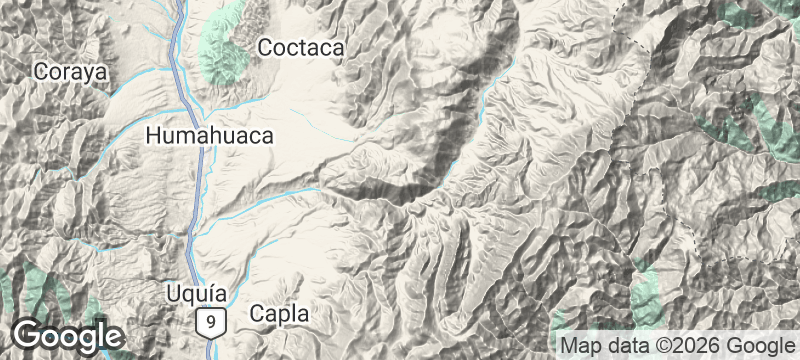
The Cerro de los Catorce Colores rises at the end of an unpaved mountain road above Humahuaca, and at the viewpoint around 4,350 metres the claim of fourteen colours — ochre, burgundy, violet, white, green, yellow, orange, pink and six more without common names — reveals itself as an understatement of the geological record. The serrated ridge runs for kilometres, its zigzag folds pressed in by Andean tectonics, readable from across the valley. There are no facilities, no shade, and no sound except wind.
The Serranía de Hornocal is a fold-thrust range raised in the Andean uplift, its ancient sedimentary sequences compressed and tilted until their full chromatic range stands exposed: iron oxides for the reds and yellows, copper for the greens, manganese for the purples, calcium carbonate for the white bands. The altitude is a genuine consideration — time at Humahuaca first, a slow pace at the mirador, and respect for the constant wind that keeps rangers warning visitors back from the unfenced edge. The colours read fullest under high sun, the drive up passes pre-Inca agricultural terracing still growing potatoes near Aparzo, and a high-clearance vehicle earns its keep on the final kilometres. The reveal here is the point, and it lands.
Solo
The viewpoint on a quiet weekday, the serrated ridge glowing in full sun and nobody within earshot, is one of the high-altitude moments that justify the cold and the effort — colours genuinely unlike anything else Argentine geology produces.
Couple
Timing the drive up for high sun, when the fourteen bands hold their full saturation, turns a morning from Humahuaca into one of the northwest's most extraordinary visual experiences.
Friends
The loop from Tilcara or Humahuaca works as a group day with a high-clearance vehicle — arriving together at altitude with the full ridge spread below makes the effort feel proportionate.
- The viewpoint stands around 4,350 metres, reached by an unpaved climb from Humahuaca.
- Fourteen mineral layers — iron, copper, manganese, calcite — band the folded ridge.
- High sun lights the full chromatic run; wind rules the unfenced viewpoint edge.
- Pre-Inca terraces near Aparzo still grow potatoes beside the road up.
Provisions from Humahuaca — empanadas and api morado before the drive up to the mirador.
Llama jerky and coca leaves chewed against the altitude on the exposed hillside.
Arenal & La Fortuna
Costa Rica
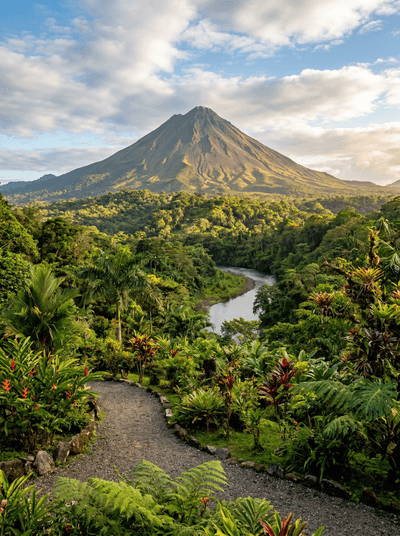
Hot springs steaming through jungle beneath a volcano's perfect cone at dusk.
Drakensberg
South Africa
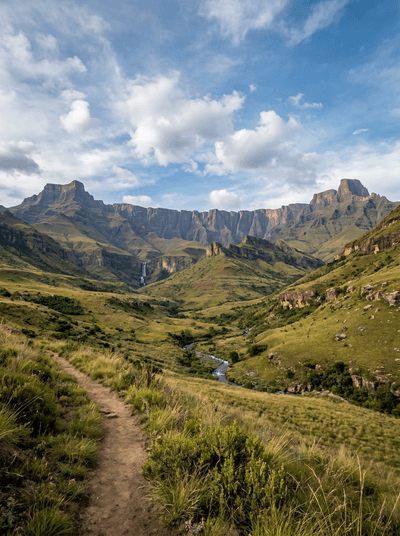
Basalt walls rise above sandstone caves painted across thousands of years.
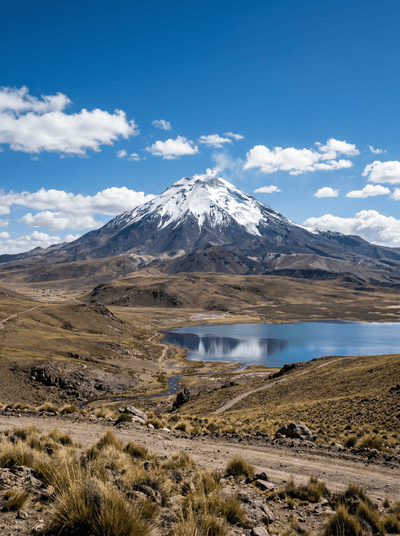
Parque Nacional Volcán Isluga
Chile
Volcanic horizons and high wetlands surround living Aymara settlements in the altiplano.
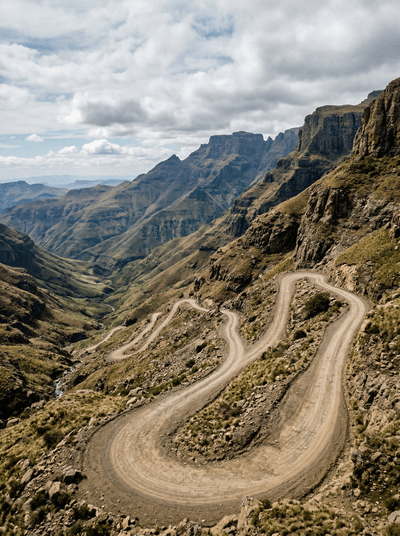
Sani Pass
South Africa
A switchback road climbs from green foothills to a high border above the clouds.
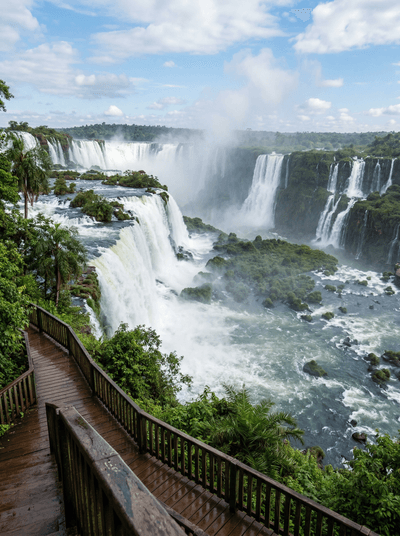
Iguazú Falls
Argentina
A river shatters into hundreds of waterfalls around the thunder of the Devil's Throat.
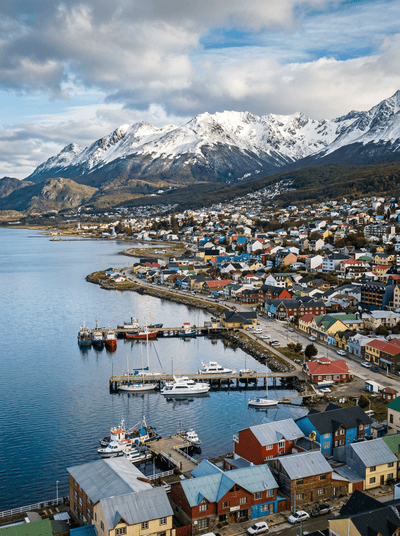
Ushuaia
Argentina
The port where Antarctica begins — beech forest climbing to glaciers at the planet's edge.
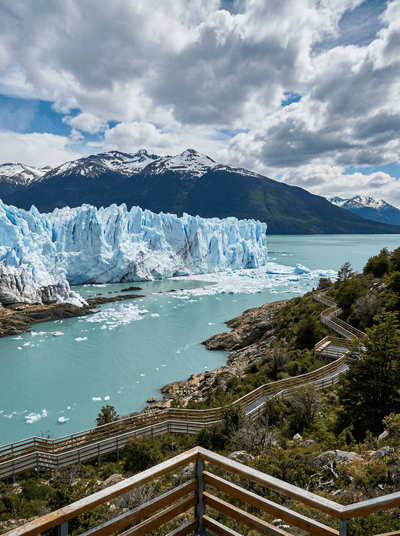
El Calafate
Argentina
A glacier calves office-block towers of ice into turquoise water as you watch.
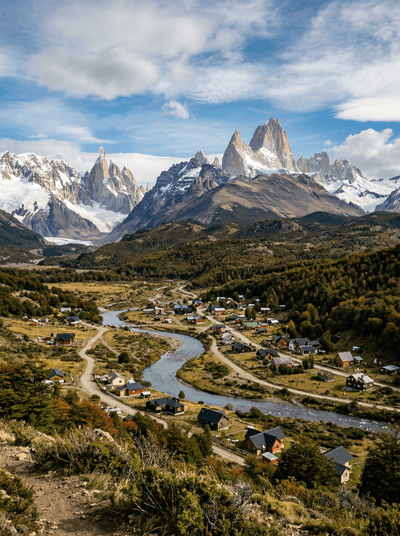
El Chaltén
Argentina
Granite spires pierce Patagonian cloud — condor country of vertical stone and wind.