Argentina
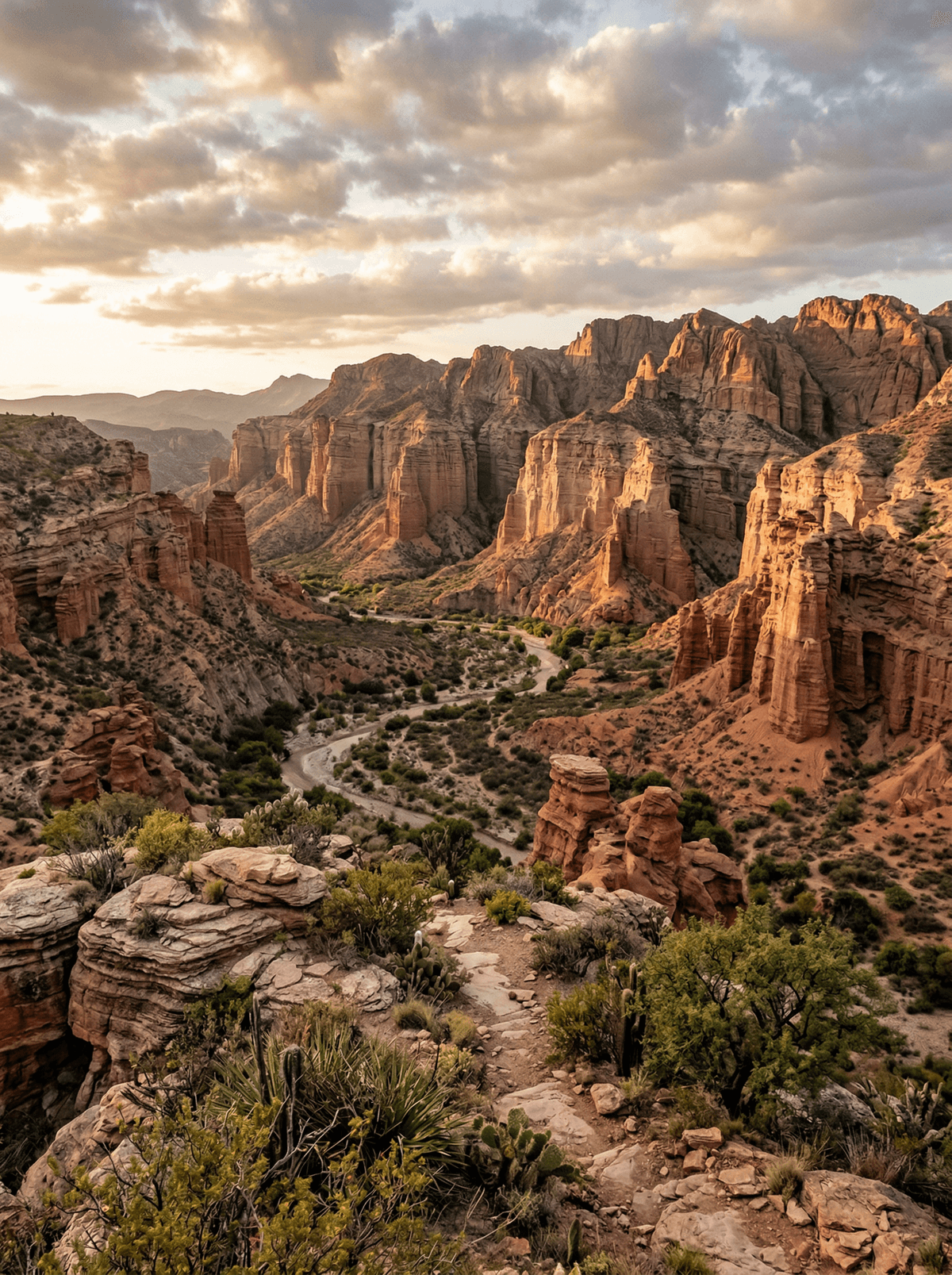
Sierra de las Quijadas
Red-rock amphitheatres carved by vanished rivers, where pterosaur fossils surface from sandstone.
The red sandstone amphitheatre of Sierra de las Quijadas was a Cretaceous lakebed a hundred million years ago, and the creatures of its shores are still in the rock — most famously Pterodaustro, a filter-feeding pterosaur whose flamingo-like life was reconstructed from the fossils this formation keeps yielding. Erosion has opened the old lakebed into canyons, arches and badlands above a plain of cardón and quebracho.
The park protects over 70,000 hectares of the Lagarcito Formation in northwestern San Luis — a pterosaur ground nearly unmatched in South America, with Pterodaustro specimens recovered by the hundred and fossils still embedded in the sandstone where rangers can point them out. The central bowl at Potrero de la Aguada spreads kilometres of red rock that turns purple as the afternoon leans, reachable by a self-guided rim walk from the entrance side, while the fossil grounds themselves open only on ranger-guided walks booked at the station. Flash floods built this landscape and still own it — dry riverbeds pass in the rainless months and seal off when storms come. Pumas, guanacos and Chacoan armadillos work the dry monte in visitor densities low enough that wildlife encounters are probability, not luck.
Solo
The Argentine canyon park the Talampaya-and-Ischigualasto circuit has not discovered — equivalent geological interest, none of the queues, and a self-guided rim walk in afternoon light with exactly the right ratio of effort to reward.
Couple
The drive through the western plains, arriving at the rim as the sandstone turns deep crimson, is the road-trip payoff that justifies leaving the standard highlight route — trackway tours guided, rim walk free.
- Pterodaustro fossils surfaced here by the hundred, a species science met in this rock.
- The Potrero de la Aguada bowl turns from red to purple as the afternoon leans.
- Rangers lead booked walks to fossil grounds beyond the public map.
- Flash-flood riverbeds open in the rainless season and seal themselves after storms.
Empanadas puntanas and regional wine carried from San Luis city.
Chivito al horno and locro at a San Luis bodegón after the park day.
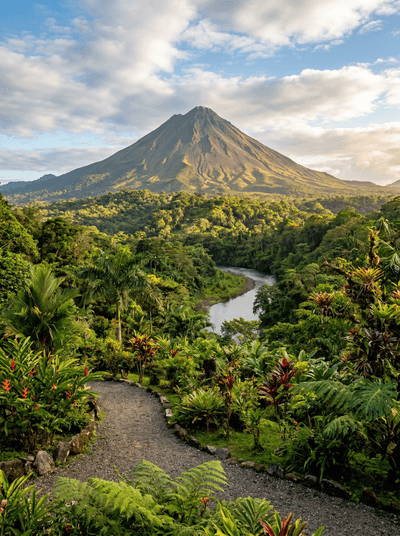
Arenal & La Fortuna
Costa Rica
Hot springs steaming through jungle beneath a volcano's perfect cone at dusk.
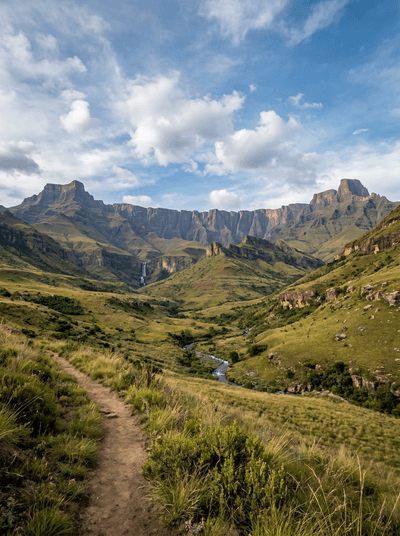
Drakensberg
South Africa
Basalt walls rise above sandstone caves painted across thousands of years.
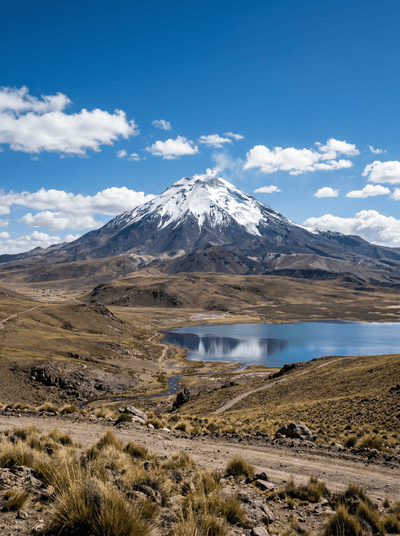
Parque Nacional Volcán Isluga
Chile
Volcanic horizons and high wetlands surround living Aymara settlements in the altiplano.
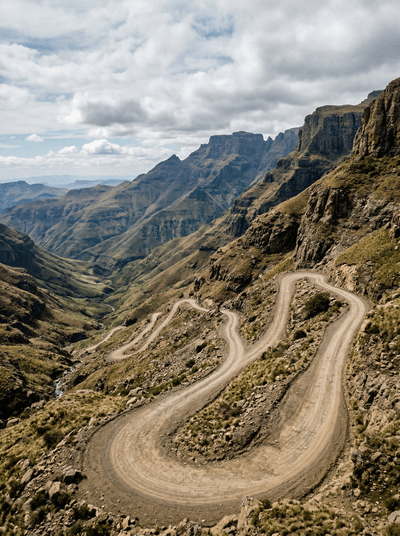
Sani Pass
South Africa
A switchback road climbs from green foothills to a high border above the clouds.
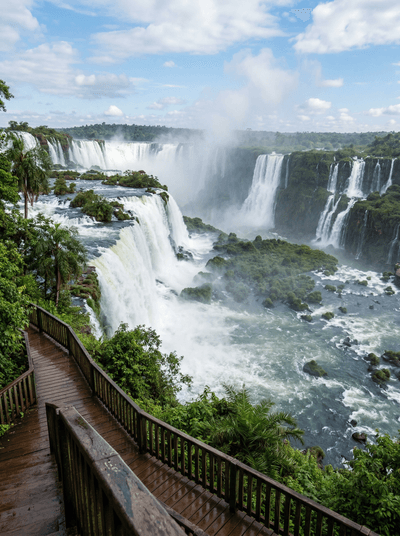
Iguazú Falls
Argentina
A river shatters into hundreds of waterfalls around the thunder of the Devil's Throat.
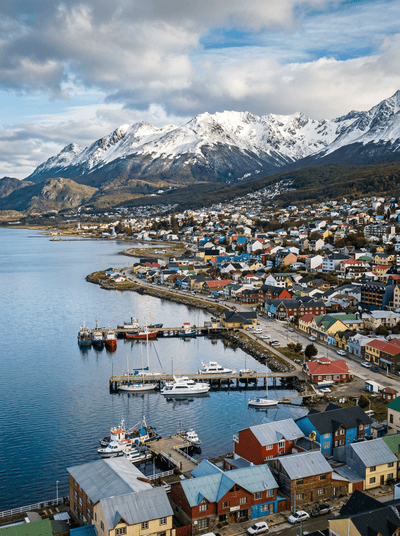
Ushuaia
Argentina
The port where Antarctica begins — beech forest climbing to glaciers at the planet's edge.
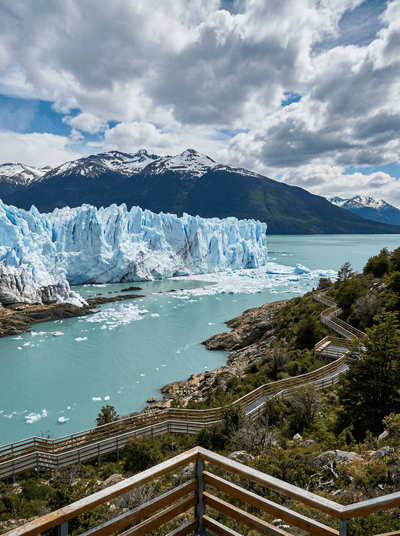
El Calafate
Argentina
A glacier calves office-block towers of ice into turquoise water as you watch.
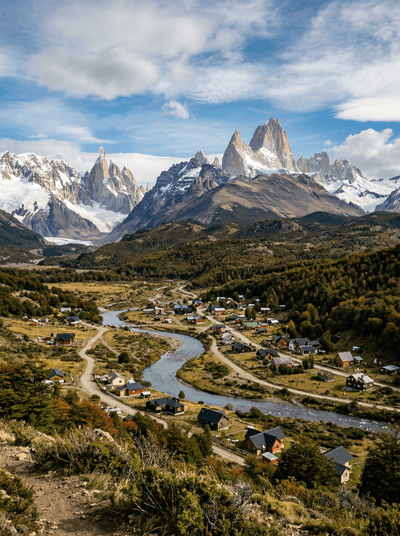
El Chaltén
Argentina
Granite spires pierce Patagonian cloud — condor country of vertical stone and wind.