Egypt
Tell el-Amarna
A pharaoh's forbidden capital, razed by his successors and lost under sand for three millennia.
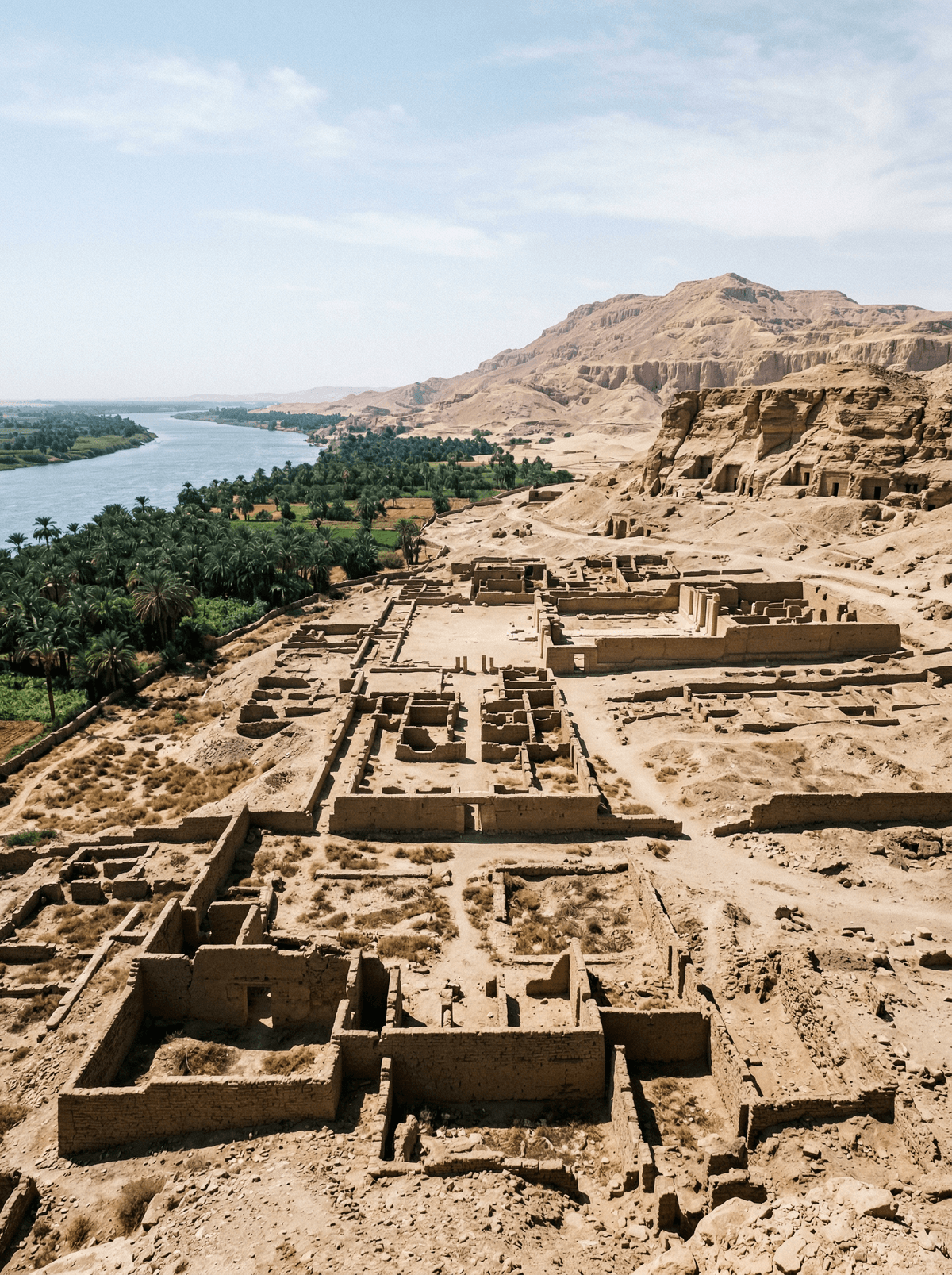
The desert here is flat, empty, and almost featureless — and that is the point. Akhenaten chose this barren stretch of Nile valley precisely because nothing had been built on it, and he raised an entire capital from nothing in under fifteen years. His successors dismantled it with equal speed, and the sand took back the rest. What remains is an outline, a ghost city measured in foundation walls and carved cliffs.
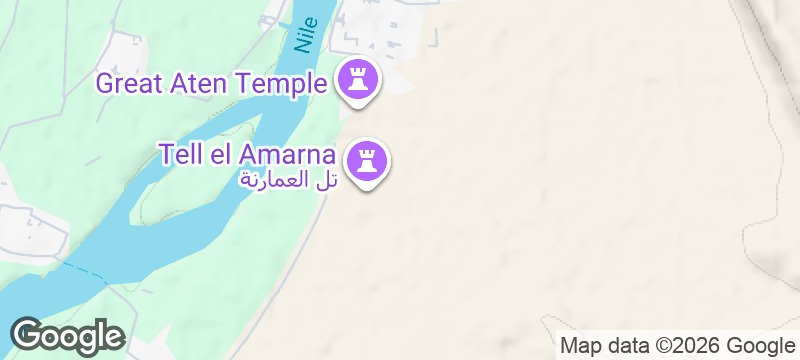
Tell el-Amarna was the short-lived capital of Pharaoh Akhenaten, built around 1346 BCE as the centre of his revolutionary monotheistic worship of the sun disc Aten. The city — ancient Akhetaten — housed an estimated thirty thousand people at its peak, complete with palaces, temples, and workshops, before being systematically abandoned and demolished after Akhenaten's death. The Northern Tombs contain carved reliefs showing daily life under Akhenaten's reign, including depictions of the royal family in an intimate, naturalistic style that broke with millennia of Egyptian artistic convention. The bust of Nefertiti, now in Berlin's Neues Museum, was found in a sculptor's workshop here. The site stretches along the east bank of the Nile near the modern village of El-Till in Middle Egypt, and its remoteness from the main tourist trail means most visitors arrive to find themselves alone with a guardian and a deep silence.
Solo
Tell el-Amarna is for the traveller who reads before they travel. The site demands imagination — you are walking through a city that was deliberately erased. But for anyone who knows Akhenaten's story, the emptiness speaks louder than stone, and the tomb reliefs add vivid detail to the silence.
Couple
The story of Akhenaten and Nefertiti — religious revolution, artistic reinvention, and a dynasty that collapsed after them — gives the site a narrative charge that carved ruins alone cannot. The journey through Middle Egypt's agricultural landscape adds a context of timelessness.
- The entire city was built in under two years — every building newly cut from desert limestone with no precursor settlement beneath.
- The Royal Tombs of the North contain wall paintings of Akhenaten and Nefertiti's daily life — intimate domestic scenes unknown from any other pharaonic site.
- After Akhenaten's death, his successors spent decades erasing every inscription of his name — the erasure itself is now visible in the surviving stone.
- The site covers 8km of the Nile's east bank and is explored by bicycle or donkey cart hired from the village — no tourist coaches.
Simple village meals of ful, bread, and fresh cheese in El-Till, the modern village beside the ancient city.
Upper Egyptian grilled pigeon stuffed with freekeh at a Minya restaurant before the site visit.
Thick mango juice from the orchards that now grow where Akhenaten's gardens once stood.
Mindelo
Cape Verde
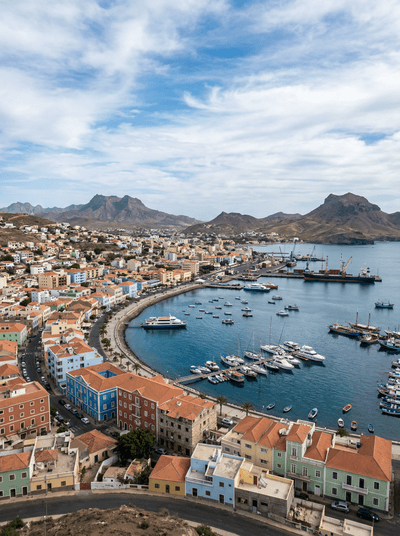
Morna music drifts from dimly lit bars where Cesária Évora once sang barefoot for sailors.
Cidade Velha
Cape Verde
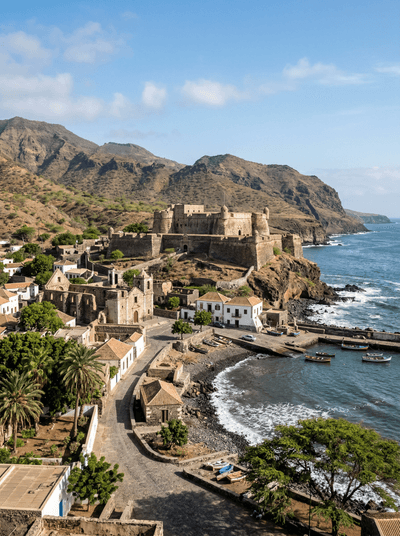
First colonial city in the tropics — a slave pillory still stands in the silent square.

Fukuoka
Japan
Yatai street stalls steaming under canvas where strangers share ramen at midnight.
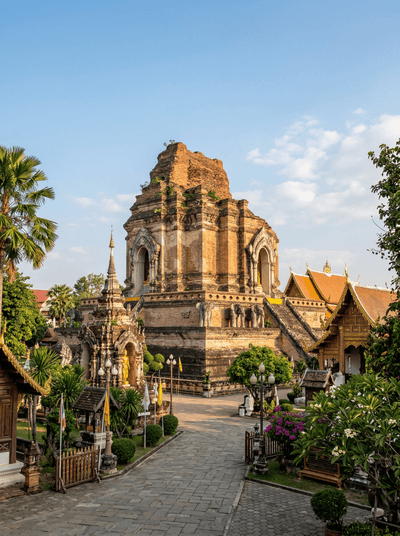
Chiang Mai
Thailand
Monks in saffron robes walking barefoot past tattooed expats and ancient brick chedis at dawn.
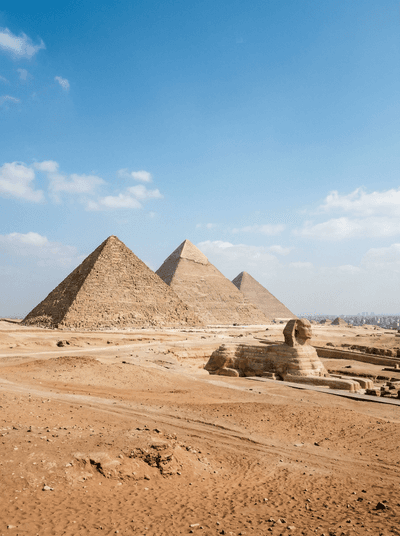
Giza
Egypt
Camel shadows stretch across sand where the last ancient wonder meets the Sahara's edge.
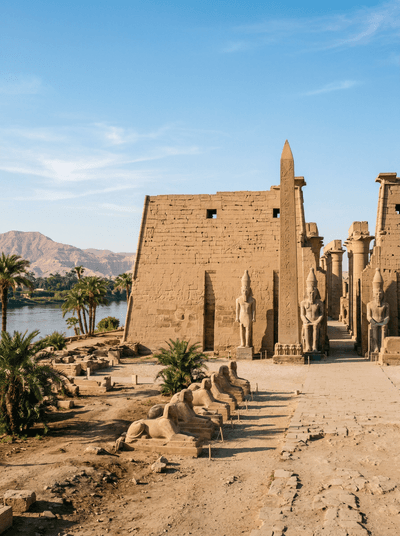
Luxor
Egypt
Dawn light flooding Karnak's hypostyle hall through columns carved before Rome existed.
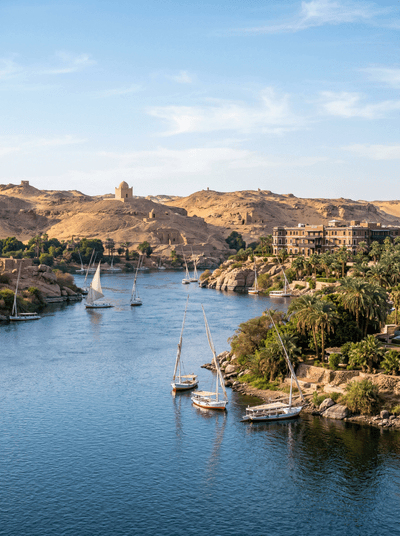
Aswan
Egypt
Feluccas gliding past granite islands where the Nile runs quietest and Nubian colour blazes.
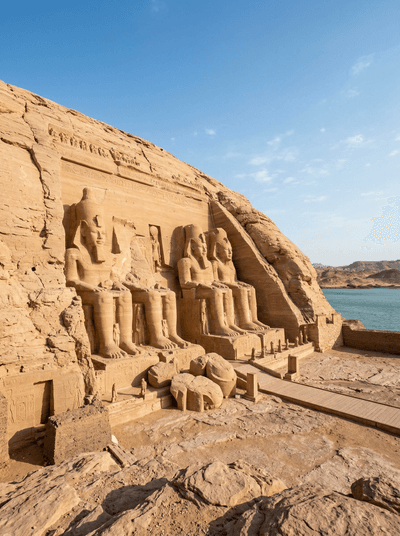
Abu Simbel
Egypt
Twice a year, dawn crawls sixty metres through solid rock to light a pharaoh's face.