Egypt
Tuna el-Gebel
Catacombs stuffed with mummified ibises and baboons, sacred animals of a forgotten god.
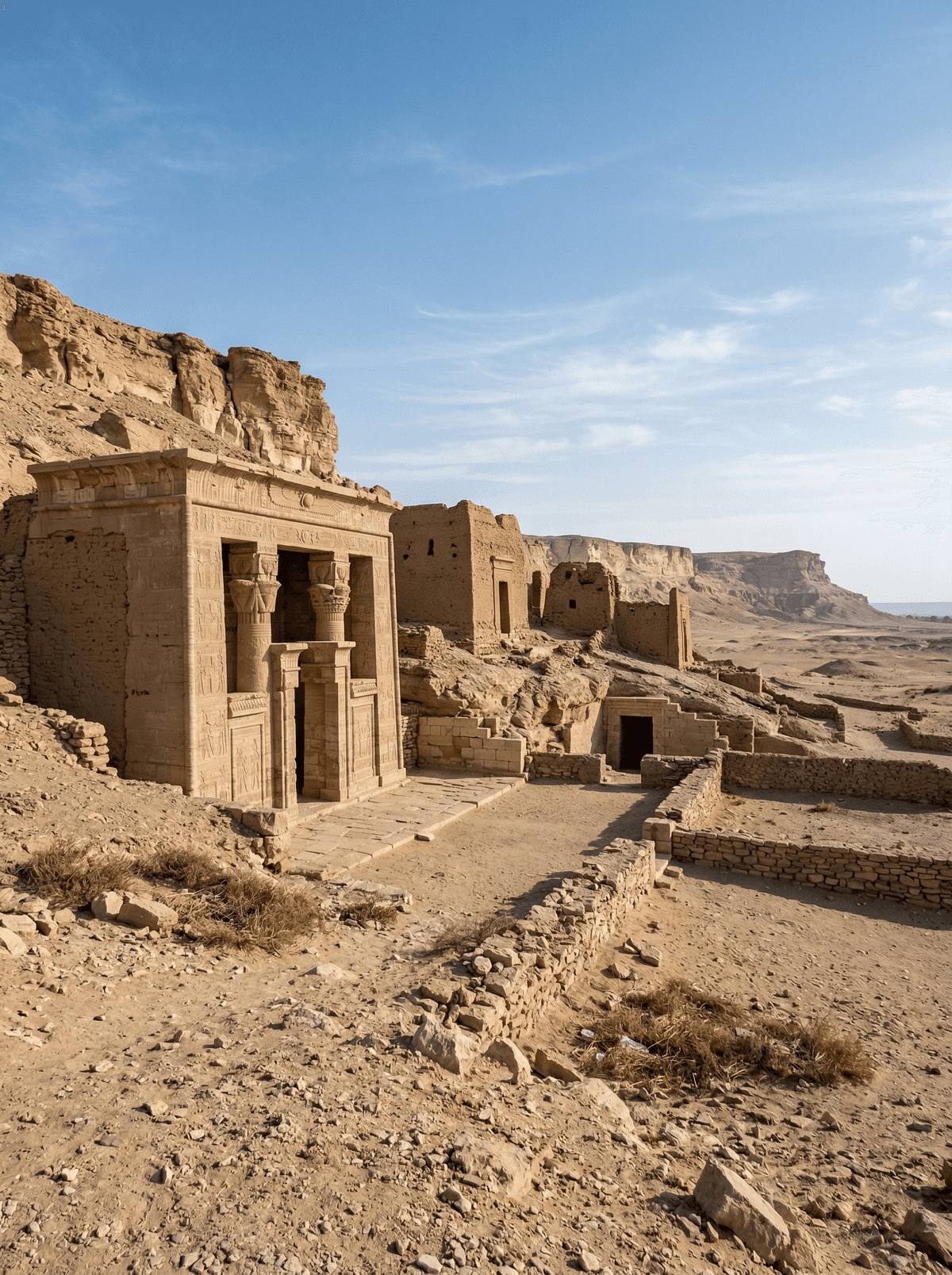
The air cools instantly as you descend into corridors stacked floor to ceiling with bundled ibis mummies, their linen darkened by twenty-three centuries. Above ground, the tomb of Petosiris stands open to Middle Egypt's dry light, its walls mixing Egyptian and Greek styles at the exact collision point of two worlds.
Tuna el-Gebel was the necropolis of Hermopolis Magna, cult centre of Thoth, the ibis-headed god of writing and wisdom. Its underground galleries hold thousands upon thousands of mummified ibises and baboons — devotional offerings — running for kilometres and still only partially explored. The tomb-chapel of Petosiris, a high priest who lived through Alexander's conquest around 300 BCE, ranks among Egypt's finest late-period monuments, Egyptian gods rendered with Greek drapery on the same walls.
Solo
Go down into the galleries first, save Petosiris for the good light, and read the boundary stela before the drive back.
- The catacombs are estimated to hold over four million mummified ibises — digs have run here since 1927.
- The Tomb of Isadora keeps the mummified body of a young woman who drowned in the Nile around 120 AD.
- The necropolis street is a miniature hybrid city — Egyptian-Greek tombs lining both sides.
- Akhenaten's boundary stela, cut into the cliff face nearby, is still legible after 3,300 years.
Minya's markets keep the day fed — liver sandwiches, koshary and tamiya, juice bars pressing mango and sugarcane.
Near the site itself it is roadside ful and warm bread, eaten in palm shade.

Lipcani
Moldova
A town four-fifths Jewish before 1941; its record survives in 3,527 recorded graves by the Prut.
Ed-Dur
United Arab Emirates
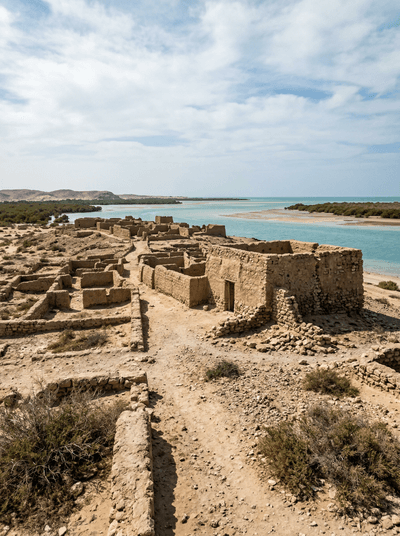
A lost Gulf port with 20,000 graves and the region's only temple to the sun.
Tayma
Saudi Arabia
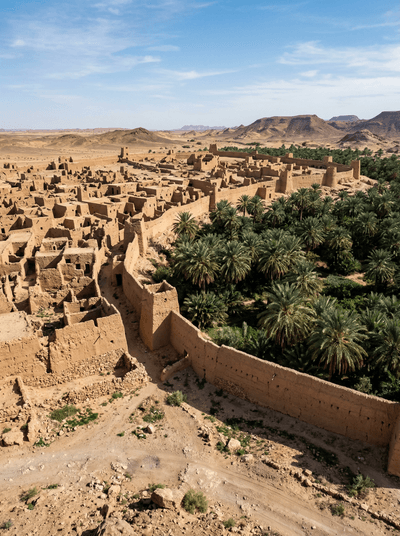
An oasis inhabited for six thousand years whose ancient stele now stands in the Louvre.
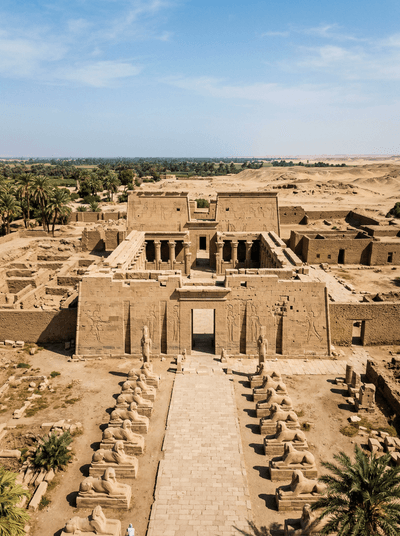
Medinet Madi
Egypt
A Middle Kingdom temple lost in the Fayoum desert, its sphinx-lined processional road swallowed by sand.
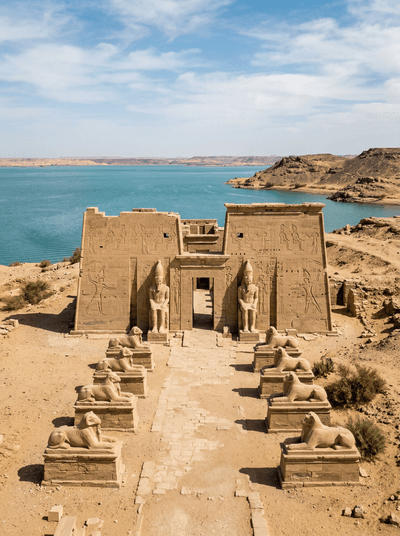
Wadi el-Seboua
Egypt
A sphinx-lined avenue rising from Lake Nasser's shore to Ramesses II's relocated Nubian temple.
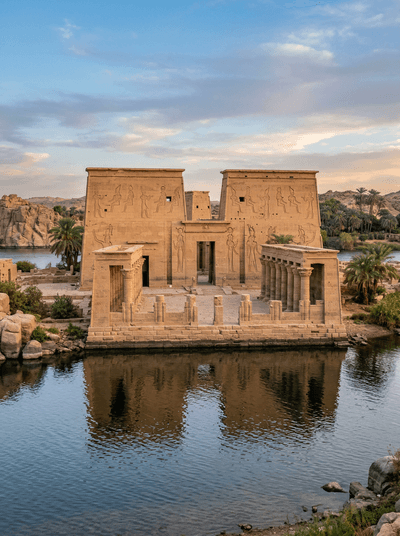
Philae Temple
Egypt
A temple rescued from rising waters, reassembled stone by stone on an island in the Nile.