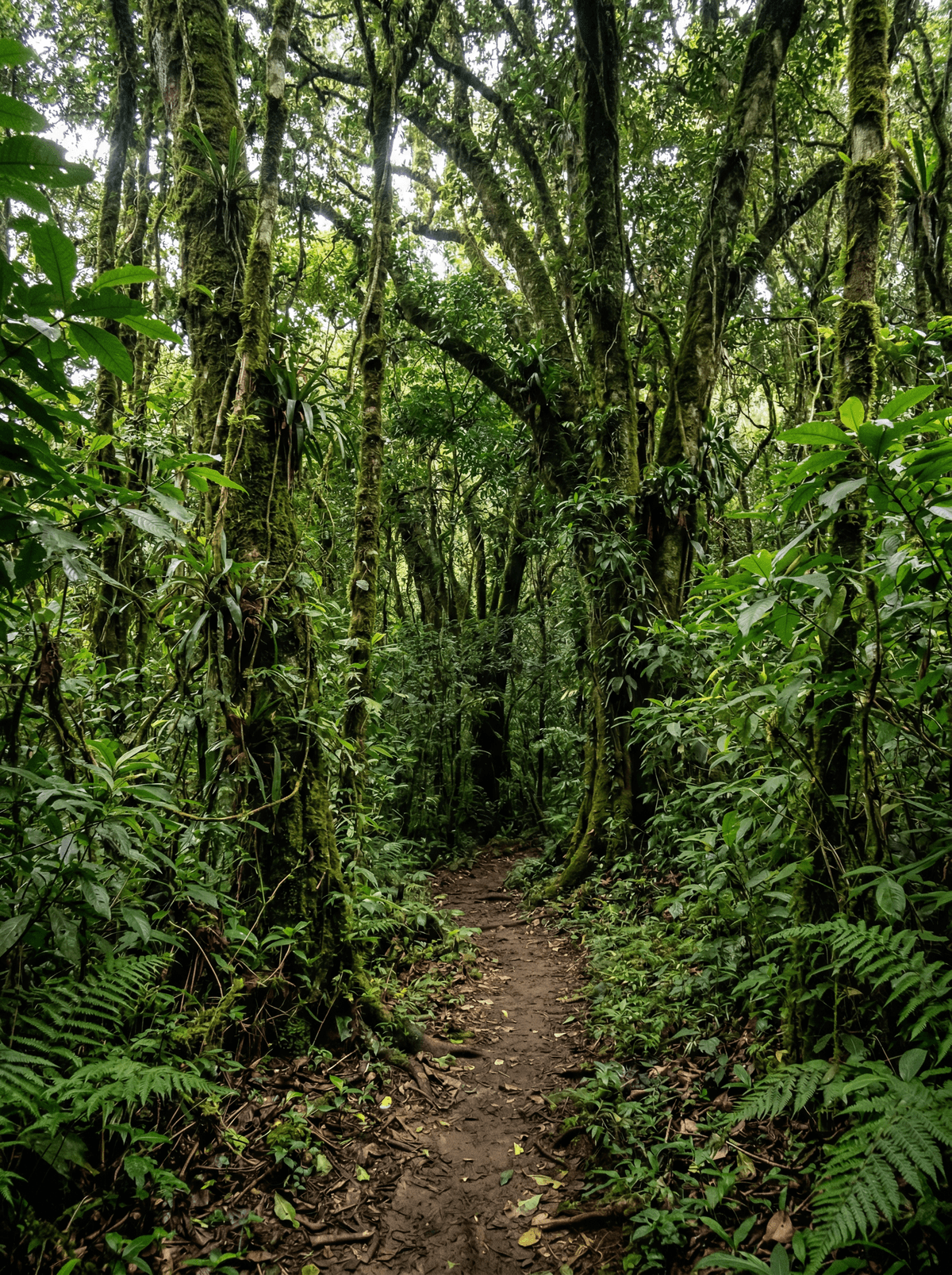
Kenya
Kakamega Forest
Primates crash through the canopy of Kenya's last rainforest, dense with 350 butterfly species.
Branches crack overhead and a troop of blue monkeys scatters through the canopy, dislodging a shower of leaves and butterflies into the humid air. The forest interior is thick, warm and layered — rotting wood, damp earth, flowering lianas. Light lands on the floor in bright coins, lighting fungi and fern fronds the size of dinner plates.
Kakamega is the last piece of Guineo-Congolian rainforest left in Kenya — an ecological island in the western farmland, the easternmost outrider of the great forest that once ran unbroken to the Congo Basin. Its riches are outsized for its area: some 350 butterfly species, hundreds of birds including specialities like Turner's eremomela and the blue-headed bee-eater, seven primate species, and hammer-headed fruit bats roosting in the upper storey. Community guides from the surrounding Luhya villages lead the trails, reading medicinal plants as fluently as bird calls. It is a UNESCO-recognised biosphere landscape, and walking it feels like being let into central Africa through a side door.
Solo
Dawn walks with a local guide track primates and butterflies in near-silence — Kakamega rewards looking twice.
Couple
Narrow trails, close canopy and birdsong instead of traffic — worlds away from savannah Kenya.
Family
Sensory overload for children — butterflies landing on hands, monkeys crashing overhead, community guides reading the forest as they go.
Friends
Rain or shine, the forest works as a group walk — and the evening storytelling in the villages caps it.
- Kenya's only rainforest — the last eastern fragment of the Guineo-Congolian forest belt.
- Roughly 350 butterfly species and seven kinds of primate crowd one small forest island.
- Luhya community guides read the forest's medicine, birds and bats on every walk.
- A UNESCO-recognised biosphere landscape among the most biodiverse corners of East Africa.
Ingokho — Luhya slow-cooked chicken with ugali, the west's proudest plate.
Sweet bananas from the market stalls at the forest edge — Luhya farm country all around.
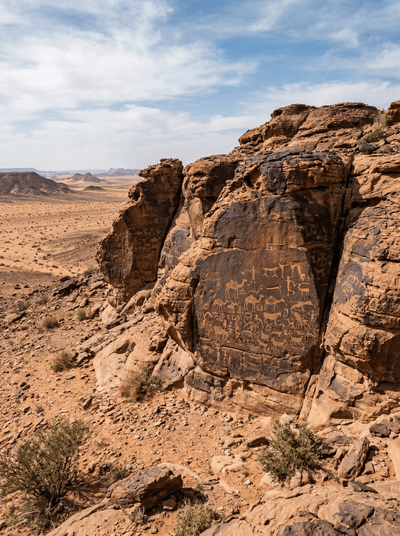
Jubbah
Saudi Arabia
Petroglyphs of camels, ibex and hunters carved into sandstone ten thousand years ago.
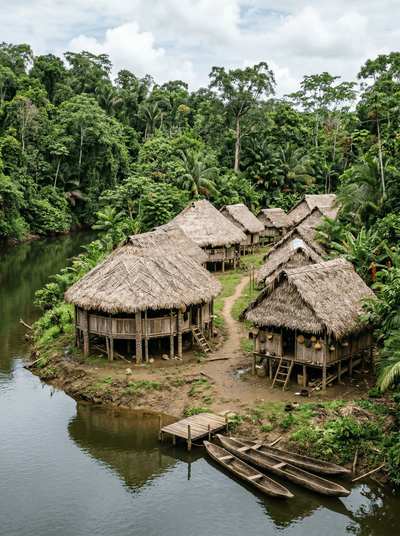
Emberá Communities of the Chagres
Panama
Upriver by dugout canoe to a village where tattoos are drawn from a rainforest fruit.
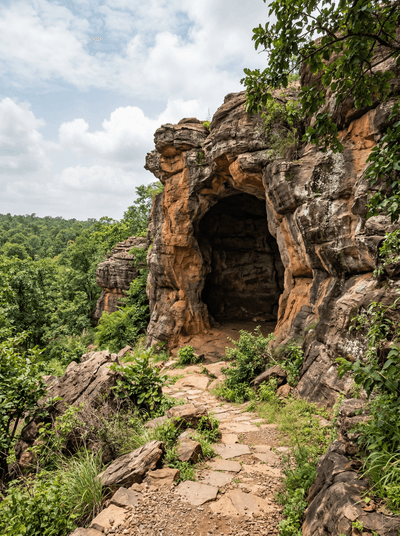
Bhimbetka
India
Prehistoric hunting scenes painted in blood-red ochre across sandstone shelters buried in thick teak forest.
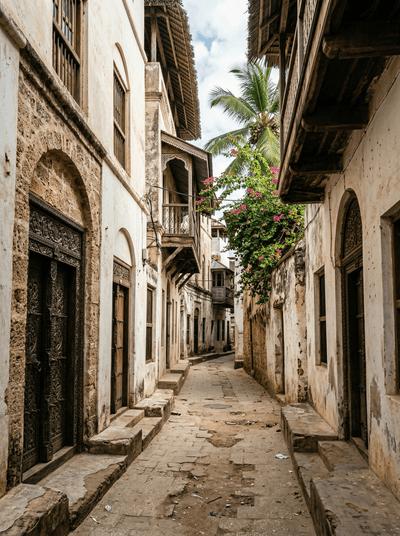
Lamu Old Town
Kenya
Donkeys replace cars on coral-stone lanes where Swahili doors tell centuries of family history.
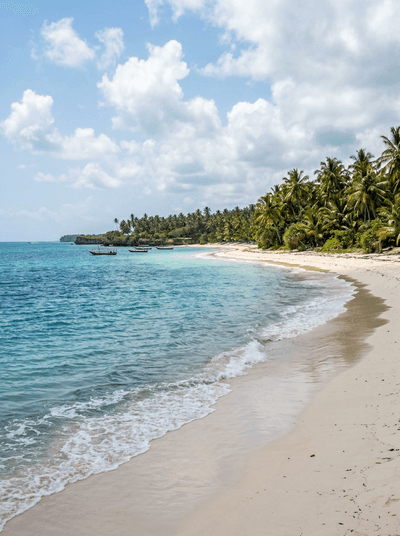
Malindi
Kenya
Vasco da Gama's 1498 pillar still stands where Swahili and Italian menus share the street.
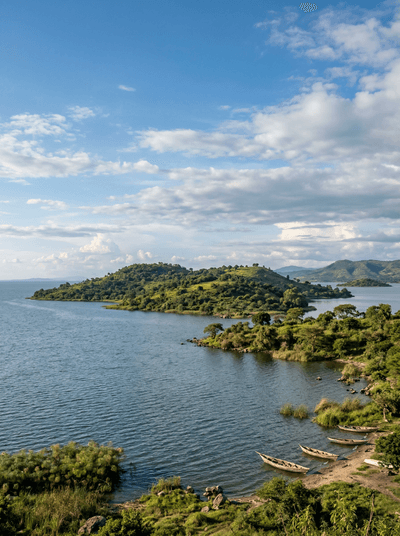
Rusinga Island
Kenya
A fossil island in Lake Victoria where 18-million-year-old apes were unearthed from shoreline rock.
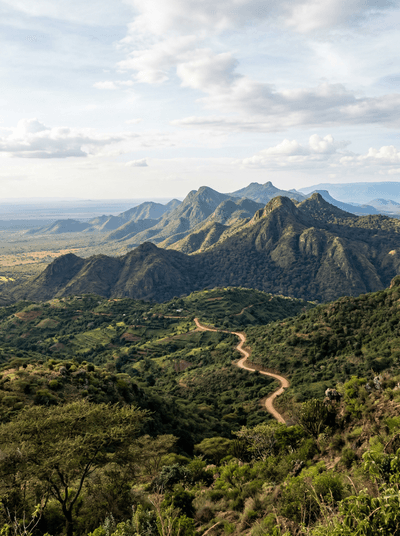
Taita Hills
Kenya
Mist clings to forest fragments where birds that exist only here still sing.