Brazil
Cânion do Xingó
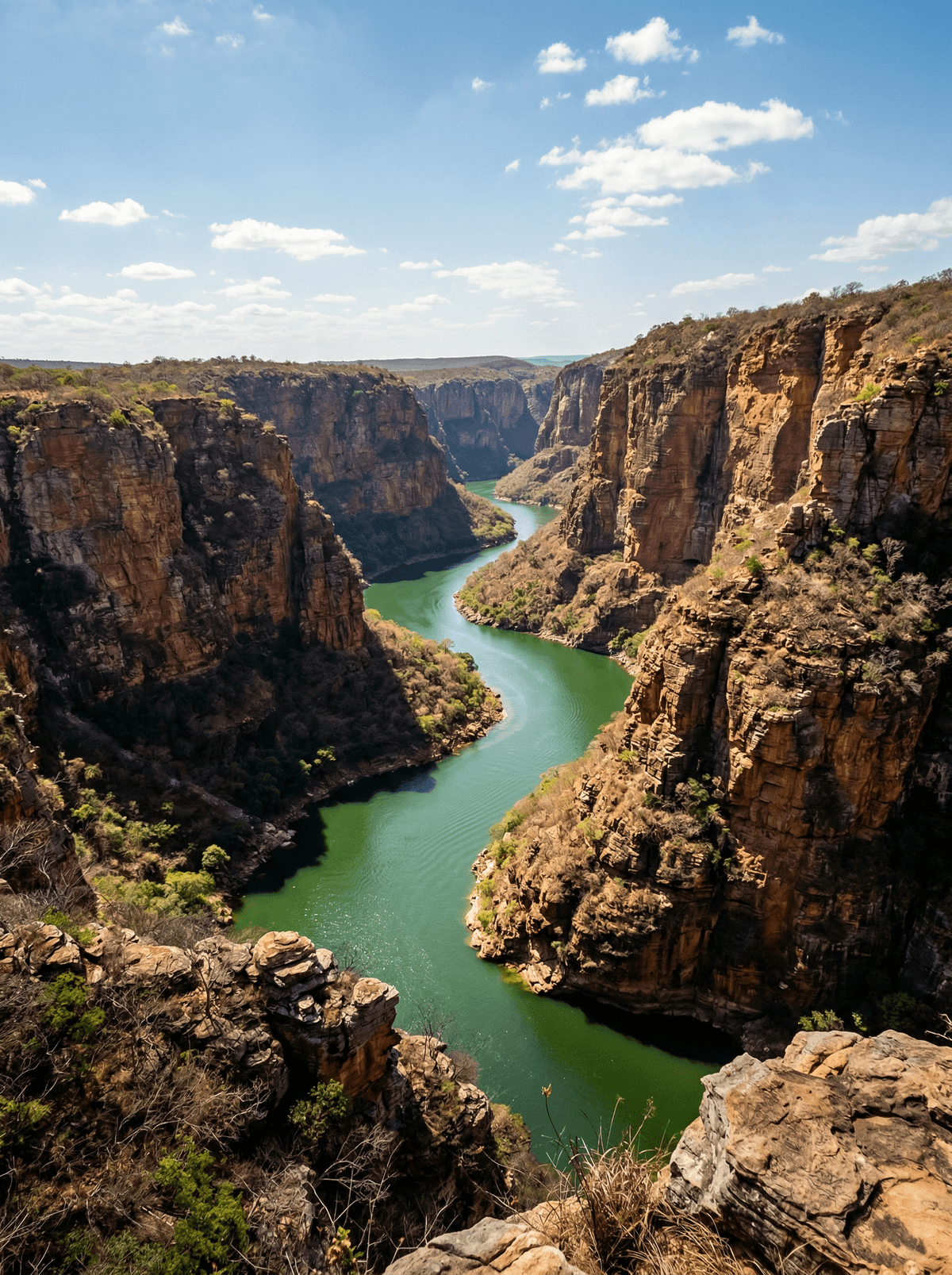
Sixty-five kilometres of canyon, a hundred and seventy metres deep, and a dam filled it.
The São Francisco ran along the bottom of this valley before the Xingó dam went in. Now 3.8 billion cubic metres of it stand in the canyon, and the way to see the place is from the deck of a catamarã, with rock going up more than fifty metres on either side. Three hours out and back, deep in the sertão.
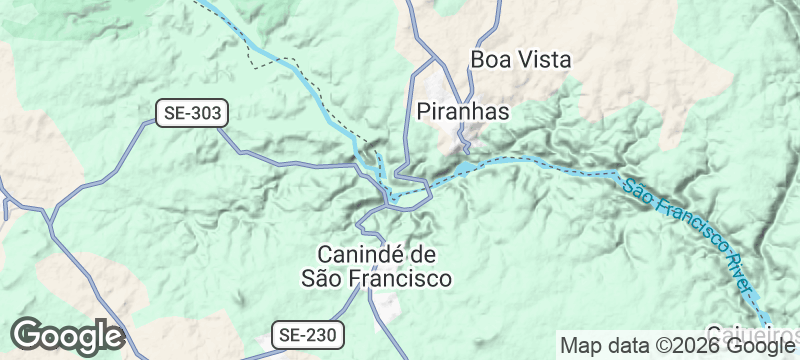
The canyon runs sixty-five kilometres, narrows and widens between fifty and three hundred metres, and the valley reaches a hundred and seventy metres deep. Boats are escunas and catamarãs, the circuit runs about three hours, and it calls at the Paraíso do Talhado and puts people into canoes for the Gruta do Talhado, which takes its name from rock that looks cut by hand. Canindé de São Francisco is the base for all of it, with fifteen restaurants along its waterfront and the boats leaving from among them. The older reason to come is upstream of any of that: the Museu de Arqueologia de Xingó holds more than fifty thousand pieces recovered from seventy sites, human skeletons, tools and graphic records, and opens Wednesday to Sunday from nine until four. Along the river lies the Grota do Angico, where Lampião and Maria Bonita were killed, reached on the boat route the municipality calls the Rota do Cangaço.
Couple
The three-hour circuit is the day's spine, and the stop at the Paraíso do Talhado is where people get into the water. Take a morning departure and hold the museum back for the afternoon, which shuts at four.
Family
The museum is the surprise: fifty thousand pieces out of seventy sites, skeletons and tools and marks made on stone, open Wednesday to Sunday and visitable free or with a guide. Put it either side of the boat and the day fills itself without anyone having to hurry.
Friends
Fifteen restaurants line the Canindé waterfront and the catamarãs leave from among them, so the boat and the grilled surubim are the same address. The Gruta do Talhado is the part you do by canoe, off the main circuit, and it is worth asking for.
- The canyon runs sixty-five kilometres, varies between fifty and three hundred metres wide, reaches a hundred and seventy metres deep and holds 3.8 billion cubic metres of water behind the Xingó dam.
- The standard trip is by escuna or catamarã and takes about three hours, calling at the Paraíso do Talhado and running a canoe into the Gruta do Talhado, whose rock looks cut by hand.
- The Museu de Arqueologia de Xingó holds more than fifty thousand pieces from seventy archaeological sites, skeletons, tools and graphic records, and opens Wednesday to Sunday from nine until four.
- The Grota do Angico, where Lampião and Maria Bonita were killed, is reached from here along the São Francisco on the Rota do Cangaço.
Surubim comes off the grill on the Orla Salomão Porfírio de Britto at Canindé de São Francisco, one of fifteen kitchens working peixada, moqueca and camarão ao molho along the water.
The sertão half of the same waterfront is carne de sol with pirão de leite and galinha caipira, finished with the doces caseiros the state calls the local signature.
Elba
Italy
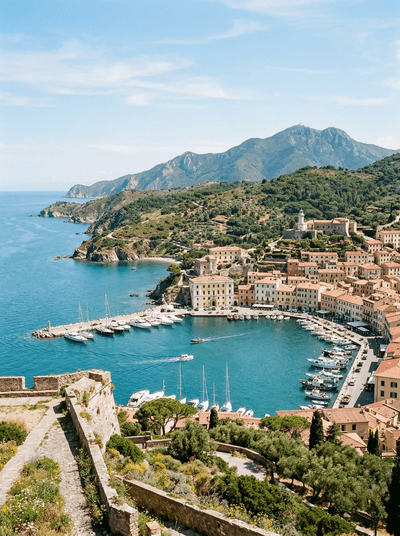
Napoleon's island of exile hides iron-red beaches beneath a granite mountain you ride up standing.
Kosterhavet National Park
Sweden
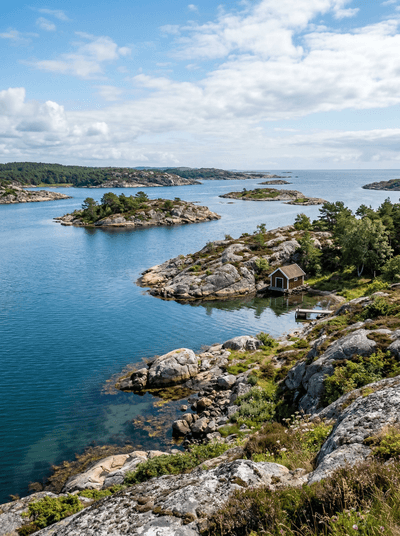
Sweden's only coral reef hides beneath the surface of its westernmost archipelago.
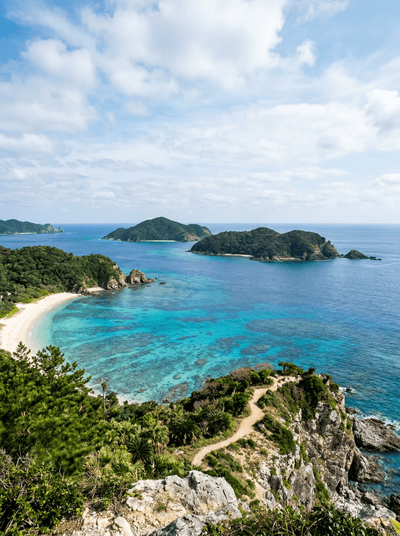
Kerama Islands
Japan
Water so clear the reef casts shadows on white sand far below the boat.
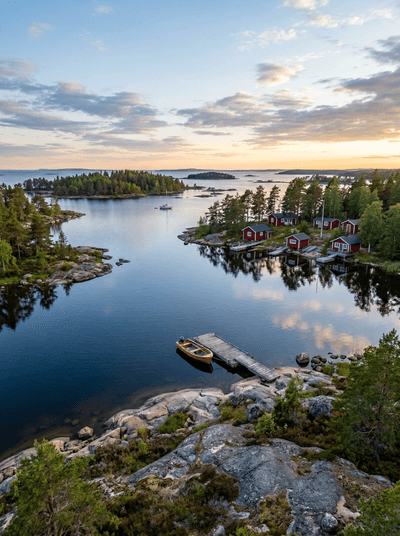
Luleå Archipelago
Sweden
Over a thousand islands in a brackish sea that hard winters turn into a white plain.
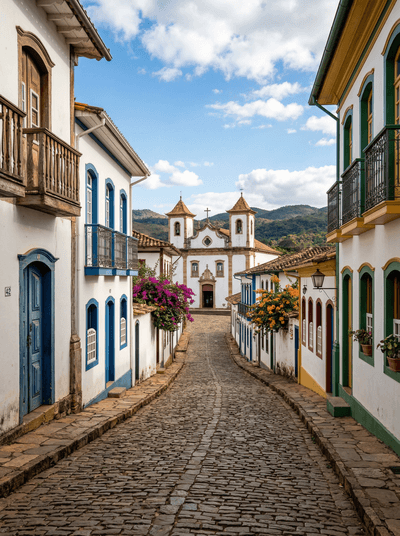
Pirenópolis
Brazil
A colonial gold town erupting in costumed cavalry battles between Moors and Christians every Pentecost.
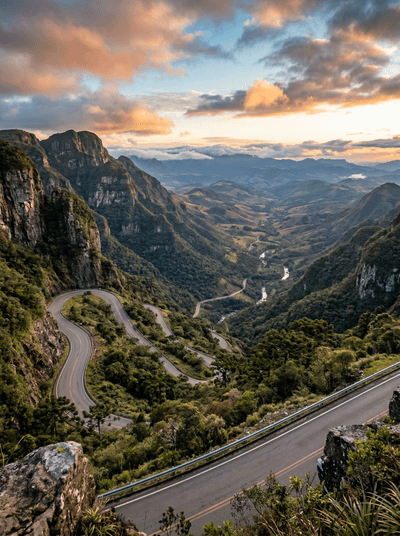
Urubici
Brazil
Frost-coated araucaria forests and canyon rims at the frozen heart of subtropical Brazil.
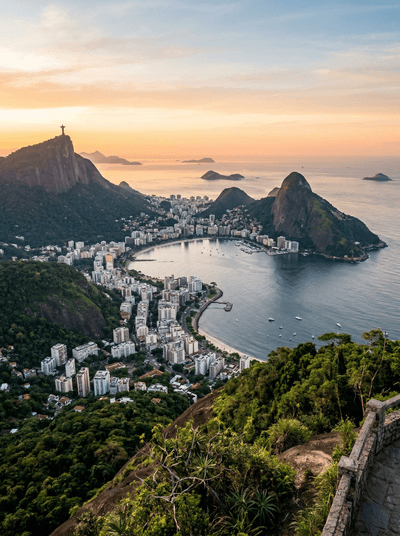
Rio de Janeiro
Brazil
Granite peaks erupting from tropical forest between lagoon and ocean, a landscape no city should have.
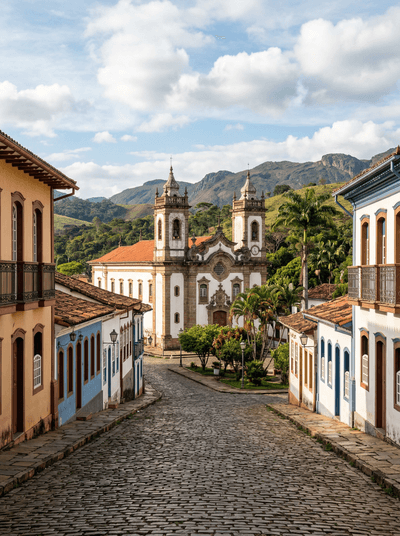
São João del-Rei
Brazil
Baroque towers answering each other across a valley, ringing the sex of whoever has just died.