Brazil
Canudos
Canudos fell with four left in a trench: two men, an old man, a boy.
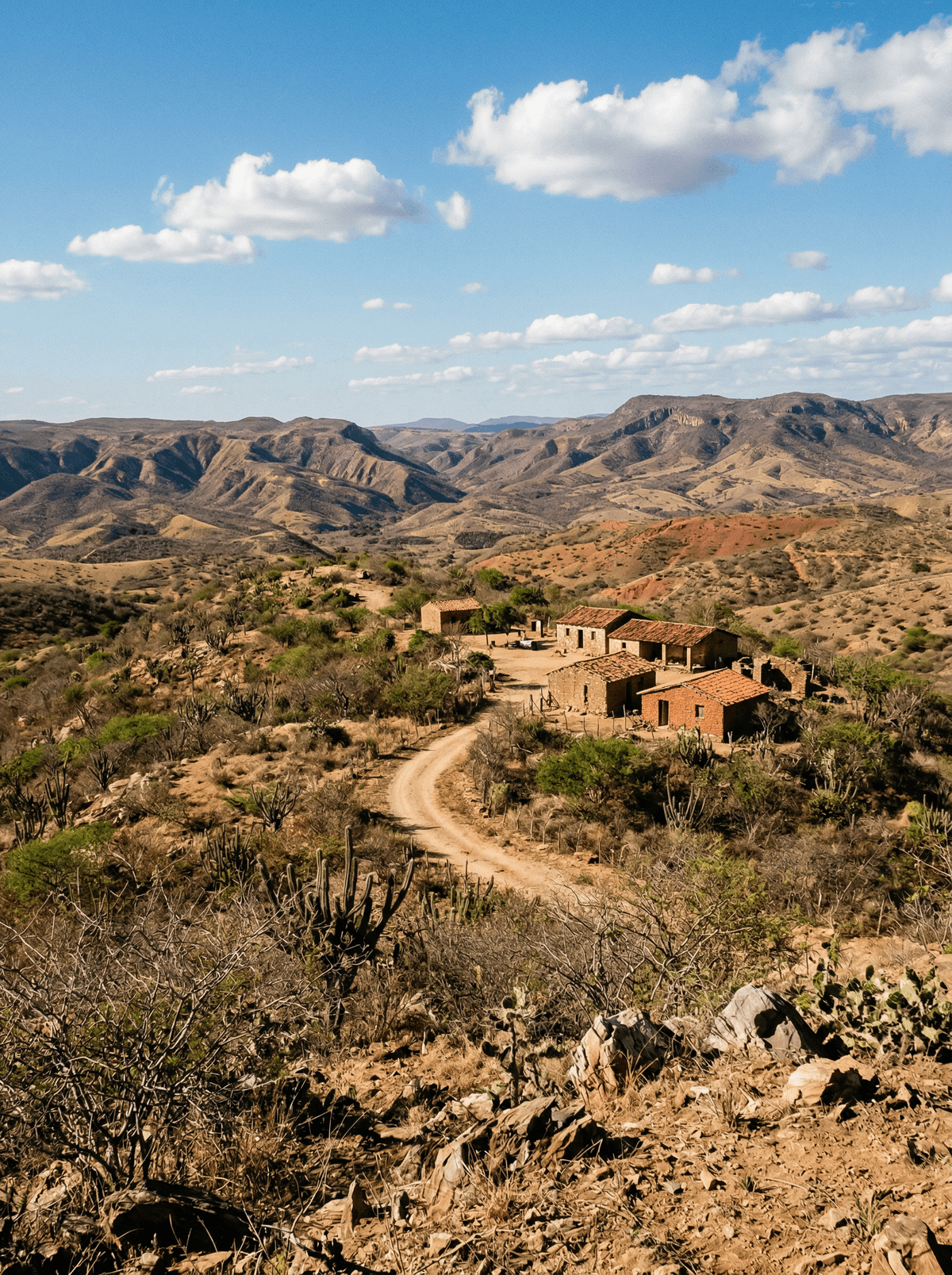
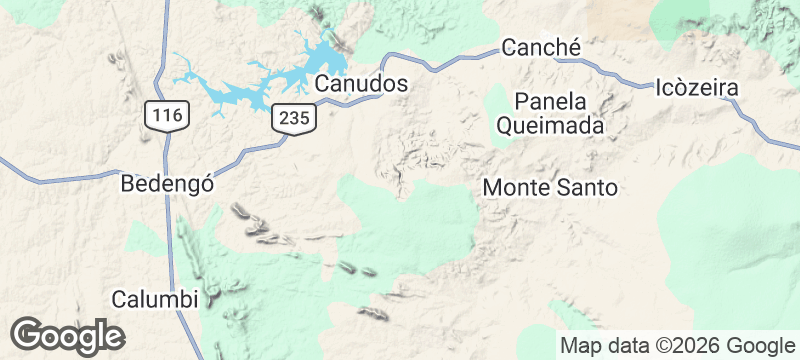
There is a lake where the town was. Belo Monte burned on 5 October 1897, five thousand two hundred huts and its two churches taken down with dynamite and kerosene, and seventy years later the Vaza-Barris was dammed and the ashes went under. The Canudos in Bahia you can drive to now is the third town of that name, sitting above the water in the caatinga at four hundred metres.
Antônio Conselheiro was a religious leader from Quixeramobim in Ceará who had walked the interior since the 1860s before the settlement he founded on the Vaza-Barris grew big enough to alarm a four-year-old Republic. Four military expeditions came between November 1896 and October 1897; the first three were beaten back, and the third lost its commander, Colonel Moreira César, at the Fazenda Velha in the early hours of 4 March. Conselheiro took shrapnel in the leg on 6 September and died on 22 September, a fortnight before the end; the army dug him up for a photograph, cut off his head and sent it to a medical professor in Salvador. The Parque Estadual de Canudos holds the ground: the Alto da Favela, taken on the morning of 28 June and looking straight over what is now water, the Fazenda Velha, the Pelados, and the Vale da Morte, a narrow valley the army used as a burial place, where soldiers lie with the women and children who had come out with them. Euclides da Cunha sailed for Bahia on 3 August 1897 and wrote Os Sertões out of what he saw; glass panels now stand at the sites with photographs from the war itself, and at the Alto das Memórias with portraits of survivors and their descendants taken from the late 1940s on.
Solo
Begin at the Alto da Favela, where the university has set a map of the troop movements, then drop to the Vale da Morte and the Riacho do Motta and follow the Estrada de Massacará out to the Alto do Mário, the Fazenda Velha and the Pelados. The park is open seven to eleven and one to five, every day of the week. Groups give the university fifteen days' notice; a small party sends names, a date and a time to the Campus Avançado, and that is all of it. There is a university campsite for up to eighty people on the ground itself.
- The Parque Estadual de Canudos covers 1,321 hectares of the ground the war was fought on, created by state decree in 1986 and run by the Universidade do Estado da Bahia as an open-air museum.
- The settlement and the town that replaced it both lie under the Açude Cocorobó, and from the Alto da Favela part of that second Canudos can still be picked out.
- The Memorial Antônio Conselheiro keeps an archaeological museum, the José Calasans auditorium, a library and an archaeology laboratory, and opens mornings and afternoons every day apart from public holidays.
- The caatinga along the Rio da Toca da Velha carries umbuzeiros, mandacarus and xiquexiques, and Lear's macaw, one of the most endangered birds alive.
Bode and cabrito come roasted, fried or stewed, alongside carne do sol and charque, and the plate every restaurant in town can put in front of you is ensopado de galinha caipira.
Doce de banana is the surprise, made from fruit off the irrigated plantations the dammed river feeds; maxixe, cassava and bottled butter go into most of the rest.
Utqiaġvik
United States
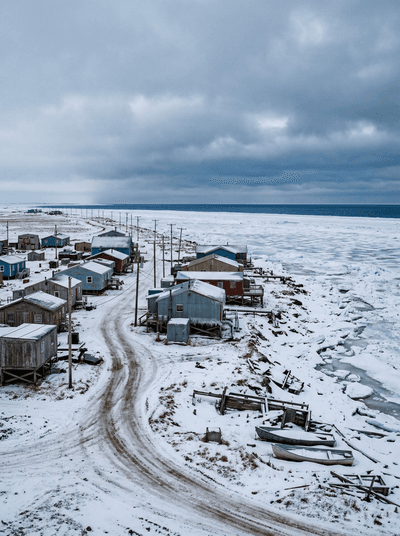
Midnight sun refusing to set for eighty days straight in a town where whales surface offshore.
Calanchi di Aliano
Italy
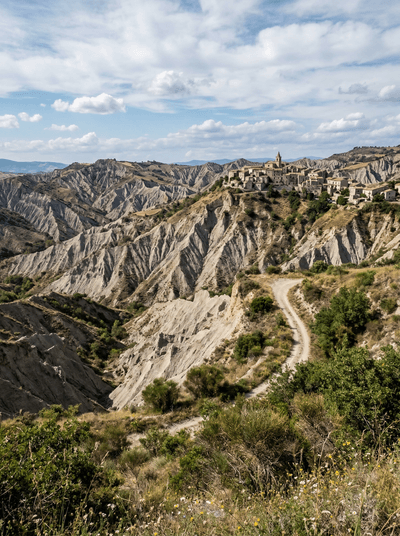
Grey clay badlands stretching to the horizon, the exile landscape of Christ Stopped at Eboli.
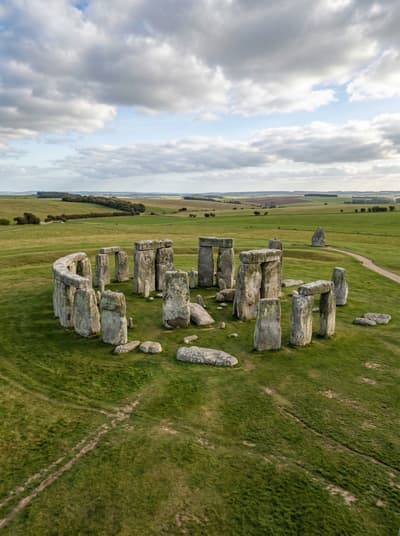
Stonehenge
England
Bluestones hauled a hundred and fifty miles to stand in a circle nobody can fully explain.
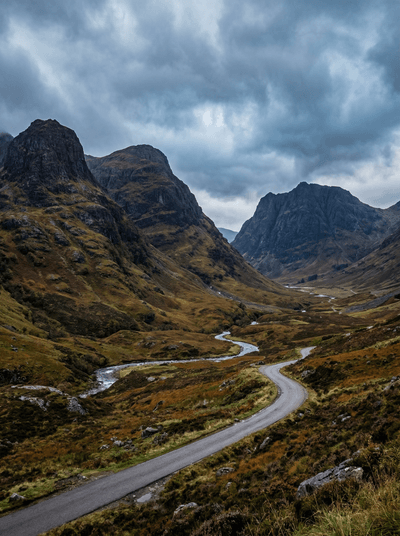
Glencoe
Scotland
A valley so haunted by massacre the mountains themselves seem to mourn in low cloud.
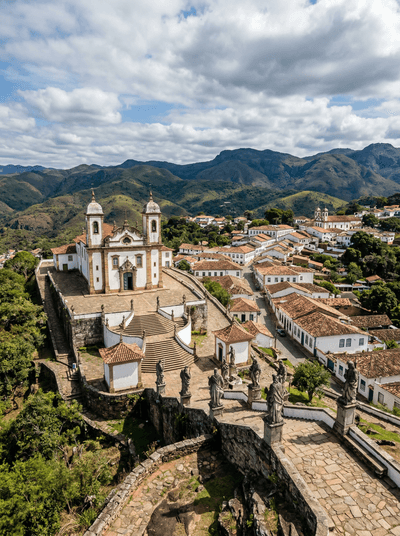
Congonhas
Brazil
Twelve life-size soapstone prophets, each holding his own prophecy in Latin, cut by a failing sculptor.
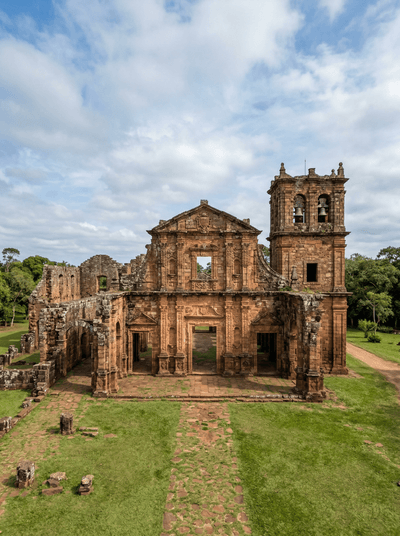
São Miguel das Missões
Brazil
Sandstone ruins of a Jesuit republic the Guaraní built, carved, and then lost.
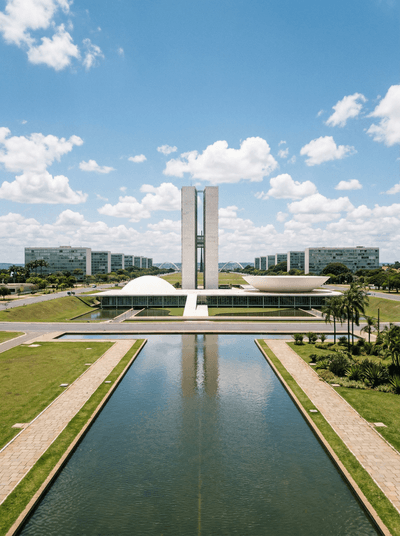
Brasília
Brazil
A modernist capital conjured from red dust where Niemeyer's concrete curves defy the cerrado.
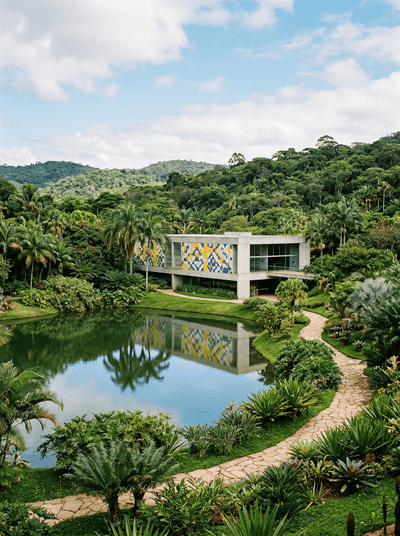
Inhotim
Brazil
A legally recognised botanical garden with twenty-four art galleries planted through it.