Peru
Leymebamba
A cloud-forest town guarding two hundred rescued Chachapoya dead with personal tenderness.
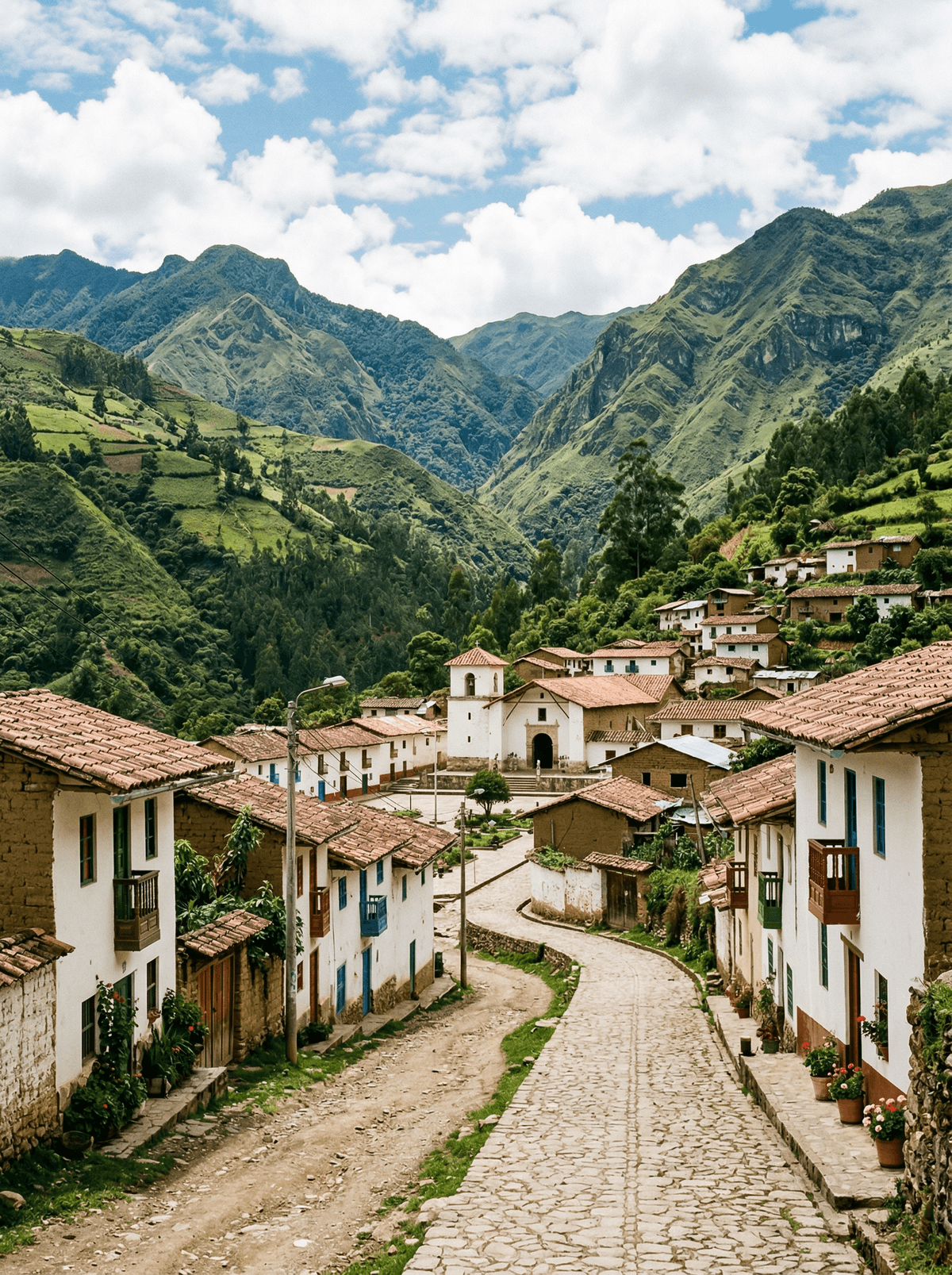
The museum is quiet and cool, and it holds one of Peru's great archaeological rescues: more than two hundred Chachapoya funerary bundles brought down from the cliff tombs of Laguna de los Cóndores, conserved with a care that feels personal. Outside, cloud forest presses against the town's edges, the air all wet earth and eucalyptus.
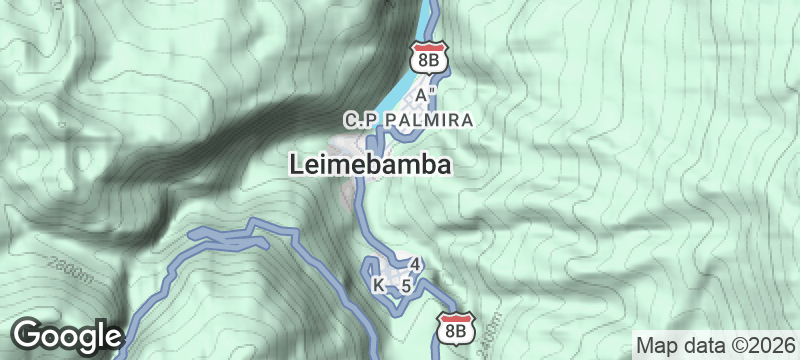
Leymebamba is a small agricultural town in the upper Utcubamba valley south of Chachapoyas, and its museum — built in 2000, run with the community — exists because of an emergency: looting at the lake tombs of Laguna de los Cóndores in the late 1990s forced the recovery of the mummies, textiles, quipus and ceramics now conserved here in climate-controlled rooms. The display treats the dead as human heritage under professional care, and rewards the visitor who reads the Chachapoya-Inca story around them — this is one of the finest collections in northern Peru, sitting in a town of cobbled streets where nothing hurries. The cloud forests beyond are spectacled-bear country, and multi-day treks leave from here for the lake tombs themselves.
Solo
The museum demands slow attention — no crowds, no audio guide, just conservation done beautifully — and the cloud-forest trails extend the mood.
Couple
A cobbled town, a revelatory museum and forest walks compose shared discovery that feels private rather than performed.
- More than two hundred funerary bundles from Laguna de los Cóndores rest in careful conservation.
- Quipus, textiles and ceramics complete one of northern Peru's finest collections.
- The town stages the multi-day trek to the lake tombs themselves.
- The cloud forests around town are spectacled bear country, laced with quiet trails.
Cloud-forest honey on fresh bread from bakeries that open before dawn.
Caldo de gallina steaming in clay bowls at the market on cold mountain mornings.
Lindoso
Portugal
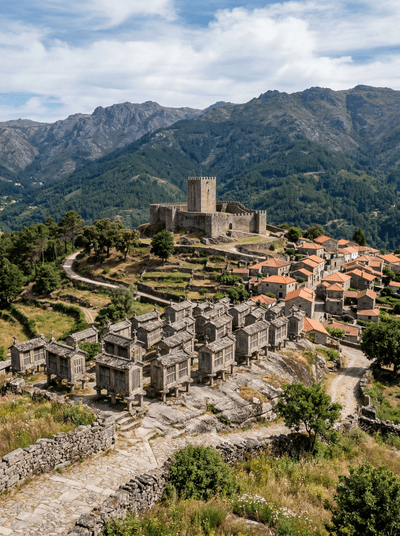
Dozens of granite granaries cluster like tiny temples beneath a border castle.
Piódão
Portugal
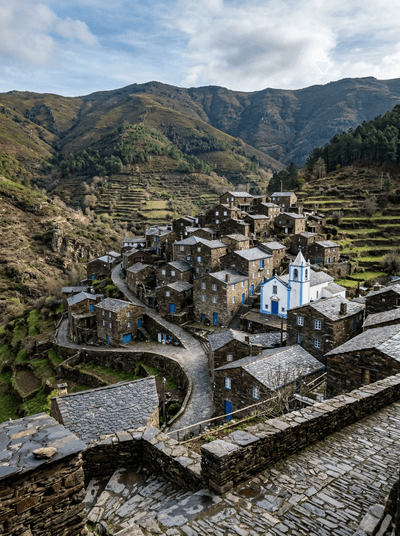
Blue-grey schist houses cascade down a mountain bowl, glowing amber after dark.
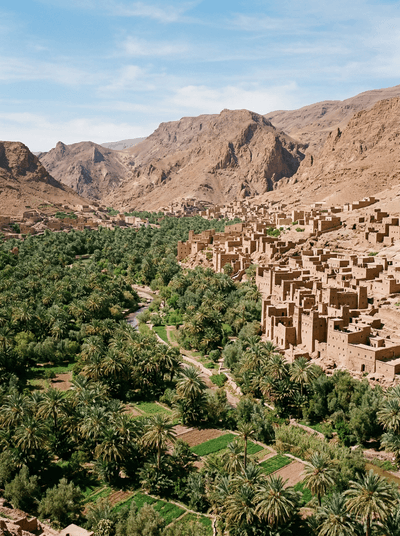
Tinghir
Morocco
Water flickers through palm shade before the road disappears between limestone walls.
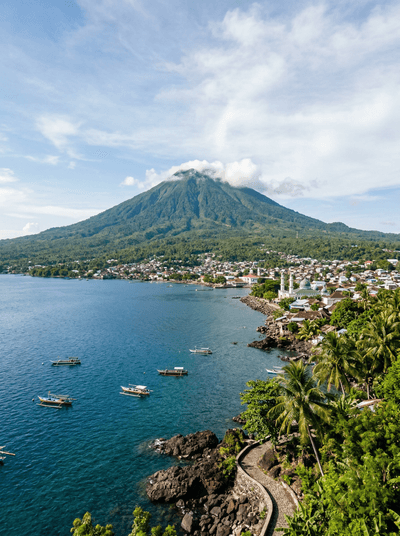
Ternate
Indonesia
The theory of evolution was posted to Darwin from this clove island's shore.
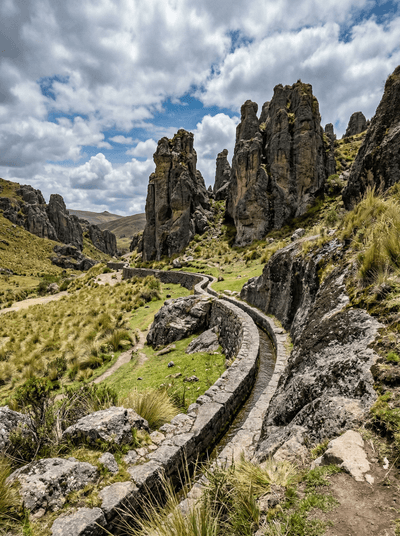
Cumbemayo
Peru
Pre-Inca aqueducts carved through living rock — still channelling water after millennia.
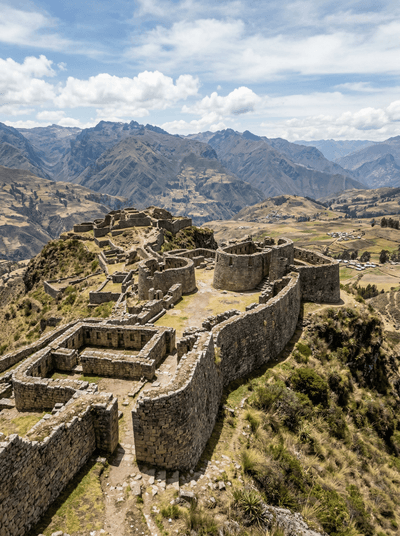
Marcahuamachuco
Peru
Kilometres of stone galleries crowning a mesa — pre-Inca grandeur without an audience.
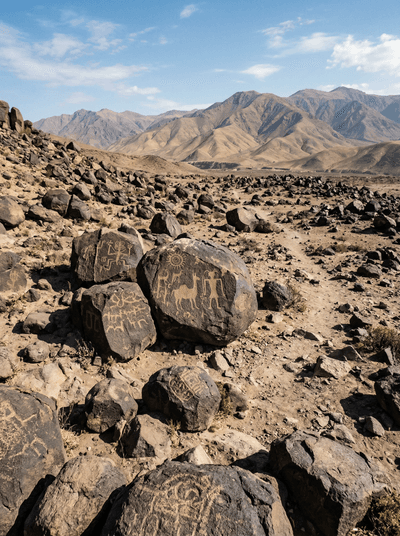
Toro Muerto
Peru
A desert of engraved boulders — thousands of petroglyphs, barely a visitor.
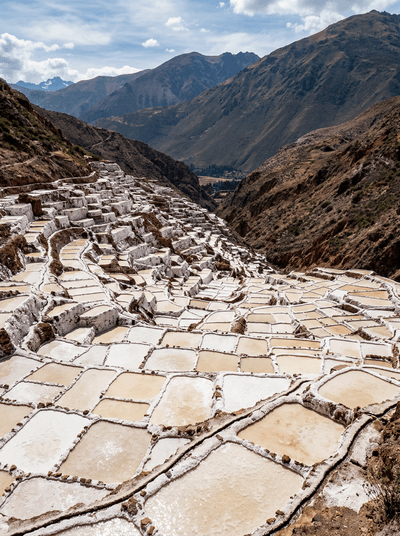
Salineras de Maras
Peru
Thousands of salt pans cascading down a mountainside, hand-harvested since before the Inca.