Egypt
Gilf Kebir
Prehistoric swimmers painted on cave walls in the deep Sahara, from when this wasteland was green.
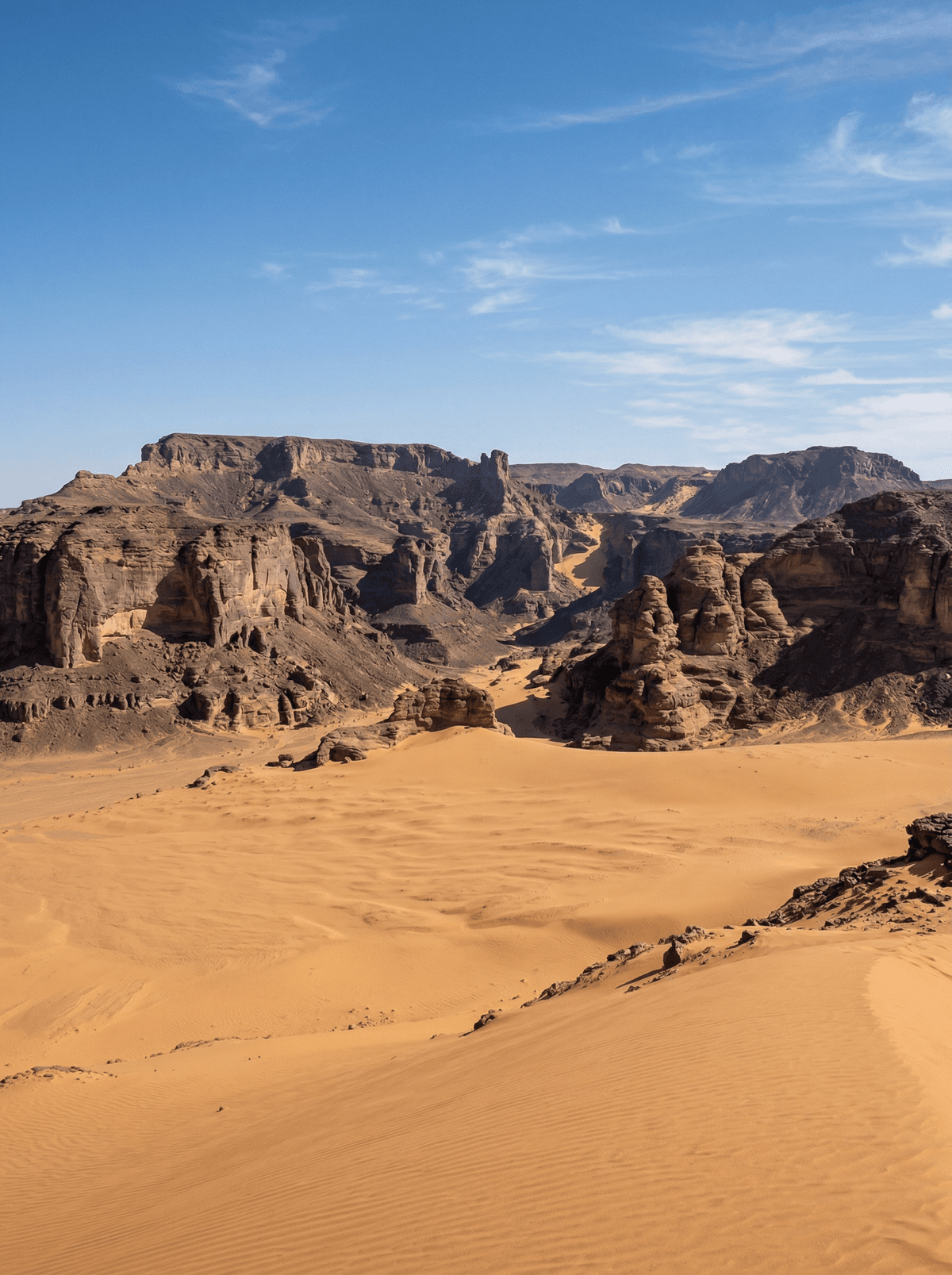
The plateau rises from the Sahara floor like a wall, flat-topped and sheer-sided, the size of Switzerland. Inside its wadis, caves hold paintings of swimmers, giraffes, and cattle — art made when this desert was savanna, lush enough to support herds. The silence is not quiet; it is the total absence of human sound across hundreds of kilometres.
Gilf Kebir is a sandstone plateau in Egypt's deep south-western desert near the borders with Libya and Sudan, one of the most remote landscapes on the African continent. The Cave of Swimmers, discovered by Hungarian explorer László Almásy in 1933 and later featured in the film The English Patient, contains Neolithic rock art depicting human figures in swimming postures — evidence that this hyper-arid region received monsoon rains and supported lakes and vegetation roughly eight thousand years ago. The Wadi Sura caves hold additional rock art galleries including the Cave of Beasts, discovered only in 2002, with over five thousand painted figures. Reaching Gilf Kebir requires a multi-day 4x4 expedition from either Dakhla Oasis or Siwa, with all fuel, water, and supplies carried in — there are no roads, no settlements, and no infrastructure of any kind.
Friends
Gilf Kebir is an expedition, not a trip — and expeditions need a team. The logistics require shared commitment, the distances demand companionship, and the pay-off — standing in front of eight-thousand-year-old paintings in one of the remotest places on Earth — is the kind of experience that defines a friendship.
- The Cave of Swimmers — painted with figures appearing to dive and float — provided the central image for Michael Ondaatje's novel The English Patient.
- Rock art in the Wadi Sura gorge includes giraffes, cattle, and crocodiles — animals that haven't existed in this region for 10,000 years.
- The plateau is the size of Switzerland and sits entirely above 1,000 metres — accessible only by 4x4 convoy with a minimum of two vehicles.
- The round trip from Cairo covers 3,500km of desert tracks — expeditions typically run for 10 to 14 days with full camping and fuel loads.
Everything carried in: camp-cooked meals around a fire in one of the remotest deserts on Earth.
Bedouin guides bake bread in the sand and brew tea over acacia-wood fires.
The nearest restaurant is several hundred kilometres away — expedition simplicity sharpens every flavour.
Millennium Cave
Vanuatu
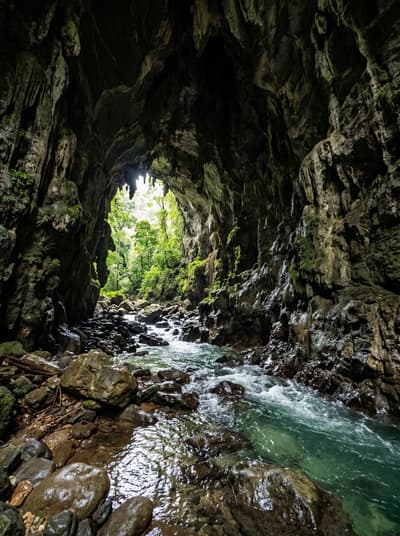
Scramble through jungle and wade chest-deep rivers to a cave you enter walking and exit floating.
Phong Nha
Vietnam
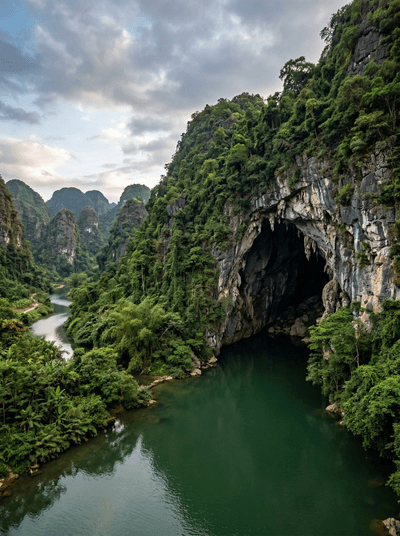
Hidden jungle portals opening into subterranean river systems and limestone caverns.
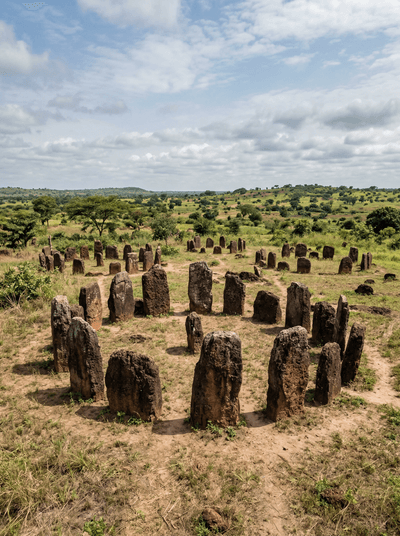
Wassu Stone Circles
Gambia
Laterite pillars arranged in concentric rings — Iron Age astronomy or burial rites, nobody is certain.
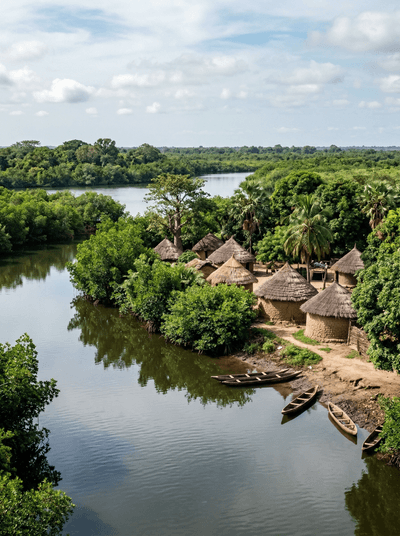
Tumani Tenda
Gambia
Sleep in a village roundhouse and wake to colobus monkeys raiding the mango tree outside.
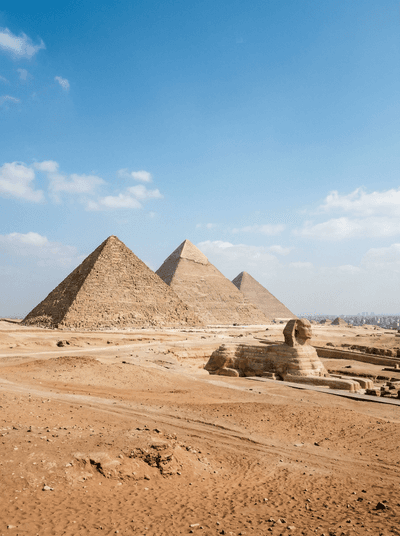
Giza
Egypt
Camel shadows stretch across sand where the last ancient wonder meets the Sahara's edge.
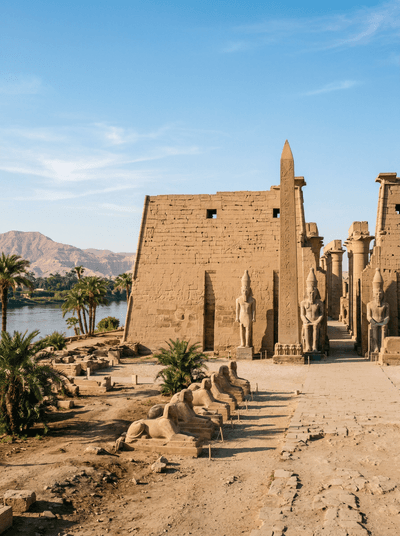
Luxor
Egypt
Dawn light flooding Karnak's hypostyle hall through columns carved before Rome existed.
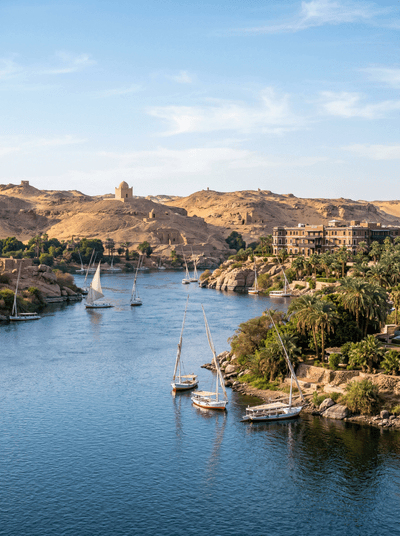
Aswan
Egypt
Feluccas gliding past granite islands where the Nile runs quietest and Nubian colour blazes.
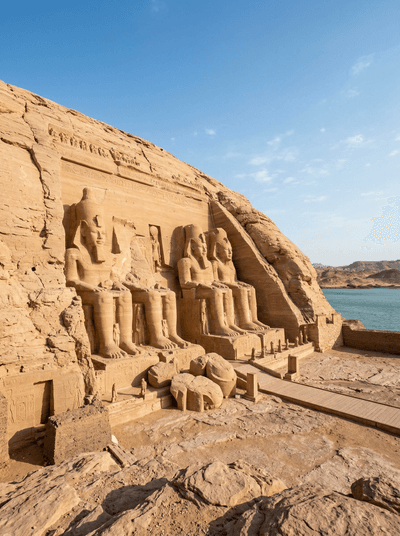
Abu Simbel
Egypt
Twice a year, dawn crawls sixty metres through solid rock to light a pharaoh's face.