Egypt
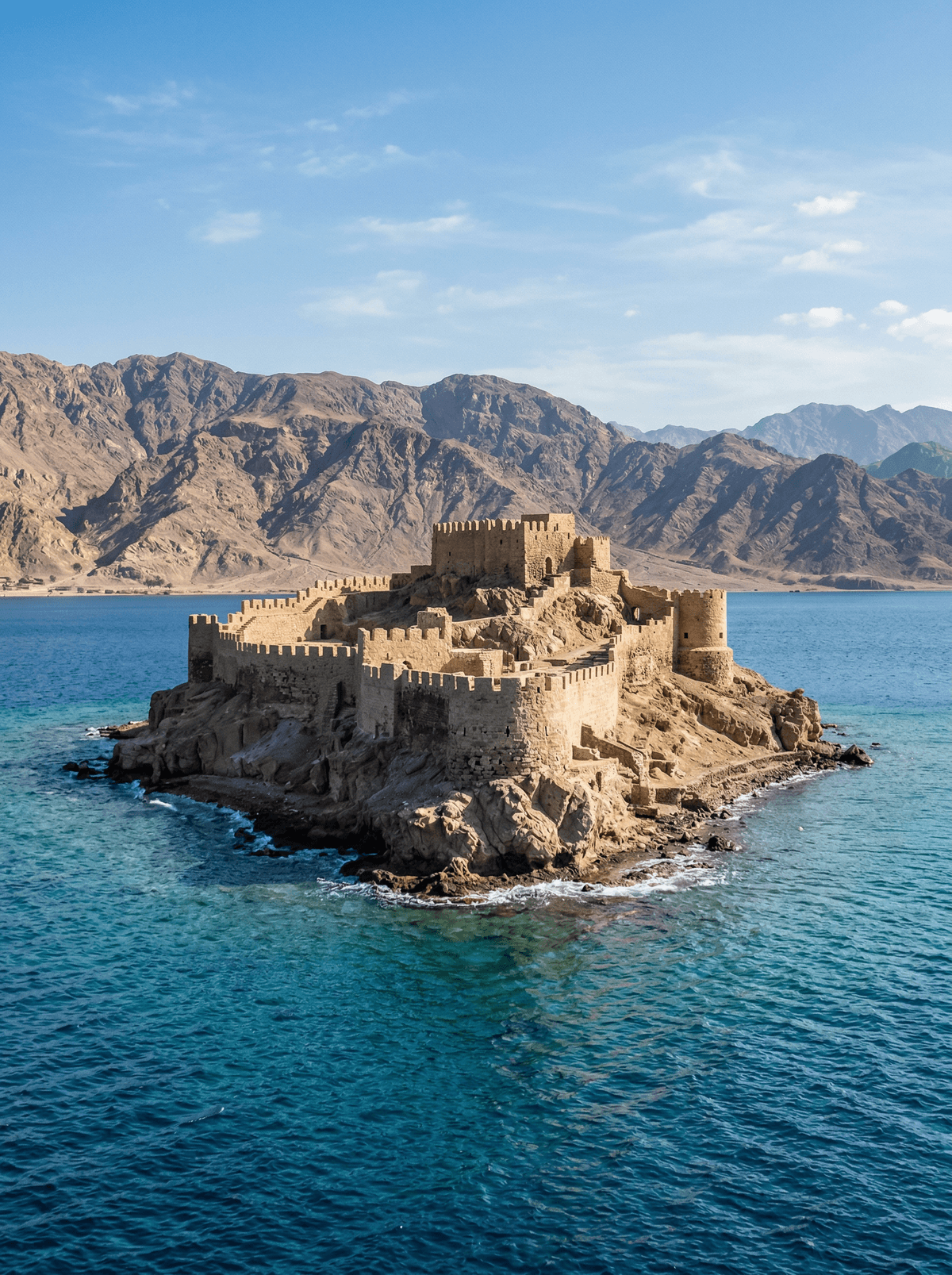
Pharaoh's Island
Crusader-contested fortress on a Gulf of Aqaba island, four countries visible from its ramparts.
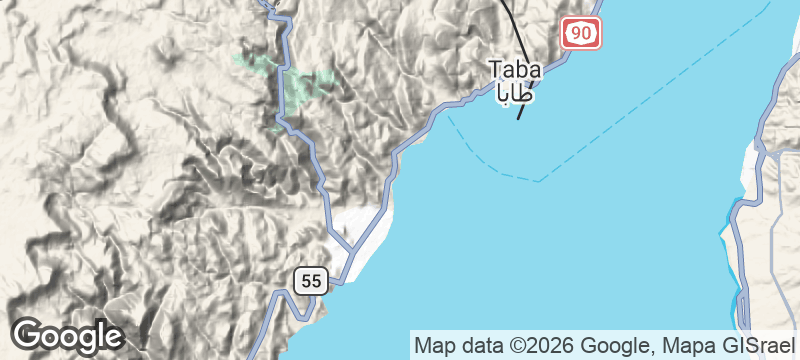
The fortress appears as the boat rounds the headland — a compact castle filling almost every square metre of a small island, its walls rising straight from the water. From the ramparts the view turns geopolitical: Saudi Arabia across the strait, Jordan to the north-east, Israel to the north, Sinai's mountains behind you.
Pharaoh's Island — Jezziret Faraoun — sits about seven kilometres south of Taba. Saladin fortified it in 1171 to guard the sea lane and the pilgrimage route through Sinai, on an island the Crusaders had contested for the same reason: the strait here narrows to barely eight kilometres, and the castle walls command every approach. Below the waterline, coral grows close against the island's shore.
Solo
Take the first boat from Taba, climb straight to the ramparts, and count the four countries before the day's groups land.
Couple
Snorkel the coral off the island's shore between fortress walks — two unhurried hours covers both.
Family
The crossing is short and the castle is climbable — children get a real fortress with water on every side.
Friends
Book a boat between you from Taba, split up across the ramparts, and race to spot all four countries first.
- From the highest rampart, four countries stand in a single view — Egypt, Israel, Jordan and Saudi Arabia.
- The walls carry both Crusader-era and Islamic building phases — the strait changed hands with the century.
- Most visits run two to four hours: the fortress climb, the ramparts, and snorkelling off the shore.
- Boats make the short crossing from Taba, and most excursions bundle the snorkelling gear.
Meals and cold drinks come with the boat — excursions from Taba carry refreshments onboard.
Back on shore, Taba's hotel kitchens take the seafood dinner.
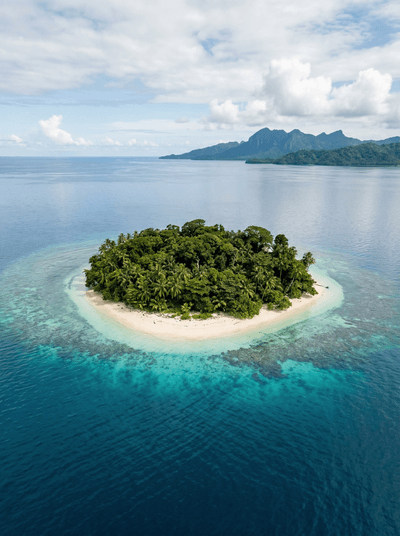
Kennedy Island
Solomon Islands
A coral islet where a future president waited to be found, and two scouts found him.
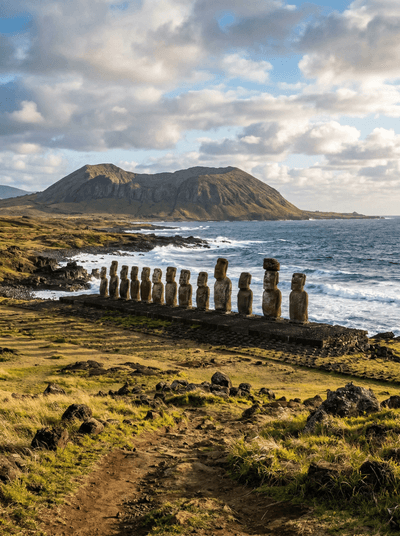
Rapa Nui (Easter Island)
Chile
Moai, grassed craters and a living Polynesian culture meet in the open Pacific.
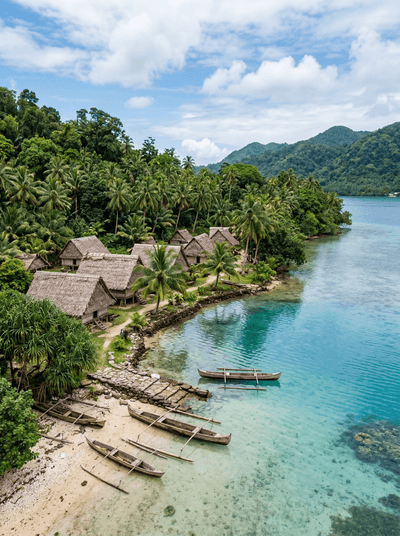
Yap
Micronesia
Stone money too heavy to move, so ownership transfers by word alone on this jungle island.
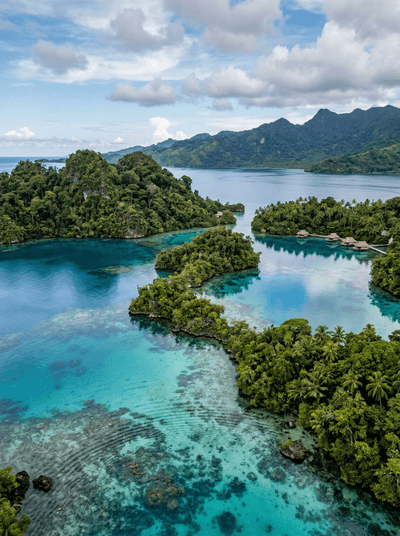
Marovo Lagoon
Solomon Islands
Two barrier reefs enclose a lagoon holding its own islands, villages and generations of woodcarvers.
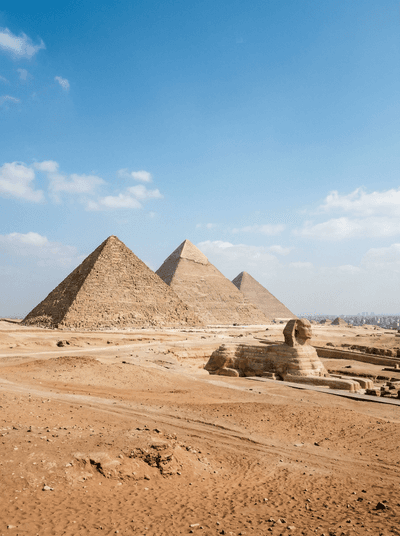
Giza
Egypt
Camel shadows stretch across sand where the last ancient wonder meets the Sahara's edge.
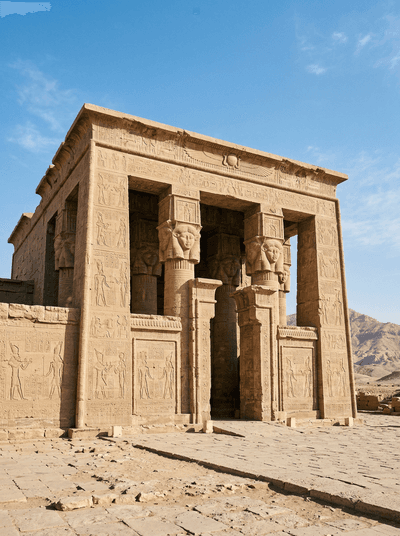
Dendera
Egypt
Two-thousand-year-old paint still vivid on ceilings where the goddess Hathor smiles from every column.
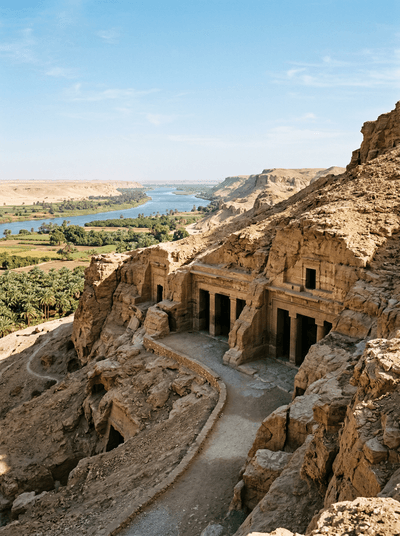
Beni Hasan
Egypt
Rock-cut tombs high on a cliff face, their four-thousand-year-old wrestlers still mid-grapple on the walls.
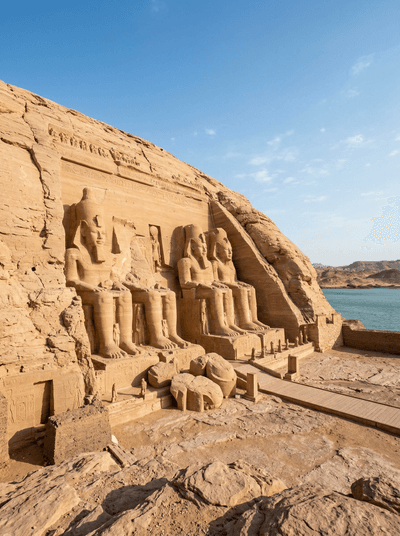
Abu Simbel
Egypt
Twice a year, dawn crawls sixty metres through solid rock to light a pharaoh's face.