Egypt
Dendera
Two-thousand-year-old paint still vivid on ceilings where the goddess Hathor smiles from every column.
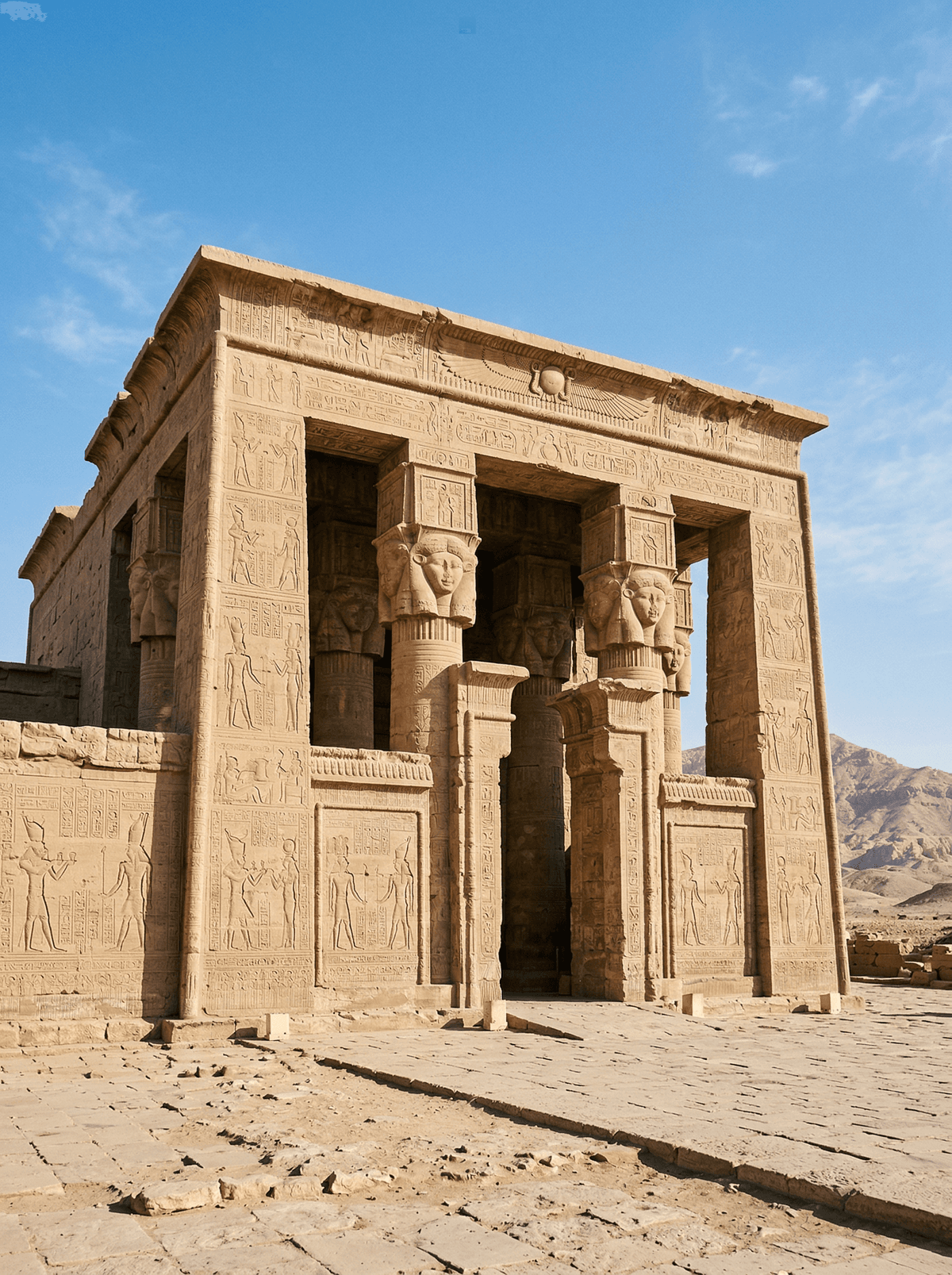
You step inside and look up. The ceiling is painted in deep blue and gold — the goddess Nut swallowing the sun, zodiac figures wheeling overhead — and the colour is two thousand years old. Hathor smiles from every column capital, her cow-eared face repeated in the cool, incense-scented dark.
The Temple of Hathor at Dendera is among the best-preserved complexes in Egypt, built between roughly 54 BCE and 20 CE. Its fame rests overhead: the astronomical ceiling of the hypostyle hall and the celebrated circular zodiac, carved around 50 BC — the original hangs in the Louvre, a cast holding its place in the stone. Hathor-headed columns line the halls, a torchlit crypt runs beneath the floor, and a narrow staircase climbs to roof chapels still carrying their painted ceilings.

Solo
Carry a torch for the crypts, climb to the roof chapels, and give the ceiling the crick in your neck it deserves.
- The Dendera Zodiac is one of the oldest star charts in existence.
- The internal staircase leads to open-air roof chapels — painted ceilings in natural light.
- The crypt reliefs are seen by torchlight, and some still generate genuine scholarly argument.
- The mud-brick precinct wall hides every modern building — inside it, the centuries fall away.
Roadside stands press sugarcane and pour cold hibiscus by the temple gate.
Qena's grills handle the drive back: kofta, kebab and river fish, Upper Egypt style.
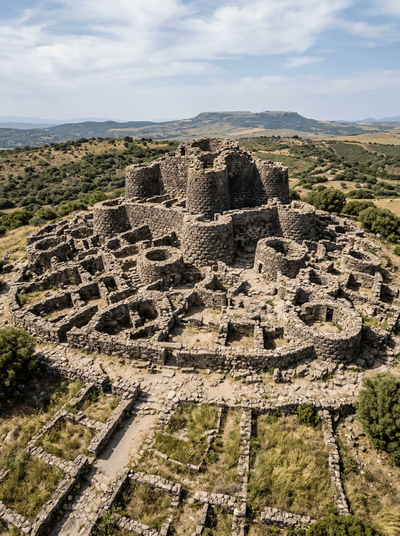
Su Nuraxi di Barumini
Italy
A Bronze Age stone fortress predating Rome by seven centuries, buried until the 1950s.
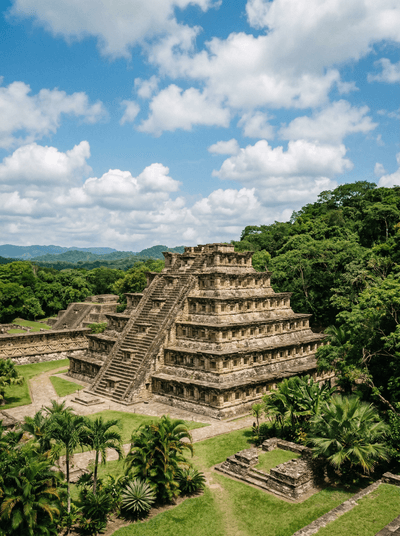
El Tajín
Mexico
Niches, ball courts and carved reliefs spread across an ancient Gulf Coast capital.
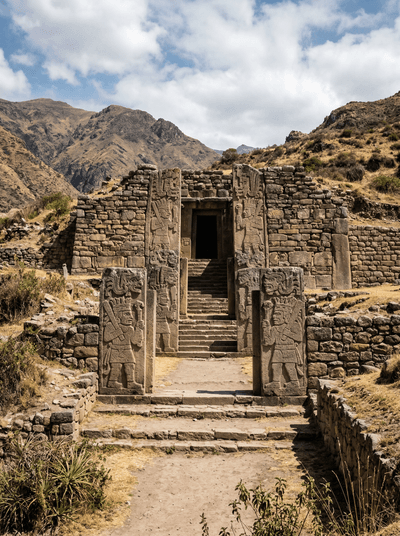
Sechín
Peru
Temple walls carved with warriors and the dismembered — 3,600-year-old stone testimony.