Argentina
Puerto San Julián
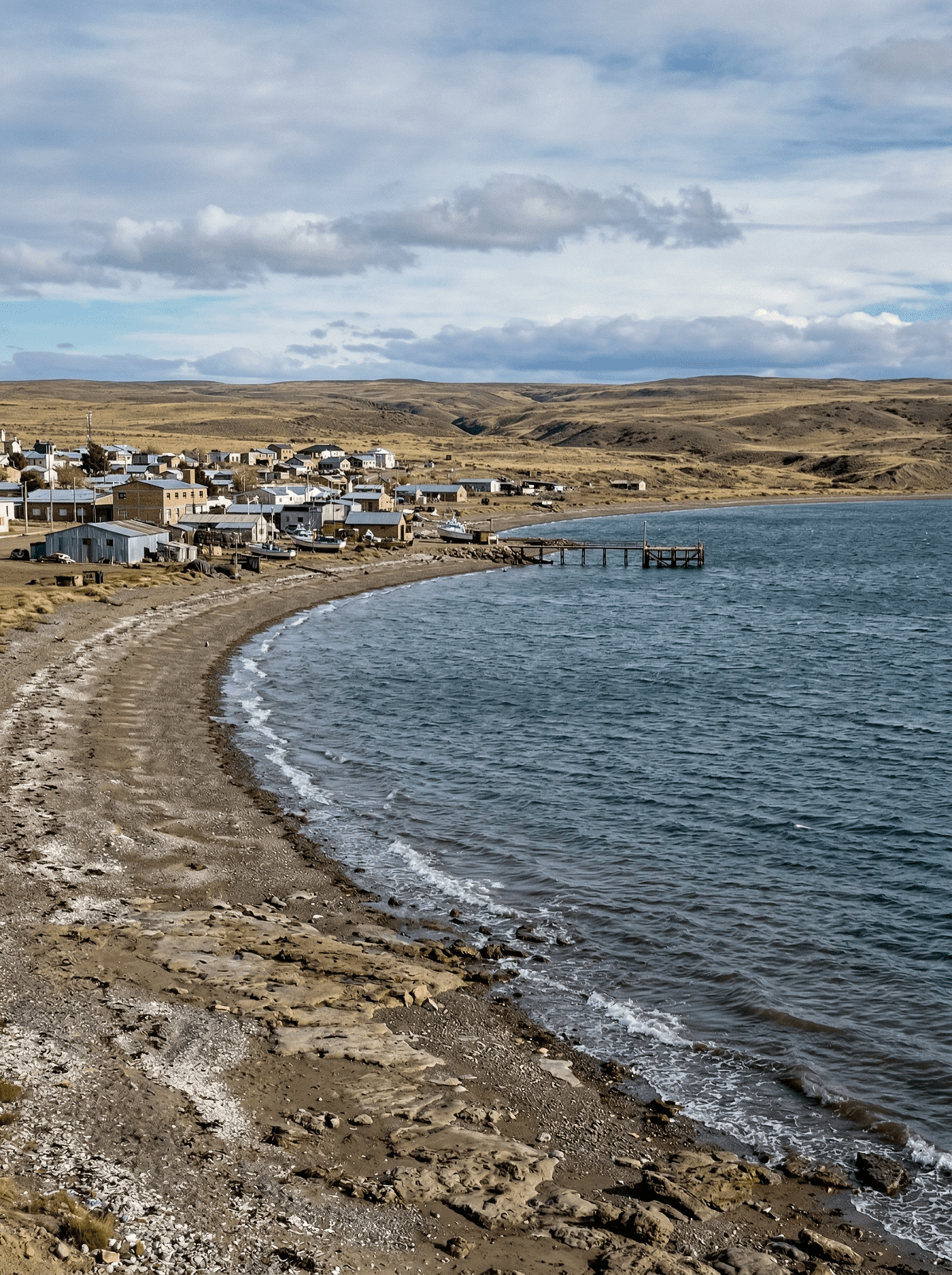
The bay where Magellan's crew mutinied in 1520, now patrolled by Commerson's dolphins.
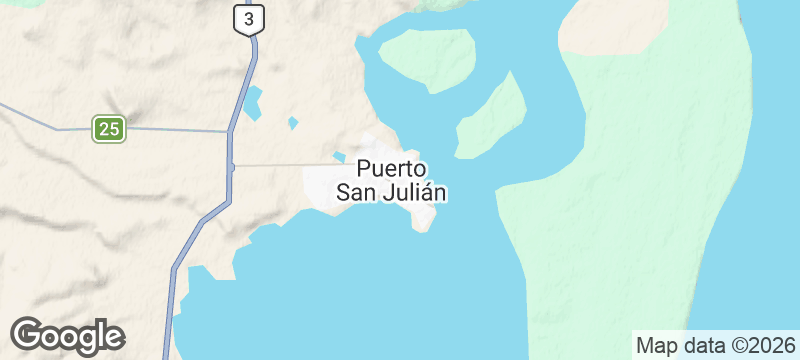
Puerto San Julián is the harbour where Magellan wintered his fleet in 1520 — executing mutineers, claiming the coast for Spain, and meeting the people his crew called Patagonians, a word that went on to name the whole southern cone. Drake wintered in the same bay decades later and held an execution of his own. Today the town exports wool, flamingos hold a lagoon visible from the main road, and Commerson's dolphins patrol the bay.
This is the first European wintering site in Patagonia, and the town wears the history well — waterfront museums and an audio-guided historical route carry the Magellan story, so the visit stays substantial even when the boats sit ashore. The bay's black-and-white dolphins take their name from the naturalist who recorded them on these coasts in 1767, and licensed marine departures reach them and the penguin colonies when sea and season permit — never as a certainty. The Laguna de los Flamencos holds its colonies against the steppe year-round, and the working-port character underneath it all — wool bales, creaking boats, wind — is what makes the layers feel lived rather than staged.
Solo
A port that rewards the historically minded — the Magellan layer beneath the working wool town gives a depth the coastline alone would not justify, with dolphins and flamingos as the wildlife counterpart.
Couple
Harbour history, working-port character and accessible wildlife justify two nights on the Ruta 40 or coastal run rather than a passing stop — the audio route first, a licensed bay trip when the water allows.
- Magellan anchored five months in 1520, put down a mutiny, and met the 'Patagonians' here.
- An audio-guided historical route walks the waterfront's five centuries of maritime layers.
- Commerson's dolphins carry the name of the naturalist who recorded them here in 1767.
- Flamingo colonies hold the saline lagoon beside the national route year-round.
Centolla and langostinos at a harbour-side table, the boats creaking at the dock.
Lamb and empanadas at a simple parrilla in the windswept port.
Karpathos
Greece
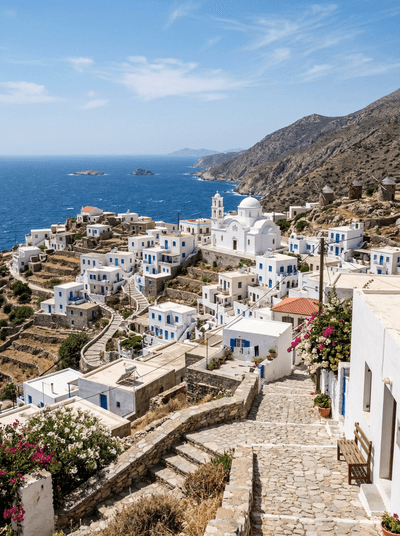
Mountain women in traditional dress still bake bread in wood ovens above wind-lashed Aegean cliffs.
Crosby Beach
England
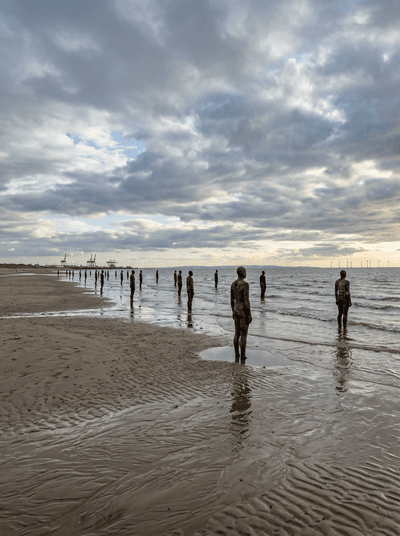
Iron men stand chest-deep in the tide, rusting patiently into the Irish Sea.
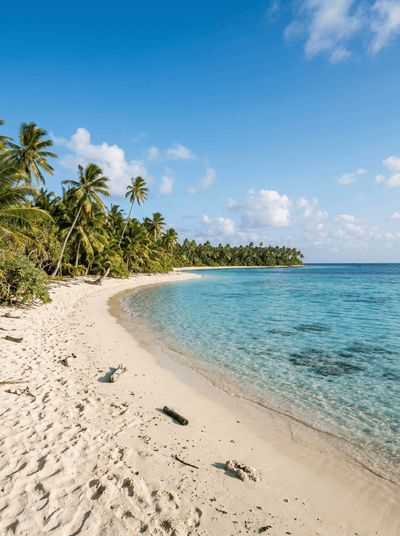
Nanumea
Tuvalu
Japanese bombs found this atoll's church in 1943; a landing craft still rusts on the reef.
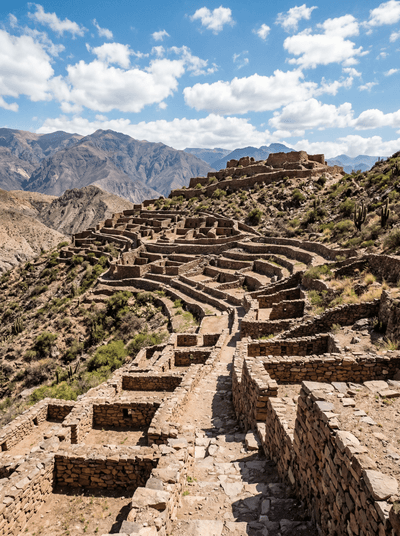
Quilmes Ruins
Argentina
A pre-Columbian stone city climbs the hillside, its people unbeaten for a century.
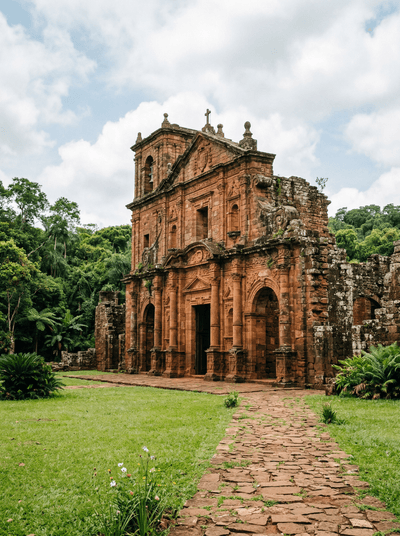
San Ignacio Miní
Argentina
Jungle-wrapped Jesuit ruins where Guaraní played baroque beneath a howler-monkey canopy.
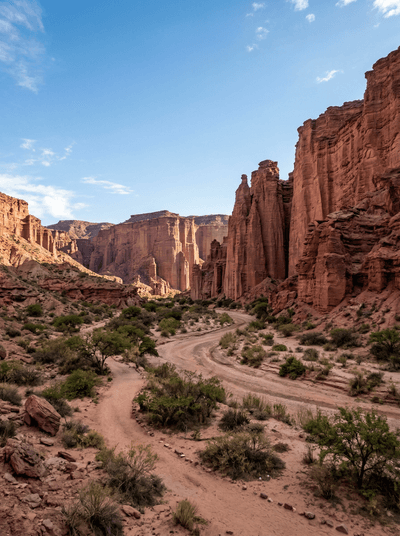
Parque Nacional Talampaya
Argentina
Red sandstone canyons where condors nest above dinosaur-age trackways in the riverbed.
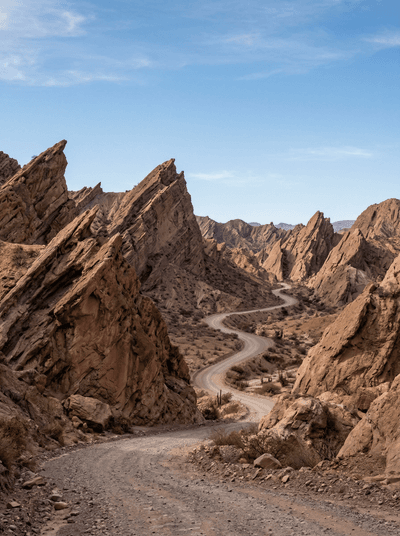
Quebrada de las Flechas
Argentina
Tilted stone slabs pierce the earth like frozen arrows, a canyon turned sideways.